Free for nonsubscribers
By Howard Hardee
August 10, 2026 © Leeham News: Boeing’s divestment of autonomous air taxi developer Wisk Aero might be surprising in terms of the transaction partner—Wisk’s one-time rival, Archer Aviation. But analysts watching the US airframer have speculated for months that Wisk could be on the chopping block, as the air taxi start-up was not part of Boeing’s core business of selling large commercial jets.
Some within the industry believe that, rather than having much interest in Wisk’s envisioned business case for a self-flying air taxi, Boeing considered the subsidiary purely a technology incubator informing autonomous flight systems on Boeing’s future airliners.
Today’s disclosure shows that Boeing is still interested in Wisk’s technology, at least. Archer is acquiring Wisk and a pair of related autonomy assets—SkyGrid and Insitu—while agreeing to a technology-sharing arrangement with Boeing, which takes a roughly 20% stake in Archer. The deal, expected to close by year-end, is valued at about $1 billion.

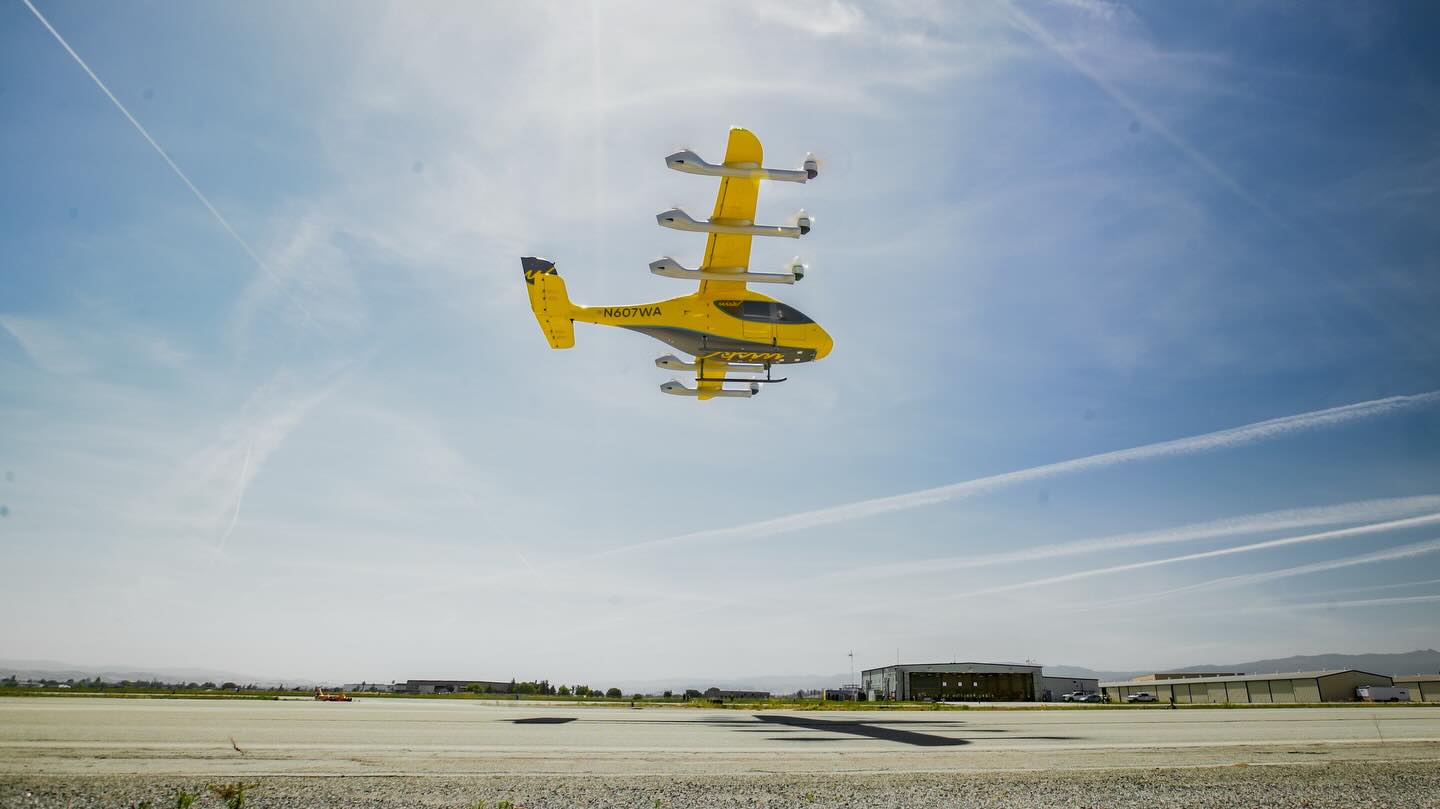
Wisk Aero’s second full-sized prototype performs a hover during a test flight in California. Photo credit: Wisk Aero
For Boeing, the deal reduces a modest level of risk, frees up cash and preserves access to autonomous flight technology that may prove critical in the future. It is essentially all upsides.
In an equity research note on August 10, Jefferies analysts emphasized that the deal amounts to an “intellectual property cross-license agreement that will continue to allow [Boeing] to access the core Wisk autonomous flight technology.”
Brian Yutko, Boeing’s vice president of commercial airplanes product development, called the deal a “win win” for all parties.
“It allows Wisk, SkyGrid and Insitu to accelerate capability development and time to market while ensuring Boeing capitalizes on its investments in these technologies over the past two decades through continued development in our core businesses,” Yutko said.
Notably, Archer and Wisk were previously locked in a bitter, years-long lawsuit over trade secrets and engineer retention, which was resolved in a 2023 settlement. At the time, the two companies vowed to put the feud behind them, and to collaborate on potential autonomous variants of Archer’s Midnight taxi.
Consider the eVTOL
During the most recent Farnborough International Airshow, Yutko—who previously worked as Wisk’s CEO—refuted the idea that Wisk was only ever a technology incubator for Boeing. In a passing conversation with LNA, he maintained that any company working to advance technology must make an earnest effort to reach market. Otherwise, he said, breakthroughs with real-world applications are unlikely.
Indeed, Wisk has been progressing through a flight-test campaign with a pair of Gen 6 prototypes and is further along in development than is widely recognized. What the sale to Archer means for the future of the Gen 6 aircraft remains to be seen.
In April, Yutko explained Boeing’s vision for the four-passenger electric vertical take-off and landing (eVTOL) at a gathering of the Pacific Northwest chapter of AIAA (American Institute of Aeronautics and Astronautics).
“The Wisk strategy from the start has been how to build a next-generation aviation business, then use that to advance capabilities that we can think about how to apply them to the future,” Yutko said.
“Those types of capabilities are things like safety-critical avionics, electric power trains, and how they might be applied not just to new airplanes, but to more efficient power distribution on the airplanes—on bigger airplanes, as an example,” Yutko added. “High-rate manufacturing processes, focus certification engagements, and all kinds of interesting things that come from taking all those wild diaspora of technologies.”
That includes battery-electric, composite manufacturing and autonomous flight technology, which Wisk’s engineers have been tasked with applying to a single product—in this case, the Gen 6 air taxi—“where you can then say, let’s go forth and see if we can certify here,” Yutko said.
Then there was one
Under the leaner business strategy of chief executive Kelly Ortberg, Boeing has been trimming parts of its portfolio not focused on its core revenue-generation machine, Boeing Commercial Airplanes.
Last year, Boeing sold Digital Aviation Solutions—including Jeppesen, ForeFlight, AerData and OzRunways—to private equity firm Thomas Bravo for $10.5 billion.
Looking more broadly across the aerospace sector, Boeing’s sale of Wisk further reduces the number of established airframers directly involved in air taxi development. Last year, Wichita’s Textron Aviation quietly wound down its Nexus eVTOL development program and Airbus Helicopters paused work on the CityAirbus NextGen project.
Now, Embraer-backed Eve, developing the four-passenger Eve 100, stands as an exception.
Related