By Howard Hardee and Charles Alcock
September 29, 2026
Subscription Required
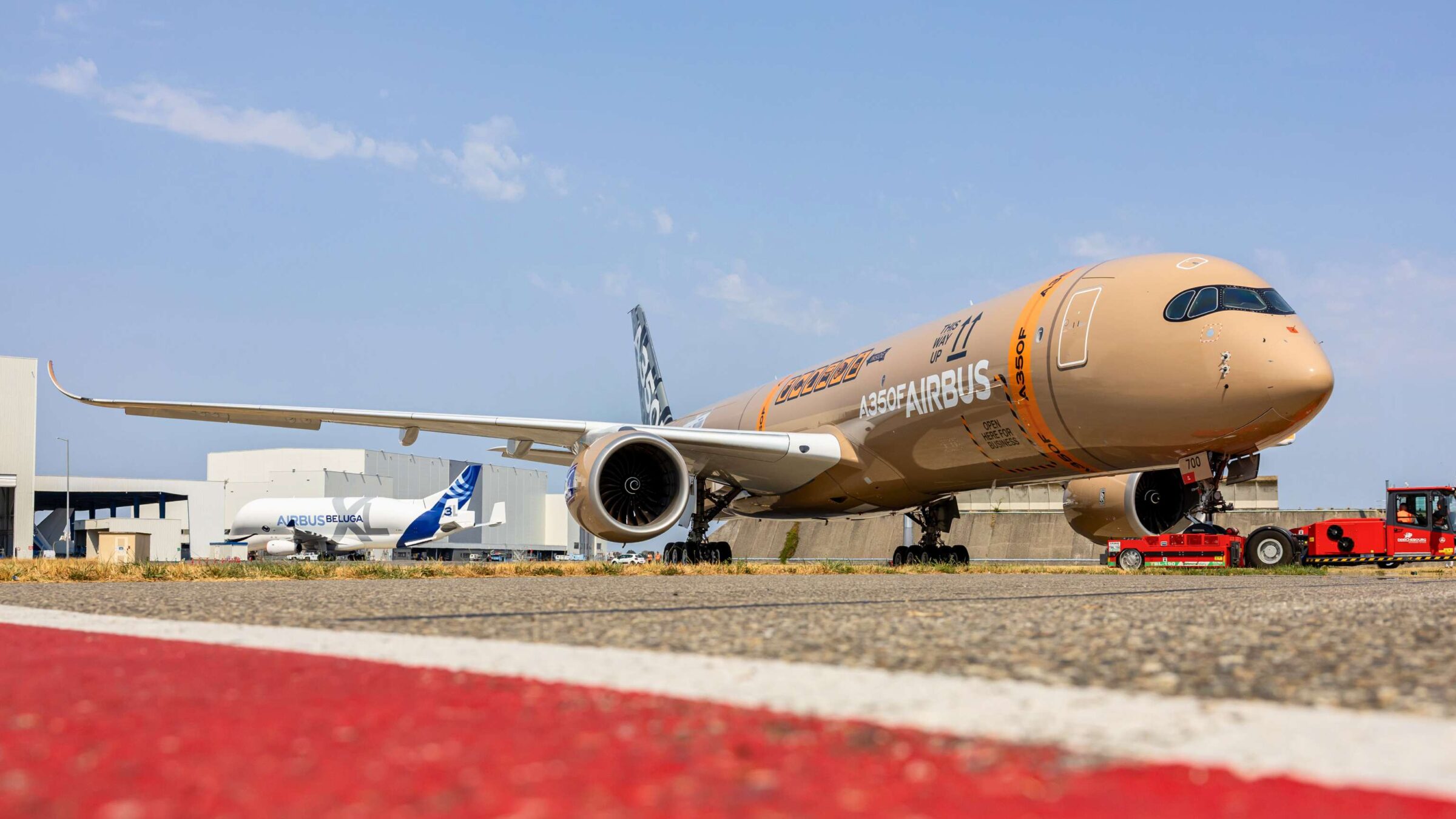
The first flight of the Airbus A350 Freighter on September 29 signified more than the European airframer’s intention to compete in the dedicated widebody cargo market.
When the jet enters service—possibly in 2028, though Airbus still maintains that revenue service will begin next year—it will represent the first competition for Boeing’s widebody freighters since the MD-11F made its first flight in January 1990, notes Tom Crabtree, a cargo market consultant with the Transport Research Advisory.
Even if the A350F’s entry to service is delayed, the program will likely benefit from a significant jump on Boeing’s 777-8F.

The first example of the A350F pictured ahead of its first flight on September 29, 2026. Photo credit: Airbus
In terms of economic and operating performance, the 777-8F and the A350F are neck and neck, within 3% of each other in fuel burn and cash operating costs, according to a 2022 breakdown by Leeham News and Analysis’ Bjorn Fehrm. Maintenance costs may prove a separator, but such costs will only become clear once both aircraft are in service for years.
Both freighters provide a 20% efficiency improvement over previous-generation cargo jets.
With little daylight separating the performance of the two types, the advantage likely goes to the airframer that reaches market first. But how far behind is the 777-8F?