August 6, 2026, © Leeham News: We looked at the expected efficiency gains for the next narrowbody from a more advanced wing last week. Now we add an advanced fuselage and check what efficiency gains the airframe can contribute on top of the next-generation engines that we wrote about two weeks ago.

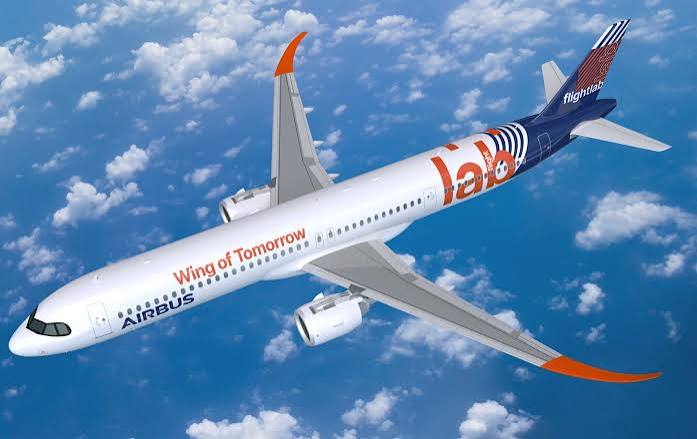
Figure 1. The rendering of the extended wing of an A321neo, to test the effects envisaged in the wing of tomorrow program. Source: Airbus.
The discussion about how the fuselage will be designed for the airliners replacing the Airbus A320neo/A321neo and the Boeing 737 MAX is not only about more advanced construction techniques and materials; it’s also about the movement of the “Heart of the Market”. The delivered cabin seating of the single-aisle segment has increased by more than a seat per year since 2010.
If a new narrowbody is to have an active life as long as the A320/A321, we’re talking about 55 years, meaning it would be delivered until 2095. The cabin seating can then exceed 290 seats for the final part of the aircraft’s life, which would make it too long for many single-aisle airport gates.
We will use the Leeham Aircraft Performance and Cost Model (APCM) to examine what this all means, separating fuselage effects from those of an improved wing. Finally, we add it all together: gains from more advanced engines, wing, and fuselage to see what efficiency gains we can expect of a replacement for the A320/A321 and 737 MAX generation.