By Jay Menon • Contributing Writer
October 12, 2026
Subscription Required
The first hydrogen-powered commercial aircraft may be considerably smaller than the aircraft the industry was talking about five years ago.
That does not mean hydrogen has lost its place in aviation’s search for alternatives to fossil fuels. The technology has advanced. Aircraft have flown on liquid hydrogen, fuel-cell power density has improved, and work is moving ahead on the equipment needed to refuel aircraft at airports. What has changed is the expected route to market.

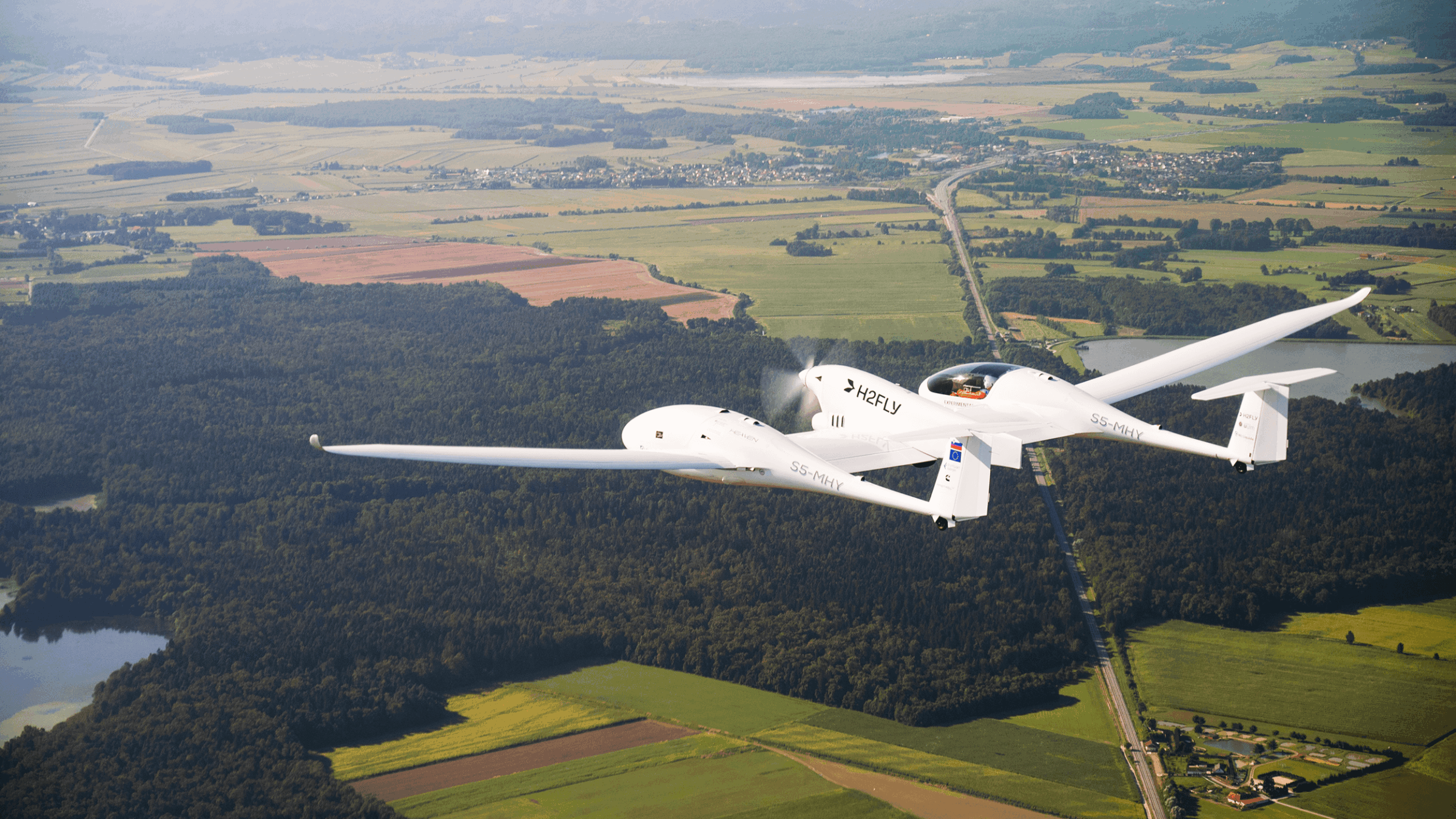
H2FLY’s piloted HY4 demonstrator aircraft is equipped with a hydrogen-electric fuel cell propulsion system. Photo credit: H2FLY/X.com
Rather than jumping directly to larger airliners, hydrogen aviation is increasingly taking shape from the bottom up: prove the technology on small aircraft, move into the regional market, and then see how far aircraft size can be pushed without giving away too much payload, range, or operating efficiency.
“What proved too optimistic was the idea that aviation could make that leap in one step,” Ralph Muller, CEO of H2FLY told Leeham News and Analysis (LNA).
“The lessons learned since then have led to a strategic shift: we see hydrogen aviation developing step by step, starting with smaller aircraft, where the technology, certification and infrastructure are less complex, and scaling up from there.”
The question is no longer simply whether hydrogen can make an aircraft fly. It is whether the propulsion system can be light and reliable enough, whether an airline can refuel the aircraft without lengthening its turnaround, and whether those equations continue to work as aircraft get bigger.