Air India bets on one of aviation’s greatest turnaround specialists: Who is Tewolde Gebremariam, the incoming CEO of Air India

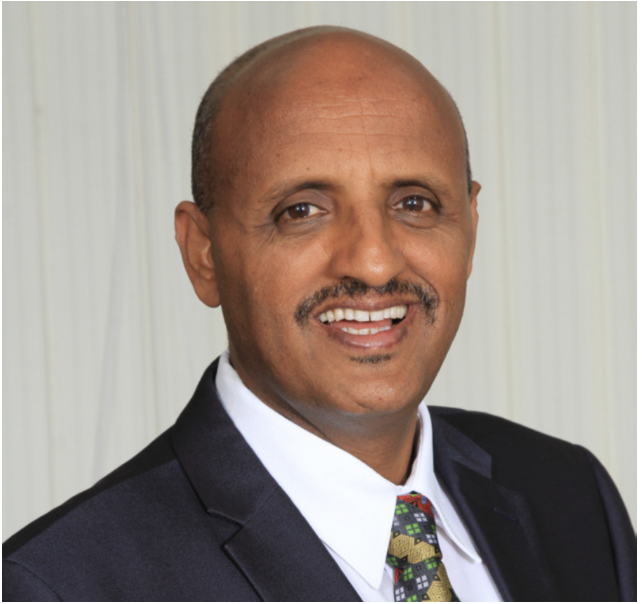
Air India has chosen one of the airline industry’s most respected executives to lead the next chapter of its transformation.
The Tata Group-owned airline today announced the appointment of Tewolde Gebremariam as its new Chief Executive Officer and Managing Director, succeeding Campbell Wilson. It is a leadership change that goes far beyond replacing one CEO with another. Instead, it is a statement of intent.
For the past four years, Air India has focused on rebuilding itself—ordering aircraft, merging airlines, refreshing its brand, integrating systems and attempting to repair decades of neglect. Those foundations have largely been laid. The next challenge is arguably the harder one: turning Air India into a consistently profitable, operationally reliable, globally competitive airline.
There are few people in the world of aviation with a better track record of doing precisely that than Tewolde Gebremariam.
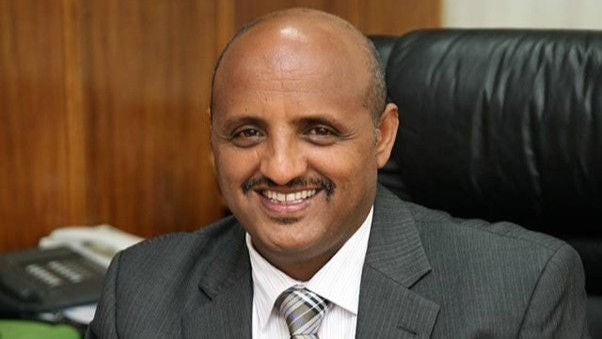
Air India’s Incoming CEO Tewolde Gebremariam
Why this appointment matters
When Tata Sons reacquired Air India in January 2022, the airline needed a builder.
Campbell Wilson, who arrived from Singapore Airlines, inherited an airline whose problems extended far beyond ageing aircraft. Customer confidence had eroded, technology systems barely spoke to one another, staff belonged to multiple organisations, products had stagnated, and profitability remained elusive.
Wilson’s tenure was about creating the platform. During his four years, Air India launched the Vihaan.AI transformation programme, unveiled an entirely new brand identity, announced aircraft orders for more than 470 aircraft, integrated Vistara into the full-service airline, combined Air India Express with AIX Connect, commenced fleet retrofits, introduced Premium Economy across much of its network and began rebuilding customer confidence.
That work, while still incomplete, has fundamentally altered the airline.
Tewolde arrives not to rescue Air India from collapse, but to execute perhaps the most ambitious airline growth strategy outside the Middle East.
From traffic officer to one of aviation’s most respected CEOs
Unlike many airline chief executives who arrive through consulting firms, finance or government, Tewolde literally grew up inside an airline. He joined Ethiopian Airlines in 1985 as a transportation agent – effectively an entry-level operational role.
Over nearly four decades, he worked through cargo handling, airport operations, regional management, commercial leadership and network planning before eventually becoming Executive Officer for Marketing & Sales in 2004. Two years later, he became Chief Operating Officer, responsible for flight operations, engineering, commercial activities and customer services.
When legendary Ethiopian Airlines CEO Girma Wake retired in 2011, Tewolde was the natural successor. The promotion proved transformational – not only for Ethiopian Airlines, but for African aviation itself.
The architect of the Ethiopian Airlines success story
To understand why Air India chose him, one needs to understand what Ethiopian Airlines looked like before his appointment. Although respected, Ethiopian remained primarily an African flag carrier with a modest international presence. By the time Tewolde stepped down in 2022, it had become something entirely different.
Under his leadership:
- Annual revenue increased from around US$1 billion to approximately US$4.5 billion
- Passenger traffic quadrupled from 3 million to 12 million annually before COVID
- Fleet strength expanded from 33 aircraft to over 130 aircraft
- The airline developed one of the world’s fastest-growing cargo businesses
- Addis Ababa became Africa’s largest intercontinental connecting hub
- Ethiopian expanded into over 125 destinations spanning Africa, Europe, Asia and the Americas
- The airline invested more than US$700 million in aviation infrastructure, including maintenance facilities, cargo terminals, flight simulators, training academies and what was then Africa’s largest airport hotel.
Those numbers are impressive. But the context makes them extraordinary.
Most African state-owned airlines have historically struggled with political interference, weak finances and inconsistent strategy. During the same period that several African flag carriers either collapsed or shrank dramatically, Ethiopian Airlines became the continent’s largest airline by virtually every meaningful metric. Perhaps more remarkably, it remained consistently profitable.
Vision 2025: thinking bigger than everyone else
One reason Tewolde is admired across aviation is that he never managed Ethiopian Airlines quarter-to-quarter. Instead, he worked to long-term strategic plans. His flagship initiative, Vision 2025, was unveiled in 2010 with objectives that many observers considered wildly optimistic.
The airline targeted dramatic expansion in fleet size, passenger traffic, cargo operations, maintenance capability and aviation training. Critics thought the numbers were unrealistic. Instead, Ethiopian achieved several of the targets years ahead of schedule. Rather than merely buying aircraft, the airline simultaneously invested in maintenance, pilot training, engineering capability, cargo infrastructure and airport facilities. That integrated approach meant Ethiopian could sustain growth without relying excessively on outside providers.
It is perhaps the strongest parallel with Air India today, which is simultaneously investing in fleet renewal, engineering, digital systems, lounges, training and customer experience. His handling of crises defined his leadership.
Great airline CEOs are ultimately judged not during good years, but during crises.
Tewolde faced two defining tests. The first came in March 2019, when Ethiopian Airlines Flight ET302, a Boeing 737 MAX, crashed shortly after take-off from Addis Ababa. The accident killed all 157 people on board and became one of the defining events in Boeing’s modern history. The crisis placed Ethiopian Airlines under unprecedented global scrutiny.
Industry observers generally praised Tewolde’s transparent communication with families, regulators and the media while continuing to maintain operational stability across the airline.
Barely a year later came COVID-19. While airlines worldwide parked fleets and reported historic losses, Ethiopian pivoted aggressively towards cargo. Passenger aircraft were rapidly converted into temporary freighters, allowing the airline to become one of the world’s largest transporters of medical supplies, PPE and later COVID vaccines. Instead of merely surviving the pandemic, Ethiopian emerged stronger than many competitors.
That ability to adapt rapidly during disruption is one reason Tewolde enjoys enormous credibility within global aviation.
A respected global aviation statesman
His influence extended well beyond Ethiopian Airlines. During his tenure, he served on the IATA Board of Governors, advised the United Nations Secretary-General on sustainable transport, held leadership positions within the African Airlines Association (AFRAA), and served on multiple corporate and public-sector boards in Ethiopia.
He also became one of the few airline CEOs regularly invited to shape global aviation policy rather than merely respond to it.
Why Air India wanted him
At first glance, Ethiopian Airlines and Air India appear very different. One is sort of Africa’s flag carrier; the other is India’s.
Yet their ambitions are remarkably similar. Both seek to build large intercontinental hub airlines connecting multiple continents through geographically advantageous locations.
Addis Ababa sits between Africa, Europe, Asia and the Middle East. Delhi sits between Europe, North America, Southeast Asia and Australia.
Ethiopian proved that a geographically well-positioned hub could compete successfully against airlines many times its size. Air India hopes to achieve something similar.
More importantly, Tewolde has experience managing exactly the issues Air India now faces:
- He has inducted dozens of aircraft annually.
- He has overseen rapid international network growth.
- He has built engineering capability alongside fleet expansion.
- He has expanded cargo operations.
- He has developed aviation academies to train thousands of employees.
And perhaps most importantly, he has demonstrated that sustained profitability is compatible with rapid expansion. Those are precisely the challenges awaiting Air India over the next decade.
The challenges ahead
Tewolde does not inherit an easy job. Air India continues to grapple with fleet shortages, delayed aircraft deliveries, operational reliability issues, product inconsistency, regulatory scrutiny following the AI171 tragedy, rising costs and increasingly intense competition from Gulf carriers and IndiGo.
Over the next five years, hundreds of new Airbus and Boeing aircraft will begin arriving. Retrofits must be completed. Service standards must improve and standardise.
The airline must continue integrating its culture after absorbing Vistara while simultaneously competing for premium travellers against Emirates, Qatar Airways, Singapore Airlines, Lufthansa and British Airways. Unlike Ethiopian Airlines in 2011, Air India will operate under relentless public and media scrutiny.
What do Air India Chairman and the incoming CEO have to say?
N. Chandrasekaran, Chairman of Tata Sons and Air India, said,
On behalf of the Board, I am delighted to welcome Tewolde to Air India. Having completed the initial phase of stabilization, integration, and fleet commitments under Campbell’s guidance, Air India is now entering a critical execution and expansion era. Tewolde’s track record in building one of the world’s most efficient and profitable airline groups makes him uniquely suited to lead Air India. His operational expertise, commitment to safety, and vision for hub development will be instrumental as we establish Air India as a premier global carrier and a source of national pride.
Tewolde Gebremariam, Incoming CEO & Managing Director, said,
It is a profound honour to be entrusted with leading Air India at such a historic moment in its journey. Air India carries an incredible legacy, and the opportunity to build a world-class global airline that reflects India’s extraordinary economic potential is uniquely exciting. I look forward to working closely with Chairman Chandrasekaran, the Board, our employees, and all government and industry partners to deliver exceptional operational reliability, warm Indian hospitality, and sustained long-term growth.
Bottomline
Air India’s appointment of Tewolde Gebremariam is much more than a routine CEO change. It is one of the most consequential leadership appointments in global aviation this year. Campbell Wilson’s legacy will likely be remembered for rebuilding Air India’s foundations after decades of decline. Tewolde’s mandate is different: convert those foundations into a world-class airline.
His record at Ethiopian Airlines suggests he understands how to scale an airline without losing operational focus, execute long-term strategy, and navigate crises while continuing to grow. That combination is exceptionally rare in commercial aviation.
The Tata Group has now entrusted the next phase of Air India’s transformation to the man who built Africa’s most successful airline. The expectations could scarcely be higher.
Welcome to India, Mr Gebremariam, and all the best at Air India.
Liked our articles and our efforts? Please pay an amount you are comfortable with; an amount you believe is the fair price for the content you have consumed. Please enter an amount in the box below and click on the button to pay; you can use Netbanking, Debit/Credit Cards, UPI, QR codes, or any Wallet to pay. Every contribution helps cover the cost of the content generated for your benefit.
(Important: to receive confirmation and details of your transaction, please enter a valid email address in the pop-up form that will appear after you click the ‘Pay Now’ button. For international transactions, use Paypal to process the transaction.)
We are not putting our articles behind any paywall where you are asked to pay before you read an article. We are asking you to pay after you have read the article if you are satisfied with the quality and our efforts.
More from Live from a Lounge