87
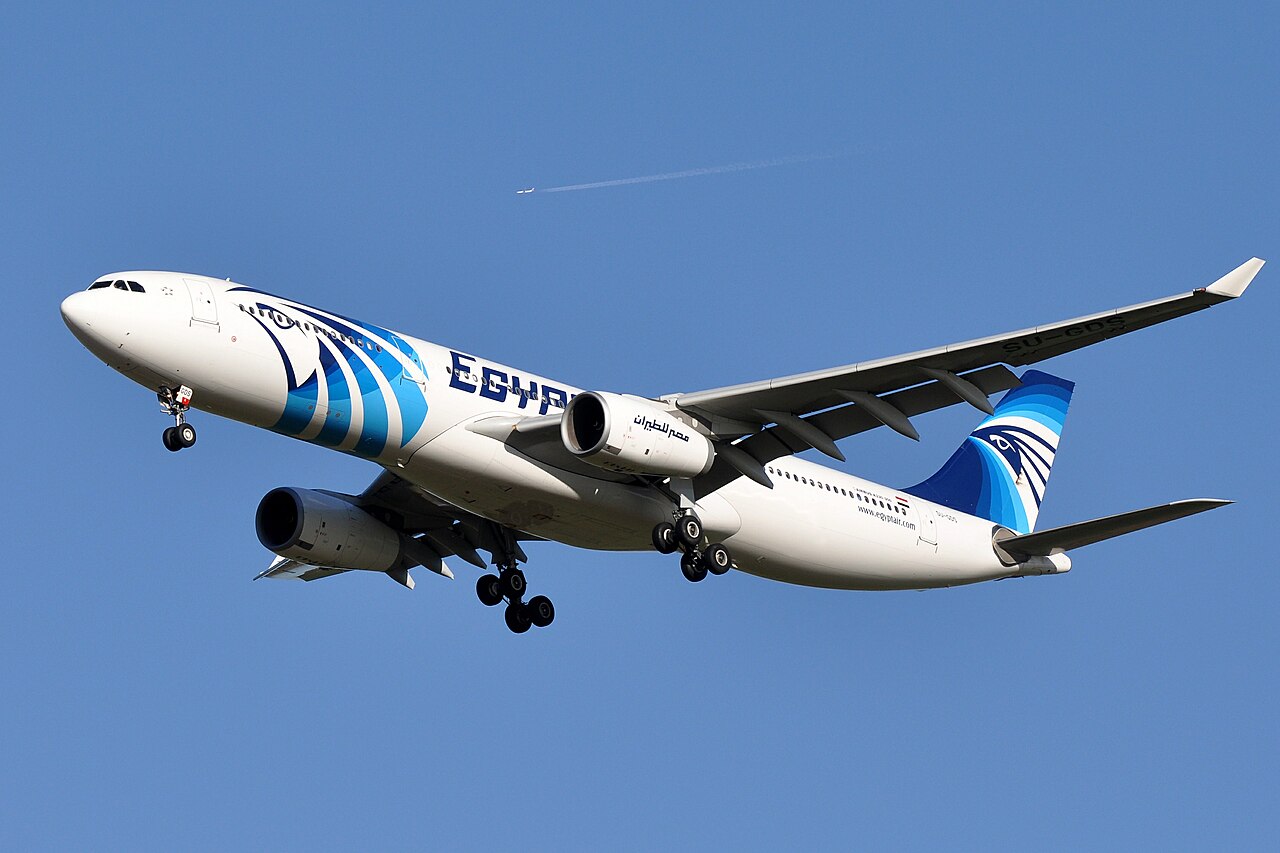
One of Africa’s oldest and largest airlines, EgyptAir has connected Egypt with the world for more than 90 years. From its huge hub at Cairo International Airport, the airline operates an extensive network stretching across Africa, Europe, the Middle East, Asia and North America.
For aviation enthusiasts, EgyptAir is particularly interesting at present. Its varied fleet still includes Boeing 737-800s, 777-300ERs, 787s and Airbus A330s, but a major modernisation is underway. New Airbus A350-900s and Boeing 737 MAX 8s have begun arriving, bringing new aircraft types and opening the possibility of significantly longer routes from Cairo.
Brief History of EgyptAir
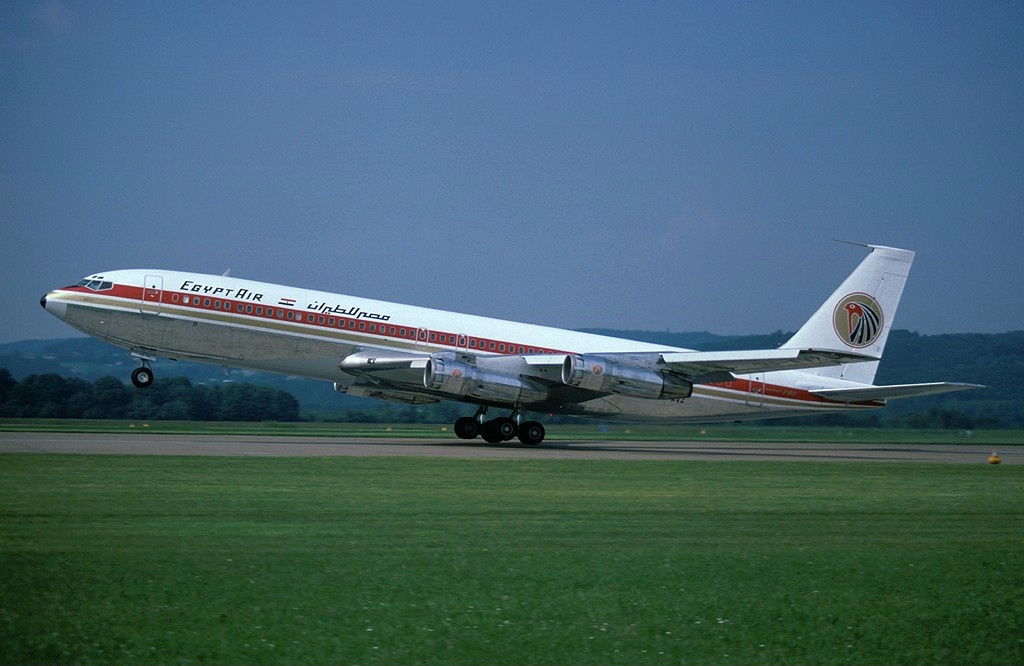
Eduard Marmet, CC BY-SA 3.0 GFDL 1.2, via Wikimedia Commons
EgyptAir can trace its history to 1932, when Misr Airwork was established, making it one of the world’s oldest continuously operating airlines. Commercial operations began the following year, initially linking Cairo with Alexandria before the network expanded around Egypt and beyond.
The airline underwent several name changes. Following the formation of the United Arab Republic between Egypt and Syria, it became United Arab Airlines (UAA) in 1960. The EgyptAir name was adopted in 1971.
Over the decades, EgyptAir has operated a fascinating assortment of aircraft. Early types included de Havilland aircraft, Douglas DC-3s and Vickers Viscounts, while the jet era brought types including the Comet, Boeing 707, Boeing 737, Airbus A300, Airbus A340 and Boeing 747.
Its location at the meeting point between Africa, Europe and Asia helped Cairo develop into an important connecting hub, with EgyptAir gradually building a network extending across all three regions.
Another significant milestone came in 2008, when EgyptAir joined Star Alliance, giving it much greater global connectivity through fellow member airlines.
Today, EgyptAir is part of the state-owned EgyptAir Holding Company, which encompasses passenger, cargo, maintenance and other aviation businesses.
Current Base and Operations
EgyptAir’s overwhelming focus is its principal hub at Cairo International Airport (CAI).
Cairo’s geographical position is central to EgyptAir’s business model. The airline can carry passengers between Europe, Africa, the Middle East and Asia while also serving Egypt’s substantial inbound tourism market.
EgyptAir operates domestic services linking Cairo with destinations including Luxor, Aswan, Hurghada and Sharm El Sheikh, alongside a large international network.
Africa is particularly important. EgyptAir serves numerous destinations across North, East, West and Central Africa, allowing Cairo to function as a connecting hub for passengers travelling between Africa and Europe, the Middle East and Asia.
Long-haul services extend to destinations in Asia and North America, while the arrival of the Airbus A350 is allowing the carrier to expand this part of its network considerably.
Important and Notable Routes
Some of EgyptAir’s most important international routes include:
- Cairo – London Heathrow
- Cairo – Paris Charles de Gaulle
- Cairo – Frankfurt
- Cairo – Dubai
- Cairo – Jeddah
- Cairo – New York JFK
- Cairo – Washington Dulles
- Cairo – Newark
- Cairo – Toronto
- Cairo – Tokyo Narita
However, 2026 has brought two particularly interesting additions.
EgyptAir launched new nonstop flights from Cairo to Los Angeles and Chicago O’Hare, both using the Airbus A350-900. The Los Angeles route is especially significant, demonstrating the range capabilities of EgyptAir’s new flagship and giving the airline a direct presence on the US West Coast. Both Los Angeles and Chicago are scheduled three times weekly during the 2026/27 winter season.
The A350 is also increasingly appearing on established routes. During summer 2026, scheduled destinations for the type have included New York JFK, London Heathrow, Paris Charles de Gaulle and Frankfurt.
Fleet Overview
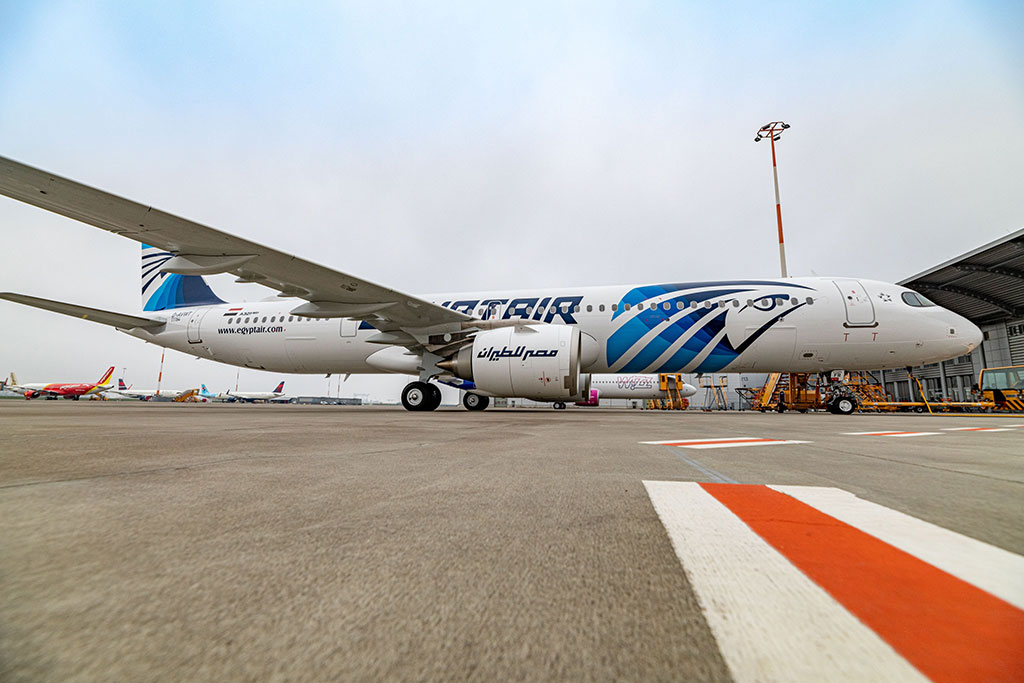
EgyptAir currently has one of the more varied fleets among major African airlines, mixing Airbus and Boeing narrowbody and widebody types.
The fleet is undergoing significant change. Older Boeing 737-800s, Airbus A330s and Boeing 777-300ERs remain important, while the newer A320neo, A321neo and Boeing 787-9 have already modernised significant parts of the operation.
Now another phase is underway with the arrival of the Airbus A350-900 and Boeing 737 MAX 8.
Main Passenger Fleet
EgyptAir’s passenger fleet includes:
| Aircraft Type | Approx. In Service |
|---|---|
| Airbus A320neo | 8 |
| Airbus A321neo | 7 |
| Airbus A330-200/300 | 7 |
| Airbus A350-900 | 3 (+13 on order) |
| Boeing 737-800 | 30 |
| Boeing 737 MAX 8 | 3 (+15 on order) |
| Boeing 777-300ER | 5 |
| Boeing 787-9 Dreamliner | 8 |
Fleet totals can fluctuate as aircraft enter and leave service, particularly during the current renewal programme.
The airline also has a dedicated cargo operation which includes converted Airbus A330-200P2F freighters.
Airline Livery
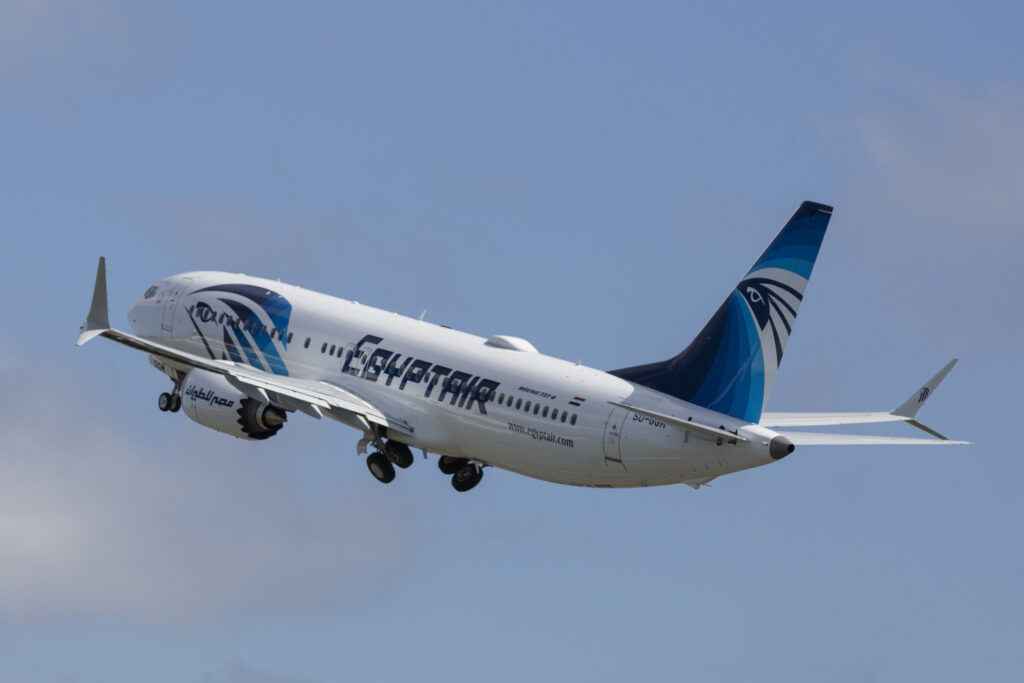
Boeing and EgyptAir announced today the Egyptian national airline took delivery of its first 737 MAX. The 737-8 is the first of 18 airplanes leased from SMBC Aviation Capital to be delivered and represents the first 737 MAX in Egypt.
EgyptAir has one of the most distinctive identities among African airlines.
Most aircraft feature a predominantly white fuselage, with large blue EGYPTAIR titles towards the front accompanied by the airline’s name in Arabic.
The most recognisable feature is undoubtedly the tail. This is painted dark blue and carries a stylised golden representation of Horus, the ancient Egyptian sky god traditionally depicted with the head of a falcon.
Blue engine nacelles complete the appearance on many aircraft.
EgyptAir introduced this version of its corporate identity in 2008, coinciding with the period in which it joined Star Alliance. Despite the arrival of several new aircraft generations since then, the basic scheme has remained largely unchanged.
For spotters, the combination of the dark blue tail, gold Horus emblem and blue engines makes an EgyptAir aircraft relatively easy to pick out on a busy airport ramp.
Special Liveries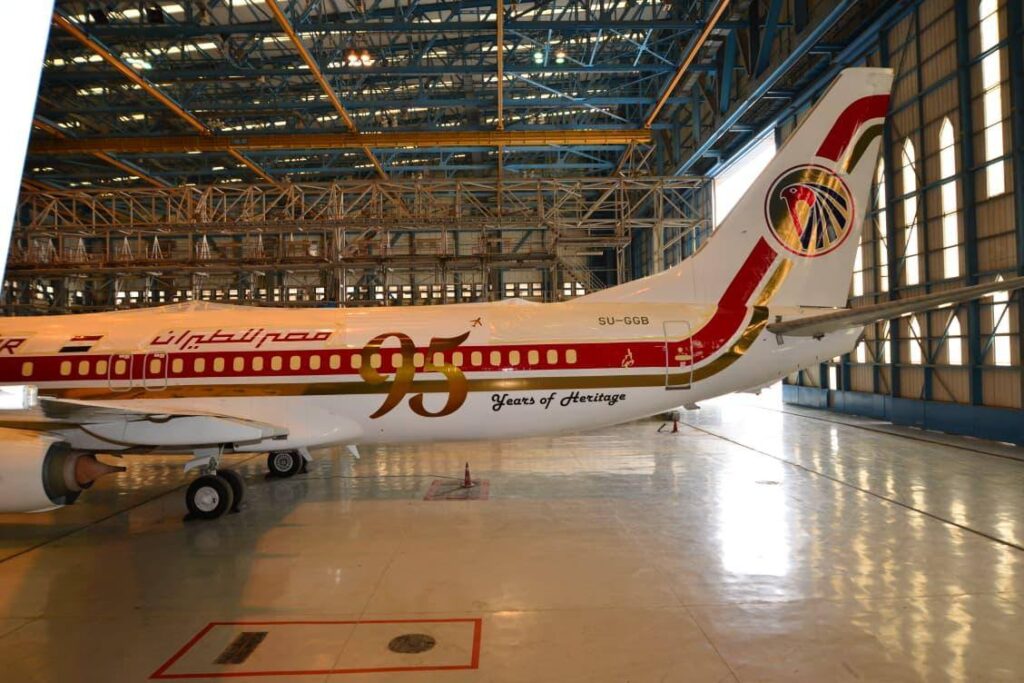
EgyptAir does not operate the huge variety of special liveries seen at some airlines, but there have nevertheless been some interesting variations.
As a member of Star Alliance, selected aircraft have appeared in the familiar Star Alliance scheme, featuring a predominantly white fuselage with large black alliance titles and the Star Alliance logo on the tail.
Recently the airline introduced a Boeing 737-800 in a retro 1970s/80s livery to mark the airline’s 95th anniversary, which was welcomed by enthusiasts.
The Future of EgyptAir
The next few years could represent one of the most significant periods of fleet change in EgyptAir’s modern history.
The airline is simultaneously modernising both its short- and long-haul fleets. The Boeing 737 MAX 8 will gradually assume a greater role on regional and medium-haul services, while the Airbus A350-900 is becoming the new flagship of the long-haul fleet.
The introduction of Los Angeles and Chicago provides an early indication of what that expansion could look like. With the A350 capable of operating substantially longer sectors than much of EgyptAir’s existing fleet, more distant destinations in North America and Asia become possible.
At the same time, the arrival of 18 737 MAX 8s represents an equally important renewal at the other end of the network, replacing older aircraft with more efficient equipment.
Title image: Eric Salard, CC BY-SA 2.0