What does the public expect from sustainable aviation? According to our latest Aviation Index, the answer is clear: action, not compromise. Now in its ninth year, the annual research is one of the UK’s longest-running trackers of public attitudes towards aviation.
This year’s findings suggest people want the industry to reduce emissions through innovation, efficiency and smarter operations, while continuing to deliver the connectivity and economic benefits they value the most.
The public want progress, not trade-offs
More than half (55%) of respondents say reducing aviation emissions should remain a priority, but they increasingly favour practical solutions over limiting demand for flying. People are more supportive of improving efficiency, embracing innovation and advancing technology than asking passengers to fly less.
The report also shows that the public expects organisations – not individuals – to lead the way. Nearly a third (31%) believe the UK Government has the greatest responsibility for reducing aviation’s environmental impact, followed by airlines (24%) and organisations such as NATS and the Civil Aviation Authority (22%). Just 4% say the primary responsibility lies with passengers.
The message is clear: the public expects the aviation industry to deliver meaningful emissions reductions through innovation and collaboration.

Turning ambition into action
Many of the solutions already exist. While sustainable aviation fuel and next-generation aircraft will be vital in the years ahead, emissions can be reduced today by making better use of the UK’s airspace.
Every unnecessary mile flown burns more fuel. By modernising airspace and using advanced technology to enable more direct, efficient flight paths, aircraft can reduce emissions while improving resilience and reducing delays.
At NATS, we’re helping make this happen through smarter air traffic management, collaborative decision-making and continued investment in technology. Since 2007, these improvements have enabled millions of tonnes of carbon dioxide savings, with even greater benefits to come as airspace modernisation progresses.

Behavioural change has its limits
The research also highlights an important challenge.
While many people are willing to make environmentally conscious choices, there are clear limits to the changes they are prepared to make.
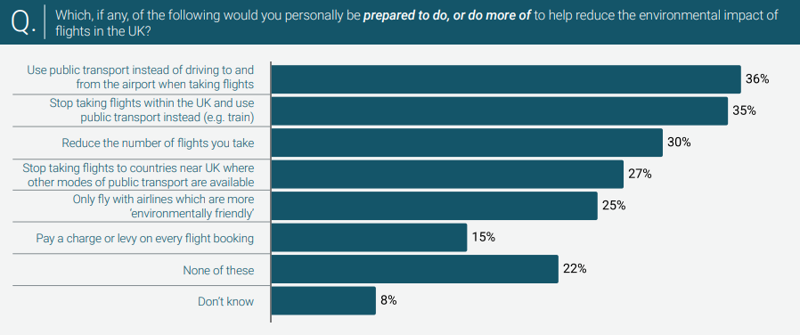
36% use public transport to get to the airport, 35% would choose rail over domestic flights where practical, and 30% would reduce the number of flights they take. However, more than one in five respondents (22%) say they would not be willing to take any of the actions presented.
This suggests that, while individuals are prepared to contribute where they can, there is stronger support for improvements that reduce emissions across the entire aviation network, rather than relying solely on changes in personal behaviour.
A shared responsibility
Reaching net zero aviation will require collaboration across government, regulators and the aviation industry. There is no single solution – sustainable aviation fuels, new aircraft technologies, smarter operations and modernised airspace all have a role to play.