Welcome to On the Menu, where we explore what makes a bar’s menu unique, intriguing, and all-around delicious.
Ignacio “Nacho” Jimenez has nothing against classic Margaritas. But he’s noticed that people rarely order them at Superbueno, his award-winning Mexican American cocktail bar in New York City’s East Village.
“In many Mexican bars and restaurants, your Margarita is going to be one of your three most popular drinks,” he says. At Superbueno, it barely cracks the top 10. “That shows you the kind of openness that people come in with. They are willing to try something new.”
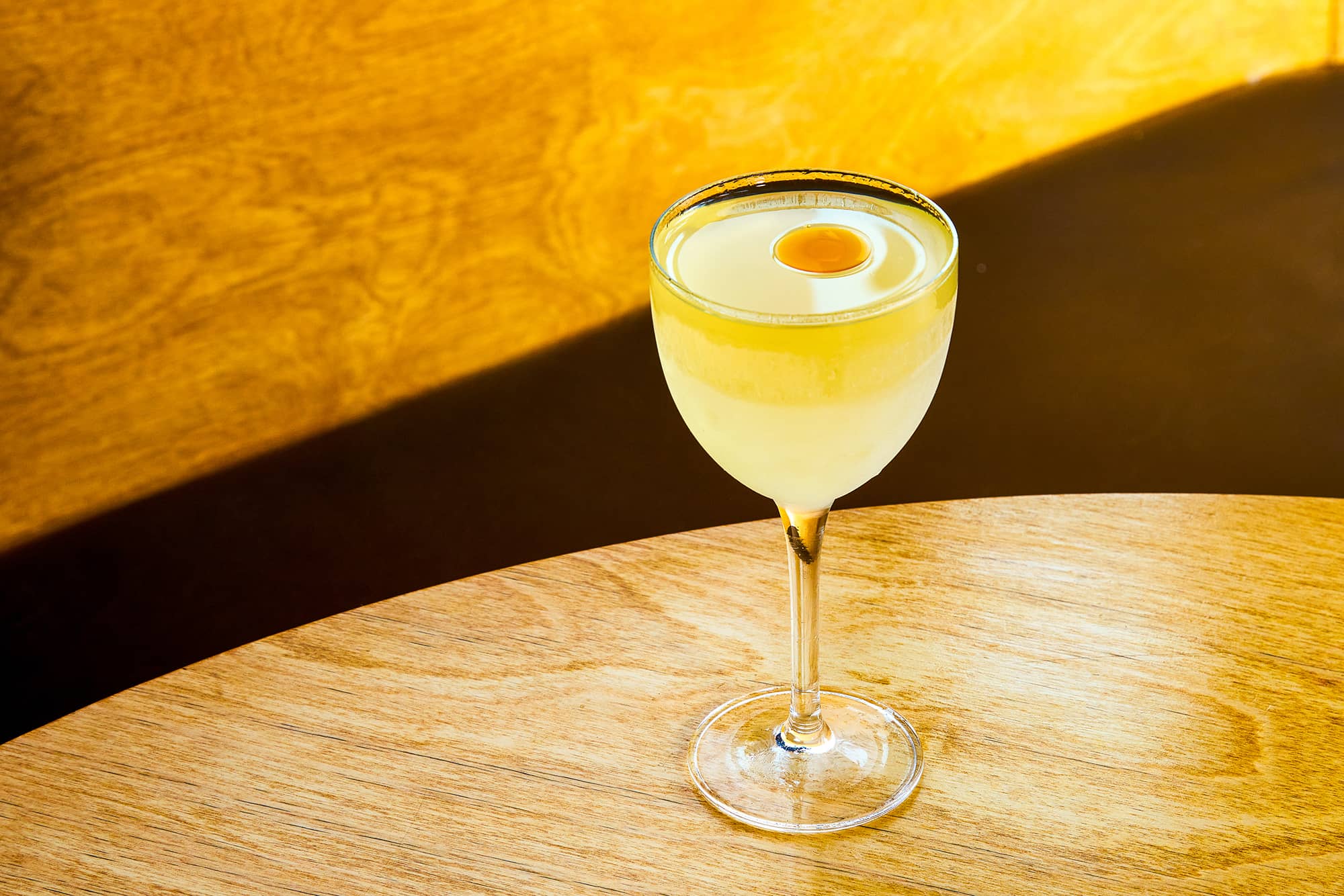
It’s a testament to the appeal of the rest of the menu, too. The inventive list at Superbueno incorporates influences from the classic cocktail renaissance of New York in the 2000s, as well as flavors and traditions from Jimenez’s native Mexico. There’s a Negroni riff with mole-fat-washed mezcal, a silky Roasted Corn Sour, and a Green Mango Martini finished with chili oil, among others.
Despite the drinks’ sophistication, the bar is distinctly, unapologetically fun. That open-hearted energy has made it a favorite of far-flung cocktail pilgrims as well as locals looking to kick back with birria grilled cheeses and mezcal slushies.
Since opening in 2023, Superbueno has been named to Imbibe’s 2024 Imbibe 75, won a James Beard Award, and topped multiple world’s best lists. “It’s been an amazing experience, and really humbling,” says head bartender Kip Moffitt.
We caught up with Jimenez and Moffitt to learn how they develop their menu, when it’s time to pivot to give overlooked drinks their due, and more.
Imbibe: How would you describe your overall approach to the menu?
Jimenez: When you start designing the menu of your bar, you start with a concept. Both of our training and backgrounds were heavily influenced by the renaissance of classic cocktails. We were both bartenders who came up around then, in 2006 or 2007. We are very much influenced by that time period.
We wanted to have that canvas and a plethora of cocktail classics that also have some sort of flavors of Mexico. We wanted to pay homage to ingredients and dishes, and the ceremony surrounding certain drinks. You never know how it’s going to translate. Some things you do just by instinct, without having the certainty of how these drinks will take off.
Moffitt: We have a staff that is encouraged to be themselves more than anywhere I’ve ever worked in my life. It’s an amazing energy. A lot of these people came here when they were little, or they don’t have a lot of opportunities to go home, and they have memories of things that they want to see on the menu as well. It’s really fun to ask these questions about what they would like to see, and we’re able to recreate things from their memories as well.

One of the drinks that has particularly resonated with guests is Vodka y Soda. How did that drink come about?
Jimenez: When we developed Vodka y Soda, we knew we were onto something special. I always wanted to do an homage to guava, an ingredient that’s normally seen in cocktail menus in the form of purees. I wanted to use it in the form of a highball, something like a Paloma: refreshing and thirst-quenching.
At the beginning, I remember playing around with the idea of calling it a Guava Highball. Masa [Urushido, owner of Katana Kitten] suggested the name Vodka y Soda. When he tried it, he said, “What’s the name?” and I said, “Guava Highball.” And he’s like. “Hm. What is in it?” This is the process always with him. When we present drinks to Masa, he asks, “What’s in it?” before he says anything else. You’re never going to get the reaction, “Oh, this is amazing!” [laughs].
We told him it’s vodka, it’s infused with this and that. He said, “What if you call it a Vodka y Soda?” And I knew that was the name.
How important are cocktail names when you’re writing a menu?
Jimenez: I don’t think I have ever really spoken about the importance of names on cocktail menus. Fifty percent of the success of a cocktail is how you sell it.
We might understand what the ingredients are and how those ingredients translate into a drink. But you have to expect that 90 percent of the people who come into your bar or restaurant don’t have that experience, and you want to make it easy for them to order.
One thing Kip and I always talk about is, I want to provide people an understanding of what style of drink they’re drinking and what flavor profile they are expecting. It’s on the menu and in a brief, two-sentence description that we’re giving.
How has the menu evolved since you opened?
Jimenez: When we started Superbueno, I didn’t want to make a long menu. I don’t want to have to look through pages and pages to find what drink I’m going to have—I’m tired!
So, at the beginning, we said, “We just want to create 10 bangers.” I just wanted to have 10 drinks that were absolutely amazing. But with that in mind, we had a huge task in hand. Every style of drink is not for everyone, so we want to make sure that each drink we create is something that different people could respond to.
We recently changed it, though. We have our liquor list and a happy hour on the menu now, so there are some more pages to go through.
What brought about that change?
Jimenez: Some of it is reading people, and some of it is making adjustments. Since we started the menu, Kip has been giving the program a more seasonal approach.
How do you incorporate seasonality?
Moffitt: Our menu is all fresh ingredients. So, for the Salted Plum and Tamarind Milk Punch: sometimes, the plums aren’t to our liking, or there are seasons in New York when we can’t get plums at all. Then we’ll switch it—we make it a horchata milk punch instead.
We also make the marmalade for the Breakfast Margarita. The marmalade is really fun because I get to deep-dive into the hundreds of different mole preparations that come from all over. There’s pre-Hispanic and there’s pre-colonial ones, there are all types of flavors.
The tepache is also seasonal. It’s delicious, and it’s different flavors than most people expect from a tepache. They’re excited when they see it’s passion fruit and ginger and sour orange, and not only pineapples and spices.
You recently started offering the tepache in two different formats on the menu, too. Why?
Moffitt: We weren’t giving enough people the opportunity to try it because originally it was in a large format. We were doing it for four people, and then we started doing it for two and four. On the menu before last, we turned it into a highball also. Now we have more people who are able to try it. It’s probably our most popular drink during happy hour.
There’s a lot of joy and playfulness to how the menu presents these very thoughtful, complex drinks. Is that sense of play important to you?
Jimenez: In Mexican culture, we never take ourselves too seriously—even to a fault, at times. Particularly surrounding imbibing, there’s always a celebratory aspect to it. It’s always laid-back, always fun. We want to continue to highlight that and to reflect that in our drinks and our names.
Sometimes, it’s not about standing there with a 15-minute monologue where I know I’m going to lose someone. It’s about, can I provide a couple of things that can spark a question or some kind of curiosity. Then I leave it up to them.