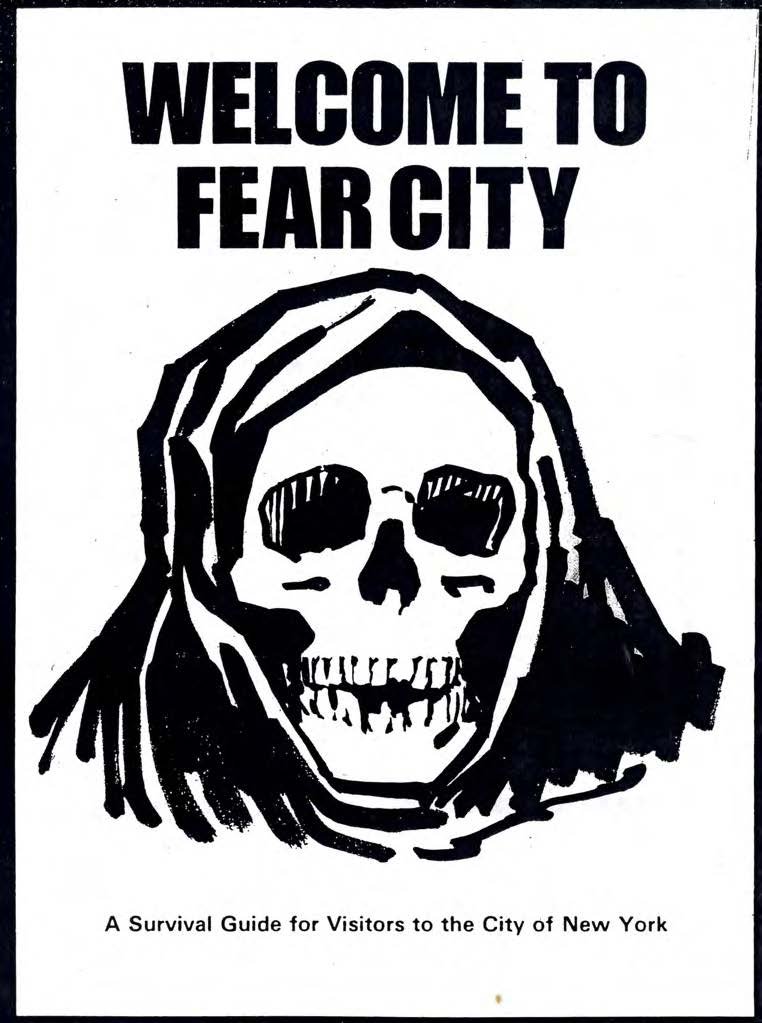
The cover image was too compelling to ignore, and its contents were even grimmer than expected. This “Survival Guide” contains nine “tips” for, well, surviving a vacation in the Big Apple. As you can see when you click inside the pamphlet, the tips are ominous, foreboding warnings such as “do not walk,” “avoid public transportation,” “Remain in Manhattan,” and “stay off the streets after 6 P.M.”
I was baffled as to who would create this brand of menacing travel brochure, but the reasons for its existence are clearly stated in the pamphlet: “By the time you read this, the number of public safety personnel available to protect residents and visitors may already have been still further reduced. Under those circumstances, the best advice we can give you is this: Until things change, stay away from New York City if you possibly can.”
Here’s some back story.
The fiscal crisis in 1975 led New York City to enact extreme budget cuts; city workers experienced reductions in salaries and pensions, and more than 50,000 people (one-sixth of the workforce) were laid off. On July 1, 1975, 5,000 police officers, many in radio-car patrols, were furloughed, along with 1,600 firefighters—20% of the city’s entire department, 7,000 teachers, and many highway, sanitation and bridge workers. Initially, some unions reacted strongly. Highway workers picketed during rush hours, teachers went on strike for one week at the beginning of the school year, and sanitation workers left 48,000 tons of garbage on the street for two days. There are also accounts of bridge workers walking off the job with three drawbridges still raised.