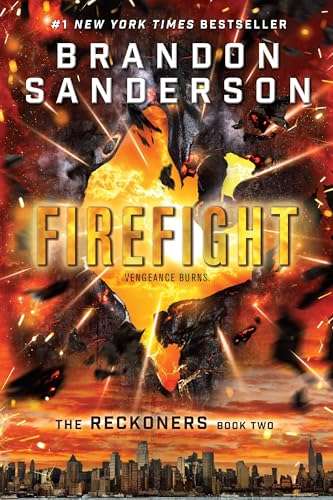
Book Review: Firefight by Brandon Sanderson
Introduction
“Firefight” is the second book in Brandon Sanderson’s acclaimed “Reckoners” series, building upon the universe established in its predecessor, “Steelheart.” This novel continues the journey of David Charleston, a determined young man who has committed himself to combating the tyrannical superhumans known as Epics. Sanderson’s ability to expand his universe through intricate world-building, layered characters, and profound themes makes “Firefight” a captivating read. The struggle of ordinary humans against godlike powers resonates deeply, prompting readers to reflect on their own moral quandaries. This review will delve into the storyline, character dynamics, thematic elements, writing style, and provide a critical analysis of “Firefight,” highlighting its cultural relevance in contemporary literature.
Plot Summary
“Firefight” picks up in the aftermath of “Steelheart,” where David and his team of Reckoners have relocated to Babilar, a vibrant yet perilous city governed by the enigmatic Epic known as Regalia. While the stakes established in the first novel set a solid foundation, “Firefight” significantly complicates them by introducing new challenges that test both David’s resolve and the team’s dynamics. David grapples with his feelings for Megan, creating an internal conflict that adds emotional depth to the plot. This complexity is paramount as it challenges readers to engage with the story on a deeper level.
The narrative unfolds through a series of gripping encounters with various Epics, each characterized by powers intricately tied to their personalities and moral alignments. Sanderson crafts action-packed sequences that maintain reader engagement, seamlessly blending moments of tension with character-driven storytelling. Ultimately, the Reckoners aim to uncover the true nature of Epics, leading to revelations that challenge David’s understanding of good and evil. This sense of moral ambiguity distinguishes “Firefight,” complicating the straightforward battle between heroes and villains often depicted in superhero narratives. Through these developments, Sanderson invites readers to reflect on the nature of authority and resistance, both in the fictional realm and in contemporary society.
Character Analysis
David Charleston’s evolution in “Firefight” is significant, as he transforms from a revenge-driven youth to a more complex character grappling with moral dilemmas and personal vendettas. This internal evolution raises poignant questions about the nature of revenge: does it truly bring closure, or does it perpetuate a cycle of violence? Through David’s interactions with Megan, whose character development is equally compelling, the narrative underscores the emotional weight of their mission. Their relationship deepens as they confront the realities of their fight against oppression, allowing readers to empathize with their struggles.
Regalia, the new Epic, serves as a masterfully crafted character representing the duality of power. Her charm and charisma draw David in, yet her unpredictable nature poses a constant threat to the Reckoners. This duality prompts reflection: how often do we find ourselves captivated by individuals exhibiting both benevolent and malevolent traits? Sanderson excels at portraying characters with shades of gray, compelling readers to question their allegiances. The supporting cast, including characters like Prof and Tia, is also fleshed out, each facing personal struggles that contribute to the overarching narrative. This richness in character development enhances reader investment, elevating the story beyond a mere battle of good versus evil.
Thematic Exploration
“Firefight” engages with profound themes of power, morality, and identity. Sanderson examines the corrupting influence of power, illustrating how even the most well-meaning individuals can be swayed by their abilities. Furthermore, the nuanced portrayal of Epics reveals that their powers do not inherently dictate their moral standing; Regalia, for example, challenges the notion that all Epics are malevolent. This invites readers to reconsider their preconceptions about heroes and villains, emphasizing that moral dilemmas are rarely black and white.
The exploration of vengeance and forgiveness is central to David’s journey, spotlighting the blurred lines between heroism and villainy. Sanderson’s choice to explore these themes through a young protagonist like David resonates with many readers who grapple with similar questions of identity and moral responsibility. The theme of identity plays a pivotal role as David’s struggles with his past reflect the internal conflicts faced by others in crisis. Sanderson’s exploration of sacrifice further emphasizes what it truly means to be a hero, as characters grapple with difficult choices often bearing great personal costs. This deep engagement with ethical dilemmas encourages readers to reflect on their values and the broader implications of their actions within society.
Historical Context
The backdrop of “Firefight” offers critical insight for understanding its narrative depth. Set against the aftermath of a significant event known as Calamity, which bestowed superhuman abilities upon select individuals, Sanderson provides a lens to examine contemporary societal issues. The themes of power, corruption, and rebellion resonate strongly in today’s world where authority figures often misuse their influence. The Reckoners’ struggle against oppression parallels real-life movements challenging systemic injustice, making the narrative feel relatable and urgent.
Babilar itself transforms into a character, enriched by these historical contexts. Its vibrant yet treacherous streets reflect societal decay stemming from unchecked power. Sanderson’s commentary on social structures invites readers to contemplate their realities, enhancing the book’s cultural relevance. The depiction of Babilar not only showcases Sanderson’s adept world-building but also critiques modern governance and the complexities present when authority is concentrated in the hands of a few.
Literary Devices
In “Firefight,” Sanderson employs various literary devices that enhance the narrative. His skillful use of foreshadowing permeates the text, creating tension that prompts readers to anticipate unfolding action and character fates. This technique enriches suspense and mirrors the unpredictability of David’s journey, which is fraught with unexpected twists. Symbolism is intricately woven throughout, as each Epic can be seen as embodying different philosophical ideals, further informing the reader’s understanding of the themes. Regalia, for example, symbolizes the seductive allure of power, paralleling real-world figures who wield charisma amid authoritarian tendencies.
The pacing of the narrative retains momentum through fast-paced action sequences interspersed with quieter, introspective character moments, ensuring that readers remain engaged while allowing for emotional resonance. The dialogue is sharp and impactful, effectively reflecting the personalities of the characters whilst propelling the plot forward. Sanderson’s vivid descriptions immerse readers in a richly imagined world, inviting them to experience Babilar’s intricacies and the lurking dangers. The combination of these literary techniques solidifies Sanderson’s reputation as a master storyteller, enabling him to create a compelling narrative that captivates and entertains.
Critical Evaluation
“Firefight” exemplifies Brandon Sanderson’s mastery in crafting intricate plots and dynamic characters. While a few pacing issues arise, particularly during moments where action overshadows character development, the overall narrative remains engaging and thought-provoking. Sanderson successfully balances humor with gravity, making his characters relatable and their struggles deeply resonant. This blend of emotional depth and thrilling action enhances the book’s appeal to a wide variety of readers.
The strengths in character development and thematic exploration outweigh any pacing shortcomings, allowing “Firefight” to thrive as a sequel that both entertains and provokes reflection on heavier topics. The continuation of David’s journey, complemented by the introduction of captivating new characters, ensures readers remain invested in the series while eagerly anticipating future installments. In a genre often overshadowed by simplistic good versus evil tropes, Sanderson’s nuanced storytelling offers a refreshing perspective that encourages critical engagement with the text.
Conclusion
In “Firefight,” Brandon Sanderson adeptly expands the universe of the Reckoners, delivering a narrative rich with character arcs and profound themes that resonate long after the last page is turned. With its exploration of morality, identity, and the nature of power, the novel invites readers to reflect on contemporary societal issues within a thrilling action framework. Sanderson’s storytelling prowess and world-building secure his position as a master of modern fantasy, leaving readers eager for the next chapter in David Charleston’s journey. “Firefight” not only advances the overarching narrative but solidifies the Reckoners series as a significant contribution to the genre, blending exciting adventure with meaningful discourse. As readers close the book, they are left with lingering questions about power, identity, and the moral dilemmas that shape our world, ensuring that the impact of “Firefight” extends far beyond its pages.