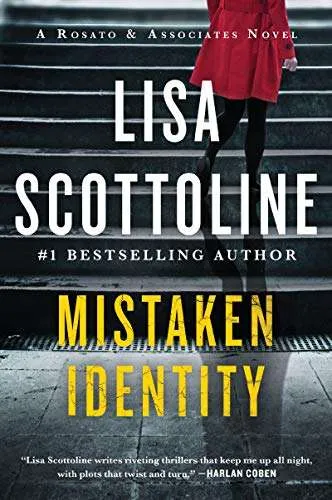
Review of “Mistaken Identity” by Lisa Scottoline
Introduction
“Mistaken Identity,” a gripping legal thriller by Lisa Scottoline, delves into the complex world of familial ties, moral dilemmas, and the harsh realities of the judicial system. Scottoline, a celebrated author known for her ability to weave intricate plots with strong female protagonists, delivers a compelling narrative that engages readers both emotionally and intellectually. The book serves as a poignant reminder of the fragility of identity, the essence of justice, and the moral quandaries that can arise within the confines of the law.
Setting the stage for this intense legal drama, Scottoline introduces us to Rose, a tenacious attorney whose life is turned upside down when she discovers that her next case involves a woman accused of a heinous crime she insists she did not commit. As the story unfolds, readers are pulled into a labyrinth of legal challenges, ethical dilemmas, and the profound impact of public perception on justice, all of which make for a riveting reading experience. The question arises: how does Scottoline ensure that readers are not only entertained but also provoked to think critically about the issues at hand? The answer lies in her sharp character portrayals and the relentless pacing of the narrative that mirrors the urgency of legal battles.
Plot Summary
The narrative begins with Rose, a dedicated attorney who prides herself on her unwavering commitment to justice. However, her world is shaken when she takes on the defense of a woman accused of a brutal crime. From the onset, Scottoline expertly establishes the stakes, drawing readers into a story that is not simply a battle in the courtroom but a deeply personal journey for Rose. The notion of personal investment in a case raises an important question: how does one navigate professional responsibilities when they become intertwined with personal beliefs and emotions? This complexity enhances the narrative, revealing Rose’s vulnerability as she fights for her client’s innocence.
As Rose navigates the legal system, Scottoline employs a series of twists and turns that keep readers on the edge of their seats. The narrative is carefully paced, with tension building as the trial approaches. Each revelation raises the stakes higher, forcing Rose to confront uncomfortable truths about her own biases and the limitations of the justice system. Each twist not only propels the plot but also challenges the reader to question how well they understand the notion of truth within the legal framework. The climax of the story is a powerful moment that challenges not only the characters but also the readers to reflect on their perceptions of truth, justice, and identity.
Scottoline’s ability to craft suspenseful plots is on full display in “Mistaken Identity.” The unpredictability of each twist ensures that readers remain engaged and invested in the outcome. Moreover, the author skillfully ties the narrative’s resolution back to the themes of identity and perception, providing a satisfying conclusion that resonates with the moral complexities woven throughout the story.
Character Analysis
One of Scottoline’s strengths lies in her ability to create multidimensional characters that resonate with readers. Rose serves as the focal point of the narrative—a strong yet vulnerable attorney whose journey is as much about personal growth as it is about legal defense. Why is it essential to portray a protagonist with both strengths and flaws? This duality makes her relatable, as readers can see aspects of themselves in her struggles to balance professional obligations with personal integrity. Each challenge Rose faces catalyzes her evolution, making her journey a microcosm of the broader struggles inherent in the pursuit of justice.
The character of the accused woman is equally compelling. Through her backstory, Scottoline explores the complexities of societal judgment and the theme of mistaken identity. By presenting the accused not merely as a victim but as a richly developed character, Scottoline invites readers to empathize with her plight, which mirrors the real-world issues surrounding wrongful convictions. This narrative choice illuminates how societal biases can cloud judgments and increase the stakes of the legal system, emphasizing the consequences of hasty assumptions.
Supporting characters in the narrative serve as critical foils to Rose, each representing different aspects of the legal system and moral dilemmas. For instance, Rose’s colleagues exhibit a spectrum of beliefs about justice, from idealism to cynicism. How do these differing perspectives shape the narrative’s exploration of justice? They provide a broader context that highlights the systemic issues within the legal framework. Whether it be Rose’s colleagues who offer contrasting views on the case or family members who embody the personal stakes involved, these characters enrich the narrative and reinforce the themes of loyalty, justice, and the search for truth.
Thematic Exploration
“Mistaken Identity” is rich with themes that provoke thought and discussion. At its core, the novel explores the dichotomy of justice versus injustice. Through Rose’s experiences, readers witness the flaws within the legal system and how quickly innocence can be overshadowed by societal prejudice and media frenzy. This exploration of systemic issues invites readers to question how justice is often a subjective construct rather than an absolute truth, and how individual biases can shape outcomes in unpredictable ways.
The theme of identity and perception is another significant aspect of the story. Scottoline challenges readers to reflect on how individuals are often judged based on appearances and preconceived notions. The exploration of identity prompts vital questions about societal constructs: Do labels define us, or do we have the power to reshape them? This inquiry raises important questions about the nature of identity in a world quick to label and categorize individuals based on limited information.
Familial bonds play an essential role in the narrative as well. Rose’s relationships with her family underscore the significance of loyalty and support in a tumultuous time. As she balances her professional responsibilities with her personal life, the novel illustrates the complexities of familial obligations and the emotional toll that professional dilemmas can take on personal relationships. Is there a cost to pursuing justice at the expense of personal connections? The novel leaves readers contemplating the sacrifices made in the name of duty.
Historical Context
Scottoline’s writing is often influenced by real-world events and legal precedents, which adds depth and authenticity to her stories. “Mistaken Identity” resonates with contemporary issues surrounding wrongful convictions, media influence, and public perception of justice. The book invites readers to reflect on recent high-profile cases that highlight the fragility of the judicial system, making the themes of the narrative both timely and relevant. Why is this historical context significant for the reader? It grounds the story in reality, allowing for a more profound connection between the narrative and the societal issues it addresses.
The exploration of these themes extends beyond the pages of the book, prompting discussions on the intersection of law and ethics in modern society. By drawing from real-world issues, Scottoline enhances the urgency of her narrative and ensures that her story resonates with readers in a meaningful way.
Literary Devices
Scottoline employs a range of literary devices that enhance the reading experience and contribute to the overall impact of the narrative. The narrative structure, characterized by alternating perspectives and flashbacks, allows readers to piece together the truth gradually, mimicking the investigative process that Rose undertakes. This structure not only maintains suspense but also enriches the characterization, offering insights into various viewpoints and motivations. How does this structural choice affect reader engagement? It fosters deeper investment in the outcome, as readers are actively involved in uncovering the layers of truth.
Foreshadowing is another effective device used throughout the narrative. The subtle hints sprinkled across the story build tension and anticipation, culminating in revelations that are both surprising and satisfying. This technique ensures that readers remain engaged, eagerly awaiting each twist and turn. Scottoline’s adept use of pacing and tension keeps the reader hooked, making it difficult to put the book down.
Symbolism also plays a crucial role in “Mistaken Identity.” The title itself serves as a powerful symbol of the overarching theme of identity, emphasizing the complexities of human nature and societal expectations. Scottoline’s use of symbolism enhances the thematic depth of the narrative, encouraging readers to reflect on their own perceptions of identity and justice.
Critical Evaluation
Lisa Scottoline has crafted a well-paced and thought-provoking thriller that effectively combines suspense with moral inquiry. Her writing style is both engaging and accessible, making complex legal terminologies understandable for a broad audience. The book excels in character development, presenting well-rounded individuals whose motivations are clear and relatable. The plot is intricate yet coherent, maintaining a steady tension that compels readers to stay invested until the final page.
While the narrative is compelling, some readers may find certain plot twists somewhat predictable, detracting from the element of surprise. Additionally, the pacing towards the middle may lag as the story delves deeper into legal intricacies that, while fascinating, can momentarily shift focus away from the central conflict. Nevertheless, these are minor criticisms in the context of an otherwise engaging narrative. It is important to note that even predictable moments can serve to reinforce themes and provide emotional resonance, showcasing Scottoline’s skill in weaving complex narratives.
Conclusion
“Mistaken Identity” by Lisa Scottoline is not merely a legal thriller; it is a profound exploration of identity, justice, and the human condition. Through powerful characters and an intricate plot, Scottoline challenges readers to confront their own perceptions of truth and morality. The novel serves as a reminder of the complexities that lie within the judicial system and the importance of empathy in understanding the lives of others.
In a world where appearance often dictates judgment, “Mistaken Identity” offers a timely reflection on the nature of justice and the myriad ways it can be subverted. Readers are left contemplating not only the outcome of the trial but also the broader implications of identity and ethics in their own lives. Perhaps the most valuable takeaway from Scottoline’s work is this: the pursuit of justice is fraught with challenges and moral ambiguity, and it is our responsibility to seek understanding amidst uncertainty. Scottoline has once again proven her prowess as a storyteller, making this book a must-read for fans of the genre and newcomers alike.