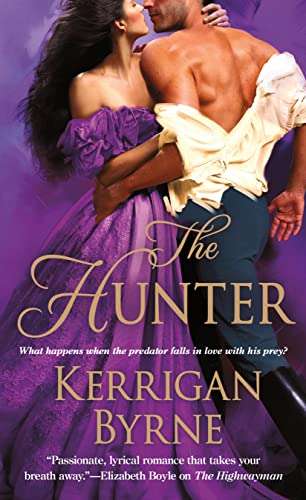
Book Review: The Hunter by Kerrigan Byrne
Kerrigan Byrne’s “The Hunter” elegantly entwines romance with thrilling adventure, showcasing her expertise in crafting captivating narratives infused with rich historical detail and complex characters. The novel unfolds against the backdrop of a Victorian society rife with secrets and moral dilemmas, where Byrne weaves a tale that excites and resonates emotionally with readers. The masterful combination of tension, character development, and thematic depth makes “The Hunter” a standout in the historical romance genre.
Storyline Overview
At the heart of “The Hunter” lies an intricate plot that follows the journey of Emmeline, a fiercely independent woman whose life is thrust into peril following a tragic incident. The story begins with an immediate sense of urgency as Emmeline becomes entangled with Thorn, a dashing yet enigmatic hunter. Their paths cross during a series of dark and dangerous events, forcing them into alliances fraught with mistrust and tension. As they navigate the treacherous waters of their respective pasts, readers are drawn into a world filled with danger, deception, and unexpected twists.
Byrne artfully builds tension through a series of well-placed plot twists, making each chapter essential to the unfolding drama. This strategy is crucial as it keeps readers engaged and invested in the outcome, prompting them to turn the pages with anticipation. The pacing of the narrative is expertly managed, transitioning smoothly between high-stakes action and intimate character moments. For instance, one pivotal scene finds Emmeline and Thorn cornered by enemies, leading to a heart-stopping escape that leaves readers breathless. Such moments serve not only to heighten the story’s excitement but also to deepen the emotional stakes, illustrating how danger can forge bonds between characters.
Character Analysis
Byrne’s characters in “The Hunter” are not merely archetypes but are crafted with depth and nuance, revealing their complexities as the story unfolds. Emmeline, the protagonist, stands out as a woman of remarkable strength and determination. Her resilience in the face of adversity paints a contemporary portrait of a heroine who refuses to be confined by societal expectations. The interplay of her vulnerability and fierceness is beautifully illustrated in her evolving relationship with Thorn, where trust is gradually built despite initial suspicion. This evolution is significant as it mirrors the larger theme of personal growth and lays the groundwork for a more profound connection.
Thorn, the titular hunter, embodies the complexities of a man shaped by his past. His brooding demeanor and tortured soul add layers to his character, making readers empathize with his struggles—not just against external threats but against his own demons. This depth is vital, as it allows readers to see him as more than a love interest; he becomes a flawed human being seeking redemption. Their dynamic represents a central focus in the narrative, highlighting themes of vulnerability and the transformative nature of love.
Supporting characters, such as Emmeline’s loyal friends and Thorn’s shadowy allies and enemies, further enhance the narrative by offering additional perspectives on societal norms and personal choices. Each character’s journey interacts with the others, creating a rich tapestry of relationships that deepens the overall emotional impact. Their presence challenges or reinforces Emmeline and Thorn’s decisions, showcasing the ripple effects of individuality against societal expectations.
Thematic Exploration
Central themes in “The Hunter” include love, redemption, and the struggle against societal constraints. Love emerges as a powerful force that can both heal and inflict pain; Emmeline’s relationship with Thorn serves as a mirror reflecting how love can catalyze personal growth. The nuances of their connection challenge traditional notions of romantic relationships, which often portray love as purely idyllic. Instead, Byrne presents it as a complex emotion that requires battle, vulnerability, and sacrifice.
Redemption is another prominent theme, as both characters seek to reconcile their past mistakes and emerge stronger. This search for redemption is a pivotal aspect of the human experience, and by embedding it in the storyline, Byrne allows readers to reflect on their own journeys of growth and forgiveness. Emmeline’s journey symbolizes the quest for personal autonomy and liberation in a world that seeks to bind her to traditional expectations. The exploration of personal sacrifice and moral dilemmas invites readers to confront the complexities of human relationships amidst societal pressures. For instance, when faced with a difficult decision that could jeopardize their safety or the lives of others, both Emmeline and Thorn must confront the moral implications of their choices, adding depth to their character arcs and reinforcing their development throughout the narrative.
Historical Context
Set during the Victorian era, a period marked by rapid change in Great Britain, “The Hunter” employs this historical backdrop to enhance its narrative. Byrne skillfully paints a picture of societal tensions and cultural shifts, offering a nuanced exploration of gender roles and class hierarchies. The constraints of Victorian society are palpable in every scene, illustrating the struggles faced by women like Emmeline who yearn for independence. This historical setting is not merely a backdrop; it acts as a character itself, influencing the motivations and actions of the protagonists.
Byrne’s attention to detail and accuracy in depicting historical elements provide richness to the setting. For example, her descriptions of the opulence and excess of high society juxtaposed with the harsh realities faced by the lower classes heighten the stakes for Emmeline and Thorn. This historical context not only grounds the tale in reality but also fortifies the social commentary embedded in the narrative, making it both relevant and thought-provoking. Readers may find themselves reflecting on modern parallels, drawing connections between the constraints of the past and the struggles of today.
Literary Devices
Byrne’s commanding use of literary devices elevates “The Hunter” beyond a simple romance. The author employs vivid imagery and metaphor, conjuring lush descriptions that evoke the sights, sounds, and emotions of the characters’ experiences. For instance, Byrne’s descriptions of the landscapes the protagonists navigate create a visceral sense of place that enhances the narrative’s tension and beauty. Dialogue is sharp and engaging, deftly capturing the historical context while illuminating the personalities of the characters. Thorn’s brooding lines often reveal his internal conflict, while Emmeline’s spirited dialogue challenges societal norms, showcasing her complexity as a character.
Symbolism plays a vital role in the narrative; the concept of the “hunter” extends beyond Thorn, encapsulating the predatory nature of society and the trials that come with the pursuit—whether it be of love, freedom, or revenge. This layering of meaning invites readers to delve deeper into the text, making it a rich source of discussion and analysis. The hunter, in various contexts, symbolizes the duality of human nature—both the desire to protect and the instinct to dominate—which propels the emotional depth of the story.
Critical Evaluation
Kerrigan Byrne has once again showcased her talent for weaving together complex narratives with compelling characters. “The Hunter” is an engaging exploration of love and resilience that stands out in the historical romance genre. While some may find certain tropes familiar, Byrne’s unique voice and rich characterizations breathe new life into the storytelling. This originality is vital in a genre often critiqued for predictability, showcasing Byrne’s deft ability to craft an innovative narrative arc that respects genre conventions while remaining refreshingly original.
However, the pacing occasionally stumbles, particularly in the middle sections, where some plot points may feel elongated. Readers seeking brisker action may find these moments drag slightly. Yet, rather than detracting from the overall experience, these lulls provide necessary depth to character development and thematic exploration, making them integral. The exploration of deeper emotional truths often emerges from these quieter moments, reinforcing the notion that character development is as crucial as plot progression.
Conclusion
In “The Hunter,” Kerrigan Byrne delivers a riveting tale that interlaces romance, suspense, and historical nuance. Through well-crafted characters and a rich thematic tapestry, the novel invites readers to explore the enduring power of love and the quest for personal redemption. While it may not be without its pacing issues, the emotional depth and intricate plotting make it a worthwhile read. For fans of historical romance and those seeking stories of personal growth against a backdrop of societal challenges, “The Hunter” is a captivating addition to Byrne’s oeuvre that should not be missed. This novel affirms Byrne’s status as a significant force in contemporary historical romance, appealing to both genre enthusiasts and newcomers alike, ensuring that readers will come away not just entertained but also enriched by the experience.