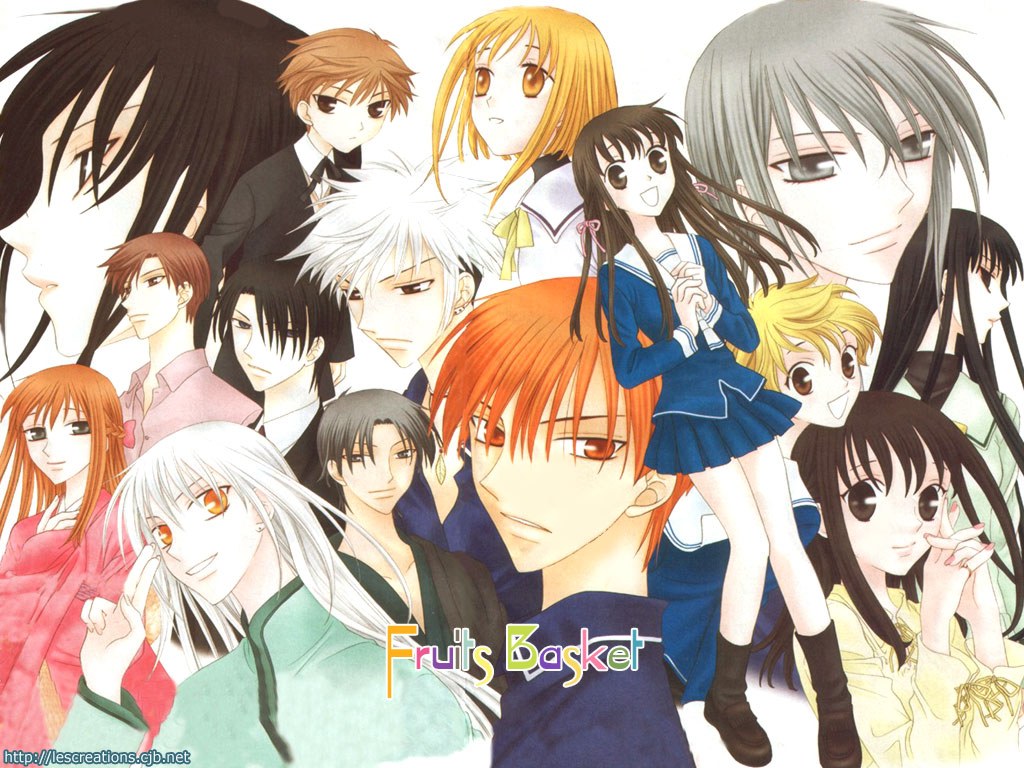
Back to the Vaults: “Fruits Basket” Manga Review
Back in 2004 (man, I’m getting old), I watched the Fruits Basket anime adaptation and loved it. So I decided to start buying the TokyoPop release of the manga, buying whatever was out there and then buying the new volumes when they dropped. Since it has been a while since I last read the manga, I thought I’d dust it off and see how it holds up today.
–> Buy Fruits Basket Collector’s Edition, Vol. 1 Manga from Amazon.com!
Note: As an Amazon Associate, I earn from qualifying purchases.
The Story, in Brief
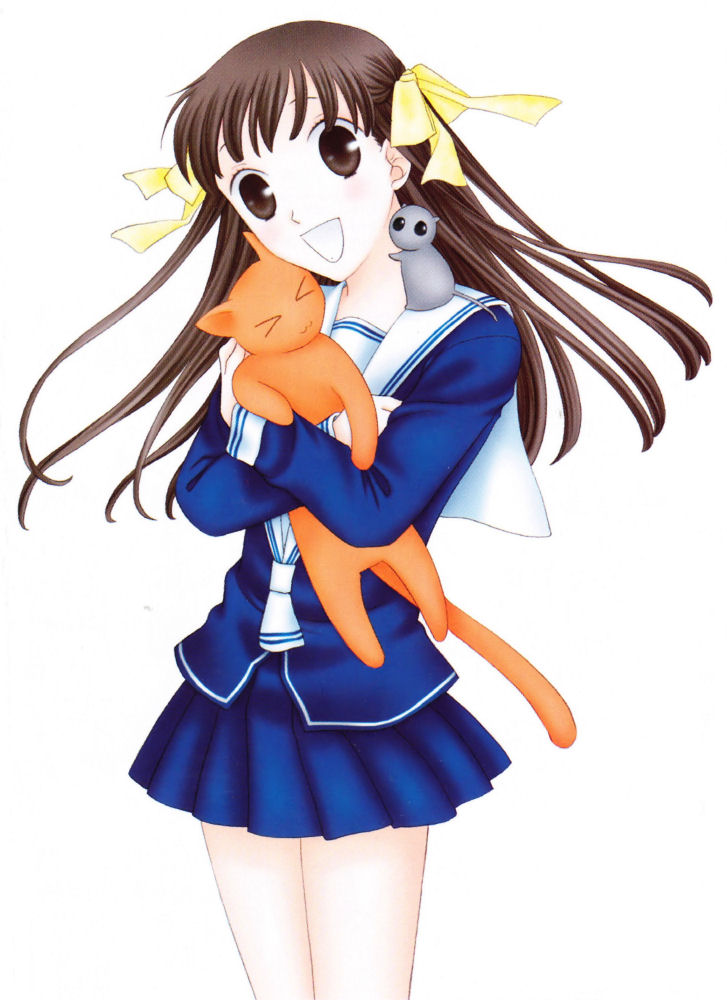 HONDA Tohru is an orphaned, high school girl who lives in a tent on what she doesn’t know is private land. On her way to school one morning, she passes a house on that land where the owner, SOHMA (SOUMA) Shigure paints some zodiac figures. She notes the missing cat from the legend. Fellow classmate SOHMA Yuki appears and walks her to school. Since Yuki is popular, this causes quite a stir.
That evening, Yuki and Shigure walk home to discover an exhausted and sick Tohru trying to make it to her tent. They take her back to Shigure’s home where Shigure makes a deal with her. She can be their live-in housekeeper. Tohru agrees. After rescuing her things from a landslide, the next day SOHMA Kyo literally bursts through the ceiling to attack Yuki. During the chaos, Tohru ends up accidentally embracing all three. Kyo turns into a cat, Yuki into a rat, and Shigure into a dog.
Shigure explains that the Sohma family is cursed. Now that Tohru knows their secret, Shigure gets permission Akito, the head of the Sohma clan, for Tohru to continue to live there. Over time, more and more of the Sohma family members with the zodiac curse come to visit her. She decides to do something to free the Sohma from this curse, especially since the cat member of the zodiac gets locked up upon reaching legal adult status. But will she succeed? And will her love for the cat of the zodiac legend carry over to Kyo?
A Really Interesting Premise
As stories go, I found that the premise of Fruits Basket to be quite intriguing and tragic in a way that didn’t depress the heck out of me. That starts with the protagonist Tohru. Despite being an orphan, Tohru maintains a positive attitude. As such, this takes a lot of the edge off of the more depressing aspects of the manga. This includes Tohru’s own tragedies.
Secondly, there’s a lighter tone to things in the first half of the manga. The conflict between Kyo and Yuki often has a comedic element to it. When SOHMA Kagura arrives, she adds more comedy moments as the boar. Yuki’s older brother Ayame (snake) also adds a lot of comedic flare throughout with his flamboyant and over the top moments. Likewise the more punkish Haru (cow) also adds comedic elements to the story. And of course, who could forget Ritsu (monkey), who takes after his sickly mother in apologizing in a comedic way.
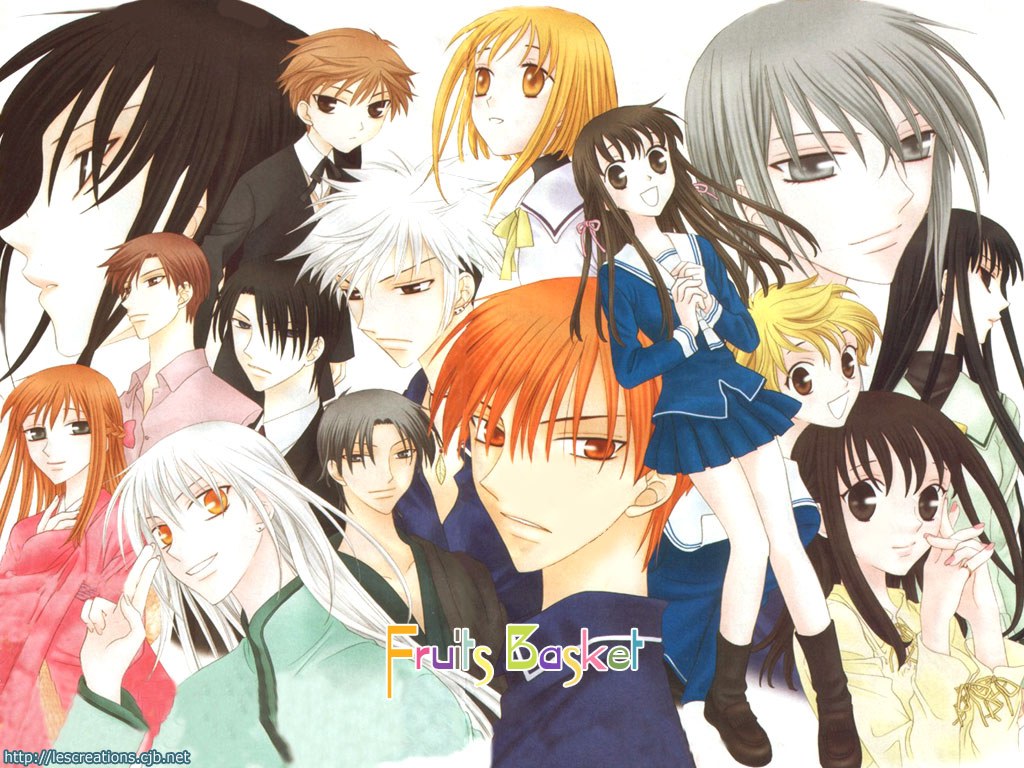
If it weren’t for all of this levity while we get to know these characters, the tragedy of the Sohma family, and the curse of the zodiac, I don’t think the manga would be that enjoyable. So by the time the manga gets a bit darker with Akito afraid of losing everyone if the curse breaks, those stories are easier to take. We are invested in these characters and want to see them free from the curse.
The manga’s main themes are loss and regret. Yet despite this and the shackles of the past, finding a way to move forward. So while there may be a depressing route to take to get there, the journey is an interesting and ultimately enjoyable one.
Second Half
For the second half of Fruits Basket, things do slow down somewhat in terms of the main plot. As such, we get new characters such as the student council serving under Yuki (who’s appointed as president). These characters are kind of a mixed bag for me. Naohito is so forgettable, I never remember his name (despite his going off at times). I don’t really care about Kimi. Kakeru does help serve as a friend for Yuki, but he’s also annoying. Takaya-sensei does try to make him fit in via the tragedy link with Tohru.

Still, we get introduced to Machi here. Had Takaya-sensei not had her injured drawing had, I think Machi would have looked so much better. (More on that in a bit.) Nevertheless, making Machi not only a flawed character but one who doesn’t worship Yuki was a good choice. That makes her relationship with Yuki feel very real rather than a consolation prize.
Tohru gets mostly removed from the story for final arc. Takaya-sensei gets her injured and in the hospital. Then she makes sure that the story never returns to Tohru. Most of it centers around Kyo finally getting his head together in regards to the lifted curse, his guilt about not saving Tohru’s mom when he had a chance (at the cost of turning into a cat in front of people), and his general feelings for Tohru. Things drag here because it is all about feelings and whatever. But once Tohru gets out of hospital, things return to normal to allow for a nice run to the finish.
Minor Issues
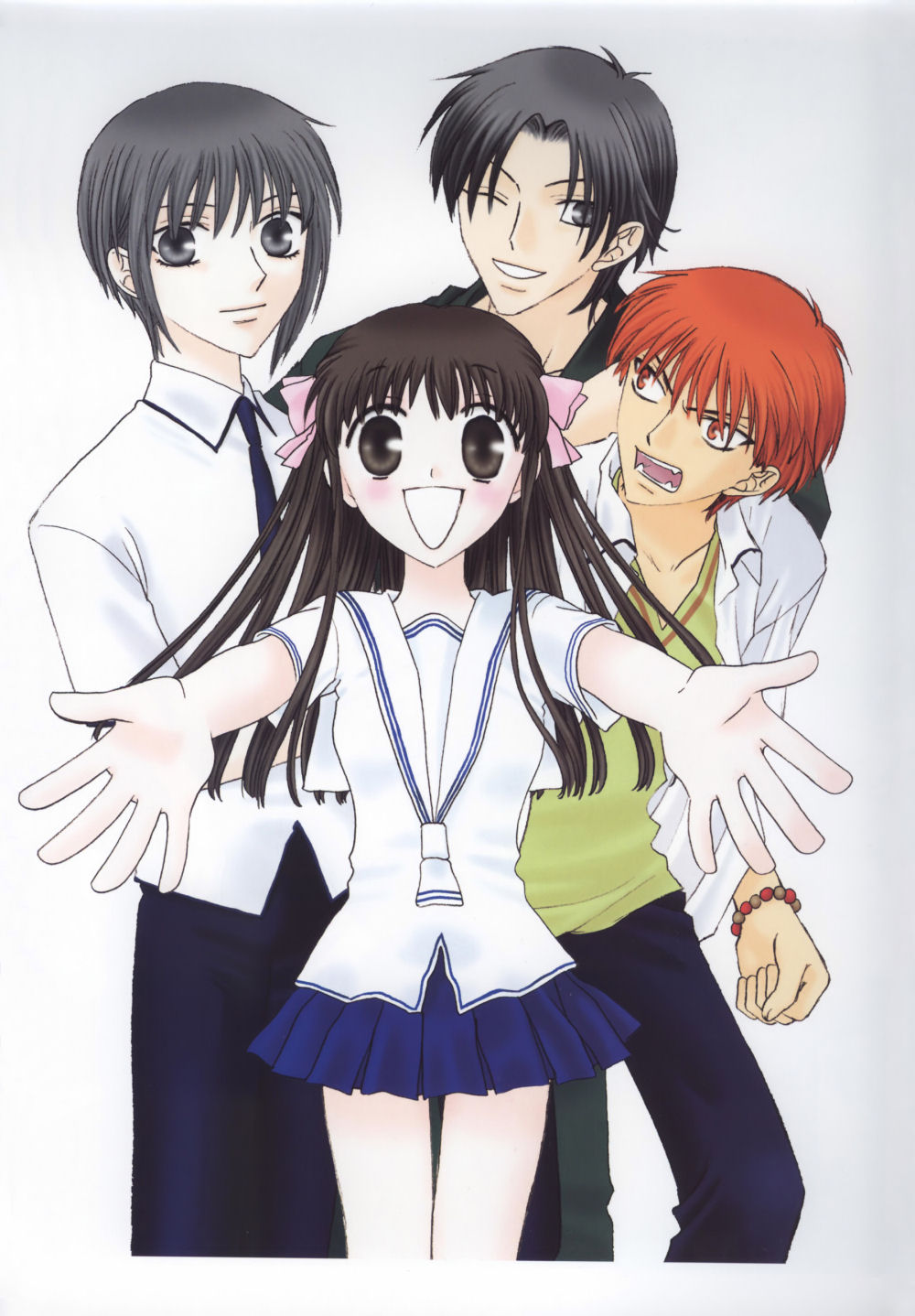 While it is clear that Takaya-sensei planned for Yuki and Kyo to have connections to Tohru that preceded the first chapter of Fruits Basket, some of this doesn’t quite work as well logically speaking. For a start, it seems a bit incredulous that both Yuki and Kyo would remember Tohru from childhood. I can believe that Kyo and Yuki would keenly remember the conflict over the baseball cap, considering their long rivalry. So when Yuki sees that Tohru has it, I can believe he’d remember that. But that alone isn’t enough to derail things.
Where I had more of a problem is how Takaya-sensei decided to flesh out Tohru’s mother, Kyoko. Apparently, the child Kyo would wander about and Kyoko discovered him. Then for unbeknownst reasons, she blathered her entire life history to Kyo. Again, I know that Takaya-sensei had this planned as we get foreshadowing of this when they visit Kyoko’s grave. However, it doesn’t work that well for me that as a child, Kyo would not only remember everything Kyoko said, but also vow to protect Tohru as a kid. But, it is a minor thing.
Another thing I had a minor issue with was Hana-chan’s (HANAJIMA Saki) backstory. When we are introduced to Hana-chan, she is used in a very comedic way. She’s a psychic who has empathic powers known as “denpa waves”. She can use this in a “poison” manner to attack people trying to bully Tohru. Yet during the flashback arc of her younger life, her guilt at the thought of nearly killing her bully causes her to vow to never use her powers in this way. Takaya-sensei does acknowledge this discrepancy by making Hana-chan acknowledge that she might have done something to one of Tohru’s bullies. It is minor though.
Finally, there’s the degradation of the character designs after volume 8. Takaya-sensei developed occupational (focal) dystonia (nerve damage) in her (left) drawing hand. I know it frustrated her as well to the point that I think she nearly quit the series. But what it means is that the character designs become very simplistic to the point where it is hard to distinguish characters.
TokyoPop’s Release vs. Yen Press
 My reread of Fruits Basket was based on Alethea and Athena Nibley’s translation for TokyoPop. I always loved their more fan-centric approach to translation-adaptation. Basically, it is an accurate but readable adaptation. That means including all of the Japanese honorifics including the brother-sister ones. So I was curious to see how Yen Press did things.
For a start, the Yen Press release loses ALL of Takaya-sensei’s commentary throughout the chapters. Instead, we get replacement artwork in the commentary blocks at the bottom of pages or the sides of pages. That’s a real bummer. Also, some of the “filler sketches” don’t have Takaya-sensei’s remarks. Not sure if that’s how the Japanese release was or not. However, it is a good reason to not give up the TokyoPop release.
On the other hand, the Yen Press release has a lot more of the original art in color. So there’s a reason to own their version of the story.
Sheldon Drzka does the translation for Yen Press. It is a shame that they didn’t just use the Nibley Twins original adaptation (or have them come back and make tweaks to their original adaptation). Fortunately, Sheldon does retain the Japanese honorifics from the spot-checks I did, including allowing Kisa to address Tohru as “Oneechan”. Rin addresses Shigure as “Gure-nii”. He did keep an “Oba-san” and an “Ane-san” reference too. Shishou got renamed to Master.
Tonally speaking, there is a small shift between the TokyoPop release and the Yen Press release. Most of the time, the two adaptations are saying the same thing in slightly different ways. However, if you’ve read the TP version as much as I have, you feel the tonal shifts in the Yen Press adaptation. I saw someone say that the YP version is better ’cause it is more nitty-gritty (ie: it throws in more profanity and such). But if anyone says the TP adaptation is like 4Kids, then you can disregard what they are saying ’cause they don’t know jack.
Final Thoughts and Conclusion
In the end, Fruits Basket is a title that I used to reread once a year. But now that my manga collection is so large, combined with new manga releases, work, and other things, I don’t get to reread it as often any more. Nevertheless, when I do read, it is mostly a lovely time.