By
Gaia Baldi
MSc Digital Anthropology

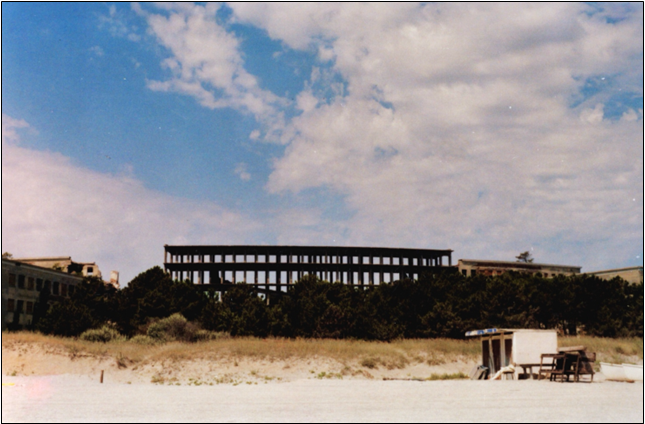
I cannot remember the first time the abandoned behemoths looming on Romagna’s beaches caught my attention. Their state of extreme disrepair both fascinates and unsettles me and many others, including urban explorers1 interested in Romagna’s ruins. Their size and location puzzled me as a child, and so did the fact that there are multiple sites of the same kind in each seaside town I’ve ever been to in Romagna. I started asking my family about these mysterious structures, who then explained that they were ‘colonie’, structures that once housed children during the summer, built especially during the Fascist Era (1922-1945)2.
Colonie3 were first conceptualised in Europe in the late nineteenth century as free sanatoria and centres of leisure for children (Pilat and Sanza 2020). Until the mid-twentieth century, colonie were a significant welfare provision for many working-class families. Attending them became significantly rare by the 1970s, as people had started vacationing with their children more, and diseases such as Tuberculosis had waned (ibid.). The very colonie that still operate nowadays are properties of either major corporations or the Catholic Church.
The most famous example is the Colonia Agip, owned by the eponymous Italian oil company.4 It was a colonia built during Fascism; in fact, it was originally named after one of Mussolini’s nephews (Sanza 2023, 157). Under Fascism, the construction of holiday houses for children was particularly intense and took on associated characteristics. State officials had devised colonie as a primary site of indoctrination for children, which was considered fundamental to sustaining the regime. In this context, colonie were not necessarily pleasant places; they were structures where children were strictly disciplined and their daily lives regulated following the guidelines contained in the Regolamento delle Colonie Climatiche by the Gioventù Italiana del Littorio (GIL)5 (ibid., 151).

Architectural historian Arne Winkelmann (2024) writes that the originally ‘humanitarian’ character of children’s holiday camps was fundamentally transformed by Mussolini’s regime. The typical colonia became a site for national paramilitary youth organisations as an attempt to shape a ‘strong’ new generation. Winkelmann (ibid.) points out that Fascist colonie are examples of Razionalismo, Mussolini’s preferred architectural current. They fuelled the dictator’s cult of personality through names celebrating him or his family members and inscriptions that bore his quotes. Decorators added Fascist symbols onto the buildings and integrated them into murals. Structures and art celebrated imperialism and militarism through iconography, barracked sleeping and strict hierarchies. The summer programme required having “conversations on Fascist culture” and “readings on Fascist culture and patriotic topics” every day (Pilat and Sanza 2020, 114).
I was writing this piece on April 25th, the Anniversary of the Liberation of Italy from Nazism and Fascism. For a long time, certain political actors have attempted to diminish this antifascist national holiday and treat it as ‘contentious’. Similarly, the topic of what to do with Fascist architecture tends to generate extreme debates. I say that the cumbersome remains of colonie may be regarded as akin to a physical manifestation of these tensions, of a ‘difficult’ Fascist inheritance that remains indisputably present. Colonie occupy a peculiar position in debates on Fascism’s legacy, often forgotten as part of its institutions – how can they be situated in the discourse, if at all?
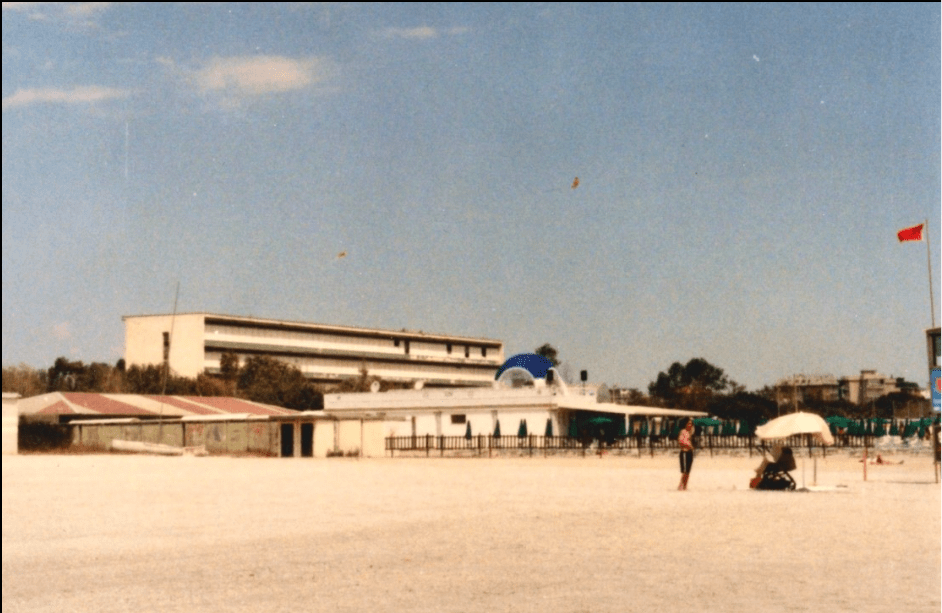
In her works on negotiations with the material legacy of the Nazis in Nuremberg, anthropologist Sharon Macdonald (2009) uses the term ‘difficult heritage’ to refer to “a past that is recognised as meaningful in the present but that is also contested and awkward for public reconciliation with a positive, self-affirming contemporary identity” (ibid., 1). Anthropologist Paolo Heywood (2025) recently pointed to sites of Fascist pilgrimage, such as Mussolini’s hometown (also in Romagna), as manifestations of this ‘difficult’ heritage at the centre of complex struggles over what to remember and what to forget. Yet these debates cannot be reduced to a binary choice between remembrance and erasure. As Heywood argues, it is important to remember that neofascists are also “just as likely as anyone else to think that ‘remembering freely’ is ethical, and that forgetfulness is a sin” (ibid., 125).
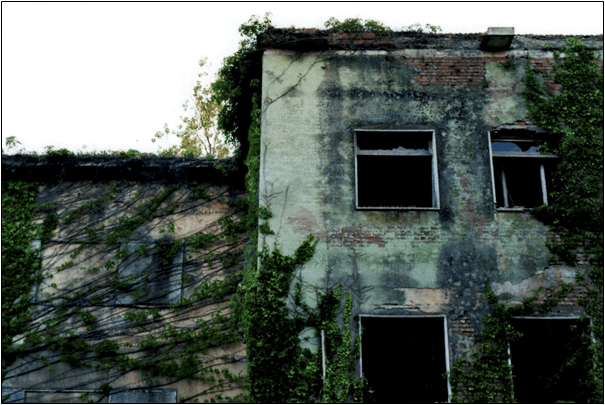
While reading Macdonald’s (2006) article Words in Stone for the module Art in the Public Sphere, I constantly thought of colonie. In the article, Macdonald points out that Nazi regime architects had indeed envisioned a future where their buildings would become compelling ‘elegant ruins’, which is something I partly see happening with colonie. The strategy that was adopted in Nuremberg was to keep the Nazi buildings in a state of ‘semi-disrepair’ (ibid., 120). Macdonald does not consider it a particularly effective strategy, but it still made me wonder whether the colonie operate on the same logic. What about those built postwar, for example? Whilst they lacked explicit Fascist rituals or symbols, they may have carried pieces of this legacy regardless, given the depth of the mark that the regime had left on this kind of institution.
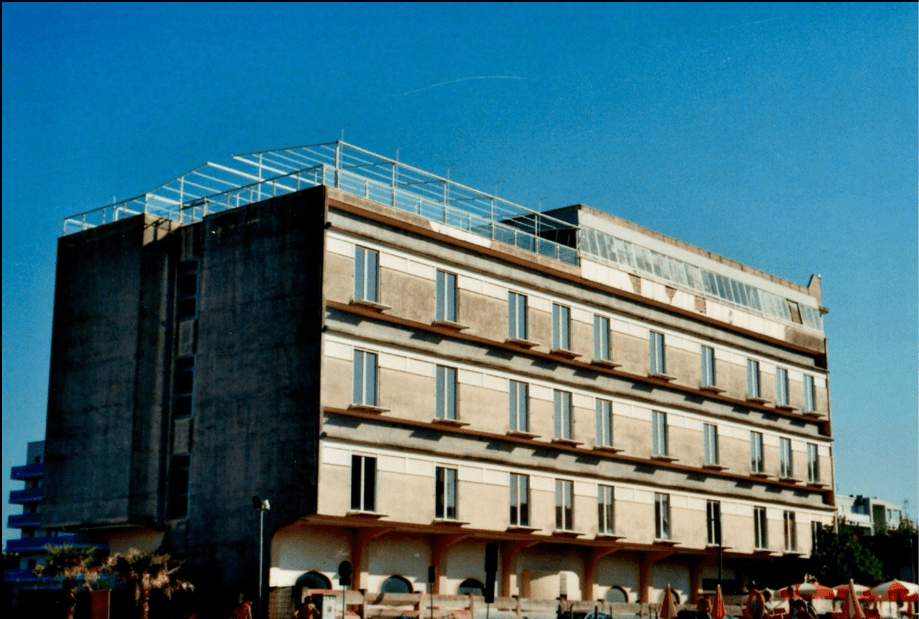
Macdonald’s article also shows how buildings have agency. Totalitarian regimes of the 20th century have used architecture to transmit their ideology and influence their subjects. The same can be said of colonie; in addition to its explicitly Fascist elements, Mussolini also wanted colonie to be noticeable and striking even from afar (Sanza 2023, 155). It is worth noting that they were disproportionately large for adults, let alone children, who would have been completely engulfed by them. I felt most perturbed by these buildings as a child – they made me feel smaller and more powerless than I already felt. I did not need to know their full history or everything about Fascism to assume that they once housed something sinister. Their language has lasted through the decades, sending a message that, above all, commemorates overpowering others. Being on Adriatic beaches where people gather for leisure, they tend not to be regarded as a place where ‘history was made’. Yet they furthered a certain idea of public health and childhood while also being sites of bombings, Mussolini speeches, and Allied encampments (after 1943). Today, homeless people seek shelter in these abandoned buildings, becoming part of their histories too.
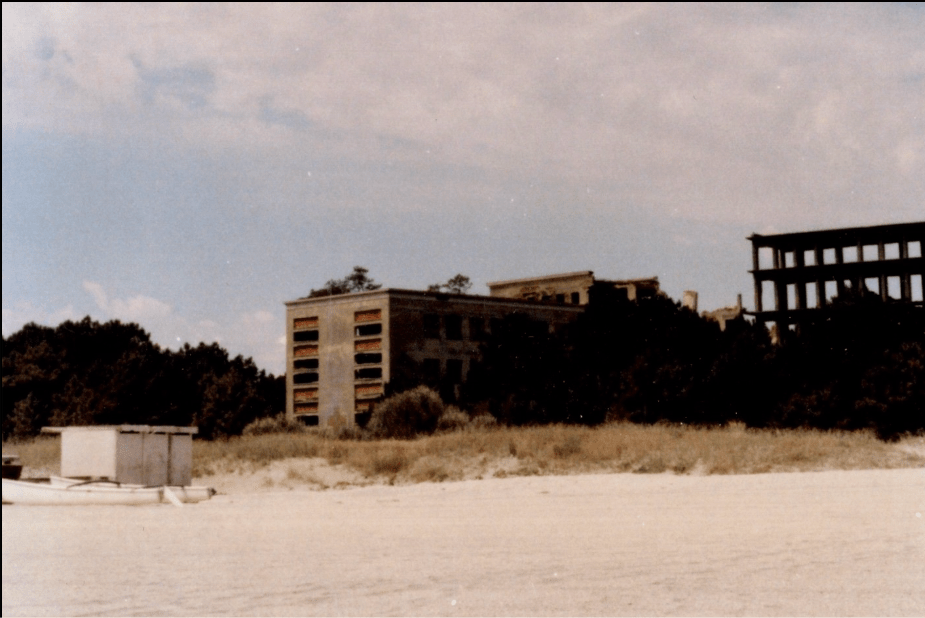
My point is not to give a definitive answer on what should be done with the colonie. In fact, I believe the public has to further recognise their relevance before engaging in discussion. There should be more education about them and efforts to increase awareness of their historical significance. Winkelmann (2024, 110) suggests that in seaside towns like Cesenatico or Riccione where colonie are aplenty, there should be didactic interventions that address the historical objectives of the camps. I would have appreciated an initiative that answered the many questions I had (and still have) about them. While my family supported my curiosity, we could hardly find any publicly accessible information about them that was reflexive or that went beyond superficial accounts. It is not that there is no information about them at all, or that no scholar has studied them. What I mean is that this information largely remains concealed from visitors to Romagna, unlike the very visible colonie– a difficult history I attempt to give justice to through my writing.

Footnotes
1 See for instance the urbex website Ascosi Lasciti https://ascosilasciti.com/it/tag/colonie– abbandonate/
2 The Fascist Era is a period of Italian history in which the country was ruled as a totalitarian dictatorship by Benito Mussolini of the National Fascist Party, beginning with a coup in 1922 and lasting until 1943 (or 1945 in parts of the nation)
3 Plural of the word colonia which literally translate to ‘colony’, colonie were part of a process of construction of new settlements under Fascism
4 AGIP was a petroleum retailer founded by the Mussolini government. It recently merged with ENI, one of the ‘supermajor’ oil companies partly owned and controlled by the government of Italy to this day. Their colonia still hosts children of employees every summer
5 The [Climatic] Colonie Regulations by the Italian Youth of the Lictor by the GL. The GIL is the collective youth organisations of the Fascist Party
References
Heywood, Paolo. 2025. “Blessed Acts of Oblivion: On the Ethics of Forgetting.” Cultural Anthropology 40 (1): 105– 130.
Macdonald, Sharon. 2006. “Words in Stone? Agency and Identity in a Nazi Landscape.” Journal of Material Culture 11 (1– 2): 105– 126.
Macdonald, Sharon. 2009. Difficult Heritage: Negotiating the Nazi Past in Nuremberg and Beyond. London: Routledge.
Pilat, Stephanie, and Paolo Sanza. 2020. “Architectural Pragmatism and Poetry: Childhood in Fascist Era Summer Camps.” Childhood in the Past 13 (2): 109– 120.
Sanza, Paolo. 2023. “Escaping Indoorness: Education and Architecture in Italy’s Summer Camps during the Fascist Era.” In The Curriculum of the Body and the School as Clinic: Histories of Public Health and Schooling, edited by Kellie Burns and Helen Proctor. London: Routledge.
Winkelmann, Arne. 2024. “Credere, obbedire, curare: Le finalità politiche delle colonie per l’infanzia nell’Italia fascista [Believe, Obey, Recover: The Political Purpose of the Italian Fascist Colonie].” IN_BO. Ricerche e Progetti per il Territorio, la Città e l’Architettura 15 (19): 94– 111.
This piece is a response to Temporalities, the theme of our 2026 print issue, which you can read here.