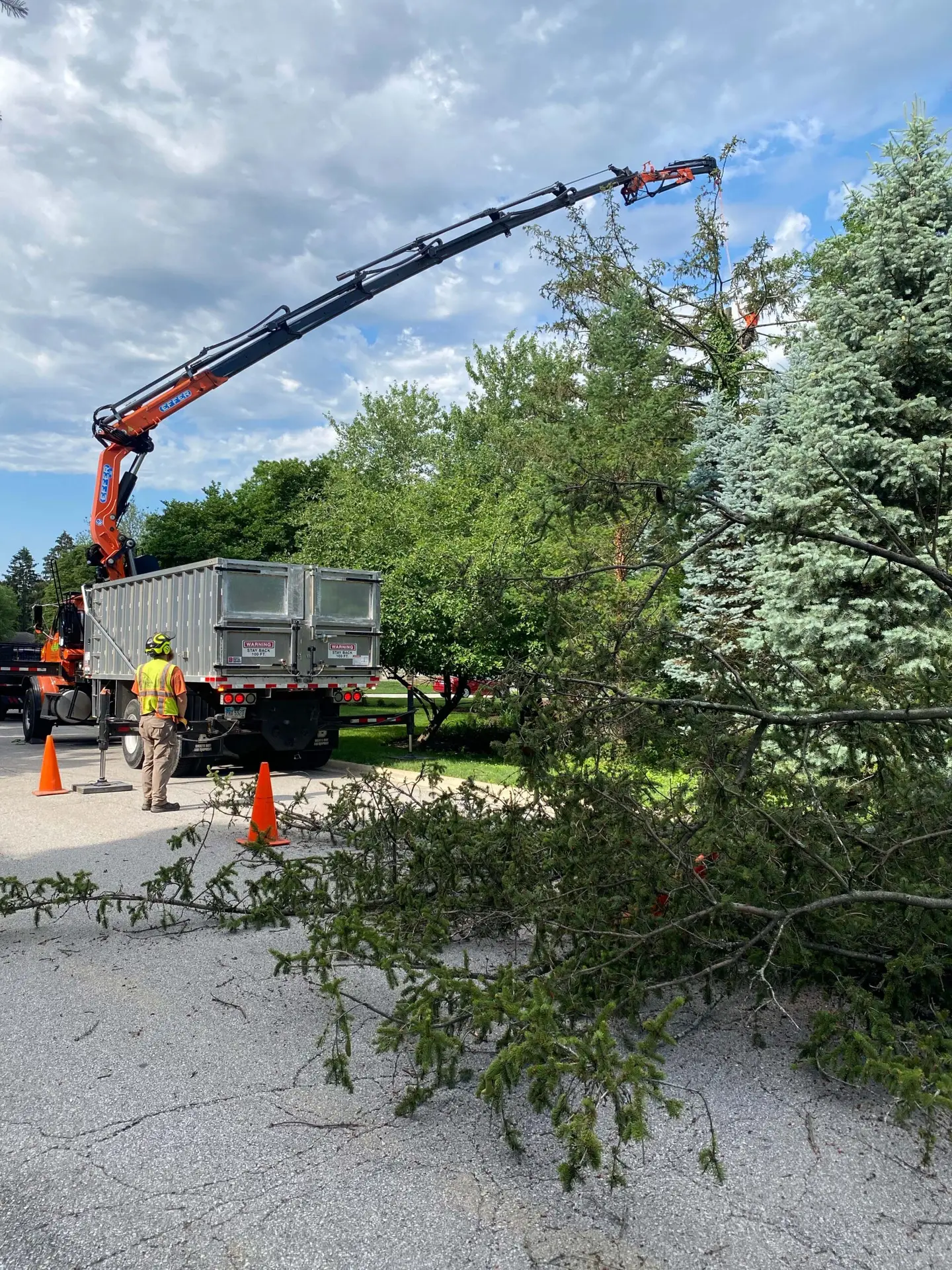
In Ohio, storm season has a way of sneaking up quickly. One afternoon can feel completely normal, and by evening you’re dealing with strong winds, heavy rain, lightning, or tornado warnings rolling through the area. Most homeowners think about securing patio furniture or checking the roof before a storm, but trees are often forgotten until something comes down.
The problem is that trees can become one of the biggest hazards during severe weather. Weak limbs, overgrown canopies, hidden decay, or unstable roots can quickly lead to fallen branches, blocked driveways, damaged roofs, or even dangerous situations around your home.
At Ahlum & Arbor, we see it every year across Ohio, storms exposing issues homeowners didn’t even realize were there. The good news is that a little preventative care before storm season can go a long way in reducing risk and helping protect both your property and your trees.
How Ohio Storms Impact Trees
Spring and summer storms put a lot of stress on trees all at once.
High winds can strain large limbs and heavy canopies, especially on older or already weakened trees. Days of heavy rain can oversaturate the soil, causing root systems to lose stability. In more severe storms, lightning strikes or tornado-strength winds can split trunks or uproot entire trees.
Even healthy trees can experience storm damage, but trees with existing structural problems are much more likely to fail during bad weather.
Some of the most common storm-related tree issues include:
- Broken or hanging limbs
- Split trunks
- Uprooted trees
- Trees leaning after heavy rain
- Cracked or weak branch connections
- Fallen limbs over homes, driveways, vehicles, or power lines
One thing many homeowners don’t realize is that storm damage is not always obvious right away. A tree may still be standing after the storm passes but could have hidden root damage or internal cracking that creates problems later.
That’s why tree storm preparation is something worth thinking about before severe weather arrives, not after cleanup has already started.
Warning Signs Your Trees May Be Vulnerable
One of the biggest mistakes homeowners make is assuming a tree is healthy simply because it still has leaves.
Trees often show warning signs before they fail during storms. Catching these issues early can help prevent dangerous situations later.
Some common signs of storm-vulnerable trees include:
Dead or Hanging Branches
Large dead limbs are one of the first things high winds will bring down. If branches appear brittle, bare, or partially detached, they should be addressed before storm season intensifies.
Cracks in the Trunk
Visible splits or deep cracks can indicate structural instability. Storm winds can quickly worsen existing weaknesses.
Leaning Trees
A slight lean may be natural for some trees, but a sudden lean or exposed roots around the base may signal instability after heavy rain.
Decay or Hollow Areas
Rotting wood weakens a tree from the inside out. Cavities, mushrooms near the base, or soft sections of trunk can indicate internal decay.
Dense or Overgrown Canopies
Trees with excessive canopy growth can act like sails during windstorms. Heavy, unbalanced limbs create additional stress during severe weather.
Root Problems
Construction damage, poor drainage, or soil erosion can weaken root systems over time. Saturated Ohio soils during spring storms can make unstable trees even more dangerous.
If you notice any of these issues, scheduling a professional inspection before storm season can help identify potential risks early.
How Heavy Rain Affects Tree Stability
Many homeowners focus on wind damage, but heavy rain can be just as dangerous for trees.
When soil becomes oversaturated, roots lose the stable ground they rely on for support. This is especially common during prolonged spring storms throughout Ohio.
In some cases, trees that appeared perfectly healthy can suddenly uproot because the surrounding soil becomes too loose to hold them in place.
Certain conditions increase the risk even more:
- Poor drainage around the property
- Compacted soil
- Trees planted too shallow
- Existing root damage
- Recently disturbed landscaping
- Trees growing near slopes or retaining walls
Large trees near homes, driveways, or sidewalks should be monitored carefully after extended rainfall, especially if you notice leaning, cracked soil, or lifted roots near the base.
Tree Storm Preparation Tips Before Severe Weather Hits
The best time to prepare trees for storms is before severe weather arrives.
Routine maintenance not only improves the appearance of your property but also reduces the likelihood of major storm tree damage.
Schedule Professional Tree Inspections
A certified arborist can identify hidden structural weaknesses, disease, decay, or root problems that homeowners may miss.
Prune Weak or Dead Branches
Removing dead, damaged, or overextended limbs helps reduce wind resistance and lowers the chance of falling branches during storms.
Thin Dense Canopies
Strategic pruning improves airflow through the tree canopy, helping reduce stress during high winds.
Remove Hazardous Trees
In some cases, severely compromised trees may need removal before they become an emergency situation.
Monitor Trees Near Structures
Pay special attention to trees growing close to homes, garages, fences, power lines, or driveways.
Tree storm preparation is often far less expensive, and far less stressful, than dealing with emergency storm cleanup afterward.
What to Do After a Storm
After severe weather passes, safety should always come first.
Many homeowners rush outside to inspect damage immediately, but storm-damaged trees can remain extremely unstable.
Here are a few important safety steps to follow:
Stay Away From Downed Power Lines
Never approach trees touching utility lines. Contact emergency services or your utility provider immediately.
Watch for Hanging Limbs
Broken branches can fall unexpectedly even after the storm has ended.
Avoid Climbing Damaged Trees
Storm-damaged trees can shift without warning. DIY cleanup can quickly become dangerous.
Check for New Leaning or Root Movement
If a tree suddenly leans or the ground appears lifted near the base, the tree may be unstable.
Document Damage
If property damage occurred, take photos for insurance purposes before cleanup begins.
Why Professional Tree Damage Cleanup Matters
Storm cleanup often involves more than simply cutting up fallen branches.
Improper cleanup can create additional hazards, damage nearby trees, or leave weakened sections behind that fail later.
Professional tree damage cleanup helps ensure:
- Safe debris removal
- Proper pruning techniques
- Structural assessment of damaged trees
- Reduced future storm risk
- Protection for surrounding property
Storms are unpredictable, but preparation can go a long way in protecting your home, your property, and your trees.
If you’re concerned about storm tree damage or want help preparing your landscape before Ohio’s next round of severe weather, the team at Ahlum & Arbor can help assess your trees and recommend the right next steps before small issues turn into costly emergencies.