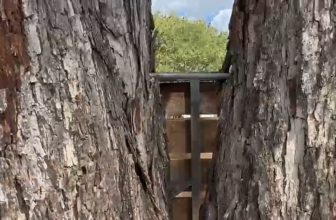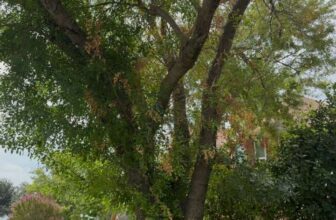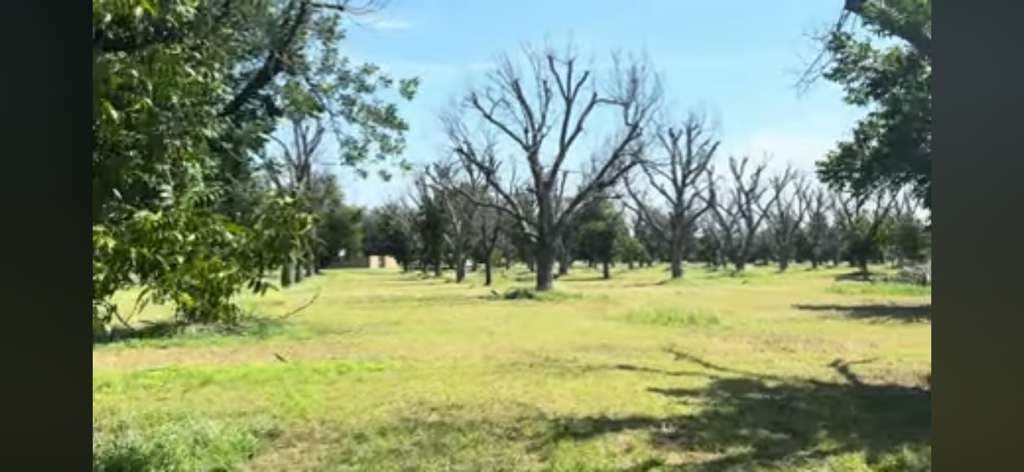
Today we’re here in Pecan Plantation, Granbury, Texas, inspecting several mature Texas Pecan trees (Carya illinoinensis) that are showing the devastating long-term effects of severe drought stress. As I walk this property, several trees have already become postmortem completely, while others are exhibiting extensive crown dieback, dead scaffold limbs, sparse foliage, and permanent canopy decline. One thing immediately stands out during this inspection: the trees that failed all have one thing in common. During the prolonged period of extreme summer temperatures, they simply did not receive enough supplemental irrigation to survive one of the harshest environmental events we have experienced in North Texas.
One of the biggest misconceptions I hear from homeowners is, “Henry, these are native Texas pecan trees. They shouldn’t need watering.” While pecan trees are indeed native to Texas, they naturally evolved along creek bottoms, floodplains, and river systems where deep soil moisture remained available for much of the growing season. A residential landscape in Granbury is a completely different environment. Once temperatures begin climbing above 105 degrees for prolonged periods, mature pecan trees can no longer rely on natural rainfall alone. If deep soil moisture is not maintained, the tree begins entering a survival mode that can permanently damage its vascular system.
The effects of drought rarely happen overnight. In fact, some of the most serious damage is occurring long before homeowners ever notice leaves turning brown. Trees respond internally first. The visible symptoms often appear months later, and in many cases the decline continues for years after the drought has ended. That is exactly what we are seeing throughout Pecan Plantation today.
Why Texas Pecan Trees Require So Much Water
Texas Pecan trees are among the fastest-growing and largest deciduous hardwoods found throughout the state. Mature specimens develop enormous canopies capable of producing tremendous amounts of shade, but maintaining that canopy requires an incredible amount of water.
Every leaf on a pecan tree is constantly losing moisture through a process called transpiration. As water evaporates from the foliage, additional water is pulled upward from the root system through the xylem tissue. This continuous movement of water allows the tree to regulate temperature, transport nutrients, maintain cellular pressure, and support photosynthesis.
Under normal conditions, this hydraulic system operates remarkably efficiently. During prolonged drought, however, that entire system begins to fail.
According to Texas A&M AgriLife Extension, prolonged drought dramatically reduces available soil moisture, forcing trees to compete for increasingly limited water supplies. Once moisture becomes unavailable, the tree begins shutting down nonessential functions in an attempt to preserve life.
The first visible symptom may simply be smaller leaves or a slightly thinner canopy, but internally the tree is already undergoing significant physiological stress.
What Happens Inside the Tree During Severe Drought
As drought intensifies, the tree begins closing tiny pores on the leaf surface known as stomata.
These microscopic openings normally allow carbon dioxide to enter the leaf while permitting water vapor to exit during transpiration. Once soil moisture becomes critically low, the tree closes the stomata in an attempt to conserve water.
While this temporarily reduces moisture loss, it also creates another problem.
Without carbon dioxide entering the leaf, photosynthesis begins slowing dramatically.
Photosynthesis is how trees manufacture carbohydrates.
Carbohydrates are the tree’s stored energy reserves.
Everything the tree does depends on those carbohydrates.
They provide energy for:
- Root growth
- Leaf production
- New shoot development
- Defense against insects
- Defense against disease
- Wound compartmentalization
- Recovery following environmental stress
When photosynthesis slows, carbohydrate production declines.
The tree begins consuming stored reserves simply to stay alive.
Over time, those reserves become depleted.
Once the stored energy is exhausted, decline accelerates rapidly.
Xylem Cavitation and Permanent Hydraulic Failure
One of the least understood aspects of drought stress is what happens inside the vascular system.
- The xylem functions as the plumbing system of the tree.
- Its job is transporting water from the roots to the canopy.
- As drought intensifies, the tension within the xylem vessels becomes so great that tiny air bubbles begin forming inside the water columns.
This process is called cavitation.
- These air bubbles disrupt water flow and cause emboli within the vascular system.
- As cavitation increases, hydraulic conductivity begins collapsing.
- Entire branches may no longer receive adequate moisture.
- The result is permanent dieback.
ISA research has shown that severe cavitation can permanently reduce the tree’s ability to transport water, even after rainfall returns.
This explains why many homeowners become confused.
They’ll say, “We’ve had plenty of rain this year. Why is my pecan tree still dying?”
The answer is simple. The damage occurred during the drought. The tree simply didn’t show the full extent of the injury until much later.
Permanent Desiccation and Crown Dieback
As I continued inspecting these trees in Pecan Plantation, one of the most obvious symptoms was extensive crown dieback.
Large scaffold limbs had completely desiccated.
Entire sections of the upper canopy were dead.
Several trees had reached complete mortality.
Desiccation occurs when living plant tissues lose moisture beyond their ability to recover.
Initially, leaves wilt.
Then shoots begin dying.
Eventually the cambium, which is responsible for producing new vascular tissue, also begins failing.
Once cambial tissue dies, the tree cannot regenerate that portion of the trunk or branch.
Dead scaffold limbs remain dead.
No amount of fertilizer, watering, or pruning can bring those tissues back to life.
This is why proper irrigation during extreme heat is so important.
Once permanent desiccation occurs, recovery becomes extremely limited.
Why Some Trees Survive While Others Become Postmortem
Walking this property, it was interesting to see that not every pecan tree responded the same way.
Some still retain healthy portions of their canopy.
Others have only minor dieback.
Several have become completely postmortem.
Tree survival depends upon many different variables.
Trees entering a drought with healthy root systems, adequate carbohydrate reserves, proper soil conditions, and good vigor generally withstand environmental stress much better than trees already weakened by previous stressors.
Those stressors may include:
- Soil compaction
- Construction damage
- Poor fertility
- Insect pressure
- Previous drought cycles
- Root decline
- Mechanical injury
Healthy trees have greater energy reserves available to survive difficult environmental conditions.
Trees already under stress begin the drought with fewer resources, making recovery much more difficult once temperatures begin exceeding 105 degrees.
Proper Watering Can Save Mature Pecan Trees
One of the simplest and most effective ways homeowners can protect mature pecan trees is through proper irrigation during periods of prolonged heat.
Rather than watering lightly every few days, mature pecan trees benefit from slow, deep irrigation that reaches the entire root system.
During prolonged temperatures exceeding 105 degrees, I typically recommend approximately 50 to 100 gallons of water every two weeks, applied slowly during the evening or overnight hours.
The objective is allowing moisture to penetrate deeply into the soil profile where the majority of absorbing roots are located, rather than simply wetting the surface.
Deep watering encourages stronger root development, improves drought tolerance, and helps maintain healthy physiological function during periods of extreme environmental stress.
Water Alone Is Not Enough
One of the biggest educational points I discuss with homeowners is that healthy trees require two critical resources to survive:
Most people understand the importance of irrigation, but far fewer understand the role oxygen plays in tree health.
Every living root on a pecan tree performs cellular respiration twenty-four hours a day. During respiration, roots convert stored carbohydrates into usable energy that powers nutrient uptake, water absorption, cell division, and new root growth. Without adequate oxygen, that entire process begins slowing down.
Even if water is available, roots cannot function efficiently when oxygen levels become limited.
This condition is known as root-zone hypoxia.
According to ISA arboricultural research, oxygen is just as essential to healthy root function as water. Healthy soils contain air-filled pore spaces that allow oxygen to diffuse throughout the root zone. When those pore spaces are lost through compaction or prolonged saturation, root respiration declines, feeder roots begin dying, and overall tree vigor rapidly decreases.
Healthy roots produce healthy canopies.
Without healthy roots, recovery becomes extremely difficult.
Soil Compaction Around the Root Flare
During every plant healthcare inspection, one of the first areas I evaluate is the root flare.
The root flare is where the trunk transitions into the structural root system and serves as one of the most important indicators of overall tree health.
Over the years, I have found that many declining pecan trees also suffer from compacted soil surrounding the root flare.
Compaction commonly results from:
- Lawn equipment
- Vehicle traffic
- Construction activity
- Foot traffic
- Years of mowing around the tree
Compacted soil reduces pore space, limiting oxygen movement into the soil while reducing water infiltration and root expansion.
Many homeowners continue watering compacted soil, believing additional irrigation will solve the problem.
Unfortunately, compacted soils often shed water rather than absorbing it deeply.
The result is shallow watering, poor oxygen exchange, declining feeder roots, and continued physiological stress.
This is why soil aeration can become one of the most valuable treatments available for recovering drought-stressed pecan trees.
The Importance of Proper Fertility
Once irrigation and soil conditions have been corrected, the next priority becomes rebuilding tree vigor.
Following prolonged drought stress, many pecan trees have depleted a significant portion of their carbohydrate reserves.
The objective now becomes restoring photosynthetic capacity and encouraging healthy canopy regeneration.
One component of our plant healthcare program includes a balanced fertility program utilizing a 21% nitrogen fertilizer.
Nitrogen is one of the primary building blocks of chlorophyll.
Healthy chlorophyll production leads to improved photosynthesis.
Improved photosynthesis produces more carbohydrates.
More carbohydrates allow the tree to:
- Produce new foliage
- Develop new roots
- Strengthen defense systems
- Recover from environmental stress
Nitrogen alone is not the answer, but when incorporated into a comprehensive plant healthcare program it becomes an important part of long-term recovery.
Why Micronutrients Matter
Texas soils are frequently deficient in several trace elements necessary for optimum tree health.
Micronutrients play critical roles in:
- Enzyme activation
- Chlorophyll formation
- Cell division
- Root development
- Stress tolerance
Following prolonged drought, many trees struggle to efficiently absorb nutrients because root systems have already been compromised.
Providing balanced micronutrient supplementation helps improve overall vigor and supports healthier canopy development as recovery begins.
Integrated Pest Management Following Drought
Environmental stress frequently attracts opportunistic insect pests.
Trees weakened by prolonged drought often become more susceptible to:
- Borers
- Scale insects
- Aphids
- Leaf-feeding insects
- Secondary invaders
Healthy vigorous trees possess stronger natural defense systems and are better able to tolerate limited insect activity.
Stressed trees lose that advantage.
For this reason, Arborist USA incorporates Integrated Pest Management (IPM) into our recovery programs following severe environmental stress.
Rather than simply reacting after insect populations become severe, IPM focuses on monitoring, early detection, and reducing additional stress before significant damage occurs.
Reducing insect pressure allows the tree to redirect more energy toward recovery rather than defense.
Arborist USA Plant Healthcare Recommendations
Following my inspection of these mature pecan trees in Pecan Plantation, my recommendations focused on improving every aspect of tree physiology rather than addressing only one symptom.
Our plant healthcare program includes:
- Deep root-zone irrigation during prolonged extreme heat
- Soil aeration where compaction exists
- Root flare inspections
- Proper fertility utilizing 21% nitrogen
- Micronutrient supplementation
- Integrated Pest Management
Every component of this program is designed to improve root function, restore photosynthesis, rebuild carbohydrate reserves, and improve long-term tree health.
Plant healthcare is never about one product.
It is about improving the entire environment surrounding the tree.
Final Thoughts
Walking through Pecan Plantation, one thing became very clear.
The drought may have ended, but its effects continue to impact mature Texas pecan trees throughout Granbury.
Many of the trees that survived the initial drought are still living with permanent physiological damage caused by prolonged heat, inadequate irrigation, depleted carbohydrate reserves, and declining root systems.
The good news is that many living trees can still recover when the proper steps are taken early enough.
Deep watering during periods of extreme heat, maintaining proper soil oxygenation, reducing compaction, supporting healthy root systems, implementing balanced fertility, providing micronutrients, and maintaining an effective Integrated Pest Management program all work together to improve the long-term health of mature pecan trees.
At Arborist USA, our goal is not simply treating symptoms.
Our goal is identifying the environmental cause of decline, restoring proper tree physiology, and preserving mature Texas pecan trees through science-based plant healthcare programs built upon TCIA standards, and research from Texas A&M AgriLife Extension.
For general tree-care best practices, homeowners can also reference guidance from the Texas A&M Forest Service, https://tfsweb.tamu.edu/trees/, a trusted authority on Texas tree health.
Schedule a professional inspection. Early detection and scientific intervention are the difference between preservation and loss. If you’d like to speak to an arborist, please call us at 817-880-6130 or visit https://www.arboristusa.com/