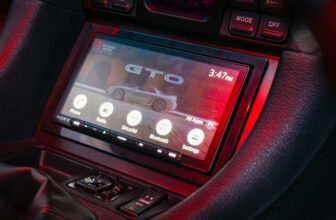
Welcome to Chapter 3. With what’s left of the 3000GT market in shambles, I decide to pivot by searching for a GTO from Japan.
Sounds easy, but I had absolutely no idea if the search would yield anything. After all, how can I search for and inspect a car from across the planet? Turns out that there are systems in place for just such a thing, and it’s easier than ever.
Until it isn’t. If you’ve ever wondered about where to find a JDM car, or the process of importing one, this is for you.
Why the JDM Market is the Right Place to Shop

There has always been a mystique around JDM cars. The forbidden fruit. It was an absolutely incredible event to see a car like an R33 Skyline here in the States even ten years ago. With all the hype built up from Fast & Furious and Gran Turismo, witnessing one in the flesh was as special as standing next to a Ferrari F40.
But there’s an old (and sexist) saying: “No matter how hot she is, there’s some guy somewhere that’s sick of her crap.”
Translated for our purposes, this meant that while seeing a JDM car was super rare for us, to the Japanese it’s uhh…it’s a Tuesday folks. Sit down. And that means, they wanna sell them! It also means many of the cars are not nearly as revered over there as they are here.
You see where I’m going with this – a 30-year old Mitsubishi GTO was priced more in line with real-world expectations.
Shopping and Inspection: Where to Find a JDM Car

I am naturally up on current market values for many cars because of Talk Me Out of It, so the first thing I needed to do for the GTO was establish a baseline price. A site like Classic.com will show me value for cars that are either already imported here or live in European countries, so that would not help me.
That lead me to multiple sites:
There are others as well, but we can focus on these as they offer the cars in their original setting.
Establishing a Baseline Price

First, it’s important to know that this isn’t a “like for like” situation – a car sold in Japan will have different options packages, VIN numbers, colors, and most importantly trims.
In the GTO’s case, I had to watch out for the SR model. We never got it over here, but in Japan, it was like a 3000GT SL with all-wheel drive. It also had Turbo wheels, so they are sometimes hidden. On the flip side, Twin Turbo models were not always labeled as such.
Think about how often dealers list “manual” as the transmission online, only to find out it’s a DCT. Listers aren’t always the most accurate.
Decoding GTO Trims and Chassis Codes (Z15A vs Z16A)
My first step is to focus on the Japanese VIN, which will have the chassis code:
- Z11A: Base, front-wheel drive models
- Z16A: Models with four-wheel steering
- Z15A: Models without four-wheel steering
In general, the Z16 chassis code is what I wanted, but the GTO MR was a light-weight VR-4, and Mitsubishi deleted the four-wheel steering for that model. That means it had a Z15 code.
Of course, everything is in kilometers and Yen, but the sites offer simple conversion tools.
Japanese Auction Grades and the Inspection System
So we have the where and the what, but how would I know a good example from a bad going off of a 300-pixel image? Enter the Japanese auction grading system.
Many auction sites offer the ability to search only for cars with a grade sheet, which is basically an independent pre-purchase inspection. These inspectors will offer a grade from 1-6 for the overall condition of the car and adds some piece of mind to the process.
It’s not full-proof, and many import brokers have a list of inspectors they trust, but it’s also better than nothing if you want to do this on your own.
Shipping, Customs, Title, and Final Registration

Shipping
Next, we need shipping costs. Again, these sites will let you add the shipping cost and marine insurance to the price if you wish. Marine insurance is a must-have in case the boat sinks – you’d be out the money.
But timing can be difficult. Just like when we track a BMW across the ocean, my GTO would be placed on a ro-ro carrier and shipped to the port of my choice (Newark, New Jersey in my case). However, we’d need to wait for a spot to open up on a ship. Remember, BMW is booking hundreds of slots, along with every other auto maker, so openings are hard to come by.
Customs

This is by far the hardest part. The first rule is that the car has to be at least 25 years old. Since every GTO is, I’m okay there. But then I must:
- File the Importer Security Filing at least 24 hours before the car ships. If it’s not done correctly, I get fined.
- Get the original documents for the car, including bill of lading, bill of sale, and foreign registration.
- Fill out EPA Form 3520-1 and DOT Form HS-7 to declare the vehicle’s compliance with safety and emission standards.
- Pay custom duty, usually 2.5%
- Translate the documents to English
I can hire a broker to do this for me, but this also opens up the possibility of finding a GTO already in the States because…who wants to do all of this? And all of this adds money to the bottom line, making a very good deal on a GTO more like a regular deal with more headaches.
Title and registration

So after all that, we still can’t drive it home – it has to be registered. Every state is different, but in New Jersey it meant I would need to go all the way to Trenton, the capital, to figure out all the paperwork – no other DMV in the state will do that for an imported car.
I’ll spare you the details, but if you’ve ever been to a DMV, consider this paperwork the final boss of patience. Also remember that any car from 1996 on must be state-inspected (OBD-2), a fact which I will bring up in a later chapter.
Armed with all this info, let’s go shopping for a few typical JDM examples.
The Typical Mitsubishi GTO for Sale in Japan

What’s good about shopping here is that, by and large, the cars are in better shape. This is partially because of the “Shaken” rule, or required Japanese inspections. These mandatory biennial inspections look over much more than their US counterparts, including things like the brakes, steering, and emissions. And the older the car is, the more it costs to keep registered, so the market has more old cars available.
It’s not fool-proof, believe me Japan has plenty of bad examples too, but there’s just nothing like that ’94 VR-4 from last week.
You know the kind of GTO I want – second or third gen, so I’ll focus on a few examples.
1994 GTO Twin Turbo

- 79,980 km
- $21,130
- Solano Black Pearl over grey cloth – most GTOs had cloth interiors
This car did not have the stock wheels, but did have the stock head unit (very rare). This would be a great 3000GT example, but with so many GTOs to look at, I could afford to be more specific.
1996 GTO Twin Turbo MR

- 35,000 km
- $37,680
- Galaxy White Pearl over grey cloth
The MR is about as special as the GTO gets, but the modifications Mitsubishi made were minor. All-wheel steering was removed, as was Active Aero, Active Suspension, and Anti-lock brakes, all of which reduced the weight by about 100 pounds. But the thing is by 1997, Mitsubishi removed those systems from the standard GTO anyway. And I want anti-lock brakes – too important a safety feature to worry about ten pounds.
The all-wheel steering too – the entire point of this car was being a technological tour-de-force.
As you can see, you pay a premium for this badge, but it’s nowhere near a ’99 VR-4 price. It tempted me.
1998 GTO Twin Turbo

- 112,450 km (69,873 miles)
- $8,897
- Solano Black Pearl over Grey cloth
Hilarious – Ferrari badges! Momo steering wheel! Yellow brake calipers! But look at that price. No doubt, this would need love to restore to its original state, but this one did have leather. Missing the original wheels would be tough though – it’s nearly impossible to find a complete full set.
I could pull up another five examples, but this should give you an idea of what adding an ocean’s distance does to my car search.
Let’s do one more, the most holy of GTO examples…
2000 GTO Twin Turbo MR

Wow, so this car seemingly has it all:
- 123,500 miles
- Hamilton Silver over grey cloth (I guess they all got the same interior?)
- $17,995
This was the most rare of all GTO – we didn’t even get a 2000 model year. Add in the fact that it’s the third gen body style, MR, in a color we never got too?
But it needs love – the turbos are bad, among other things. I dig it though. And you know what? It was already right here, in the United States. All that import stuff is taken care of.
I could have the car in my driveway in three days…