In April 2026, I gave up my private sports club membership. The stock market was correcting again due to the war in Iran, oil and inflation had shot up, and I figured it was time to cut expenses and simplify.
The membership was $185 a month. On top of that I paid $25 per guest to bring each of my two kids, so another $50 every visit four times a month.
Earlier in the year, I cut cable to save about $70 a month. I was watching all the NBA and NFL games in 10 to 15 minute highlights on my phone anyway. Saving the money and reclaiming hours of screen time felt like a good trade, regardless of the economy.
As the financial provider for a family of four, the wider the gap between my income and our expenses, the better I feel. Long gone are the days of saving 50% to 70% of my income while I worked in finance. That saving rate has drifted way down as living expenses surged.
That is the precarious math of dual unemployed parents, or DUPs, trying to stay home until both kids leave. Don’t try it without one partner testing FIRE first.
The Two Cuts, And How They Actually Felt
Going without cable was harder than expected at first. The Olympics were on and I love watching the GS Warriors. So I bought a $39 antenna at Target, caught the Olympics fine, and got used to highlights on YouTube.
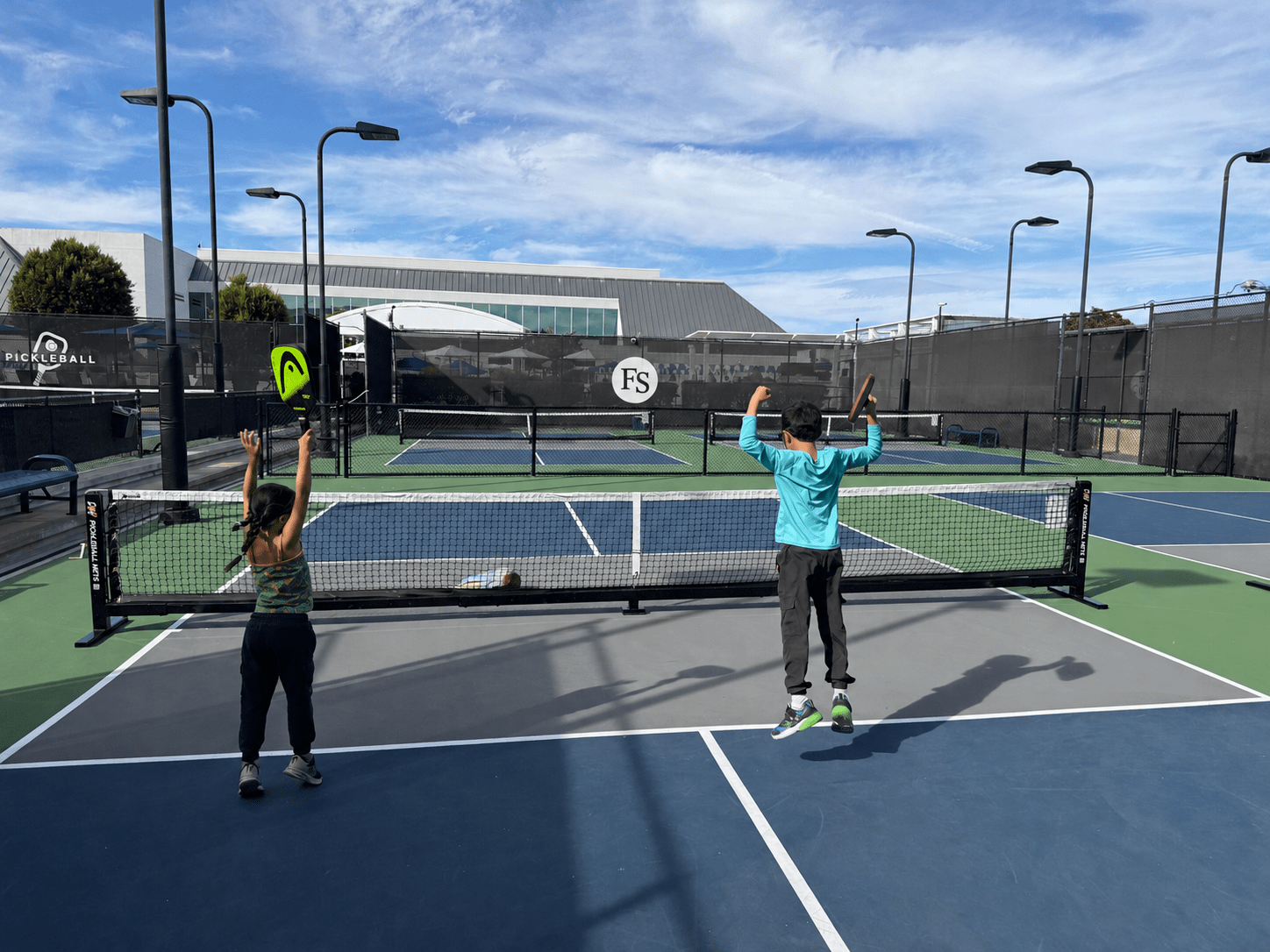
The club was the bigger loss. It has swimming, tennis, pickleball, ping pong, a basketball gym, a workout room, hot tubs, and a place to eat. What a wonderful and safe place to spend an entire day with children.
That club is also 20 miles away, a 30 to 40 minute drive each way. The activation energy to go is real, especially after writing and playing pickleball from 6am to 9:30am. Add four or five hours at the club and you have burned an entire day.
So we adjusted. We went to public parks more. Reclaiming 60-80 minutes of driving every Sunday and staying local was genuinely nice. The pool time and stroke practice would have to wait. Both kids swim well enough to have passed the test and can be left unattended in the pool if necessary.
A Nice Turnaround In The Markets
Then the market did what markets do. Since we cut costs in April, the S&P 500 climbed from about 6,600 to over 7,600 today. That was a relief after it sold off to 6,368 on March 29, 2026. As an investor who depends on his portfolio more than someone with stable active income, I felt much better about our situation.
So as any rational household CFO would do, I ran the numbers again in tools such as Empower and Boldin to see whether we could spend more again.
We could, and I knew we could without checking. But I did not resubscribe to cable. I am thoroughly used to living without it, and it has given me back roughly an hour a day. I’ve spent that hour writing on Financial Samurai and working on my next book, Your Children Will Be OK.
Then I ran the numbers on rejoining the club at $185 a month. Resounding yes. Just one problem.
The guest fee had gone from $25 per person to $100 per person. That meant $200 in guest fees every time I brought my two kids. Four Sundays a month and I’m at $985. For a club I had just quit on principle.
So I sat on the decision. I was headed to Hawaii for a month to see my parents anyway.
The Catalyst That Made Me Rejoin A Private Club
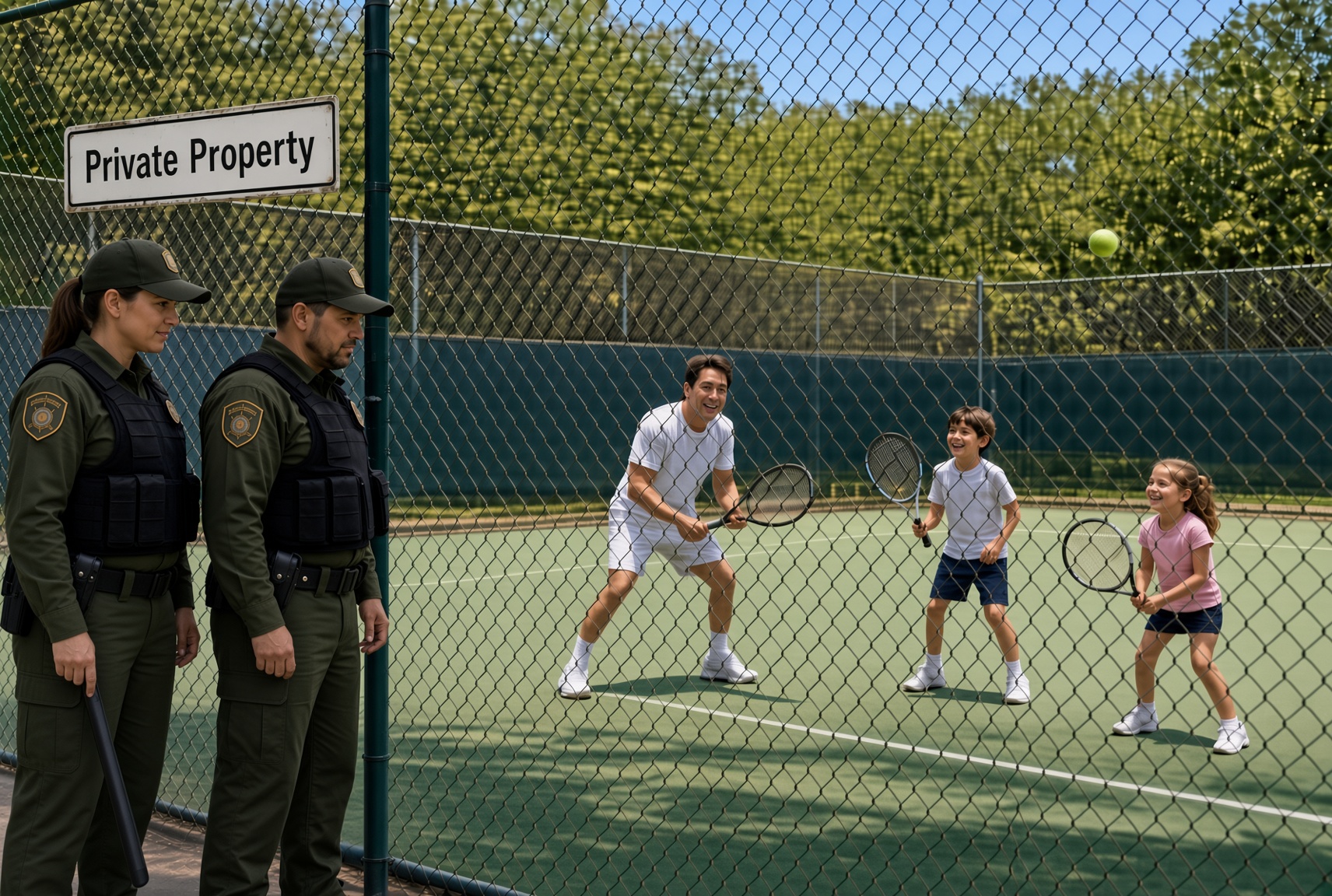
If you’ve been reading Financial Samurai since August 2026, you already know what changed my mind. Two stern park rangers approached me on an empty public tennis court near my house while I was teaching my own children how to play. It was 3:15pm on a Thursday, when most people were at work.
I spent weeks reading thousands of comments and thinking about it. Here is where I landed.
I do not want to be approached by two armed people in batons and bulletproof vests again while I’m out with my six-year-old and my nine-year-old. It would have been one thing if the rangers were friendly. However, they were unwelcoming, asking me to prove my fatherhood.
Then I asked myself what the point was of saving and investing 50% to 75% of my after-tax income for 13 years if not to make life better for the people I love. Refusing to spend $185 a month on a club my kids enjoy, when I left work in 2012 with ~$3 million that has grown with the market since, isn’t frugality. It’s stinginess wearing frugality’s jacket.
Being Able To Spend Fun Time With Them Is Even More Important
Then I did the other math, the one that actually decided it. The golden window for spending time with your children is only about 12 years, not 18. They are already aging out of the playground. At some point they will not want to spend five hours on a Sunday with dad when they could be with friends.
I know this because I was that kid. From sixth through eighth grade in Kuala Lumpur, all I wanted was to go skateboarding with my friends and grab food after. I was not longing to come home to my tired parents and explain why I did poorly in a class. I’m slowly sensing my 9-year-old doesn’t want to spend as much time with me as in the past.
I cannot control how strangers treat us in public. So the next best option is to control the environment we’re in.
Something protective switches on when you’re out with young children. You want them safe, always. And a deserted park in a quiet corner of San Francisco on a Thursday at 3:15pm, with nobody around, still wasn’t quiet enough. The city wants their money, however which way they can find it.
At the club, anyone who wants to bother us has to show a membership card at the front door first. There’s no guarantee we’d never be hassled again. But the odds drop a lot when there’s a front desk.
What A Private Club Membership Actually Costs
My dues are $185 a month. That’s the number I’d been carrying around in my head as the cost of membership, and it’s the number I felt good about cutting in April.
But dues were never the only cost. As a single member bringing two kids, I was paying $25 per guest, twice a visit, four Sundays a month. Another $200. So the membership I quit was actually $385 a month, or $4,620 a year. I had been underestimating my own expense by more than half.
Then the guest fee went from $25 to $100. Same math, new number: $185 plus $800 equals $985 a month. Nearly $11,820 a year to play tennis and pickleball with my own children.
That’s when I looked at making the kids members instead. Two junior members plus me meant the household grew to $450 a month, or $5,400 a year. Roughly $6,400 a year cheaper than paying guest fees, and I stop doing arithmetic every time we walk through the door.
Dues are the entry fee. Guest fees, food minimums, locker rentals, assessments, and the initiation you already forgot about are where the real number lives.
How Sad Is This, Really
I went to public high school, public college at William & Mary, and public grad school at Berkeley for my MBA. I pay about $100,000 a year in property taxes, some of which funds the public parks and infrastructure I was standing on.
Apparently that isn’t enough to feel welcome at a public park.
For the first time in 25 years I felt out of place in San Francisco. And that’s a feeling I know well enough to recognize instantly.
I came to America in 1995 and landed in Northern Virginia, where the Asian population was about 5% at the time. Racial remarks and low-grade prejudice were just weather. You learned to dress for it. You didn’t complain about it any more than you’d complain about humidity in August. It’s hard to change how others view you, so you conserve your energy.
Then I moved to San Francisco in 2001, a majority-minority city, and the weather changed. For 25 years I have not once felt like a guest here. That is not a small thing. Most people who grew up as the default in their hometown have no idea what it’s like to stop being the exception.
Here’s what I didn’t appreciate until recently. Moving to San Francisco was itself a purchase, especially after retiring in 2012. I don’t have to be here.
This is one of the most expensive cities in the world, and part of what I bought with that cost of living was the feeling of belonging. I just didn’t think of it as a line item at the time.
Choosing Your Desired Environment
We talk about money buying houses, cars, and freedom from work. We don’t talk about it buying the ability to choose who surrounds you.
A city. Then a neighborhood, a school, then a club. Each one is the same transaction at a smaller scale, and each one costs more per square foot of comfort than the last.
In my 20s and 30s I didn’t have many options because I didn’t have much money. When someone made me feel unwelcome, I sucked it up. Or I found some common ground, and played nice, because I hadn’t accumulated enough passive income to walk away from anything.
Now I’m 49 with two young kids. My tolerance for nonsense has gone down and my instinct to protect has gone way up. Today, the difference is that I can afford to leave. On Wall Street, we called this f you money. It’s a nice option to have.
That’s the sad part. Going private is not about status. I don’t care about any prestige associated with joining a private organization. What I appreciate is belonging and the right to be left alone, and only some people can afford the ticket.
I’m self-selecting a set of tennis and pickleball courts with my children, while I continue to play on the public courts with my friends. Plenty of people don’t get to select anything, which is exactly why the public courts should feel welcoming to everyone on them.
And as I argued in my backwards tax identification proposal, the people paying the most in taxes going private is arguably good for everyone else. We stop taking up space on the public courts. But at the same time, how sad is it that feeling unwelcome is one of the reasons why people go private in the first place.
This is how tribes starts. Someone makes you feel unwelcome, so you find a place where you won’t. Then you’re the one behind the door.
What Money Actually Buys
For years I wondered whether private schools, private lessons, and private clubs were worth it. For tuition I came up with a rule: earn at least 5X the net annual tuition per child before going private. Save your financial self before committing to a luxury expense.
As a father, I’m coming around. Peace of mind is worth a lot, and I’ll pay for it. It’s the reason why every rich person I know still has life insurance. They can self-insure, but they are willing to pay for the peace of mind their surviving heirs don’t have to make financial decisions under duress.
My wife and I both went to public grade schools where fights were routine. Survival of the fittest builds grit in some kids. It crushes the spirit of others. The problem is you don’t know which kid you have until it’s perhaps too late, and most parents with the means won’t take that bet.
So here’s my actual fear. If something happens to my kids that money could have prevented, how would I live with that?
It’s the same reason I traded in my Honda Fit for a Range Rover Sport the year my son was born. If we’d been hit in that Fit with its paper-thin doors and something had happened to my wife or son, I would never have forgiven myself. Money needs to be spent for a better life, otherwise, there’s no point saving and investing so aggressively.
So if you’re looking for motivation to save more, invest more, and take more calculated risk to beat average, add these two to the list: your children’s safety and your own peace of mind.
Optionality is the whole point. You may never use it. But on the day you need it, you’ll be glad you bought it.
Reader Questions
Have you ever gone private after a specific incident, rather than for status or convenience? What was the moment that flipped it for you? And what public thing have you quietly given up on, a park, a pool, a library, a stretch of sidewalk, because it stopped feeling comfortable? Finally, what is peace of mind actually worth to you in dollars per month, and have you ever run that number honestly?
The One Thing You Can’t Buy Your Way Out Of
Every purchase in this post protects my kids while I’m still here. The club, the car even the city I chose. None of it does a thing for them if I’m not around.
That was the one gap I couldn’t close with a membership fee, so I closed it with term life insurance instead. My policy runs until my youngest is out of college.
If you have young children and no life insurance policy, or one you bought before your kid arrived, spend three minutes comparing quotes on Policygenius. Free, no obligation, multiple carriers in one place. The version of this decision you regret is the one you keep putting off.
Want every new post the moment it publishes, ad-free for the first few hours? Sign up at here.