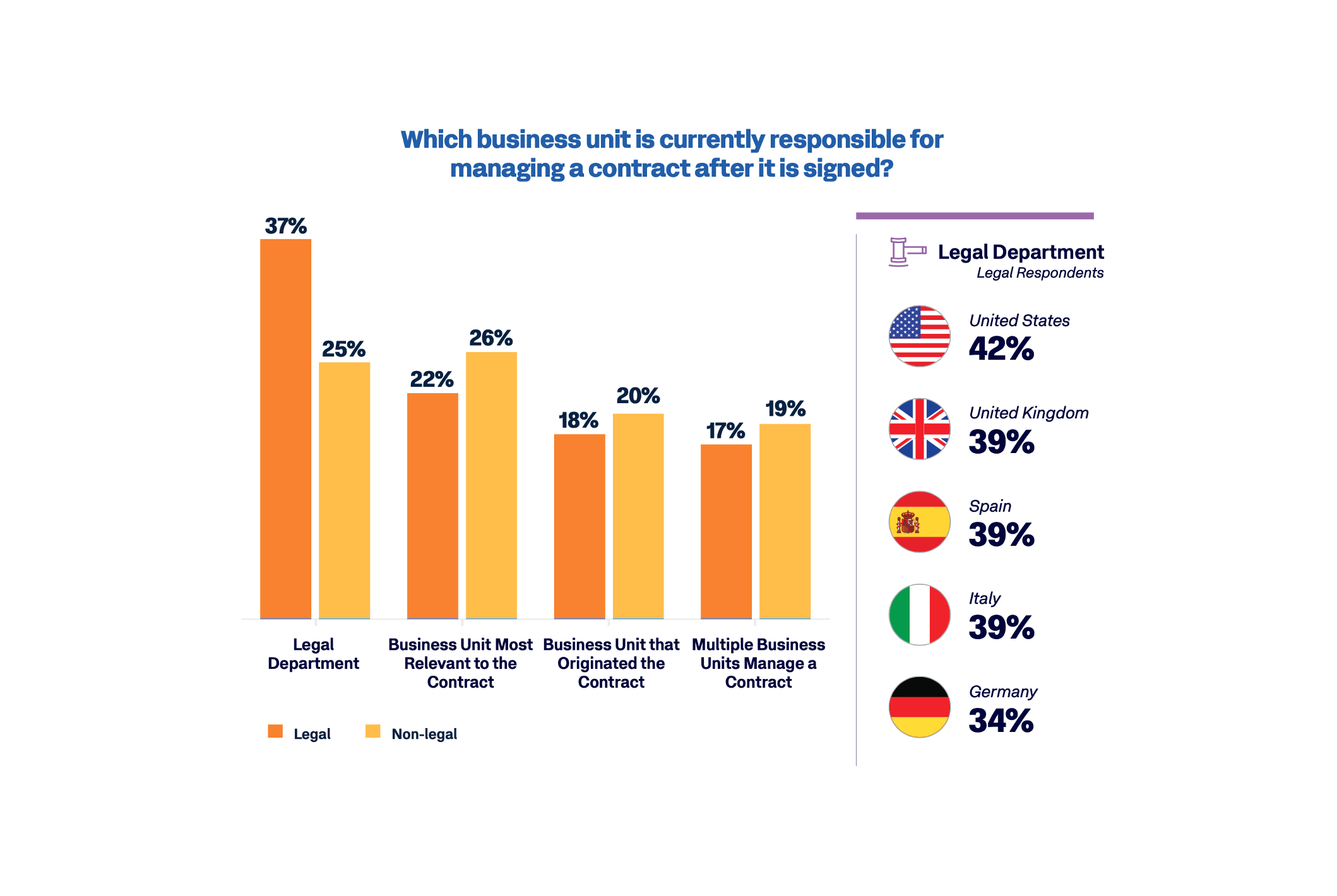
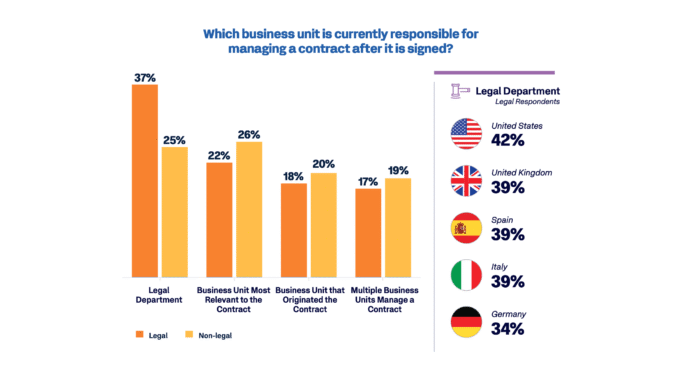
A major survey by Workday of 7,000 lawyers and other enterprise staff across 10 countries has found that contract chaos persists, with only 37% of inhouse lawyers believing ‘they are responsible for post-signature management’ of business agreements. Moreover, over half of those surveyed said that they still lack a centralized contract system. In short, corporate culture is still dominant in preventing the full benefits of legal AI.
While this may sound surprising, the reality is that Artificial Lawyer has been hearing statistics like this for over a decade – indicating that although the tech has improved, core human behaviours and enterprise culture has not changed that much.
Moreover, despite the promise of legal AI tools, if most large companies are not even sure who is responsible for contract management, nor have moved to implement some form of cross-business contract system, then there is only a little that can be done to improve things.
As the table below shows:
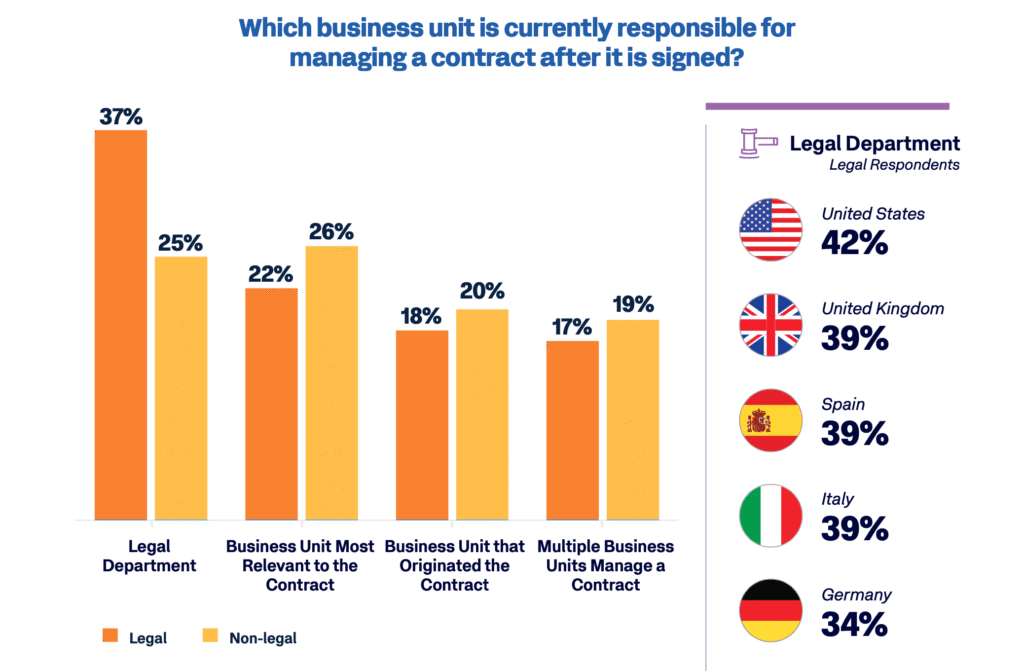
Even among lawyers only 37% felt it was ‘their responsibility’ to track contracts, while for the rest of the staff in an enterprise only 25% thought it was the lawyers’ job. And that perhaps would not be a problem if at least someone did claim that role.
However, the survey shows that 26% of staff felt contracts should belong to whichever team seemed to be ‘most relevant’.
And then they also found that:
- Enterprise employee respondents report that contracts [still] sit in personal hard drives (22%) and email inboxes (20%).
And that amazingly in 2026:
- Nearly one in four (23%) say contracts are kept as physical paper records.
Plus they also found:
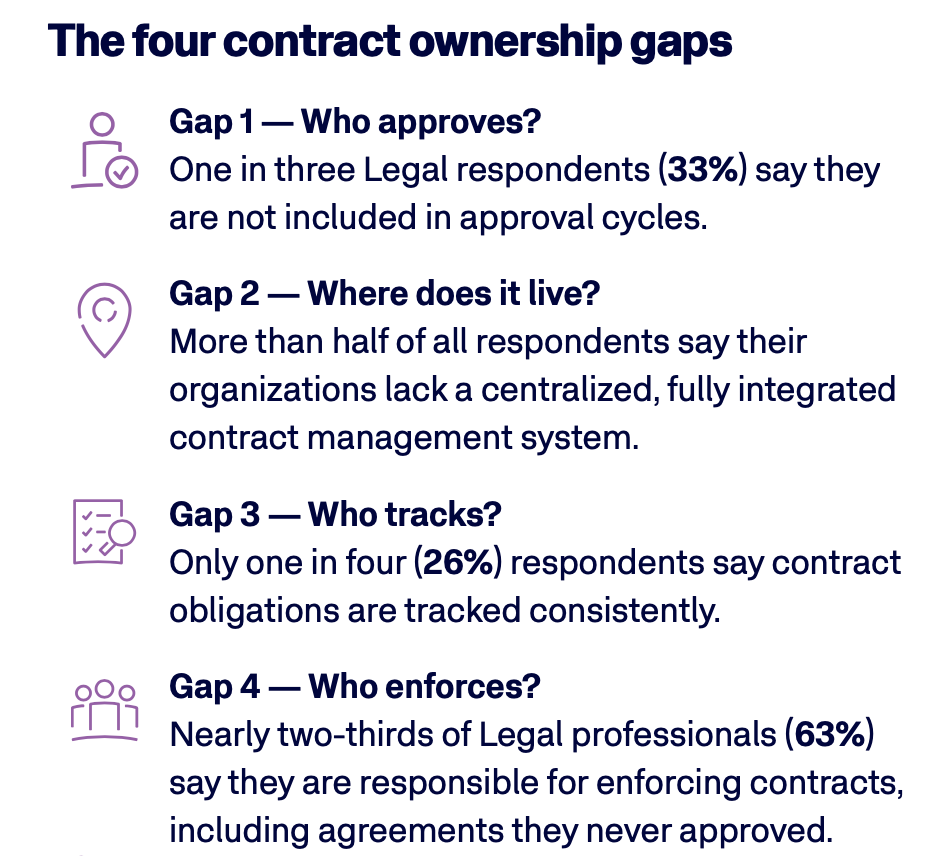
In short, the overall challenge today is the same as it was 10 years ago, even if AI promises great improvements.
Contracts are literally ‘all over the place’; there is little central control and monitoring; and ‘ownership’ seems to belong to whoever feels it matters most to them on the day.
How is legal AI meant to make a dent in this? How can AI help a business to be on top of all of its obligations and help to speed things along, or reduce risk, if the contracts themselves are out of sight and out of mind, as it were, for many of the key people – and AI systems – that might be relevant?
If the human engagement and organisational structures are not in place, then all AI can do is have localised benefits where things have been intentionally joined up, rather than have an impact at a true enterprise level. In short, contract chaos still reigns.
Just goes to show, as Peter Drucker almost said: ‘Culture still eats AI for breakfast.’
You can find the report here.
—
Two Major Legal Innovators Conferences this November
Come and join us in New York and London this November at Legal Innovators!
Legal Innovators UK – London, Nov 4 and 5
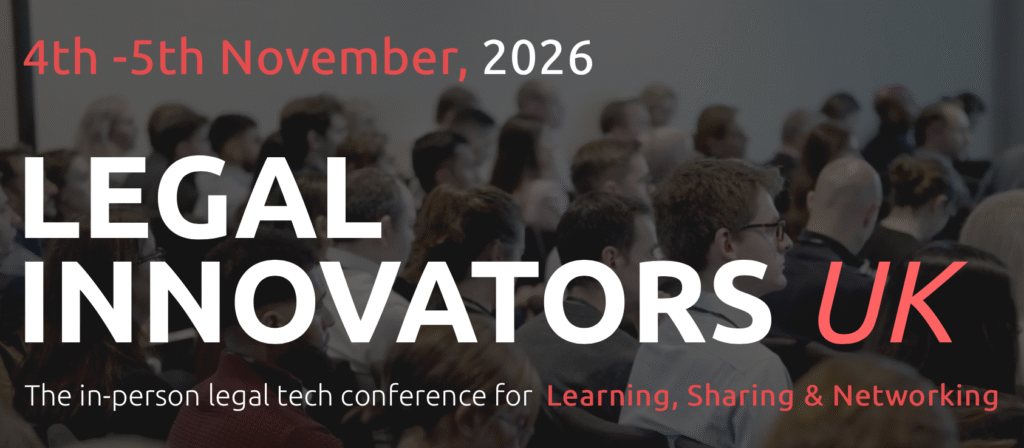
And, then Legal Innovators New York – Nov 17 and 18.
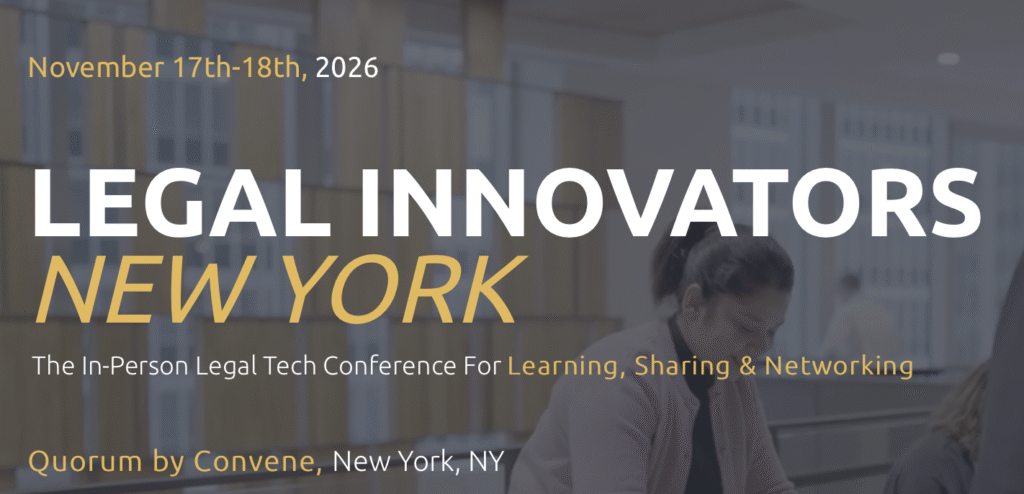
After another fantastic Legal Innovators California, where we had speakers from OpenAI, Y Combinator, Google, Meta, and many more pioneering organisations; and our stellar inaugural event in Paris this June, we are now looking forward to the landmark conferences in London and New York, both in November, and both across two days: Law Firm Day, and Inhouse Day.
Discover more from Artificial Lawyer
Subscribe to get the latest posts sent to your email.