Semi-Blind Within-Subject exBEERiment | Water Chemistry: Impact Post-Fermentation Calcium Chloride Addition Has On An American Pale Ale

Author: Marshall Schott
Water chemistry is often one of the last things brewers think about, with many buying into the age-old trope, “if it’s good enough to drink, it’s good enough to brew with.” While this isn’t necessarily wrong, it definitely minimizes the impact different levels of certain minerals have on beer, the two most commonly referenced being sulfate and chloride. Commonly referred to in relation to each other as a ratio, many brewers opt to focus on the amount of sulfate-to-chloride in their beer, with higher sulfate believed to enhance hop character, bitterness, and overall crispness while higher chloride levels round out bitterness and create a smoother, fuller perception.
Most brewers make their mineral adjustments, through the addition of various salts, during the brewing process, to either the brewing liquor or the mash. However, there are times when a beer doesn’t quite meet expectations, and some might wonder if perhaps the mineral profile is at play. While many accept what they’ve got and carry on, others may consider making post-fermentation adjustments, something prior results have shown does seem to affect beer character.
I’d be lying if I said prior water chemistry xBmt results haven’t had a huge influence on my current thinking about the topic – I now adjust my water every time I brew. Recently, while sipping a beer of my own making, the concept of post-fermentation mineral adjustments came to mind, which alongside the several requests we’ve received to occasionally revisit our semi-blind within-subject Covid protocol, inspired me to test it out for… err… on myself!
| PURPOSE |
To evaluate the differences between an American Pale Ale with a sulfate-to-chloride ratio of 3:1 and one adjusted with calcium chloride post-fermentation to a 1:1 ratio.
| METHODS |
For this xBmt, I used some of the Brü It Yourself Smiling Sky Summer Pale Ale I had on tap, the recipe of which was designed by a dear friend of mine. Big thanks to Northern Brewer for hooking me up with the ingredients for this batch!
Smiling Sky Summer Pale Ale
| Batch Size | Boil Time | IBU | SRM | Est. OG | Est. FG | ABV |
|---|---|---|---|---|---|---|
| 5.5 gal | 60 min | 42 | 4.5 SRM | 1.055 | 1.009 | 6.04% |
Fermentables
| Name | Amount | % |
|---|---|---|
| Pale 2-Row Malt | 10 lb | 87% |
| Vienna Malt | 1 lb | 9% |
| Caramel Malt 20L | 0.5 lb | 4% |
Hops
| Name | Amount | Time | Use |
|---|---|---|---|
| Simcoe | 17 g | 40 min | Boil |
| Simcoe | 12 g | 30 min | Boil |
| Cascade | 14 g | 5 min | Boil |
| Centennial | 14 g | 5 min | Boil |
| Cascade | 14 g | 5 min | Dry Hop |
| Centennial | 14 g | 5 min | Dry Hop |
Yeast
| Name | Laboratory | Form |
|---|---|---|
| FRESH Andechs | Berkeley Yeast | Lager |

The day before brewing, I collected the full volume of RO water that I adjusted with my desired salts to achieve the mineral profile listed in the recipe.

I then weighed out and milled the grains.

The following morning, I quickly heated the water and incorporated the grains, checking to ensure it was at my target mash temperature.

Following the 60 minute mash rest, I removed the grains and proceeded to boil the wort for 60 minutes before chilling it with my JaDeD Brewing Hydra IC.

A hydrometer measurement confirmed it was at my expected OG.

I then transferred the chilled wort to a sanitized fermenter.

The filled fermenter was connected to my glycol unit and left to chill for an hour to my desired fermentation temperature of 60˚F/16˚C, at which point I pitched 200 mL of active Berkeley Yeast FRESH Andechs yeast.

Next, I connected the fermenter to a keg filled with sanitizer such that it would be purged of oxygen with naturally produced CO2.

The following evening, I bumped the temperature up to 68˚F/20˚C and added the dry hops to the actively fermenting beer.

With signs of activity absent 3 days later, I took a hydrometer measurement confirming FG had been reached.

After cold crashing the beer to 34°F/1°C overnight, I added gelatin fining and let it mingle with the cold beer for 2 days before pressure transferring it to the naturally CO2 purged keg.

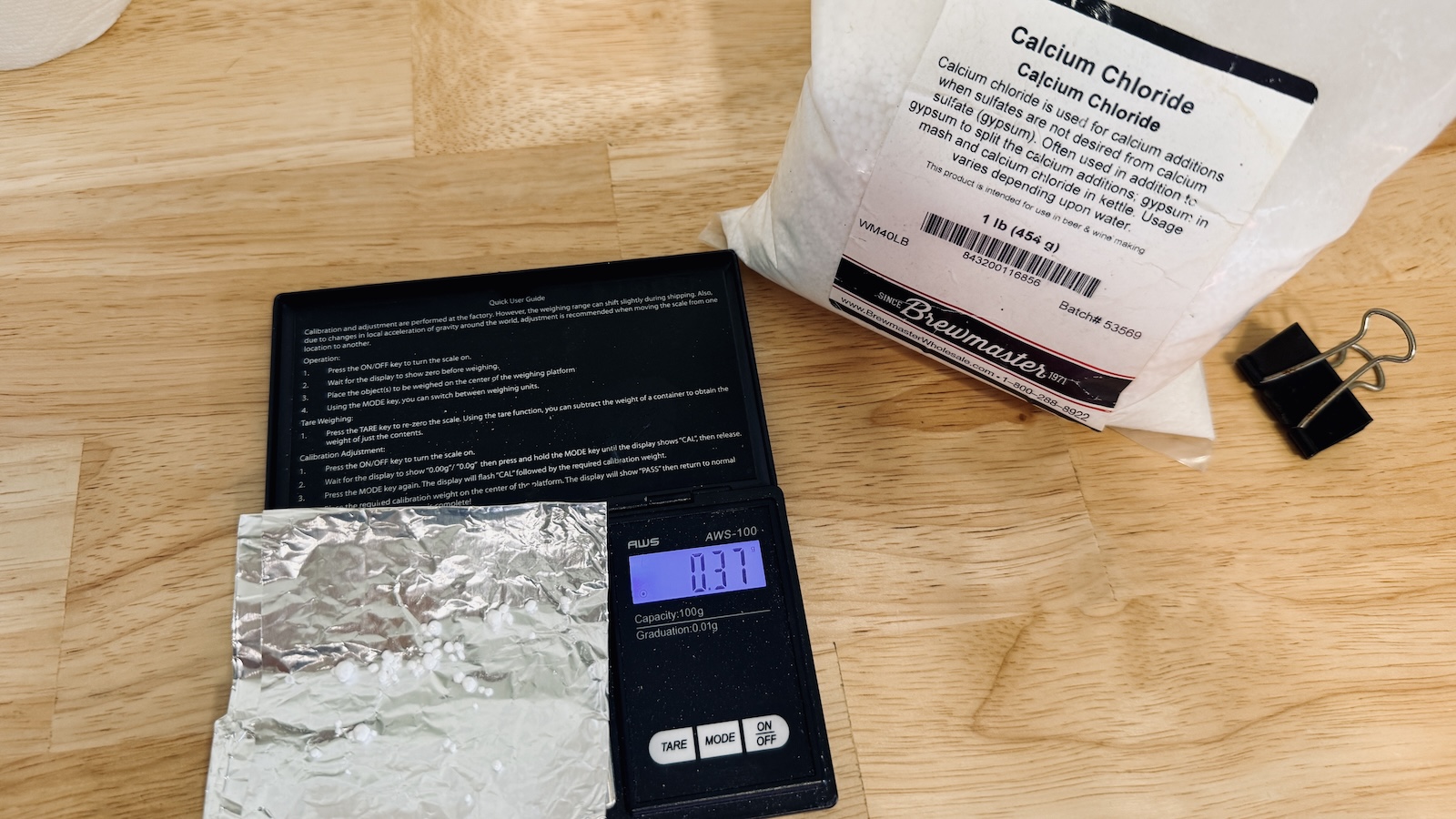
The filled keg was placed in my keezer and burst carbonated overnight before I reduced the gas to serving pressure. After 3 weeks, I used Brewfather to determine the amount of CaCl required to achieve a 1:1 sulfate-to-chloride ratio – at 279 ppm sulfate and 90 ppm chloride, a mere 0.37 grams in 32 oz/1 L of beer would even things out.

To ensure homogenization and reduce foaming, I started by dropping the CaCl into one Nalgene bottle then, to keep things as equal as possible, I added approximately 1 oz of beer to both bottles and swirled them until the salt was dissolved before filling each to the 32 oz/1 L line.

After letting both bottles settle in the refrigerator for 10 minutes, I proceeded with my trials.
| RESULTS |
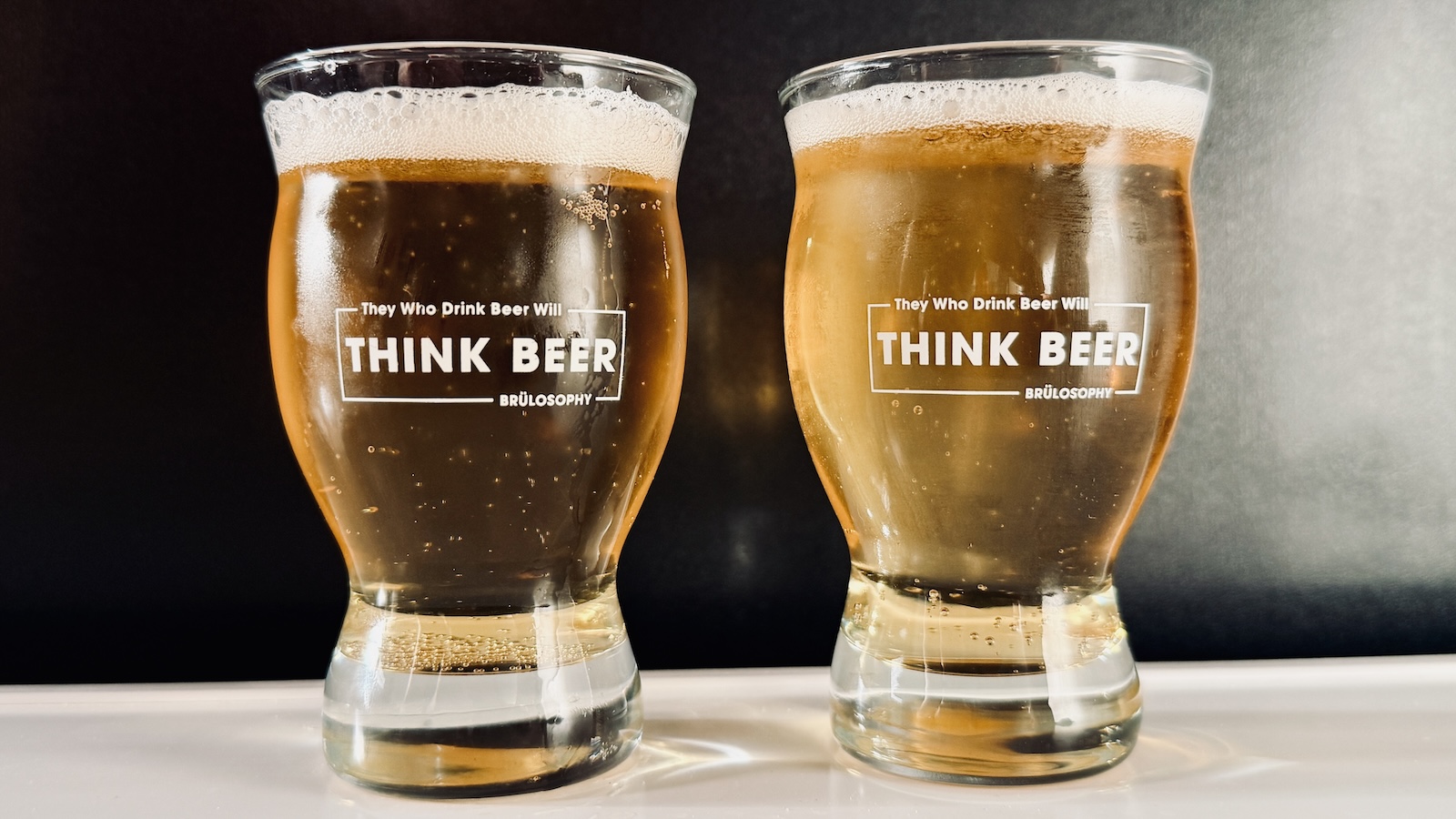
Utilizing 4 opaque cups of the same color where 2 were inconspicuously marked, one set was filled with the beer possessing a 3:1 sulfate-to-chloride ratio while the other set was filled with the beer adjusted post-fermentation to a 1:1 sulfate-to-chloride ratio. For each triangle test, 3 of the 4 cups were indiscriminately selected, thus randomizing which beer was the unique sample for each trial. Out of the 10 semi-blind triangle tests performed, the unique sample would need to be selected at least 7 times (p
While my performance wasn’t perfect, it was pretty damn consistent, to the point I’m comfortable saying that I could tell the difference between these beers. To my palate, the 1:1 sulfate-to-chloride beer had a much rounder bitterness – not that there was no bitterness, but I perceived it as being notably softer, which allowed me to focus more on the other characteristics of the beer. The overall malt and hop character seemed identical, it was the crispness that gave it away to me. While I ended up choosing the 3:1 sulfate-to-chloride beer as my most preferred in every trial I was correct on, I was perfectly happy with the 1:1 version as well, as it was still delicious, albeit different.
| DISCUSSION |
Over the last couple of decades, it seems brewers have started taking water chemistry more seriously, with most finding value in adjusting levels of minerals such as sulfate and chloride. While most salt additions are made to the brewing liquor either prior to or during the mash, there are times a brewer might prefer to enhance certain characteristics once the beer is done fermenting. My ability to reliably distinguish an American Pale Ale with a 3:1 sulfate-to-chloride ratio from one adjusted post-fermentation to a 1:1 sulfate-to-chloride ratio indicates it had a noticeable impact in this particular case.
In addition to supporting the practice of post-fermentation mineral adjustments, these results further validate the general idea that water chemistry has a palpable impact on the perceptible qualities of beer. One inescapable factor that may have played a role is the fact that, in addition to increase the chloride level, the addition of CaCl also increased the amount of calcium in the beer – whereas the starting beer had 107 ppm, the adjusted version had 178 ppm. Is that enough to have a perceptible effect?
Perhaps. But I’m not convinced it wasn’t the difference in sulfate-to-chloride ratio that led to these beers being perceptibly different to me. Having performed several past water chemistry xBmts, my experience on this one aligns not only with those, but uncharacteristically, it corroborates the common knowledge about the impact these minerals have on beer. I may have preferred the version that was 3:1 sulfate-to-chloride, but I would certainly be happy with the 1:1 version as well, it was excellent, and in the future, I may aim for that purely because I think it’ll appeal more to my friends who aren’t (yet) into craft beer.
If you have any thoughts about this xBmt, please do not hesitate to share in the comments section below!
Support Brülosophy In Style!


Follow Brülosophy on:
FACEBOOK | INSTAGRAM

If you enjoy this stuff and feel compelled to support Brulosophy.com, please check out the Support page for details on how you can very easily do so. Thanks!
Related