The Ultimate Guide to Lease Agreements



When you’re preparing to rent out a property, it’s easy to focus on finding a tenant and setting the rent. But before you even hand over the keys to your tenants, you need to agree on how the tenancy will work. You can do that by agreeing on who pays the utility bills, how tenants will report repair problems, and what happens if they need to break the lease early.
A clear lease agreement helps you work through those questions. This is because it puts the terms in writing so you and your tenant have something to refer to when questions come up. At BMG, we often get questions about what to include in a lease, especially when landlords are working from a template. That’s why we’ve created this guide to help you understand what belongs in a lease agreement and how to adapt it to your rental property.
So, where do you start? We’ll walk you through the entire lease agreement process together. We will help you understand how to choose a lease type, set clear terms, and review the agreement before signing. Also, we will cover lease renewals, address changes during the tenancy, and more. With that in mind, let’s start with defining what a lease is.
Main Takeaways
- A clear lease explains rent, responsibilities, property rules, and what happens when the tenancy ends.
- Choose a lease term that fits your property plans and your tenant’s needs.
- Check local requirements, required disclosures, and Fair Housing obligations before signing.
- Put agreed changes in writing and keep the signed lease and attachments together.
- Follow applicable rules for renewals, early termination, and lease violations. A signed clause doesn’t override the law.
Article Contents
- What Is a Rental Lease Agreement?
- Which Type of Lease Agreement Should You Offer?
- What Should You Include in a Lease Agreement?
- What Legal Requirements and Disclosures Should Landlords Check?
- When Do You Need a Lease Addendum or Amendment?
- How Do You Review, Negotiate, and Sign a Lease?
- What Lease Agreement Mistakes Should Landlords Avoid?
- How Do Lease Renewals and Non-Renewals Work?
- What Happens When a Tenant Wants to Break the Lease?
- How Should Landlords Handle Lease Violations or End a Tenancy?
- FAQs About Lease Agreements for Landlords
- Get Help Managing Your Rental Lease With BMG
What Is a Rental Lease Agreement?
A rental lease agreement is a contract between a landlord and a tenant that sets the terms for renting a property. It covers who is renting the property, how much rent will be paid, when it’s due, and what both sides are responsible for during the tenancy.
You’ll probably refer back to the lease more often than you think. If a question comes up about rent payments, maintenance requests, utilities, guests, or move-out requirements, the lease is usually the first place to look for answers. That said, you can prepare one yourself or choose an experienced property management company in Washington DC to handle the agreement on your behalf.
What’s the Difference Between a Lease and a Rental Agreement?
People often use these names to mean the same thing. Usually, a lease has a set end date, while a month-to-month rental agreement keeps going until it’s ended with the required notice.
For example:
-
Twelve-month lease: “You’re renting this home from January 1 to December 31.”
-
Month-to-month agreement: “You’re renting this home one month at a time. It continues next month unless it’s ended with the required notice.”
As you can see, both explain the rent and rules. But one has a set end date, while the other continues month by month. People may still call either document a “lease” or a “rental agreement.”
How Does a Clear Lease Help Landlords and Tenants?
A clear lease helps landlords and tenants understand what is expected of them throughout the tenancy. It puts important terms in writing so both parties have a reference point whenever questions or disagreements arise.
For example, you may have the rent spelled out, but what about utilities? Does it really spell out who pays for what? And if two units share a meter, how will the tenants share those bills? A clear lease helps explain those arrangements.
Another question is repairs. If a tenant notices a problem, how should they report it? Of course, tenants have responsibilities for caring for your property, but who handles the repair, and when might the tenant be responsible for the cost? So, explain those duties clearly without passing your legal repair obligations on to them.
A written lease gives you both something to refer to if there’s a misunderstanding. But signing it doesn’t make every term legal. The lease must follow the law, and some tenant rights still apply no matter what they sign.
Which Type of Lease Agreement Should You Offer?
Now that we’ve covered what a lease does, how long should yours last? That’s one of the main differences between lease types. To help you answer that, first spell out your plans for the property and the renters you want to attract. This is because a tenant settling into a neighborhood may prefer an annual lease because they’re looking for stability. But someone waiting to buy a home or staying in the area temporarily may want a month-to-month arrangement.
Let’s take a closer look at how the main lease options compare.
| Lease Type | Duration | Main Tradeoff |
|---|---|---|
| Fixed-term | Set dates, often six or twelve months | Easier to plan around, but less flexible |
| Month-to-month | Continues monthly until lawfully ended | More flexible, but move-out timing is less predictable |
| Multi-year | A fixed term longer than one year | Fewer renewals, but a longer commitment |
Fixed-Term Leases
A fixed-term lease has a defined start and end date. You might offer six months, twelve months, or another period that fits your rental plans. And remember, paying rent every month doesn’t make it a month-to-month lease. What matters is how long the tenant has agreed to stay.
An annual lease can suit tenants who want to settle in and landlords who want time to plan ahead. A shorter fixed term may work for someone on a temporary work assignment or help you schedule the next lease expiration during a busier rental season.
So, before signing, make sure the agreement explains what happens when the term ends. We’ll cover renewal and month-to-month continuation later in this guide.
Month-to-Month Agreements
 This is a more flexible lease type. As its name suggests, leasing continues monthly rather than committing both parties to a set end date. Basically, the agreement renews each month. You can offer it from the beginning or use it to continue an existing tenancy after a fixed term ends.
That flexibility is one of the benefits of offering month-to-month leases, especially when a reliable tenant isn’t ready to stay for another year. But you may not know how long they’ll stay or when you’ll need to find someone new, which can make planning more difficult.
Month-to-month agreements can also help landlords keep reliable tenants who aren’t ready to commit to another fixed-term lease. In some cases, extending the tenancy month by month may be better than risking a vacancy while searching for a new renter.
But remember, a month-to-month lease doesn’t mean you can raise the rent or end the tenancy whenever you want. As a landlord, you must follow notice requirements and other local rules before making changes or asking a tenant to move out.
Longer and Multi-Year Leases
Longer and multi-year leases allow landlords and tenants to commit to the rental for more than one year. They can provide greater stability for both landlords and tenants. For example, you might choose to offer a two-year lease to avoid another round of advertising, showings, and move-in preparation. And for a tenant who wants to stay, that longer commitment may be appealing as well.
However, a longer lease also means less flexibility for both sides. A tenant may need to move sooner than expected, and landlords may want the option to make changes when the lease ends.
So, before signing, make sure the lease term works for your future plans. A longer lease can help reduce turnover, but it doesn’t guarantee rent payments or stop a tenant from moving out early. If a tenant wants to leave before the lease ends, be sure you understand your options as a landlord. Learn more in our guide on breaking the lease and what landlords need to know.
But which option fits your property? The answer depends on your plans, how much flexibility you need, and what renters in your area are looking for. Then discuss the tenant’s plans so you can choose a lease term that works for both of you.
What Should You Include in a Lease Agreement?
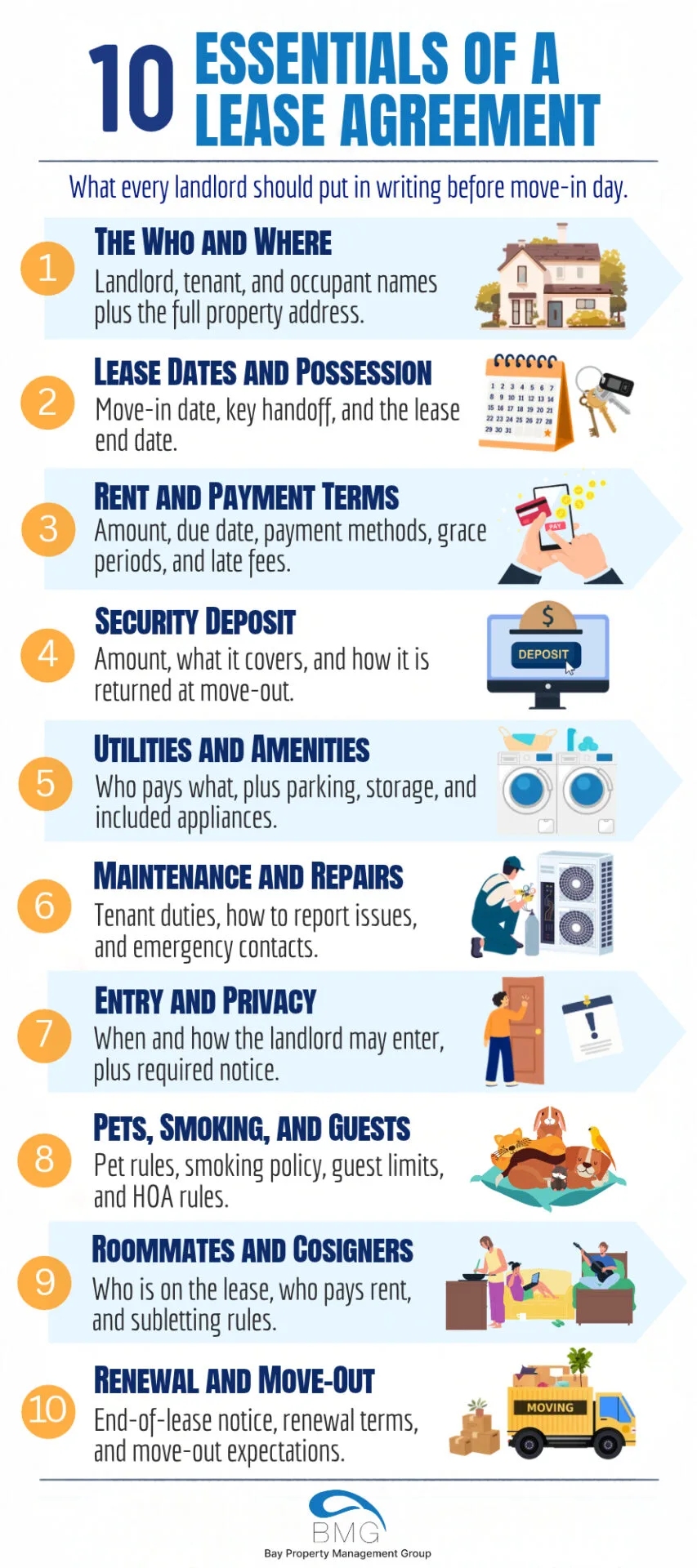
Once you’ve chosen a lease type, explain what your tenant needs to know before moving in, like how much they’ll pay, which spaces they can use, and who to contact if something breaks.
If you’re wondering what to include in a lease, start with the items below. And remember to make each term specific to your property and check it against applicable law.
1. Landlord, Tenant, Occupant, and Property Details
A lease should clearly identify who is renting the property and where it is located. Include the landlord’s name, the tenant’s full legal name, contact information, and the complete property address. And if someone has been approved to live in the home without signing the lease, list them as an occupant.
It’s also a good idea to specify which areas come with the rental. For instance, does the tenant have access to the garage, basement, storage area, or backyard? Putting those details in writing helps avoid confusion later on.
2. Lease Dates and Possession of the Property
Your tenant needs to know when they can move in and collect the keys. Include that date and any move-in arrangements you’ve agreed on. If it’s a fixed-term lease, include the end date as well.
And if your tenant’s lease starts halfway through the month, how much rent will they owe? Our guide on how to calculate prorated rent walks you through the math. After that, explain how you’ll calculate that first payment so they know when and what to pay.
3. Rent, Payment Methods, and Late Fees
Specify the rent amount, due date, accepted payment methods, and where to send payment. These are some of the most important details, so you need to include any lawful grace period, late fee, or returned-payment charge. Rather than saying “late fees apply,” explain how much you charge and when the fee applies so tenants know what to expect.
4. Security Deposits and Other Charges
Your lease should explain how much the security deposit is, what it covers, and when deductions may apply. It should also explain when tenants can expect the deposit to be returned after they move out. If your state or local laws have specific requirements for handling security deposits, make sure the lease reflects those rules. Any other fees or charges should also be listed clearly, including the amount and when payment is due.
5. Utilities, Parking, Storage, and Included Amenities
Write down which utilities the tenant pays and which you cover. If you bill tenants for shared utilities, explain the calculation. Let your tenant know which parking space, storage areas, appliances, and amenities come with the rental. Explain any extra charges and what they’re expected to take care of.
 6. Maintenance, Repairs, and Reporting Problems
Spell out routine tenant duties clearly. For example, say who mows the lawn or changes the air filters. Tell tenants how to report a maintenance problem and who to call in an emergency. Make sure the lease reflects your responsibility to keep the home safe and livable.
7. Entry, Inspections, and Tenant Privacy
Explain when you may enter the rental for repairs, inspections, or showings. Tell tenants how you’ll schedule visits and give them the notice the law requires. Explain how you’ll handle emergencies separately, since different notice rules may apply.
8. Pets, Smoking, Guests, and Property Rules
Let your tenant know which pets you allow, any pet charges permitted by law, where smoking is prohibited, and the rules for guests. If your property has HOA or community rules, give them a copy to review before signing.
And remember, assistance animals aren’t pets, so review requests for them under the rules for accommodating tenants with disabilities.
9. Roommates, Cosigners, Subletting, and Lease Transfers
Another thing to include in your lease is who’ll be living in your rental. If roommates share the place, explain what each person is responsible for, including paying rent. If a cosigner or guarantor is involved, put in writing what they’re agreeing to cover. Also, let tenants know how to request a new roommate, sublet the home, or transfer the lease to someone else.
If multiple tenants share the rental, consider including language that makes each tenant responsible for the full lease obligations. This helps protect landlords if one roommate moves out, stops paying rent, or otherwise fails to meet their responsibilities.
10. Renewal, Notice, and Move-Out Terms
Let your tenant know what happens when the lease term ends, how to give notice, and which deadlines apply. Include the terms for leaving early and explain what they need to do when moving out, such as returning the keys and removing their belongings. We’ll cover renewals and early departures later in this guide.
As you can see, your lease covers the main terms, but you may agree on other arrangements with your tenant. For example, you might let them keep a pet or use an extra parking space. Over time, you may also agree to change a term already in the lease. You can put those agreements in writing through lease addenda or amendments, which we’ll explain later.
What Legal Requirements and Disclosures Should Landlords Check?
 Even after drafting the main lease terms, take one more step before signing: confirm that the agreement complies with the rules that apply to your property. A lease template can help you get started, though you’ll still need to review it for your location and rental type.
Federal, State, and Local Lease Requirements
You need to check the laws where your rental is located. These may limit how much you can collect as a deposit, which fees you can charge, and how you can raise the rent. They also cover entry, notices, rental licenses, and any wording you must include in the lease.
And if you’re using a lease from another property, don’t assume the same rules apply. Two rentals in the same state may have different city or county requirements.
Required Disclosures and Supporting Documents
Before tenants sign, give them any disclosures and documents required for your rental. For most homes built before 1978, federal lead paint disclosure rules require you to tell tenants about any known lead-based paint or lead hazards, share any available records or reports, and give them an approved lead safety pamphlet. You also need to include the required lead disclosure wording in the lease. Some properties are exempt.
Your state or local laws may require other disclosures, such as information about flood risks or shared utility billing. Give your tenant any documents mentioned in the lease so they can read everything before signing.
Fair Housing and Reasonable Accommodations
The Fair Housing Act protects renters from housing discrimination, including discrimination based on race, color, national origin, religion, sex, familial status, or disability. For instance, you may have rules for your rental, but a tenant with a disability may need you to adjust one so they can use and enjoy their home. This is called a reasonable accommodation.
Another example is when you don’t allow pets. You still need to consider a request for an assistance animal under applicable Fair Housing requirements. The tenant doesn’t have to use a special form or legal wording to ask. So, before saying no because of a rental rule, check if the law requires you to make an exception.
Lease Clauses That Need Careful Legal Review
Sometimes you may add a clause to protect yourself, like charging a late fee, but that doesn’t mean you can legally enforce it. So, before enforcing the lease, ask a local landlord-tenant attorney to review terms about giving up tenant rights, responsibility for injuries and repairs, automatic charges, or ending the lease early.
For example, Washington DC law requires written notice at least 48 hours before you enter a tenant’s home. But there is an exemption when there’s an emergency or the tenant agrees in writing to shorter notice. A lease clause saying you can enter whenever you want doesn’t override that rule.
When Do You Need a Lease Addendum or Amendment?
 Over the course of a tenancy, you and your tenant may agree to change certain lease terms. When that happens, those changes should be documented in writing through a lease addendum or amendment.
When you put that agreement in writing, you can use an addendum or an amendment. That way, you both know what’s changed.
What’s the Difference Between an Addendum and an Amendment?
Generally, an addendum adds terms or information to the lease. For example, a parking addendum might identify the tenant’s assigned space and explain its use.
An amendment changes an existing term. If you agree to change the lease’s end date, an amendment can identify the original date and replace it with the new one.
Some forms use these names differently. Just make sure the document explains what you’re adding or changing and identifies the lease it applies to.
Common Addenda for Rental Properties
Depending on your property, you may need an addendum covering:
- Pets: Which pets you allow, how tenants should care for them, and any fees allowed by law.
- Parking: Where tenants can park, rules for their vehicles, and any parking fee.
- Furnished rentals: A list of the furniture you provide and its condition.
- HOA rules: Community rules tenants need to follow and review before signing.
- Property upkeep: Specific arrangements for tasks such as lawn care.
Keep the wording consistent with the main lease. An attachment shouldn’t leave the tenant guessing which of two conflicting terms applies.
How Should You Document Changes During the Lease?
Now, suppose you agree to let your tenant add a roommate. The paperwork should identify the property, reference the original lease, and explain who is joining and what responsibilities they’re accepting.
For any agreed change, record the effective date, obtain signatures from the relevant parties, and give everyone a completed copy. Written approval helps establish what both sides accepted.
If someone is leaving, also clarify whether they’re being released from future obligations. Keep the signed document with the original lease, and check any applicable legal or notice requirements before the change takes effect.
How Do You Review, Negotiate, and Sign a Lease?
Once you’ve prepared the lease, give your tenant time to read it and ask questions. You may find that a small change works for both of you. It’s easier to discuss that now than after your tenant has already moved into the rental.
Which Lease Terms Can You Discuss With Tenants?
You can discuss rent, lease length, parking, and other terms when negotiating a lease with your tenant. For example, a tenant might ask to rent for eighteen months instead of twelve.
Not every request will be the right fit for your property. Before making a decision, think about how the change affects your plans and whether you’d be comfortable making a similar exception in the future. Whatever you agree to, make sure it complies with applicable laws.
What Should You Review Before Anyone Signs?
Before signing, take a final look at the lease to make sure everything is correct. Review the names, property address, lease dates, rent amount, deposits, fees, and any other agreed terms. You should also check that any attachments, disclosures, or addenda mentioned in the lease are included and match the agreement.
Put any promises you made in writing, too. For example, if you promised to replace an appliance before move-in, say which one and when you’ll replace it. Clear up any questions and fill in any blanks that apply before anyone signs.
Who Needs to Sign, and How Should You Keep Copies?
Everyone listed in the lease should sign the agreement before the tenancy begins. That typically includes the landlord, all named tenants, and any cosigner or guarantor who is accepting financial responsibility under the lease. Once the lease is signed, make sure each party receives a copy for their records. Whether you use paper or electronic signatures, keep the signed lease, addenda, disclosures, and other supporting documents together so they’re easy to find later. Before-Signing Checklist
- Verify that the names, property details, lease dates, and payment amounts are correct.
- Make sure all disclosures, addenda, and referenced attachments are included.
- Put any negotiated terms or promised repairs in writing.
- Address any unanswered questions or unclear wording.
- Complete any remaining blanks and collect the required signatures.
- Provide a copy of the completed lease and save one for your records.
What Lease Agreement Mistakes Should Landlords Avoid?
 You can have a detailed lease and still run into problems if the wording is outdated, unclear, or different from what you agreed with your tenant. Before you offer the agreement to your tenant, check for common lease agreement mistakes that could cause problems later.
1. Using an Outdated or Poorly Matched Template
You might be tempted to reuse a lease that worked well a few years ago. Laws may have changed, or the lease may be missing details your property needs. For example, a lease for an apartment might not mention who mows the lawn at a rental house. Review the template for the property and current local requirements before using it again.
2. Leaving Responsibilities or Charges Unclear
When a lease agreement says “Tenant is responsible for upkeep,” it leaves plenty of room for disagreement. It isn’t clear whether that means mowing the lawn, replacing filters, or paying for repairs. So, you need to name the specific tasks and explain any lawful charges. Clear wording helps prevent unexpected bills and arguments over who should have done what.
3. Making Verbal Promises Without Updating the Paperwork
It’s easy to make a side agreement during a conversation with a tenant. Suppose you tell a tenant they can use a second parking space, but the lease assigns only one. Later, you may remember that conversation differently. Put agreed arrangements in the lease or an appropriate signed attachment so both parties have the same record.
4. Assuming Every Signed Clause Is Enforceable
A signature doesn’t fix a clause that conflicts with applicable law. For example, Virginia prohibits certain lease provisions that waive tenant rights or improperly limit landlord liability. Review questionable wording before relying on it to charge a fee or take action against a tenant.
5. Failing to Document Roommate or Cosigner Changes
If one roommate moves out and another moves in, update the paperwork to show who is responsible for the rent and whether the person leaving still has any responsibilities. Have everyone involved sign, and check whether the change affects what a cosigner or guarantor has agreed to cover.
How Do Lease Renewals and Non-Renewals Work?
 As the lease end date approaches, you’ll need to review your options for renewing the lease and confirm what happens next. Your tenant may want another fixed term, need more flexibility, or be preparing to move. Starting the conversation early gives you both time to work through the options.
When Should You Start the Renewal Conversation?
Don’t wait until the last minute to talk about renewing the lease. Having the conversation a few months before the lease ends gives both you and your tenant time to plan for what comes next.
But don’t confuse that suggestion with a legal deadline. If you’re thinking about offering your tenant a lease renewal, give yourself time to review the terms and discuss their plans. Work backward from those deadlines so you have enough time to deliver the required paperwork.
What Should You Review Before Offering a Renewal?
Look at payment history, documented lease violations, property care, and your plans for the rental. Then review the proposed rent and lease length.
Base your decision on valid reasons and keep records to support it. Don’t treat a tenant as a problem just because they ask for repairs or a reasonable accommodation. Also check applicable renewal protections before deciding against renewal. For example, Philadelphia requires good cause for non-renewal of covered leases.
How Do You Update Rent and Other Renewal Terms?
A lease renewal is a good time to review the rent amount, lease term, and any other changes you’d like to make for the next tenancy period. Before making changes, check any notice requirements or restrictions that apply where your rental is located.
Once you and your tenant agree on the new terms, put everything in writing. Whether you use a renewal agreement, amendment, or new lease, make it clear which terms are changing and which ones will remain the same. It’s also worth reviewing how the lease handles automatic renewals and any notice requirements related to future changes.
What If One Roommate Leaves and Another Stays?
Confirm who’s staying and if someone new is moving in. Update the paperwork to show who’s on the lease, who pays the rent, and if the person leaving is released from future responsibilities.
Also, explain how you’ll handle the deposit. Don’t assume you need to return part of it to the roommate leaving while the others stay. Check the lease, local rules, and what everyone has agreed to before returning any money. You may need to update the cosigner or guarantor agreement, too.
What Happens If the Lease Isn’t Renewed?
If your tenant doesn’t sign another fixed-term lease, a few things can happen:
- They move out: Confirm when the tenancy legally ends, arrange the inspection and key return, and handle the deposit.
- They stay month-to-month: The lease, your agreement, or local law may allow this. Make sure you both know which terms still apply.
- They stay after the tenancy legally ends: Check the legal steps for getting the property back before taking action.
Before asking your tenant to leave, check whether the tenancy has actually ended. Reaching the lease’s end date doesn’t always mean they have to move out.
What Happens When a Tenant Wants to Break the Lease?
 A tenant moving out before the lease ends doesn’t always mean the situation will be handled the same way. What happens next depends on the lease, the reason for the early move-out, and the laws that apply where your rental is located. Before discussing fees or other consequences, review the lease and find out why the tenant wants to leave. That information will help you determine the most appropriate next steps.
Review the Lease and the Reason for Leaving
Start with the tenant’s proposed move-out date and the reason for their request. Then check the lease’s early termination provisions, notice requirements, and any agreed release options.
Keep a written record of the conversation. A job relocation, a military order, and an unresolved safety problem may require different responses, even if each tenant asks to leave on the same date.
Check for Legally Protected Early Termination
Don’t assume an early departure automatically triggers a fee. Check for protections involving:
- Military service: Qualifying servicemembers may terminate under the Servicemembers Civil Relief Act, subject to its eligibility, notice, and documentation requirements.
- Domestic violence or other protected abuse: State law may permit qualifying tenants to terminate a lease early due to domestic violence, sexual assault, stalking, or similar circumstances. Depending on the jurisdiction, tenants may need to provide documentation such as a protective order, police report, or statement from a qualified professional. Federal protections may also apply to certain tenants living in federally assisted housing.
- Serious habitability problems: Unresolved dangerous conditions may create legal remedies, but the required process depends on the jurisdiction and circumstances.
- Disability-related needs: Under Fair Housing requirements, a tenant may request an early lease termination as a reasonable accommodation for a disability. Landlords should evaluate these requests individually and engage in an interactive process when appropriate. Approval is not automatic, but decisions should be based on the facts of the request rather than a blanket lease policy.
Consider a Mutual Termination or Replacement Tenant
In our experience, one of the simplest solutions is for both parties to agree to end the lease early. This is commonly called a mutual termination. Unlike a unilateral lease break, a mutual termination allows the landlord and tenant to negotiate an acceptable move-out date, responsibilities for outstanding rent, property condition requirements, and security deposit handling. Any agreement should be documented in writing rather than relying on verbal conversations.
You may also approve someone else to take their place, but make it clear who remains responsible:
- Subletting: Someone else rents from your tenant, who usually remains responsible under your lease.
- Assignment: Someone takes over the lease, but the original tenant may still have responsibilities unless they’re released.
- A new lease: You sign a separate lease with the replacement tenant and document whether you’re releasing the original tenant from future responsibilities.
Each of these options works a little differently. The main thing to understand is that they don’t all transfer responsibility in the same way. Depending on the arrangement, the original tenant may still be responsible for rent payments or other lease obligations even after someone else moves in.
Calculate Any Permitted Charges and Handle the Deposit
The possible penalties for breaking a lease depend on the lease, local law, and why the tenant is leaving. But before asking for all the remaining rent, check what you’re allowed to charge.
A lease may include an early termination clause that allows the tenant to end the tenancy by paying a specified fee. These fees often equal one or two months’ rent, though the amount varies by lease and jurisdiction. If the tenant follows a valid early termination clause, their liability may be limited to the agreed fee rather than the full remaining rent.
Landlords should also remember that breaking a lease does not automatically entitle them to collect every remaining rent payment without limitation. Depending on local law, they may need to take reasonable steps to re-rent the property and reduce their losses. Any rent received from a replacement tenant generally needs to be credited when calculating the former tenant’s remaining obligation.
Likewise, tenants should not assume they automatically lose their entire security deposit when they move out before the lease expires. Security deposit deductions must generally comply with applicable state and local requirements and may be limited to unpaid rent, qualifying damage, and other lawful charges. Landlords should provide any required documentation and return remaining funds within the timeline required by law.
Put the Final Agreement in Writing
Once you and the tenant agree on how the lease will end, document the arrangement in writing. The agreement should clearly explain the move-out date, key return procedures, any remaining payments, and how the security deposit will be handled.
For an agreed early termination, have everyone involved sign and keep a copy. If the law gives the tenant a right to leave early, follow those requirements. Don’t make them sign another agreement to use that right.
How Should Landlords Handle Lease Violations or End a Tenancy?
 Sometimes, you’re the one considering ending the tenancy. Perhaps rent remains unpaid, serious damage has occurred, or a lease violation hasn’t been resolved. If you’re considering ending a tenant’s lease early, review the reason and the legal steps required before taking action.
Keep a Record and Decide What to Do Next
Gather anything that shows what happened, such as rent payment records, dated photos, inspection reports, and messages with the tenant. Check what the lease says about the issue. If it’s about the condition of the rental, look at what counts as damage versus normal wear and tear.
Sometimes a conversation or a payment plan can help resolve the issue. For a more serious lease violation, you may need to take formal steps. Before moving to end the tenancy, check what your local laws allow and what steps they require.
Follow Applicable Notice and Correction Procedures
You might be tempted to send a notice you’ve used before. First, check that it fits the property’s location and the specific violation. Unpaid rent and other lease breaches can involve different procedures.
Confirm the required wording, delivery method, deadline, and any opportunity the tenant must receive to correct the problem. Keep proof of delivery and allow the required period to pass before moving to the next step.
Understand the Difference Between Termination and Eviction
Termination ends the tenancy. If the tenant stays after the tenancy ends, eviction is the legal process for getting the property back. A termination notice by itself doesn’t give you the right to remove the tenant.
Follow the legal process and leave the locks, utilities, and tenant’s belongings alone. Maryland law, for example, prohibits unlawful lockouts and certain cuts to essential services. For a step-by-step overview, see our guide to evicting a tenant.
What If You Want to Sell, Renovate, or Move Back In?
The lease still applies when your plans change. Before you promise a buyer an empty property or set a date for major repairs, check the lease and local rules to see what you can do.
Some places let landlords end a tenancy to move back in or make major renovations, but only if they meet specific requirements. In Washington, DC, for example, a sale or an expired lease alone doesn’t give you grounds to evict a tenant.
Depending on your plans and local rules, you may need to give notice, get permits, or help with relocation. If you and the tenant agree to a voluntary move-out, put the terms in writing and give the tenant time to decide without pressure.
FAQs About Lease Agreements for Landlords
 Still have a few questions before preparing your lease? Here are answers to some common ones.
Can a Landlord Write Their Own Lease Agreement?
Yes. In most cases, landlords can prepare their own lease agreements. Just make sure the lease complies with applicable laws and includes any required disclosures and terms.
Can You Use a Free Lease Template?
Yes. Use it as a starting point and adjust it to fit your rental. Check local rules and add any required disclosures or attachments before you use it.
Does a Lease Agreement Need to Be Notarized?
Usually, no. Check the rules where your rental is located, especially if you’re signing a longer lease or plan to record it in public records.
Can You Change a Lease After It Has Been Signed?
Yes. For a fixed-term lease, you’ll generally need your tenant to agree. Put the changes in writing and have both of you sign. For a month-to-month lease, local law may let you make some changes by giving the required notice.
What Happens If a Tenant Doesn’t Sign a Renewal?
Check the lease and local law. The lease may renew automatically, switch to month-to-month, or end once you follow any required steps.
Does Selling a Rental Property End the Lease?
Usually, no. In most cases, the buyer takes over as the landlord and the tenant can stay under the existing lease.
What Is the Best Lease Length for a Rental Property?
There isn’t one lease length that works for every rental. A one-year lease is common because it provides stability for both landlords and tenants. However, some landlords prefer shorter terms for flexibility, while others offer multi-year leases to reduce turnover and vacancy costs.
Get Help Managing Your Rental Lease With BMG
 Your work doesn’t end when the lease is signed. You still need to track renewal dates, put agreed changes in writing, and answer your tenant’s questions. If you’re handling everything yourself or managing several rentals, it can be a lot to keep up with.
At Bay Property Management Group, we help with lease preparation and signing, renewal tracking, and tenant communication. Our team also handles rental marketing, tenant screening, rent collection, and maintenance coordination, giving you support throughout the tenancy.
Need help putting this rental lease agreement guide into practice? Contact BMG to discuss your property and how our property management services can help.