📚’A meditation on grief’. Jenni Reviews Where The Sky Still Waits by Richard Arterton, for Rosie’s #BookReview Team #RBRT #BookX – Rosie Amber

Today’s team review is from Jenni.

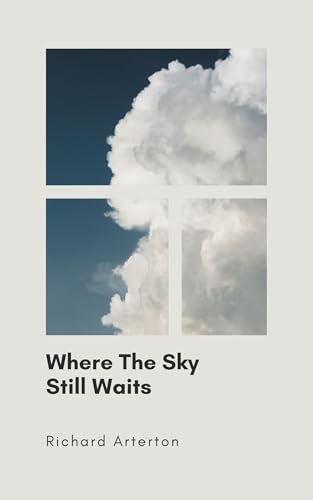
Jenni has been reading Where The Sky Still Waits by Richard Arterton.

Richard Arterton’s sophomore novel, Where the Sky Still Waits, is a meditation on grief and the human condition in the face of the inhumane engines that govern society. In that effort at meditation, Arterton almost anatomizes love attempting to dissect the messy and the individual, and in the end coming across clinical in the extreme.
Take the following paragraph from chapter 5:
Was this the human tragedy, he wondered, that love, for all its profundity, remained powerless in the face of institutions? That one could pour a life into another, feel the absolute conviction of belonging, and still have it weighed and found wanting by those who had never seen their faces?… lying there, listening to Bill’s steady breathing, he could not escape the gnawing sense that their intimacy, however authentic, was invisible to the very world that determined whether they might go on.
These musings on human tragedy come the night after the protagonist learns that Bill, his lover, has been denied asylum in England. Bill as a person will presently be yanked from the narrative, replaced with Bill as an idea, and then Bill as a memory, as Stan learns to live again in his aftermath. Bill, for his part, flirts with the magical black character trope that was rife in a certain generation of American media, though perhaps was not as prevalent in British media and thus can be forgiven somewhat in Arterton.
For those unaware, a magical black character is inserted into a narrative to impart wisdom or material help to the hapless white protagonists, they tend to be stock characters and tend to vanish from the screen once they have completed their function.
Bill enters Stan’s life like a thunderbolt, awakens him sexually and shows him the beauty of ordinary things, and then gets pulled away by the unfeeling institution of the State. Stan goes on, a changed man, to become an activist for asylum seekers invited to speak at bigger and bigger venues. Bill becomes a story he tells to move audiences.
Don’t get me wrong, Arterton is trying to do something important here. Asylum seekers and refugees of all kinds need activists of all shapes and colors and creeds, and whatever brings a person to activism is valid. Where the Sky Still Waits just also feels like it teeters on the edge of a pitfall that filmmaker Spike Lee described eloquently a quarter century ago.
Ruminative, sometimes to the point of near ponderance, there is beauty in Where the Sky Still Waits, and there is purpose. I can appreciate both. I just also don’t know that this is the kind of thing I’ll ever really read for fun.
Book Description:
Where the Sky Still Waits traces the quiet unravelling of Stanley Harrington, a middle‑aged academic whose life has contracted into ritual: the morning tea brewed to an exact shade, the dutiful visits to his fading mother, the lectures delivered to students already elsewhere in their minds. His days move with the muted inevitability of a Hopper painting – rooms of light and distance, gestures suspended between meaning and habit.
When Bill, a Ugandan asylum seeker with a disarming intelligence and an instinct for emotional truth, enters his evening English class, Stan feels the first tremor of a life he had long assumed was no longer available to him. Their connection – tentative, searching, quietly transformative – draws him into a world where grief and love coexist, where the past refuses to remain sealed, and where the smallest acts of attention can alter the shape of a life.
Set against the shifting politics of contemporary Britain, this is a novel about late‑found courage, the fragile architectures of care, and the ways two solitary men learn to inhabit the same emotional weather. Written with clarity, tenderness, and a painter’s sense of space, Where the Sky Still Waits explores what happens when a long‑quiet heart begins, at last, to speak.