The Boy from the Sea by Garrett Carr: ‘It wasn’t love or hate: it was a complete entanglement’

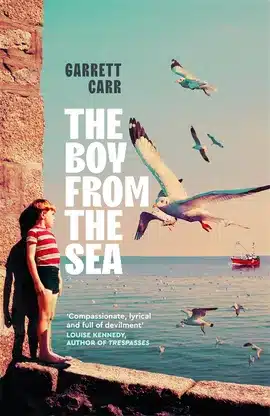
 Ireland seems to be home to a limitless supply of writing talent. Knowing that an author is Irish is usually enough to persuade me to read their book whatever it’s about. Garrett Carr’s adult fiction debut, The Boy from the Sea, was helped along by a resounding endorsement from Louise Kennedy whose Trespasses was one of my books of 2022. Opening in 1973 with the discovery of an abandoned baby, Carr’s novel follows the family that takes him in and the uneasy relationship between two boys one of whom refuses to accept he has a brother.
We didn’t go on about it, but this was the boy who caused us, for a while at least, to feel a helpless wonder that we had never forgotten.
When a child is found along the coastline in a barrel lined with tinfoil, the small town where the Bonnars live is captivated, uncharacteristically embroidering the discovery into a story which becomes more exaggerated with every telling. They call him the ‘boy from the sea’, setting up a rota for who will take him in for the night. Christine and Ambrose have a two-year-old not pleased by the appearance of this baby his parents seem so interested in, refusing to accept him as his brother when the couple adopts him. Christine’s sister has her own resentments, caring for their irascible, ungrateful father and demanding money when help is not forthcoming. As the boys grow up, Brendan yearns for Declan’s acceptance while Declan seethes at slightest sign of their father’s favour towards Brendan, insisting on joining Ambrose at sea despite having no wish to be a fisherman. Over the years, the family’s financial fortunes decline until a decision must be made.
By making it clear he wanted to impress her, Ambrose had handed Christine the role of being hard to impress, and therefore put her in command.
Carr delivers his story through the voice of the townspeople as they observe the Bonnar boys and their family with a proprietorial eye, exploring themes of family ties, community and financial hardship against the background of an industrialising fishing industry. The community is a proud one, perhaps too proud, keen to be seen as hardy and straightforward unlike those whimsical folk over in Galway. Carr knows how to spin a captivating story, peppering his narrative with wryly humorous observations, and his characters are memorable. Christine is the lynchpin of the Bonnar family while Ambrose is its vibrant heart, full of stories and plans, not quite understanding this scratchy relationship between the two boys both of whom he thinks of as his son. Altogether an enjoyable novel from a writer who’s already proved himself with non-fiction and children’s books. I’m hoping for another adult novel from him soon.
Picador Books London 9781035044535 336 pages Hardback (read via NetGalley)