Pro Clubs in EA FC Already Has the Community, But Can It Become an Esport?

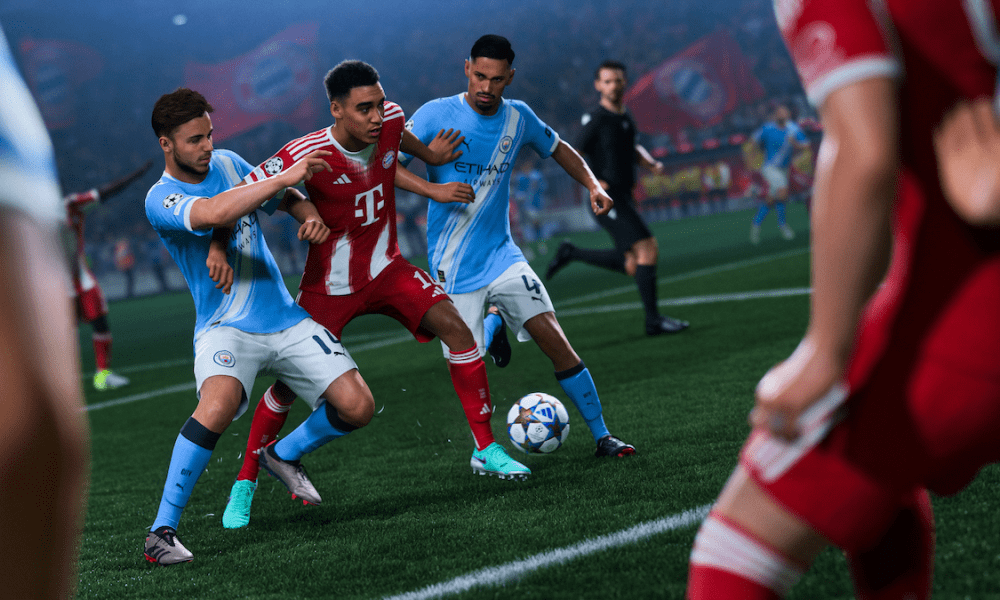
When thinking about the sport of football, I’ve always defaulted to what I’ve seen on television and on training grounds: tactical prowess. Football is just as much a chess match as it is an athletic competition, and there are few modes in video games that capture that side of the sport better than Pro Clubs in EA FC.
Built around the simple concept of 11v11 football, Clubs forces everyone on the virtual pitch to fill a role. If you’re a striker, scoring goals is your job. If you’re a center back, defending comes first. It sounds obvious, but that’s exactly why the mode works. You can’t approach it casually and expect to succeed. Eleven players have to think as one.
That’s also what separates Pro Clubs from almost every other mode in EA FC. Individual talent counts for a lot, but it rarely wins on its own. The best teams have structure, communicate, and understand positioning. They know when to press, when to drop off, and, perhaps most importantly, they trust the players around them to do their jobs.
It’s the closest EA FC comes to replicating real football, which got me thinking.
For more than a decade, communities around the world have built organized leagues around Pro Clubs. Thousands of players compete every season. Transfers happen. Teams scout opponents. Broadcasts are produced. Trophies are won. Rivalries have formed. Entire organizations have been built around a mode that has never been officially recognized as an esport by EA.
So, after all these years, is Pro Clubs any closer to becoming one?
To answer that question, I spoke with Aaron “Gringo” Baker, founder of the Virtual Football League (VFL), and Timothy Oswald, former Vice President of Operations for the Pro Clubs Network (PCN). While their experiences came from opposite sides of the Atlantic, both have spent years helping build competitive Clubs communities from the ground up.
How VFL Was Built
When Baker and his friends first started VFL in 2012, there wasn’t much of a competitive Clubs scene in the UK.
They hadn’t spent years developing a business plan, raising money, or waiting for support from EA. They had simply reached Division One, exhausted what the mode had to offer, and started wondering what they were supposed to do next.
“We got to Division One or whatever it was back then and kind of just said, ‘OK, now what?’ We’ve completed it, but we still wanted to play,” Baker said.
One of his friends had experience playing in an American Clubs league and suggested Baker try creating something similar for European players. He was 17 at the time and initially saw it as little more than a summer project.
The original VFL website was made through Weebly. Baker described it as “absolutely horrendous,” but the presentation didn’t matter much. There was nothing else like it in the UK, and players were interested.
Getting the word out required far more effort.
Baker and several friends spent hours entering Xbox drop-in matches and messaging players 30 at a time. They would tell them about the league, send them to the website, and encourage them to sign up. It was a painfully manual process, although it worked.
Season one was a success. After briefly pausing so Baker could focus on school exams, VFL returned and began growing rapidly. Season two was bigger. Season three was bigger again. By season five, the league was expanding, and by season 10, VFL was branching into additional countries and international competitions.
“The success of VFL… was pretty much purely a luck and timing-based situation… There was literally nothing really in the UK,” Baker said of VFL’s rapid growth.
What began as a boredom project eventually became one of the most important organizations in the history of competitive Clubs.

“I think definitely UK-wise, it was the first one that was properly set up,” Baker said. “It gave a lot of people ideas to make their own.”
VFL also made an early decision that helped separate it from a standard online tournament.
The league used real clubs and attempted to bring some of Career Mode’s appeal into Clubs. Players could begin at a lower-division team, perform well, earn a transfer, and eventually land at one of Europe’s biggest sides.
Baker described it as creating a career path where someone could move from a smaller club to a bigger one (Crew Alexandra to Bayern Munich was the example he provided). It gave players more than a weekly schedule of matches. Their individual careers developed over multiple seasons, with reputations growing alongside the clubs they represented.
That format became especially useful for content creators. Baker pointed to YouTubers who built series around their VFL careers, such as Bruce L33t and JCC, allowing viewers to follow them from smaller clubs to teams like Real Madrid.
VFL had effectively created a long-term progression system around Clubs before EA itself had shown much interest in doing so.
The Growth Of Competitive Clubs
VFL’s success eventually encouraged other leagues to enter the scene.
Some positioned themselves around different schedules. Others operated on separate consoles or introduced cash prizes. Over time, competitive Clubs developed into a crowded ecosystem where each organization needed its own reason for players to choose it.
Baker believes VFL’s continued appeal comes down to organization and reliability. Players know their matches will take place, forfeits are rare, and the league’s structure has been refined across dozens of seasons.
Other leagues have leaned further into cash competitions, asking players or teams to pay an entry fee in exchange for the chance to win a larger prize.
Across the pond, in North America, organized Clubs leagues were growing as well.
Timothy Oswald (known to most as simply Oswald) first became involved with PCN in 2019 after he and his friends began looking for something more challenging than the standard Clubs divisions. He quickly became an administrator and worked his way through several positions before eventually becoming PCN’s Vice President of Operations.
His timing was significant.
PCN had already emerged as one of North America’s major Clubs leagues, but its growth accelerated around the beginning of the COVID-19 pandemic. With more people at home and searching for online competition, the league expanded to around 60 teams.
That growth created a substantial workload behind the scenes.
Oswald worked from home and was often available throughout the day, which meant players and other administrators regularly came to him when something needed to be handled. He moved from a lower-level administrative role to running divisions and eventually helping oversee the league’s broader operation.
The experience also exposed how fragile a community-run competition can become.
When one of PCN’s founders abruptly stepped away, much of the knowledge required to operate the league left with him. Oswald said administrators spent several seasons figuring out processes that had previously been handled by one person.
Leadership changes and internal disagreements eventually led Oswald to leave PCN and help launch VESA, which later took over the organization.
PCN’s rise and eventual disappearance provides a useful contrast with VFL. Both became important parts of their respective regions, but longevity at that scale requires far more than finding enough players to fill teams.
A league needs administrators, consistent rulings, dependable schedules, functioning technology, community trust, and people willing to give up a considerable amount of their free time.
According to Oswald, that last part becomes difficult to sustain.
“Speaking from personal experience, it is a thankless job,” he said. “You do a ton of work, and not a whole lot of people appreciate it. You have 10 loud negatives and 100 silent positives, but the only thing you really hear is the negative.”
The negative voices are usually the ones administrators hear. Over time, that begins to wear people down. League owners and staff members often balance competition with jobs, families, and other responsibilities, all while receiving little or no compensation.
The competitive Clubs scene has survived because enough people continue volunteering for those jobs. That model can support a community league. But expanding beyond that level becomes much harder.
The Shift Toward Money
Baker and Oswald both identified money as one of the biggest changes in competitive Clubs.
During VFL’s early years, Baker said players were excited simply to have an organized competition. They wanted to win leagues, reach Champions League finals, and experience the camaraderie that came with playing alongside the same group every weekend.
Oswald noticed something similar when he entered PCN. Players were motivated by titles, personal awards, and their reputations within the community. Cash prizes existed, but most leagues were free to enter and awarded no such monetary compensation.

That has changed considerably, particularly in North America. Buy-ins have become more common, prize pools have grown, and some teams even pay players small amounts to join their rosters or give them a share of the prize money.
Oswald sees benefits to that system. A team that pays to enter a competition has more incentive to finish the season. Players may take matches more seriously when money is involved, reducing the number of clubs that fold after a poor run of results.
It also places more pressure on the league itself.
Once people pay for access, administrative mistakes become harder to dismiss. Players expect consistent rulings and a professional standard of operation. If they feel another league offers a better experience for the same fee, they can leave.
Oswald described the overall effect as a double-edged sword.
He still prefers free-to-play leagues because they preserve more of the reason many people started playing Clubs in the first place. The mode was supposed to be an enjoyable way to play football with friends. Once money becomes the main motivation, the joy can easily be lost.
“It’s almost like I’m doing this as a second job,” Oswald said. “People aren’t having as much fun.”
Baker also preferred the earlier culture, describing it as more community-driven. At the same time, he acknowledged that younger players have grown up watching teams compete for money. Naturally, many now want the same opportunity.
“I’m always going to say it was better in the past because I felt like it was more pure,” Baker said. “I felt like you had a much bigger feeling of community.”
Those players have more leagues to choose from, more tournaments offering prizes, and more sponsorship opportunities than the scene offered in 2012. Their idea of competitive Clubs was shaped by a different era.
There is room for both models. VFL can continue offering a free, organized weekend competition while other leagues sell players on the chance to win cash.
Still, relying too heavily on entry fees creates another problem.
Competitive Clubs has always been attractive because almost anyone with the game and a group of teammates could participate. Increasing the cost of entry risks pricing out younger players who don’t have income or adults who simply don’t want to pay more to compete in a game they already purchased.
A healthy competitive scene needs somewhere for inexperienced and younger players to begin. If every credible competition eventually requires a buy-in, that entry point becomes narrower.
That doesn’t mean prize leagues need to disappear. They can provide a higher-stakes environment for established teams. They just shouldn’t become the only serious path available.
Could Clubs Work As An Esport?
When asked directly whether Clubs could become an esport, Baker believed it was possible. His answer came with a major condition: EA would eventually need to take a leading role.
For Baker, an official structure would begin with EA publicly recognizing competitive Clubs and creating a sanctioned league or tournament. From there, the publisher could work with people who have already proven they know how to run these communities.
VFL, VPG, PCN, and similar organizations have years of experience handling player registrations, match scheduling, disputes, transfers, and league formats. EA wouldn’t need to invent the entire structure on its own. It could hire or partner with administrators who have already spent years learning what works.
That support would also give the scene access to EA’s marketing reach, development resources, and funding.
Without it, Baker believes community organizers will continue running into the same limitations.
“You have to have EA eventually come to the table and take control of everything,” he told us. “You need EA to come out and say, ‘We’re doing a Pro Clubs league,’ then bring in people who’ve already proven they can run these communities.”
Online tournaments are possible. Smaller LAN events have also started appearing, particularly in Europe. Turning those events into a sustainable esport creates a much larger logistical problem, not to mention reducing the chances of turning a profit.
“You’ve got to rent out 22 consoles, 22 monitors, pay for the venue… What are you really left over with?”
Then there are the players themselves.
A fighting game competitor can travel alone. A Clubs team needs to transport an entire roster. Organizers and teams must account for hotels, food, transportation, and potentially international travel for at least 11 players per side.
Prize money is also split across larger teams.
Baker used the example of a $6,000 prize pool. Divided between 11 winning players, each receives less than $600 before accounting for travel, accommodation, and food. A player might leave the event with a profit of only $100 or $200.
That is enough to create a memorable weekend. It isn’t enough to support professional players or justify the costs required to stage major events regularly.
Oswald raised many of the same concerns. Compared to esports such as Apex Legends, a Pro Clubs LAN would require significantly more equipment and a much larger venue footprint.
He didn’t rule out the possibility, especially if online technology continues improving, but the logistics make a traditional LAN circuit difficult to imagine under the scene’s current conditions.
Baker believes Clubs could slowly grow into something larger without EA. It may take another five, 10, or even 20 years. Direct involvement from the publisher could accelerate that process considerably.
EA wouldn’t necessarily need to begin with a huge prize pool.
Baker argued that even an officially sanctioned tournament offering $5,000 or $10,000 could generate substantial interest. The important part would be EA promoting it, creating a qualification structure, and giving players something official to work toward.
Compared to established esports, the prize money would be little. Compared to what community-run Clubs tournaments currently offer, it would represent a major step.
Baker also made one of the most interesting points from either interview: EA has spent years benefiting from the competitive Clubs community without needing to invest heavily in it.
“People were buying copies of FIFA because they wanted to play VFL [and] VPG,” Baker said. “EA were spending zero dollars on marketing for Clubs, but they had huge communities effectively doing the advertising for them.”
Some players purchased FIFA specifically because they wanted to participate in those competitions. League organizers created schedules, narratives, transfer drama, rivalries, and content around a mode that EA otherwise did very little to promote.
In that sense, the communities provided free marketing.
As long as independent organizations kept players engaged, EA had little reason to spend money building an official competitive structure. The mode continued to sell copies of the game and retain players without requiring the publisher to assume the financial risk.
That arrangement has worked for EA. Whether it has been good for Clubs is a different matter.
Community leagues have demonstrated that demand exists, but their success may have also allowed EA to remain passive. The better those organizations became at filling the gaps, the less pressure there was for the publisher to do it.
An official esport would require EA to take on expenses and responsibilities that community members currently handle themselves. From a player’s perspective, the opportunity is obvious. From a business perspective, EA would need to be convinced that the potential audience and revenue justify the investment.
The Monetization Problem

Oswald believes that convincing EA may eventually require Clubs to generate more money.
Ultimate Team receives the largest competitive investment because it is also EA FC‘s biggest source of recurring revenue. Packs, promotions, and the constant cycle of acquiring new players give EA a financial reason to keep developing and marketing the mode.
Clubs hasn’t historically offered anything comparable.
Oswald argued that EA would likely need to monetize Clubs more heavily before executives and shareholders began viewing it as a serious investment. That could include cosmetic items, tattoos, clothing, or systems similar to those found in NBA 2K‘s MyPlayer ecosystem.
His reasoning is understandable. Revenue gives a publisher a reason to reinvest in a mode, improve it, and create tournaments that bring additional attention.
EA has already started moving in that direction. Recent Clubs systems have introduced paid progression and currency that can reduce the amount of time required to develop a player build.
Oswald sees that as a possible first step toward a larger competitive future. If Clubs starts generating meaningful revenue, EA may become more willing to spend money on official events.
The concern is how far that monetization goes.
There is a major difference between selling optional cosmetic items and creating a competitive environment where paying gives players a meaningful advantage. A mode built around teamwork and individual roles can quickly become less appealing if players feel pressured to spend money just to keep pace.
It could also compound the accessibility problem created by paid leagues.
A younger player might need to buy the game, spend money improving a virtual pro, and then pay an entry fee to join a serious competition. At that point, Clubs loses part of what helped these communities grow in the first place.
Monetization may be the easiest way to attract EA’s attention, but it would need to be handled carefully. An esport needs a large pool of players underneath it. Pricing people out before they ever reach the competitive level would work against that goal.
Oswald acknowledged that concern. He believes players will accept reasonably priced options, particularly adults who lack the time to grind but can afford to accelerate progression. If the costs grow into hundreds of dollars per player, he expects people to walk away.
That balance may ultimately determine whether monetization helps Clubs grow or damages the scene before an esport ever has the chance to develop.
What Happens Next?
Baker and Oswald approached the question from different positions.
Baker has run one of Europe’s longest-standing Clubs leagues since 2012. His experience shows what a stable, community-focused structure can accomplish over time. Oswald helped operate one of North America’s biggest leagues during a period of rapid growth, then watched the administrative strain and internal problems that eventually changed its direction.
Both still believe Clubs has enough competitive potential to become something larger. They also agreed that EA needs to care about the mode for that to happen on a serious scale.
Community organizers can continue running leagues. They can produce broadcasts, organize cash cups, and hold occasional LANs. They have already shown that they can keep the scene alive without much help.
The next step requires more money, better infrastructure, stronger promotion, and a level of coordination that volunteer-run organizations will struggle to provide indefinitely.
Oswald would like to see talented players eventually earn professional contracts and make a living from the time they’ve invested into the mode. He also wants free-to-play competitions such as VFL to remain available for people who simply want to play organized football with friends.
Those two ideas don’t have to compete with each other.
Football itself has countless levels. Professionals play at the top, while amateur and recreational leagues give everyone else somewhere to participate. Competitive Clubs could follow a similar structure, with community leagues feeding into higher-level competitions and official events.
EA would need to recognize the work that has already been done rather than replacing it. The people running these leagues understand their players, their regions, and the specific problems that come with managing 11v11 competition.
Bringing them into an official structure would make far more sense than starting from scratch.
So, can Pro Clubs eventually become an esport? I think it can.
The mode already demands teamwork, tactical understanding, and individual skill. Organized leagues have operated for more than a decade, and players continue treating matches with a seriousness that goes far beyond standard online play.
The obstacles are mostly found outside the pitch.
Running events is expensive. League administrators burn out, prize pools are difficult to sustain, and monetization risks excluding the same players the scene needs in order to grow. EA has also shown little urgency to take control of something the community continues running for free.
None of those problems is impossible to solve, but they won’t disappear on their own.
Competitive Clubs has spent years proving what it can be with limited resources. Whether it ever becomes a true esport depends on EA deciding the mode deserves more than the community can provide on its own.
“I’d love to see it turn into an esport,” Oswald said. “There’s some really, really good players out there. They just need the platform to do it.”