How to Make and Freeze Basil Pesto


Making and freezing basil pesto is a great way to preserve the fresh flavors of summer all year long. Three simple freezing methods, plus how to thaw and use it.
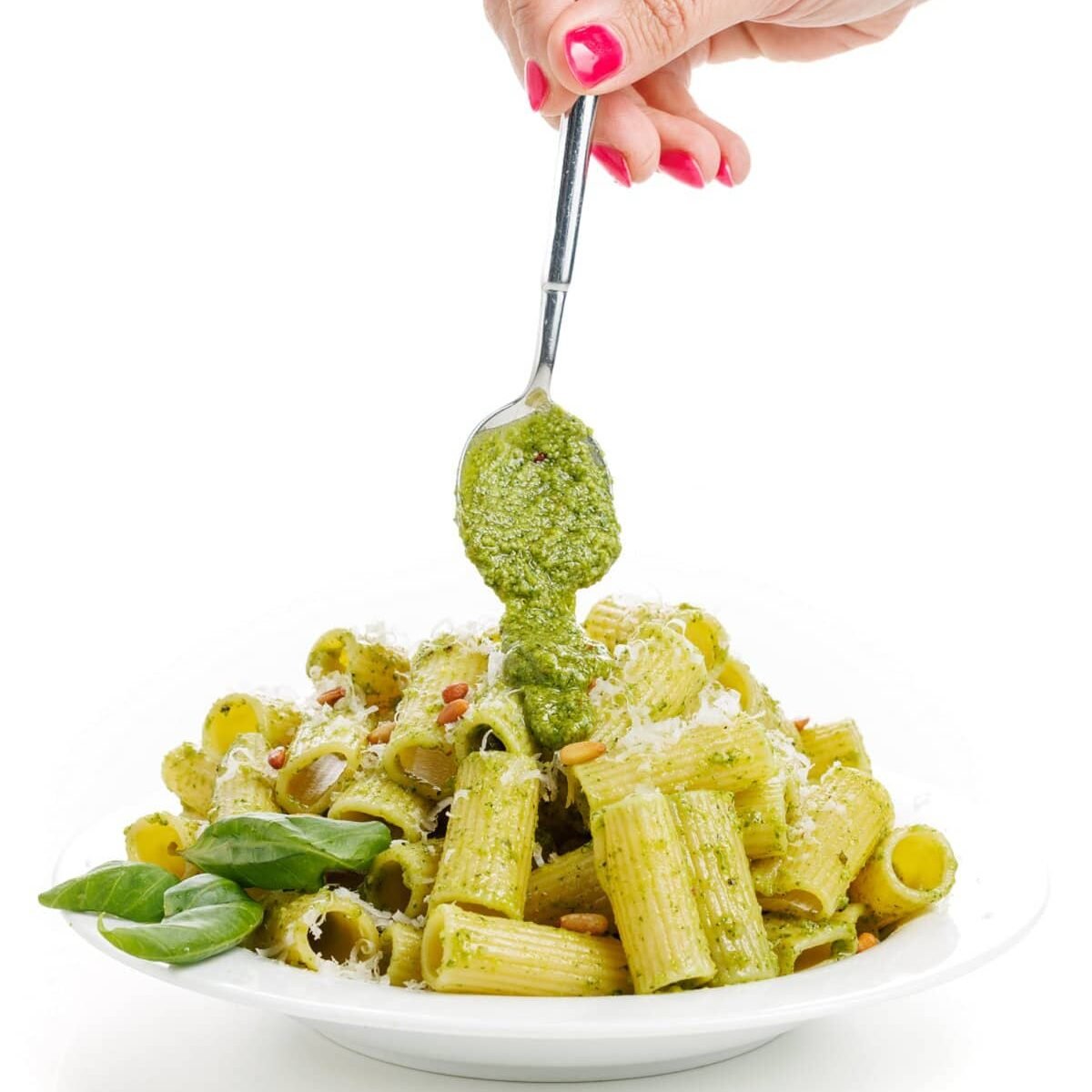
I love preparing homemade basil pesto in bulk during the summer when fresh basil can be found in bunches. It’s delicious prepared traditionally with pine nuts, but I also love other versions like my pistachio pesto. You can prepare the sauce in just minutes, and it’s also extremely versatile and ideal for freezing. When you’re in need of a quick lunch or dinner, you can take a cube of frozen pesto and transform it in to a delicious meal in minutes such as pesto pasta with salmon, pesto chicken pasta with swiss chard, or a grilled veggie sandwich with pesto.
I’ll walk you through the classic recipe, three different ways to freeze it, and exactly how to thaw it so it tastes fresh every time.
Ingredients
- Fresh basil: Whether from your own yard or the store or farmer’s market, it needs to be fresh!
- Parmesan: Nutty and salty, it adds texture and flavor to the sauce.
- Pine nuts: Instead of using raw pine nuts, I like to toast them to add a deep, rich flavor.
- Garlic: Earthy, nutty, and somewhat spicy, it adds rich flavor to the pesto.
- Lemon juice and zest: Brightens up the flavor while adding an acidic balance to the olive oil, cheese, and nuts.
- Olive oil: Helps to evenly distrubute the ingredients as they blend and gives the pesto its spreadable consistency.
Easy Substitutions
- If you don’t have basil: spinach, parsley, arugula or cilantro
- Instead of the parmesan : pecorino, romano, or Grana Padano cheese
- In place of the pine nuts : walnuts, pistachios, or cashews
how to Make and Freeze Basil Pesto

Step 1. Start making your pesto by toasting your pine nuts. Toss them in the oven at 350 for about 6 or 7 minutes, until nice and brown.
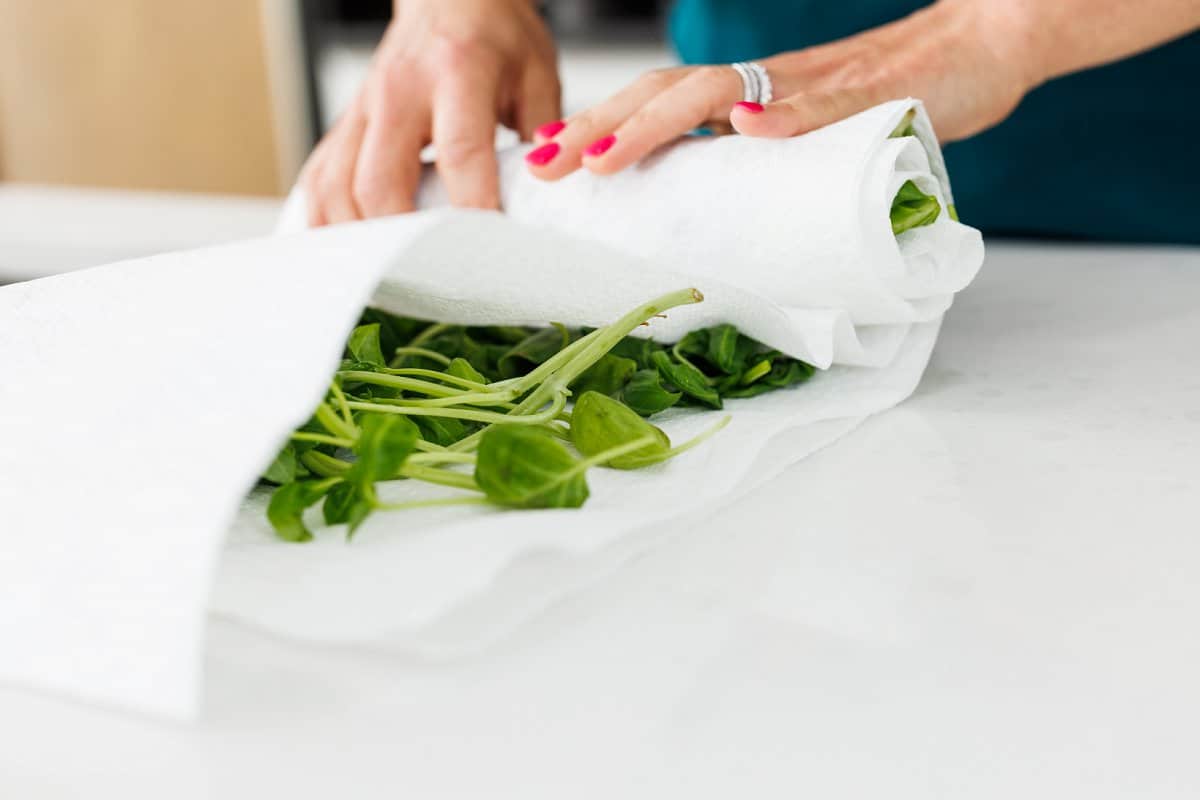
Step 2. While the pine nuts are toasting, you can wash and dry your fresh basil.
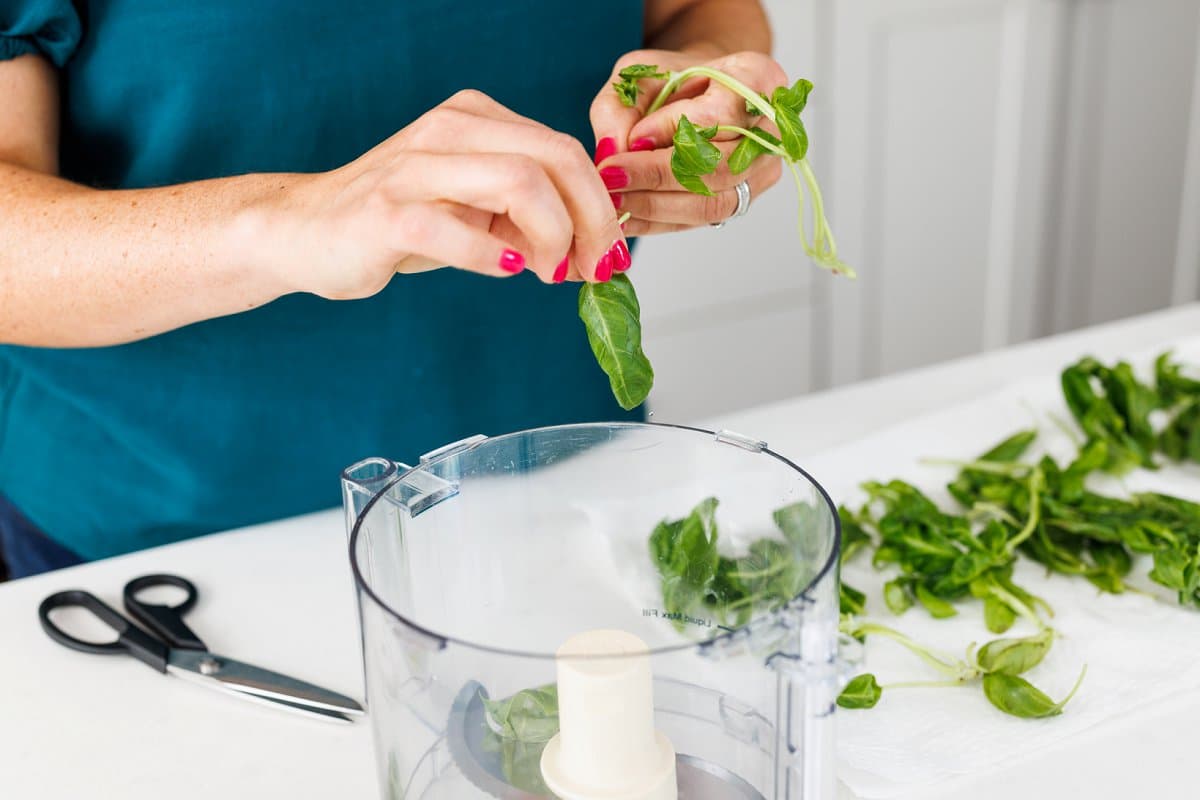
Step 3. Then pick the basil leaves off of the stems and add to a food processor.
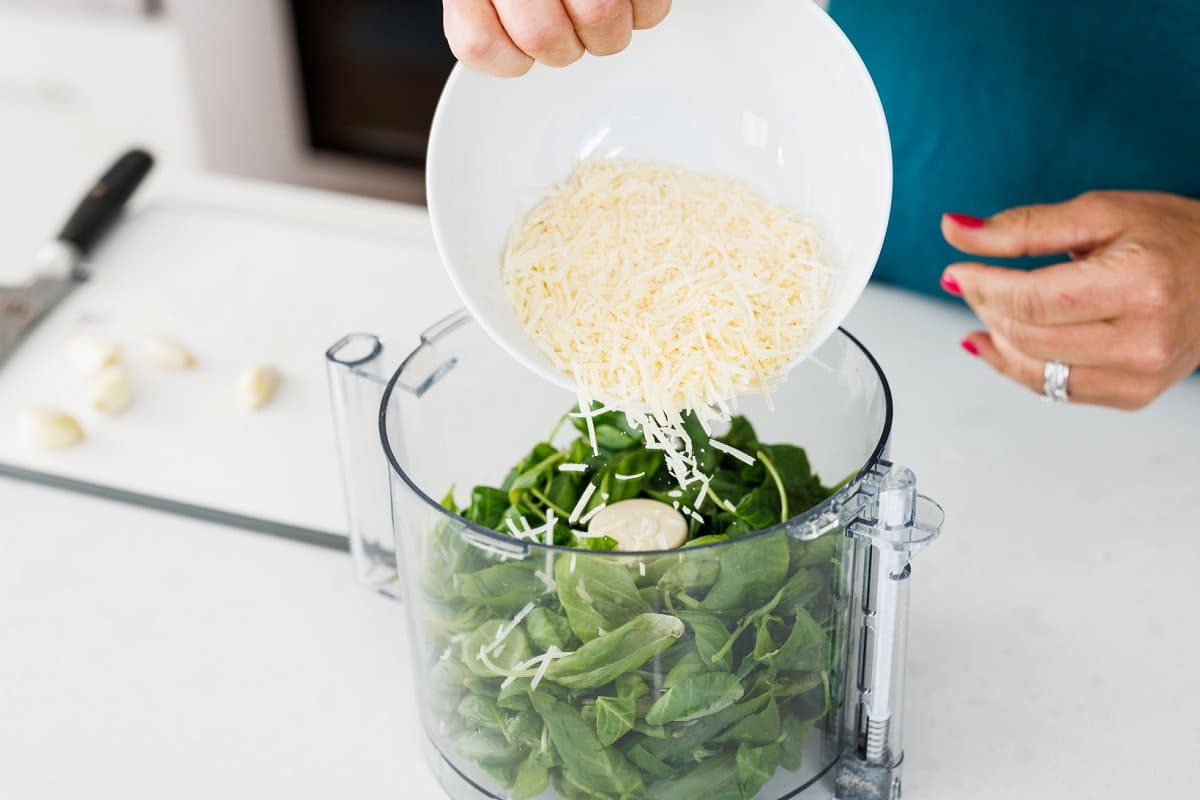
Step 4. Followed by the grated parmesan cheese.

Step 5. Then add your garlic cloves and fresh lemon zest.

Step 6. Next add your toasted pine nuts, and finish with some salt and pepper before turning on your food processor.
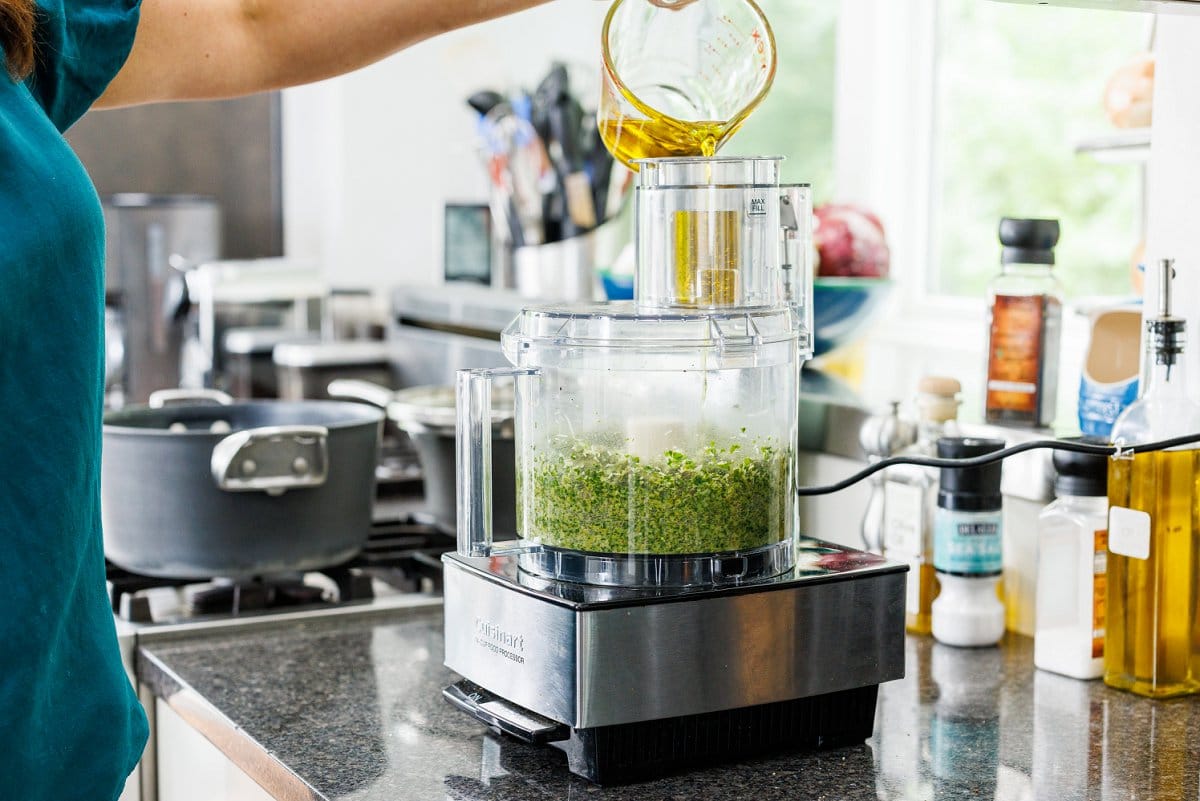
Step 7. As your pesto blends, slowly add the olive oil until it arrives at your desired consistency.

Step 8. Finish it off with the fresh lemon juice, and you are ready to serve! Or, ready to freeze.
3 Ways to Freeze Basil Pesto

- Ice cube trays (best for weeknight portions): Spoon pesto into a clean ice cube tray, filling each compartment about three-quarters full. Drizzle a thin layer of olive oil over the top of each cube; this seals out air and keeps the pesto from browning. Cover the tray tightly with plastic wrap, or the lid if your tray has one, and pop in the freezer. Once frozen solid, you can transfer them into a freezer bag.
- Flat sheet method (best for space-saving and quick thawing): Spread the pesto in a thin, even layer, about a quarter-inch thick, on a parchment-lined baking sheet or tray. Freeze until firm, then break or cut into pieces and store flat in a freezer bag. Because it’s so thin, this method thaws in minutes rather than hours.
- Jars or airtight containers (best for bigger batches): Pack pesto into small freezer-safe jars or containers, leaving about an inch of space for expansion, and top with a thin layer of olive oil before sealing.
How to Thaw and Use Frozen Pesto
This is the question I get asked the most, so let’s cover it properly:
- Adding to hot pasta or a warm skillet: drop the frozen cube or piece straight in. The residual heat will thaw and loosen it in a minute or two; no advance planning needed.
- Using it cold, like on a sandwich or as a dip base: thaw overnight in the fridge, or let is sit at room temperature for 20 to 30 minutes.
- If it looks a little watery or separated after thawing: stir in a small drizzle of fresh olive oil to bring it back together.
Recipes with Pesto

Eat It, Like It, Share it!
Did you try this method? The next time you make it, snap a picture and share it to your socials! Tag @thelemonbowl and #thelemonbowl so we can admire and share your meal.
Eat it now, or eat it later, now that you know how to make and freeze basil pesto, you’ll start using it all the time!
Your fork is waiting.

How To Make And Freeze Basil Pesto
Lemon juice and zest adds brightness and freshness to this traditional basil pesto recipe. Perfect for freezing and using later in pastas, soups, marinades and more.
Servings24

-
To toast pine nuts, place on a baking sheet in an even layer and bake at 350 for 6-7 minutes until browned.
-
In a large food processor, pulse together basil, parmesan, pine nuts, garlic, lemon juice and zest.
4 cups fresh basil, 1 cup grated parmesan, 1/2 cup pine nuts, 3 cloves garlic, 1 lemon
-
Slowly drizzle in the olive oil and puree until smooth. Season with salt and pepper to taste.
1 cup extra virgin olive oil, salt and pepper to taste
Please leave a rating and comment letting us know how you liked this recipe! This helps us to continue providing free, high-quality recipes for you.
Pesto will freeze well for up to 6 months. I like to freeze it in smaller cubes for quick defrosting or tossing in to a pot of soup or pasta.
Serving: 2tablespoons | Calories: 119kcal | Carbohydrates: 1g | Protein: 2g | Fat: 12g | Saturated Fat: 2g | Cholesterol: 4mg | Sodium: 64mg | Potassium: 42mg | Fiber: 1g | Sugar: 1g | Vitamin A: 245IU | Vitamin C: 3.2mg | Calcium: 56mg | Iron: 0.3mg
Frequently Asked Questions
Pesto keeps for 5-7 days in the refrigerator in an airtight container.
Frozen pesto will keep for at least 3 months, but up to 6 months if sealed and stored properly.
Olive oil prevents oxidation and slows the pesto from turning brown. I’ve never tried not using olive oil.
Yes, the same methods work for store bought pesto, too!