Fresh Tomato Sauce Recipe with Any Ripe Tomatoes

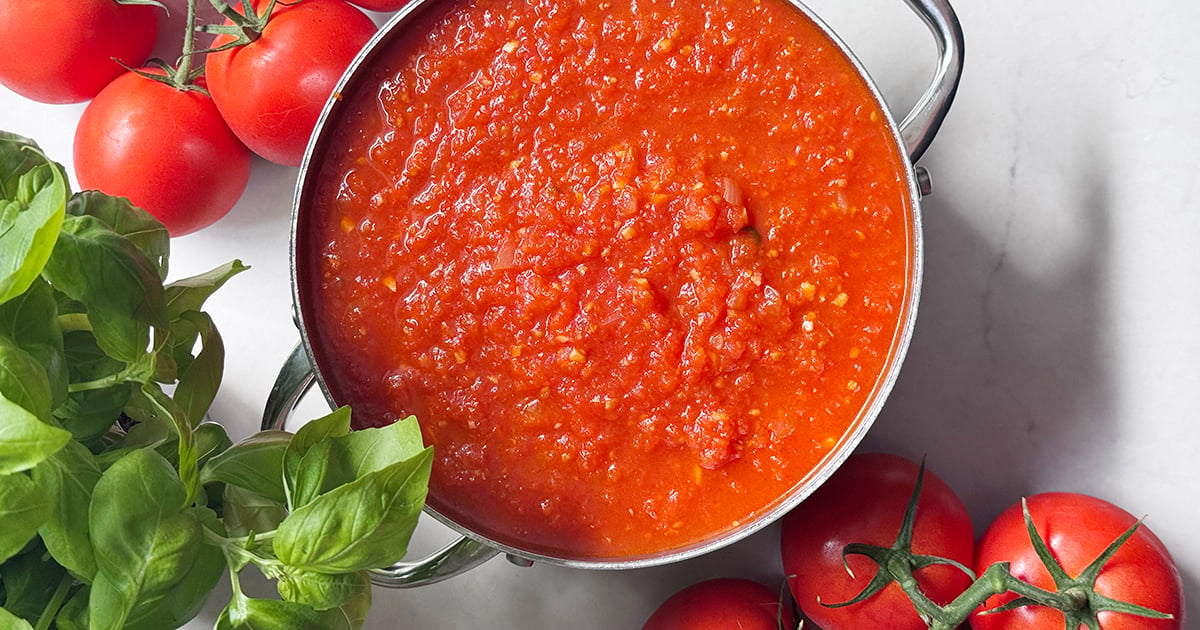
Make this easy fresh tomato sauce recipe with any ripe tomatoes. Learn how to peel, season, thicken, and finish it chunky or smooth.
This post contains affiliate links. Full disclosure is at the bottom of the article.
This fresh tomato sauce recipe is one of those recipes that instantly smells like late summer to me. Put a pot of ripe tomatoes on the stove with olive oil, onion, garlic, and basil, and suddenly the whole kitchen smells warm, sweet, and intensely tomato-y.
I originally created this recipe around one very practical question: what do you do with five pounds of ripe tomatoes? It’s a question I still ask myself every summer. I come home from the farmers market with a box that seemed reasonable when I bought it, only to realize that ripe tomatoes have a very short window between perfect and please use me immediately.
Making homemade tomato sauce with fresh tomatoes is one of my favorite ways to use them. You can eat some right away, freeze the rest, and use it for pasta, gnocchi, meatballs, lasagna, pizza, or simply spoon it onto toasted bread with mozzarella.
Despite what you may have heard, you don’t need San Marzano tomatoes to make a good fresh tomato sauce!
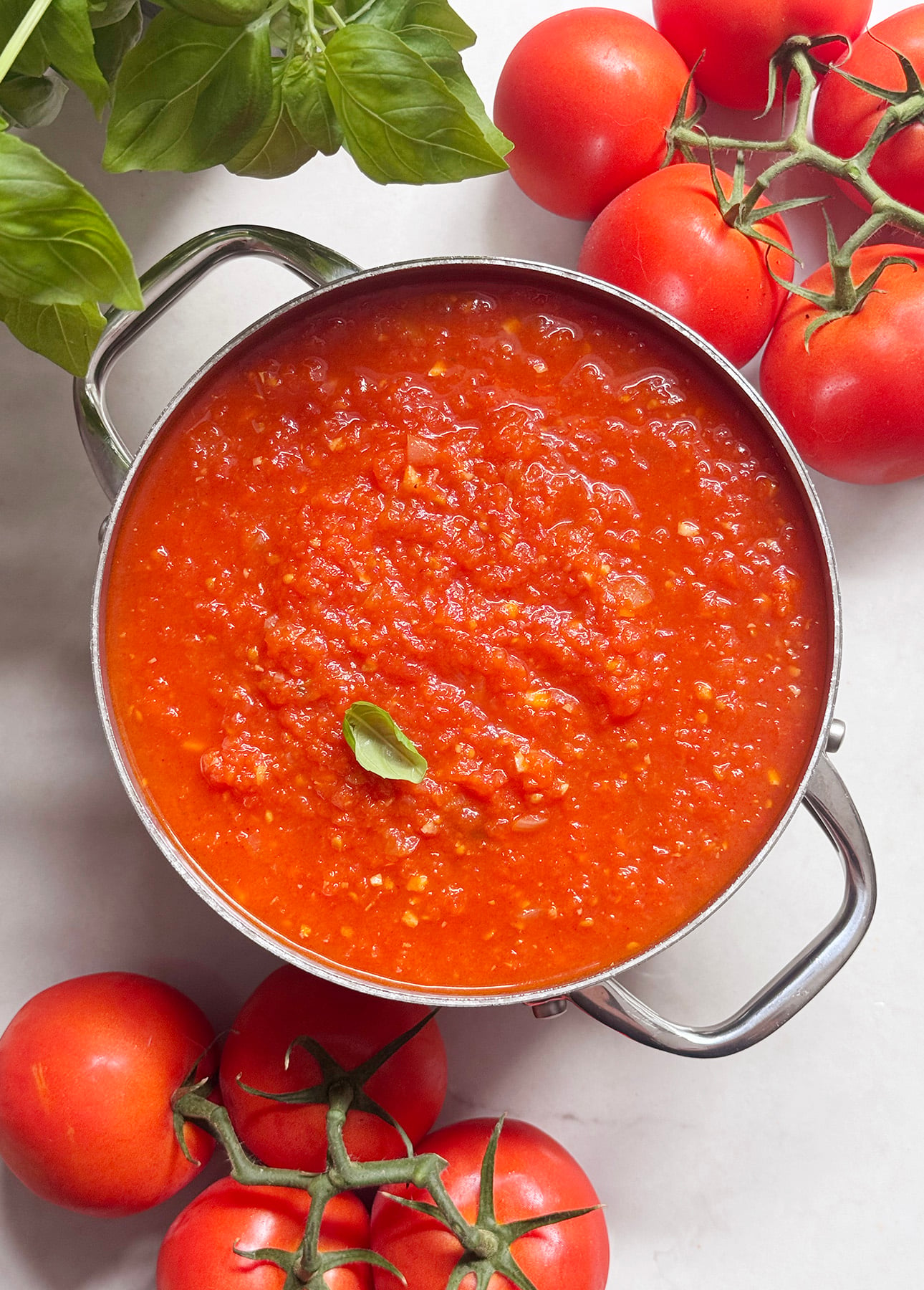
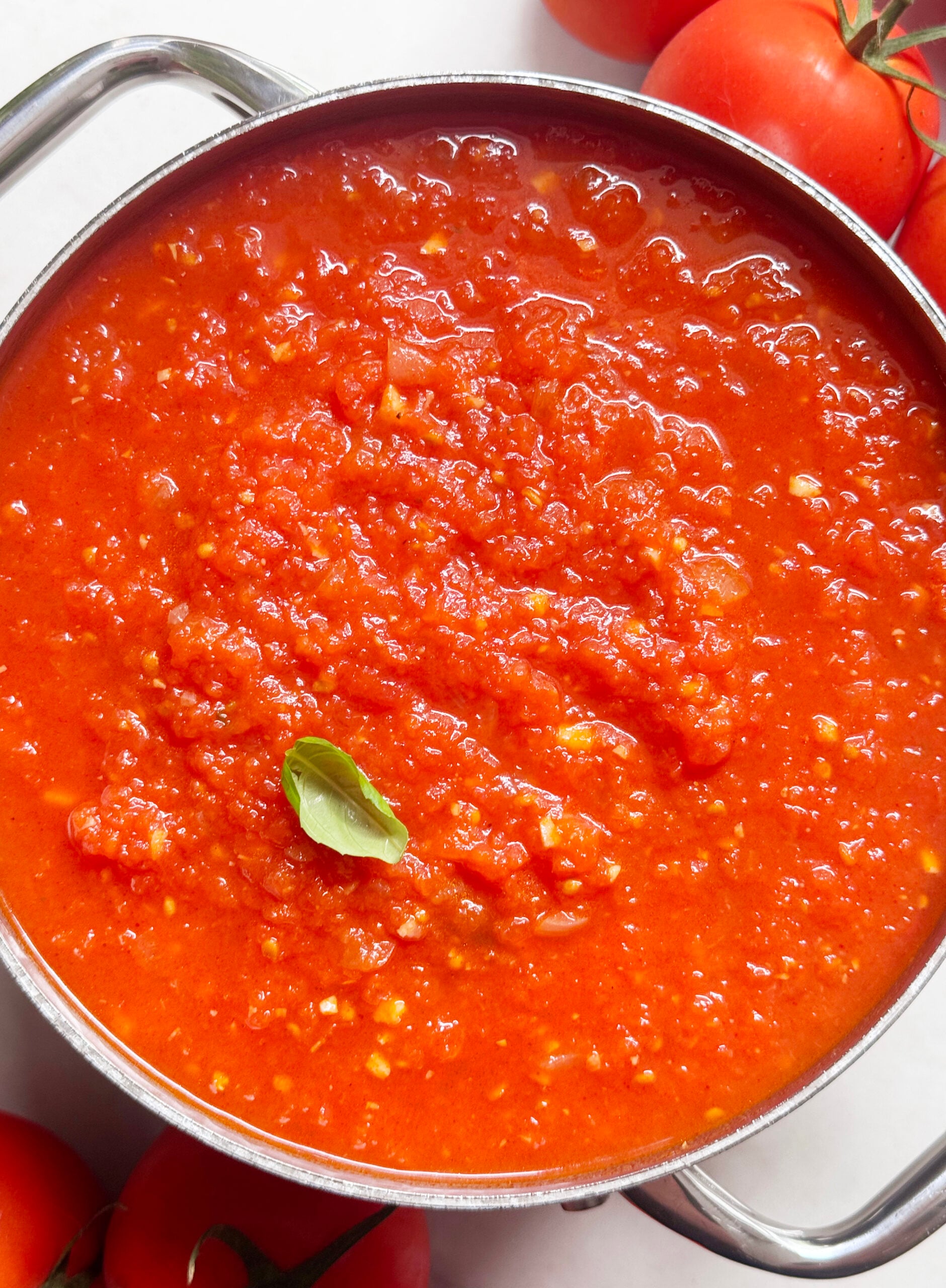
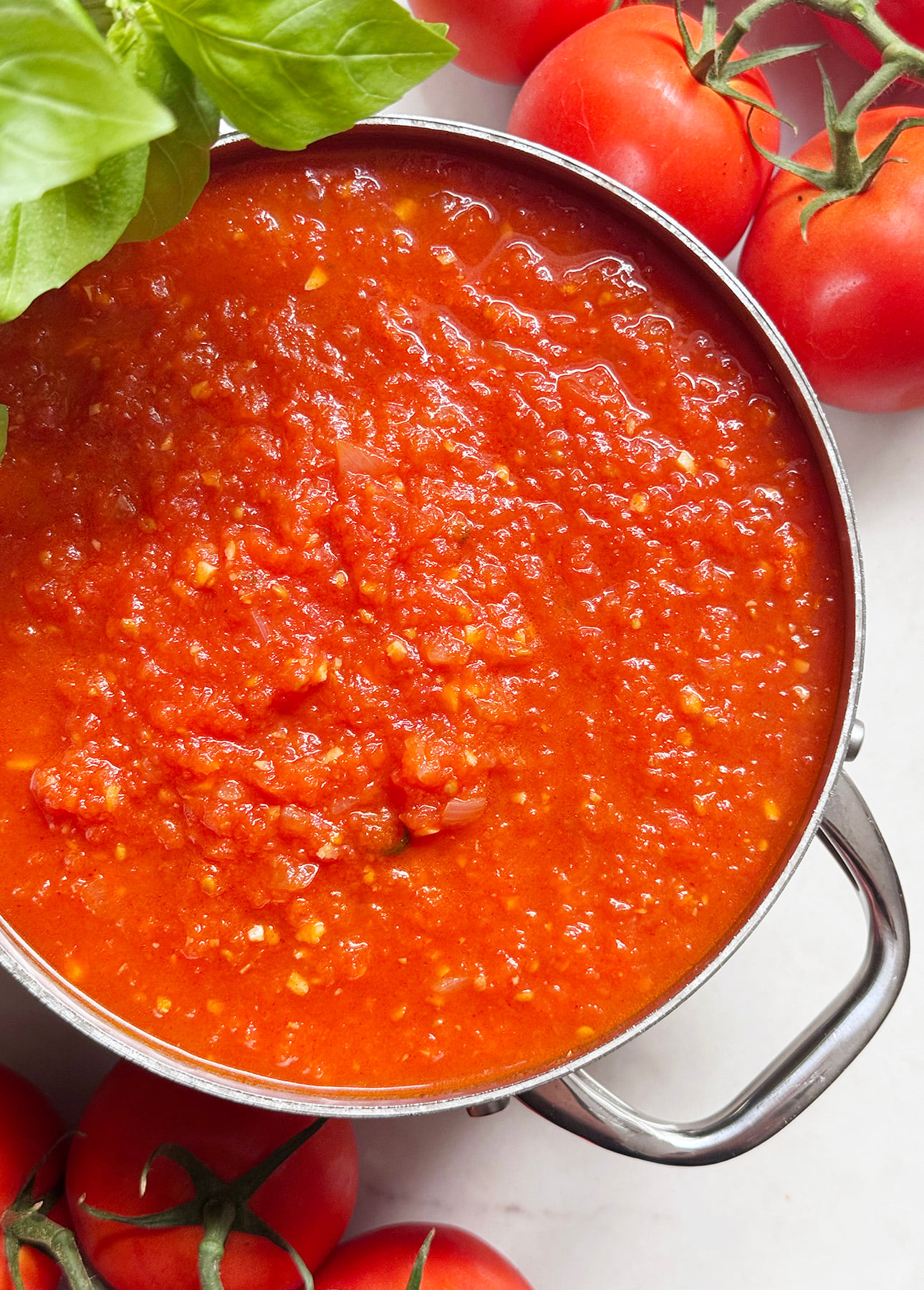
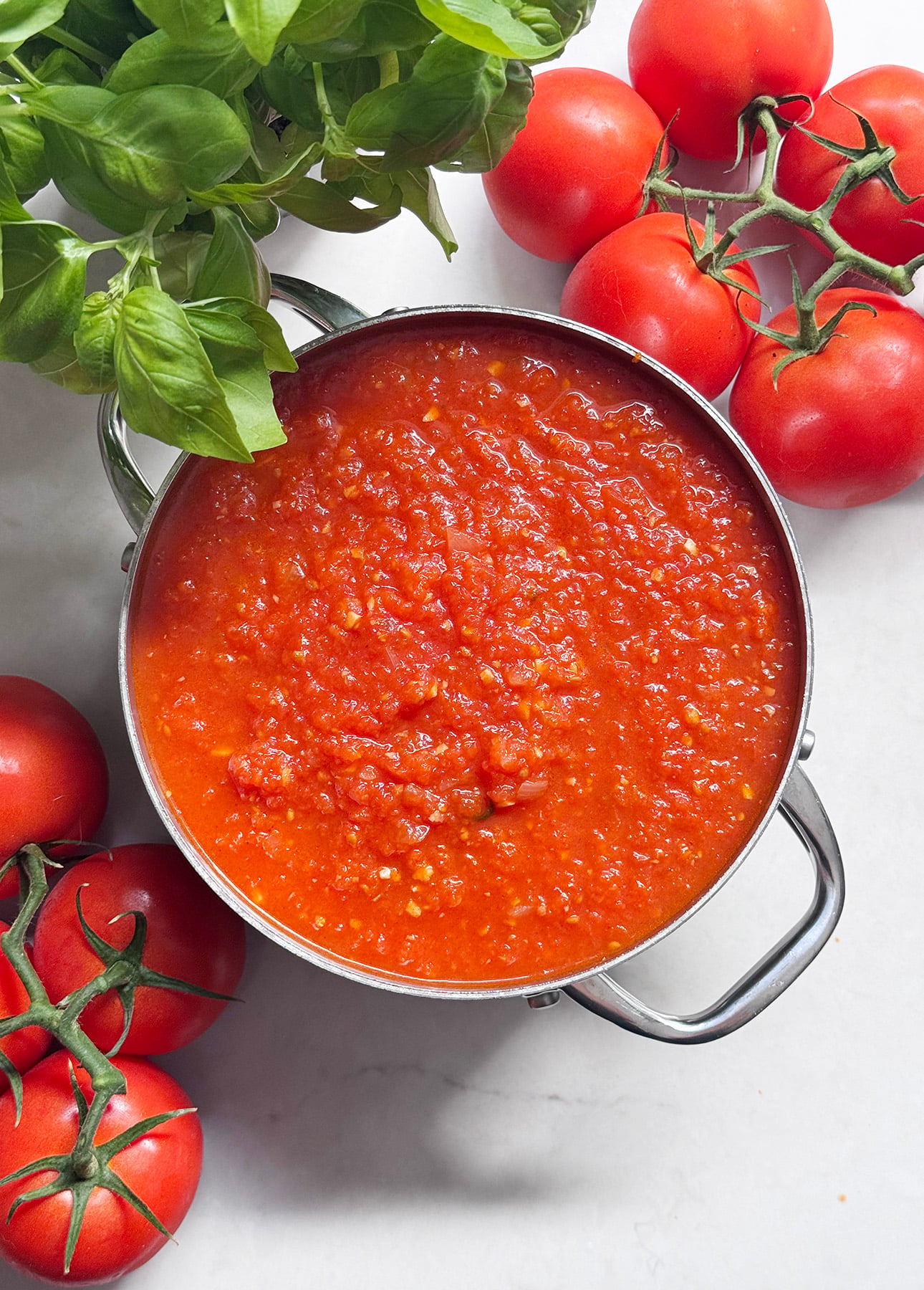
Roma, San Marzano, and other Italian tomatoes are wonderful because they’re fleshy and have relatively little juice, so they cook down quickly. But they’re certainly not your only option. The sauce pictured in this post was made with big beef tomatoes—much juicier than Romas, but beautifully ripe and full of flavor. They simply needed a little more time on the stove.
That’s really the rule I follow now: choose ripe, flavorful tomatoes and adjust the cooking time to the tomato. A fleshy paste tomato will reduce quickly. A juicy beefsteak, beef, heirloom, or garden tomato will need more time. All of them can produce an excellent sauce.
I also keep the flavorings deliberately restrained in my recipe. Onion, garlic, salt, and fresh basil give this sauce plenty of flavor while keeping it versatile. It makes a lovely fresh tomato pasta sauce as-is, but because it isn’t heavily seasoned, it’s also a great starting point for many other dishes.
In my recipe, tomato paste and white wine are supporting players rather than absolute necessities. Tomato paste is particularly helpful when you’re working with juicy tomatoes because it adds body and concentrated tomato flavor. White wine is useful for loosening the caramelized tomato paste from the bottom of the pot, but broth or water works too—and if you don’t use tomato paste, you may not need to deglaze the pot at all.
Once the sauce is cooked, you have one final choice: leave it rustic and chunky, or blend it into a smooth tomato sauce. Both versions start from exactly the same recipe.
How to Make Fresh Tomato Sauce with Fresh Tomatoes
At its simplest, making fresh tomato sauce means peeling ripe tomatoes, cooking them with a flavorful aromatic base, then simmering them uncovered until enough of their natural water has evaporated to create a thick sauce.
For this recipe, I soften onion and garlic in olive oil, add a small amount of tomato paste if I want extra body, deglaze the pot, then add the chopped fresh tomatoes. From there, the tomatoes do most of the work.
The most important part isn’t following an exact simmering time. It’s learning to recognize when the sauce has reduced enough.
Quick Summary: Start with ripe tomatoes—almost any variety will work. Peel them, chop by hand or pulse in a food processor, then simmer uncovered with a simple aromatic base until the excess water evaporates. Season in stages, finish with fresh basil, and leave the sauce chunky or blend it smooth.
What Are the Best Tomatoes for Fresh Tomato Sauce?
Italian tomatoes are convenient for sauce, but ripeness and flavor matter more than pedigree.
Roma, San Marzano, and other plum or paste tomatoes are especially well suited to sauce because they have lots of flesh compared with their quantity of seeds and juice. That means you get more finished sauce per pound of tomatoes and don’t need to simmer them for as long.
But don’t pass up beautiful tomatoes just because they’re the “wrong” variety.
Beefsteak tomatoes, beef tomatoes, field tomatoes, and heirloom tomatoes can all make delicious fresh tomato sauce. They’re generally juicier than paste tomatoes, so they’ll simply need more time to reduce.
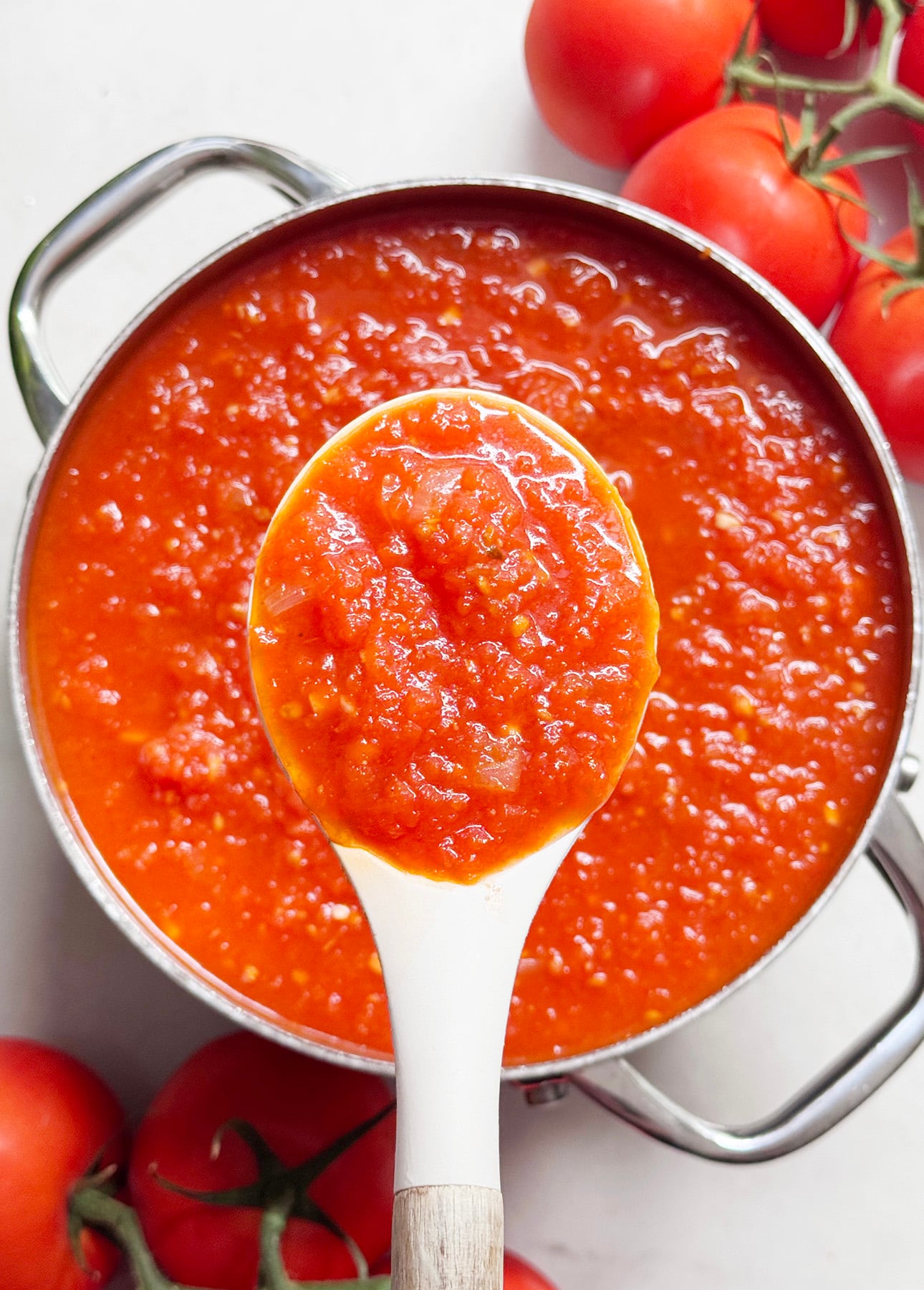
The batch pictured here was made with beef tomatoes. They released quite a bit of liquid at first, but after simmering, they produced a thick, flavorful sauce.
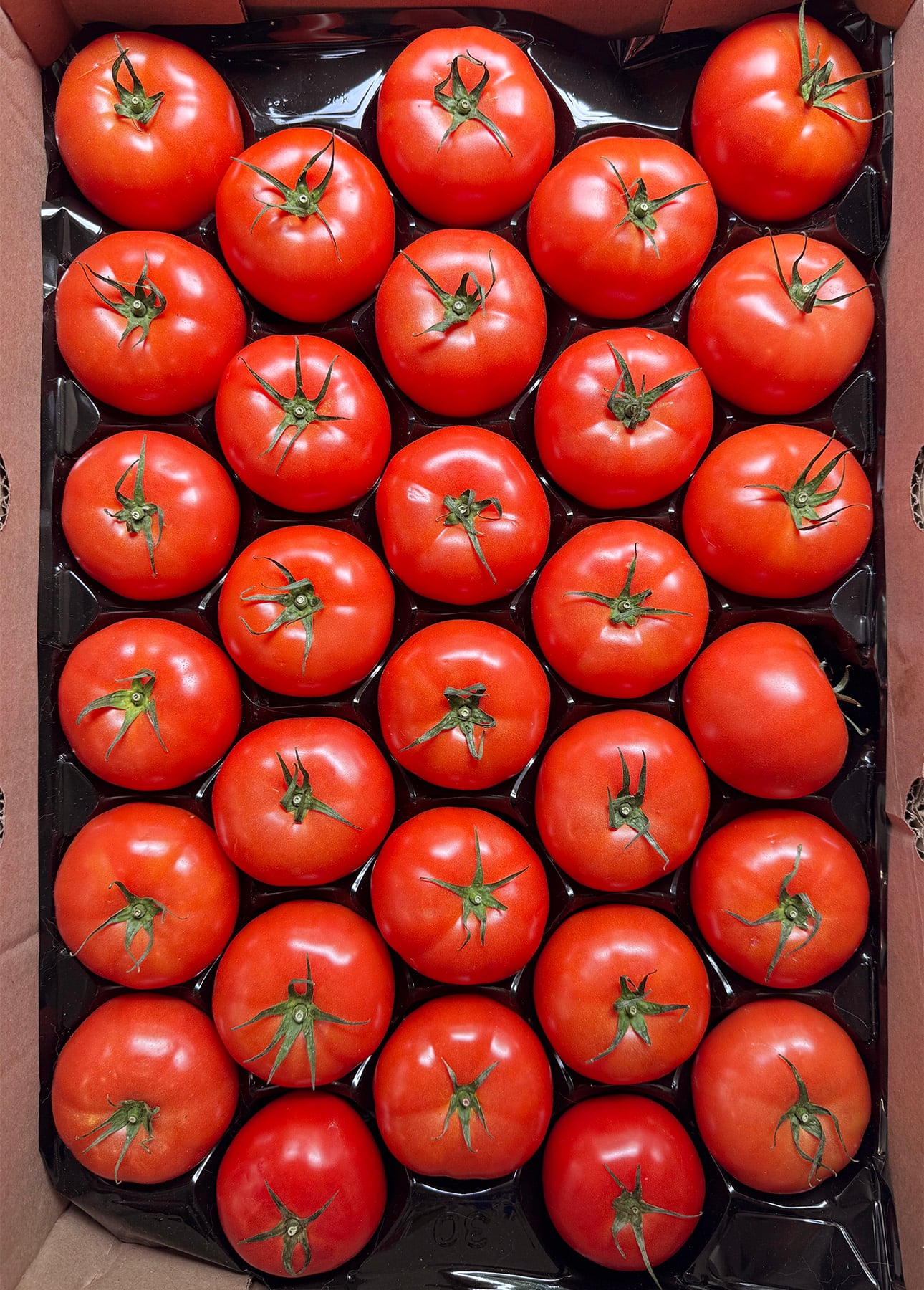
If you have a choice, look for tomatoes that feel heavy and ripe but still have plenty of dense flesh. And most importantly, start with tomatoes that actually taste good. If a tomato is bland before it goes into the pot, cooking won’t magically give it the flavor of a perfect summer tomato.
Do You Need to Peel and Seed Tomatoes to Make Sauce?
For this fresh tomato sauce recipe, I peel the tomatoes but don’t seed them.
Tomato skins don’t completely disappear as they cook. Especially in a chunky sauce, they can separate from the flesh and turn into little curled pieces. Removing them gives the finished sauce a softer, more polished texture.
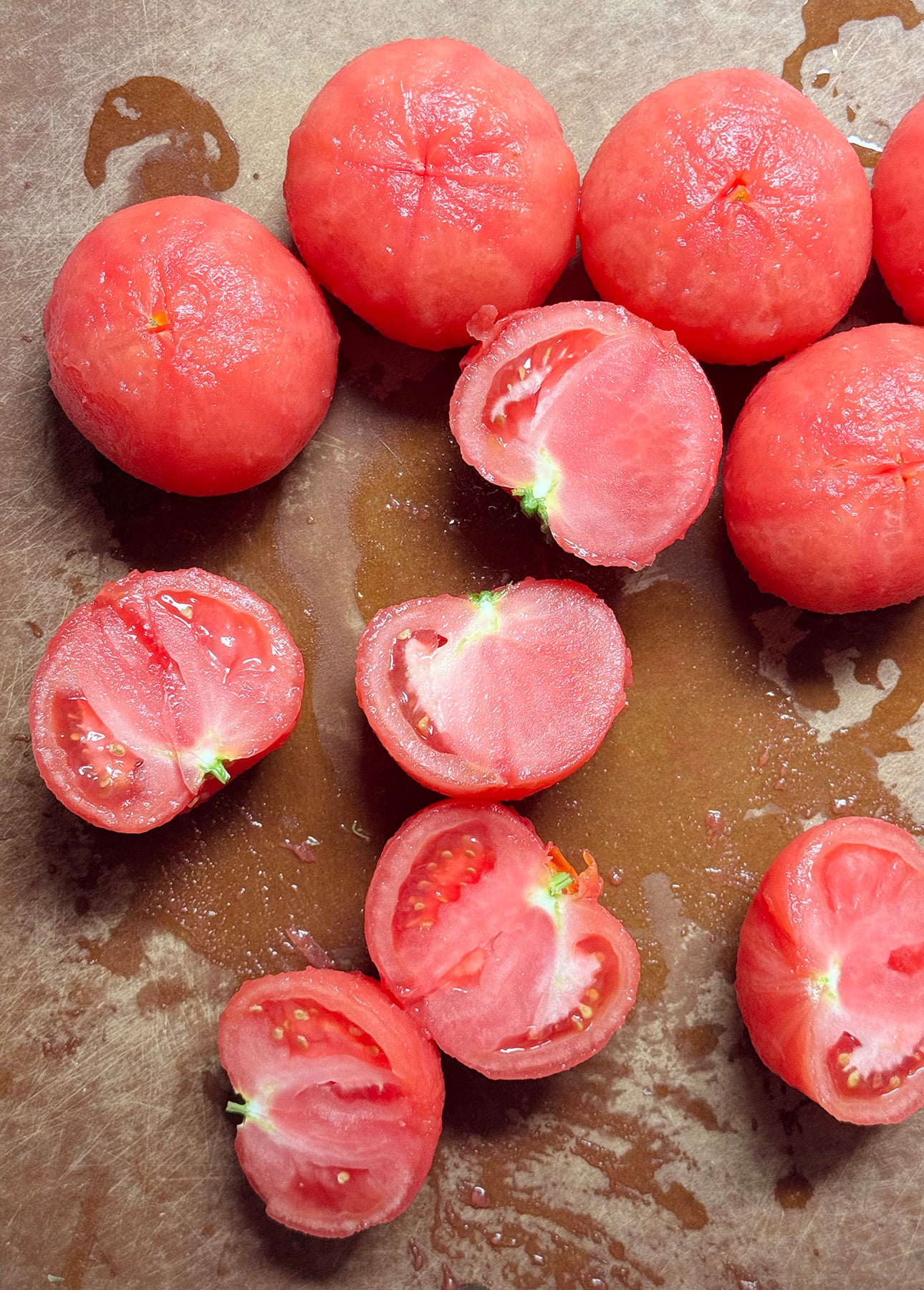
Fortunately, peeling ripe tomatoes is easy. Score a shallow X in the bottom of each tomato, then bring a large pot of water to a boil and blanch the tomatoes just until their skins begin to loosen. The skins should slip right off.
I don’t discard the seeds or juice, though. Once the tomatoes are peeled, I keep everything—the flesh, seeds, pulp, and juices.
Yes, juicy tomatoes will take a little longer to reduce this way. But I’d rather keep all the tomato flavor in the pot and control the final consistency through simmering.
Start by scoring a shallow X in the bottom of each tomato: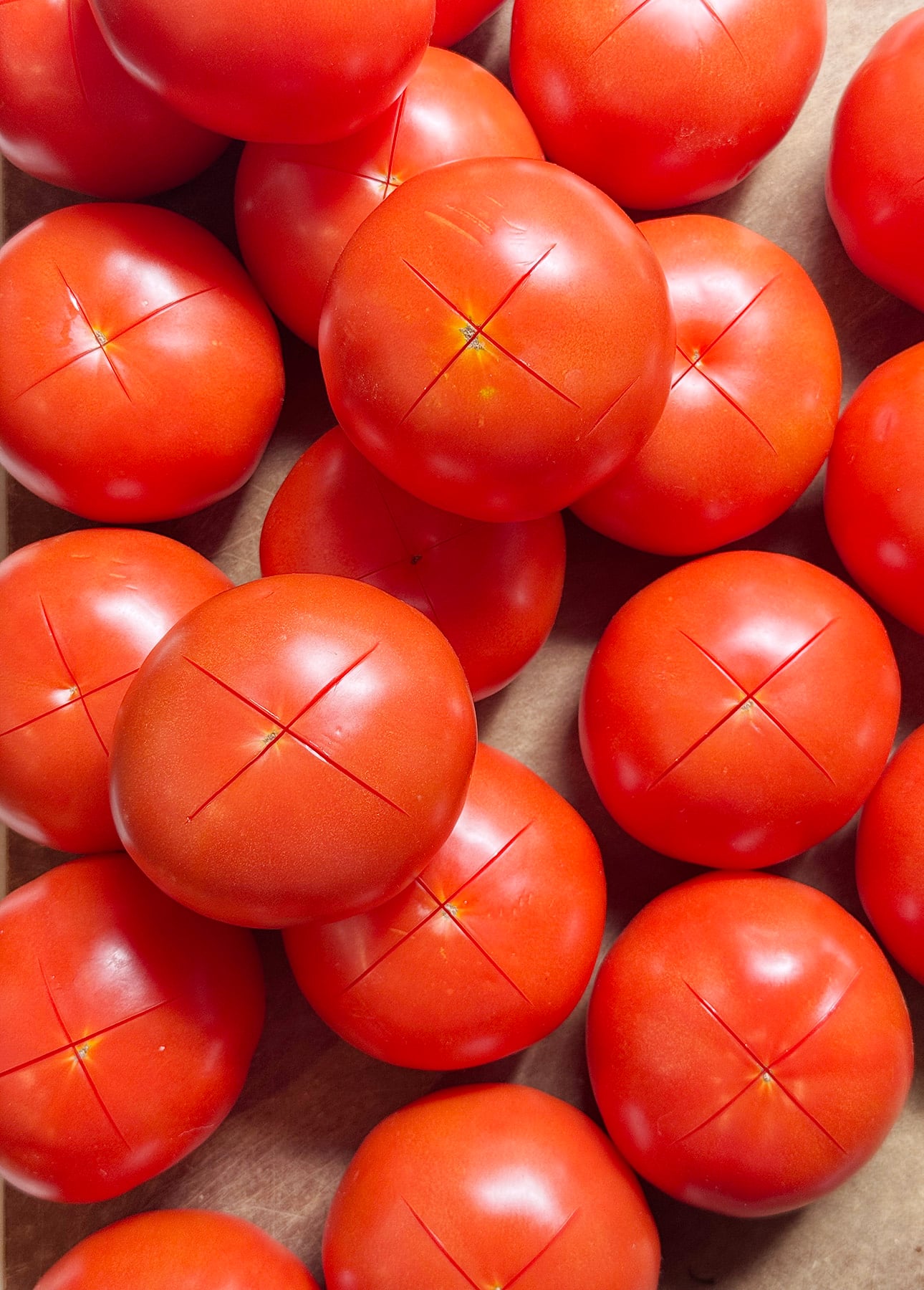
Blanch the tomatoes in boiling water just until the skins begin to loosen: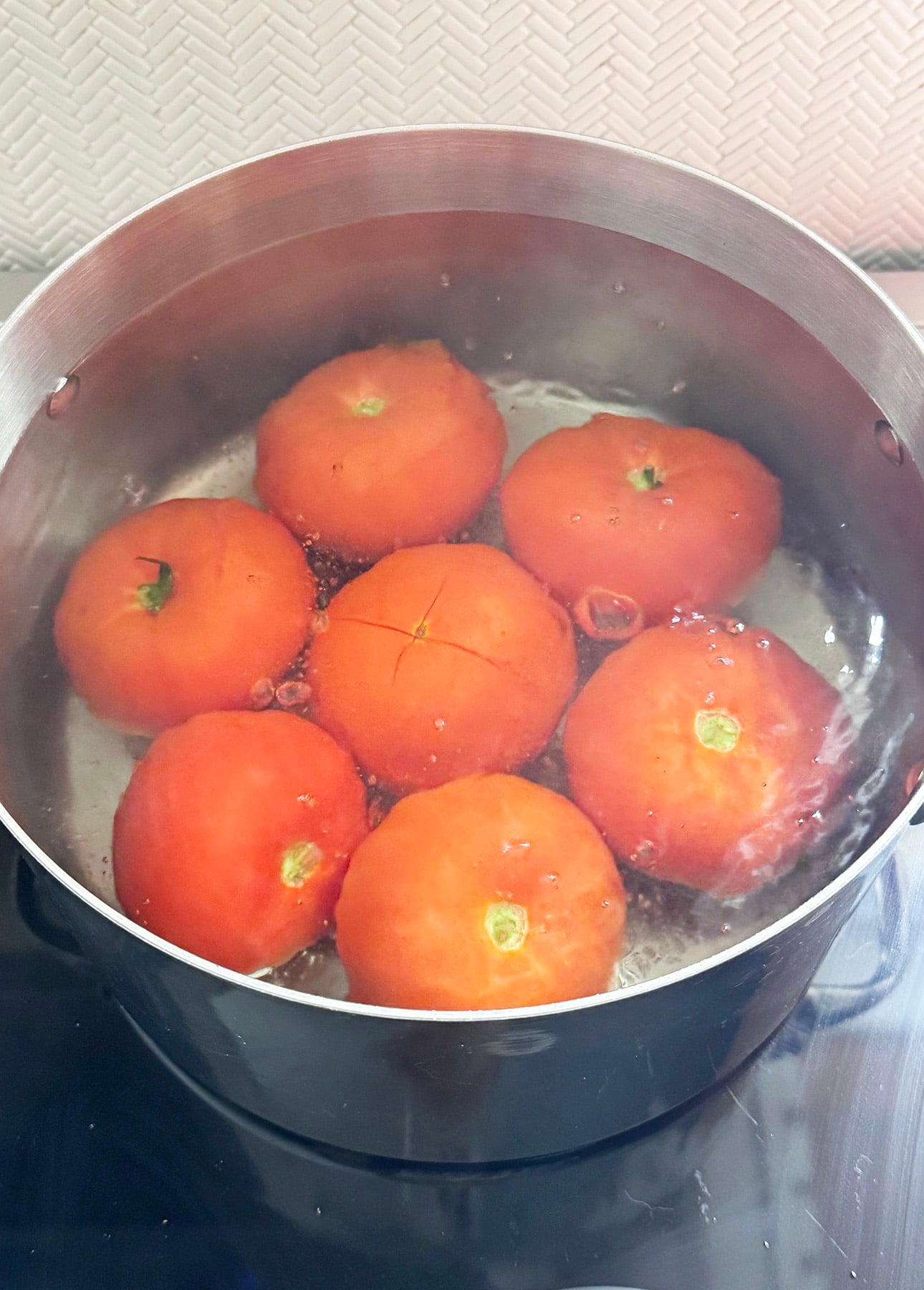
You’ll know they’re ready when the skin starts pulling away around the cuts: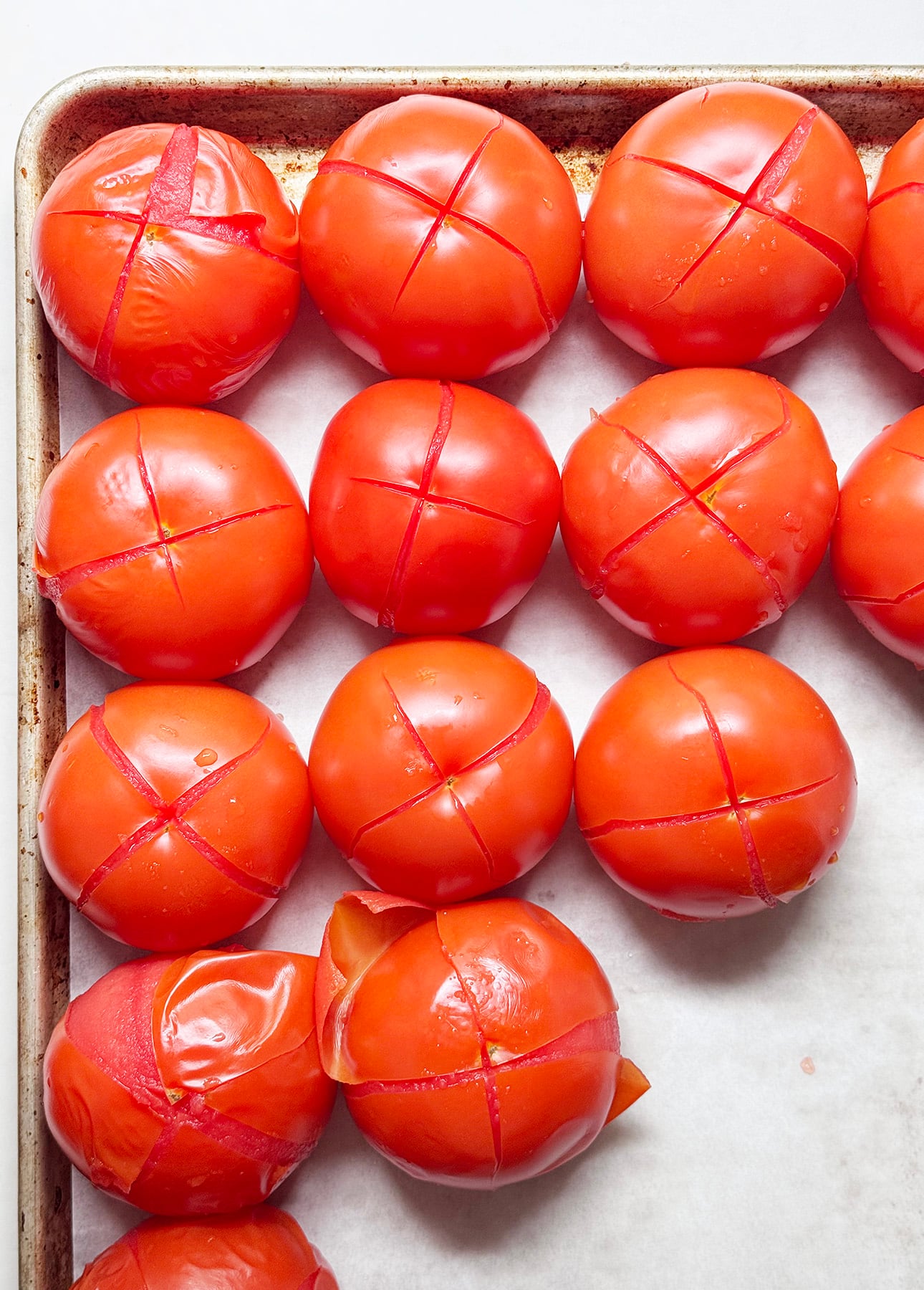
Once they’re cool enough to handle, peel the skins away with your fingers or a small knife: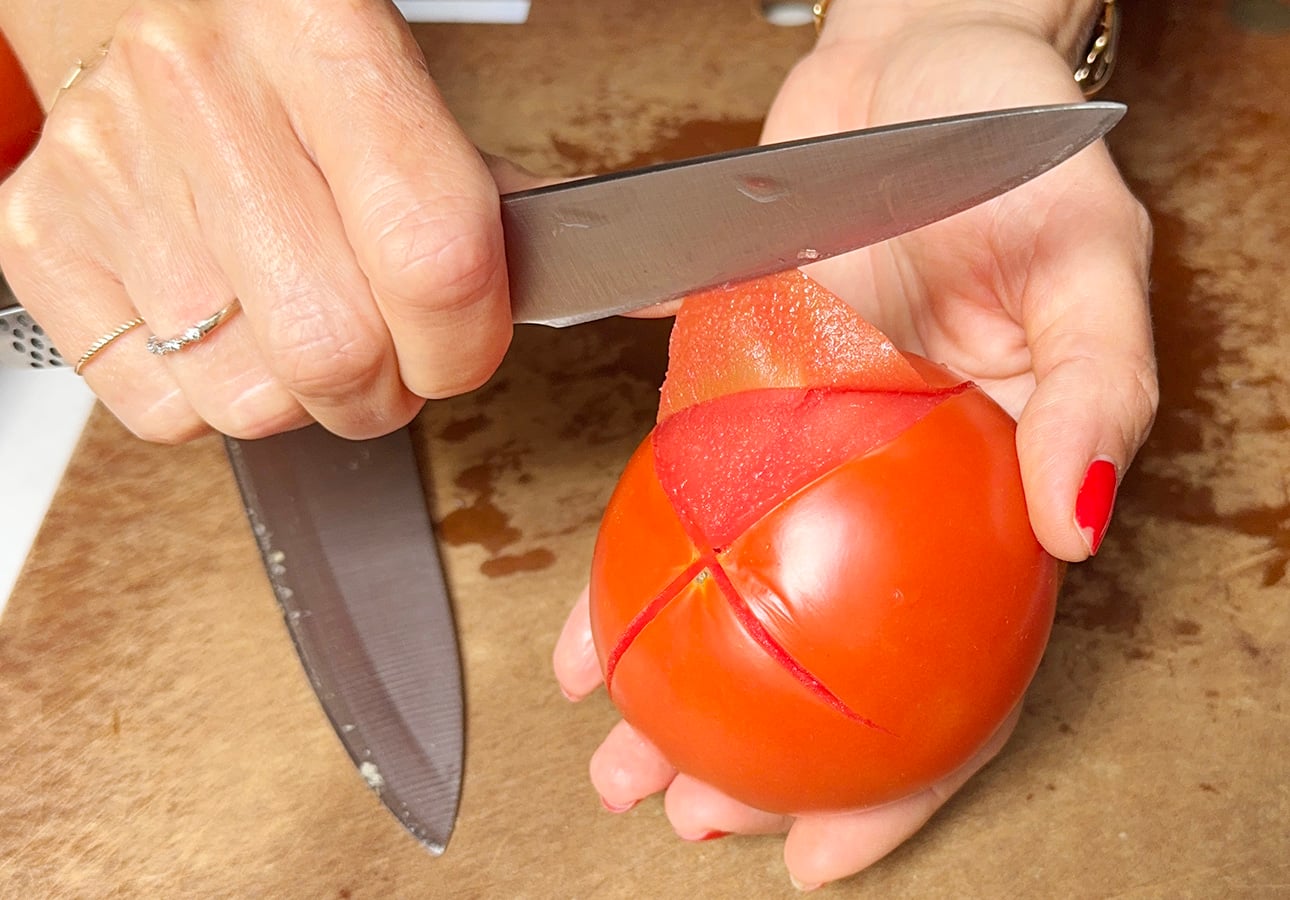
The tomatoes are now ready to chop and turn into sauce: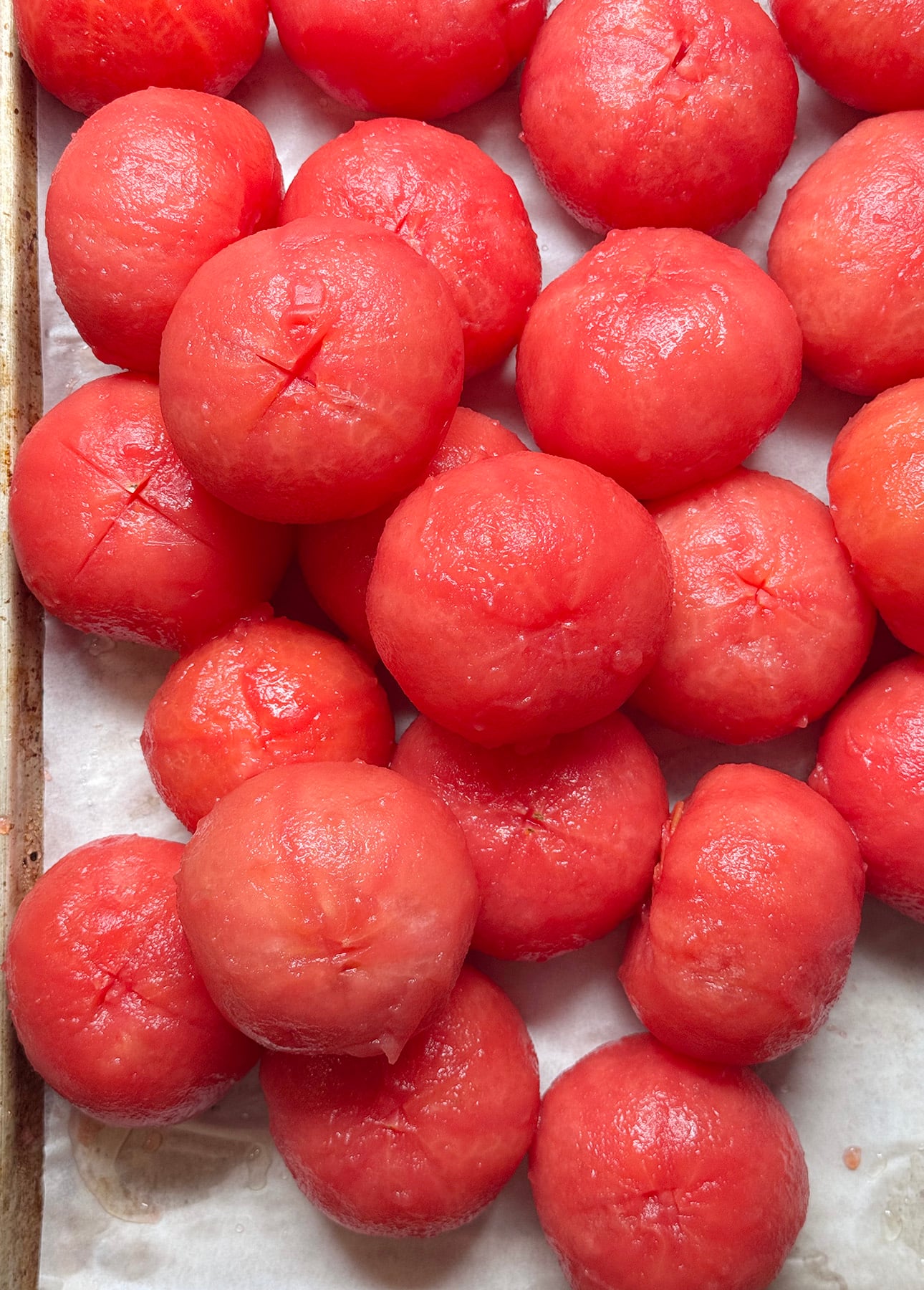
How Long Should Fresh Tomato Sauce Cook?
There isn’t one universal cooking time because fresh tomatoes vary enormously in water content.
Paste tomatoes such as Roma or San Marzano may produce a thick sauce in about 20 to 30 minutes. Beefsteak, heirloom, or especially juicy garden tomatoes may need 45 minutes or longer.
That’s why I judge fresh tomato sauce primarily by what it looks like rather than by the clock.
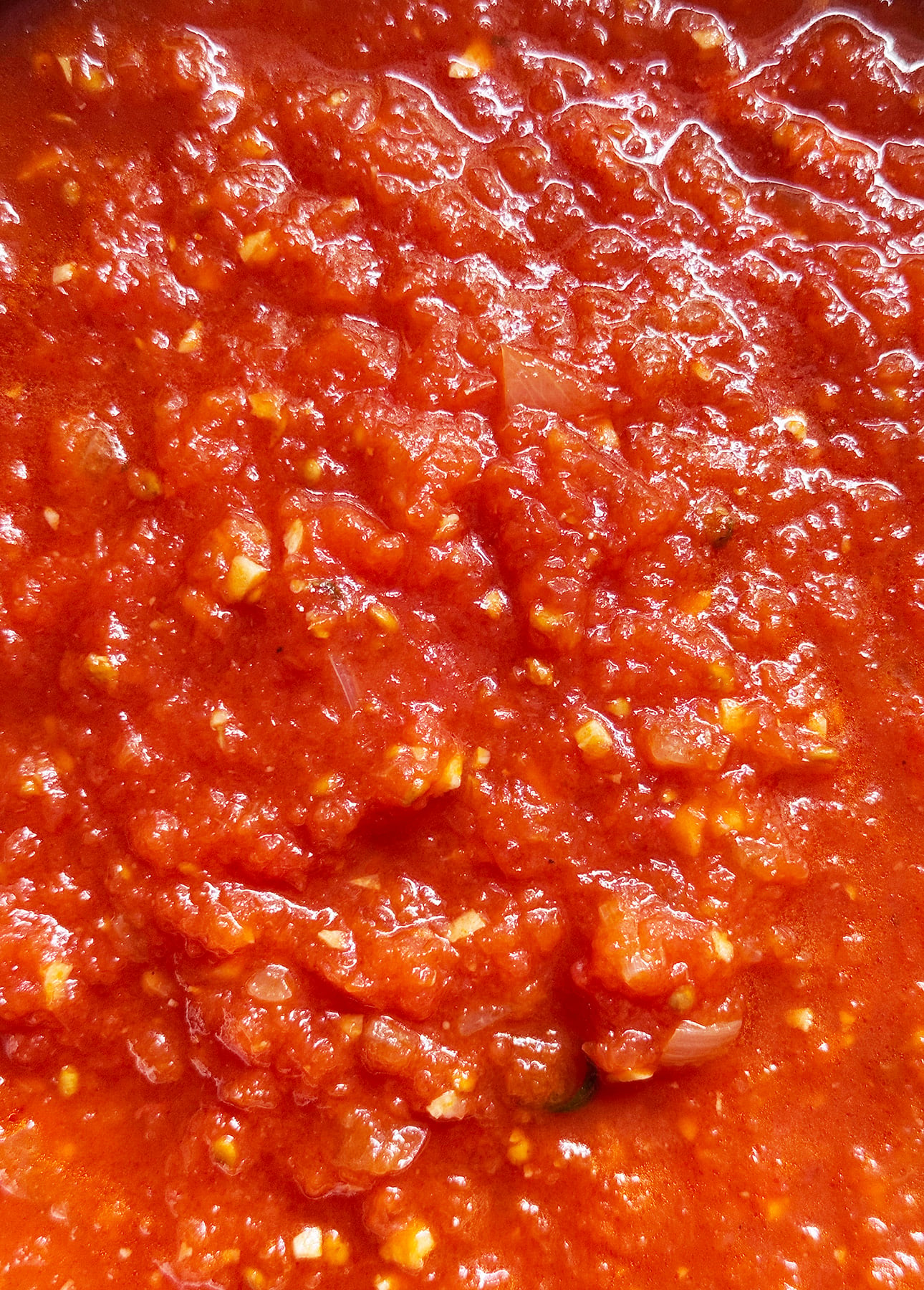
Look at the sauce before stirring it after it has simmered for a few minutes. At the beginning of the cooking process, you’ll see a noticeable layer of watery tomato juice surrounding and covering the tomato pulp.
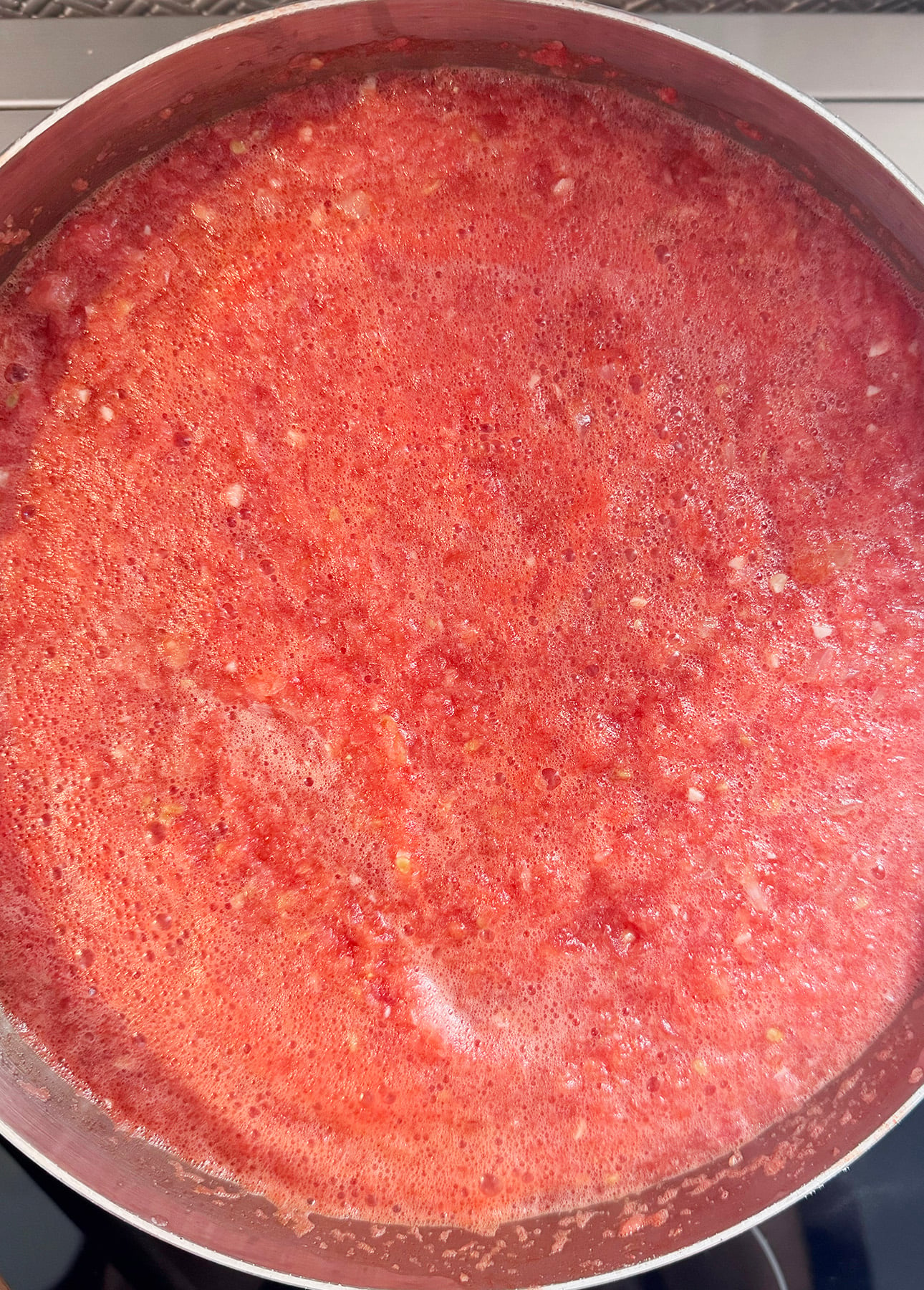
As the sauce cooks uncovered, more and more of that water evaporates. You’ll gradually see less liquid pooling on the surface and more of the tomato pieces emerging through it.
When only a thin layer of liquid remains, and the sauce looks thick rather than watery, it’s ready.
Pro Tip: Keep the pot uncovered. You’re trying to encourage evaporation. Covering the sauce traps the steam you’re trying to get rid of.
Helpful Tips for the Best Fresh Tomato Sauce
Why salt is so important in tomato sauce
If homemade tomato sauce tastes flat, my first instinct isn’t to reach for sugar. It’s to check the salt.
Salt doesn’t just make tomatoes taste salty. Proper seasoning brings their sweetness, acidity, and aroma into sharper focus. Even gorgeous ripe tomatoes can taste strangely muted when they’re underseasoned.
The important thing with a sauce that reduces considerably is when you add the salt.
I like to season lightly when the tomatoes go into the pot, then adjust the seasoning once the sauce has finished reducing. As the sauce cooks, water evaporates, but the salt stays behind, so adding all the salt at the beginning can leave you with an oversalted sauce by the end.
Once the sauce has thickened, taste it again. This final seasoning adjustment can make a surprisingly big difference.
Do you need tomato paste in fresh tomato sauce?
No. Tomato paste is optional.
I like adding a tablespoon when I’m using particularly juicy tomatoes because it helps give the sauce more body and adds concentrated tomato flavor without requiring an excessively long cooking time.
After the onion and garlic have softened, add the tomato paste and cook it briefly. It will darken slightly and may start sticking to the bottom of the pot. That’s exactly when you want to deglaze.
If you’re using fleshy Roma or San Marzano tomatoes and your sauce is already reducing beautifully, you can leave the tomato paste out.
Why add white wine to tomato sauce?
White wine is optional, too.
Its most practical purpose in this recipe is to deglaze the pot after the tomato paste has cooked.
Once tomato paste begins caramelizing on the bottom of the pan, pouring in a little liquid releases those concentrated, flavorful bits so they become part of the sauce rather than staying stuck to the pot.
I like dry white wine because it adds a subtle extra layer of flavor, but there’s absolutely no reason to open a bottle just for this recipe. Vegetable broth or water can accomplish the same thing.
If you omit the tomato paste and nothing has stuck to the bottom of the pot, you can skip the deglazing step.
Pro Tip: Deglaze when the tomato paste has turned a deeper rusty red. Don’t wait until the bits on the bottom become dark brown or burnt.
Can you use a food processor to chop fresh tomatoes?
Absolutely. It’s especially useful when you’re making a double or triple batch.
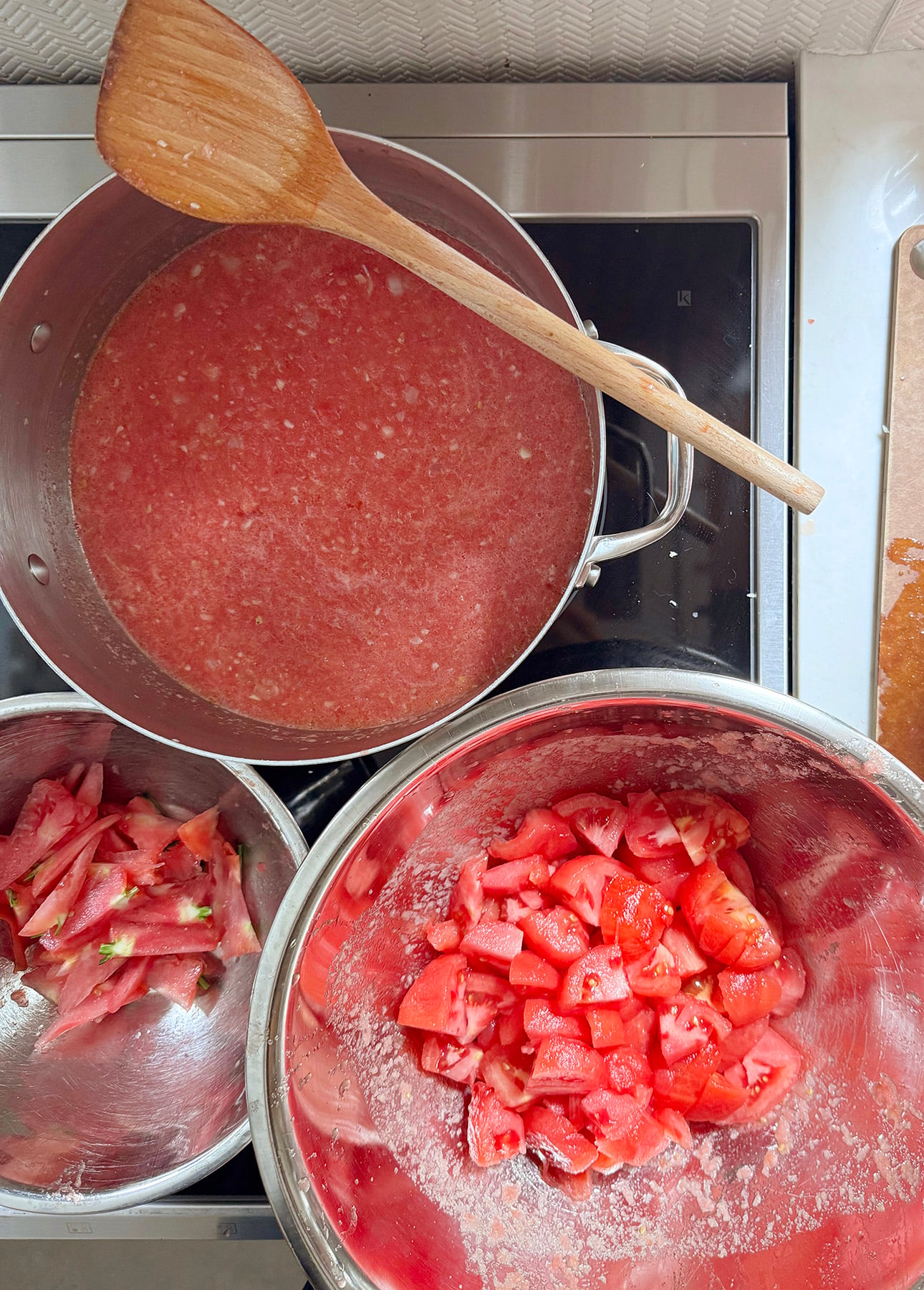
After peeling the tomatoes, work in batches and pulse them briefly in the food processor. You’re looking for chopped tomatoes rather than tomato juice, so avoid letting the machine run continuously.
For one five-pound batch, chopping the tomatoes by hand is manageable. If you’re staring at ten or fifteen pounds of peeled tomatoes, the food processor saves a considerable amount of work.
Should fresh tomato sauce be chunky or smooth?
That’s entirely up to you—and you don’t need two different recipes.
If you like a rustic chunky fresh tomato sauce, simply leave the cooked tomatoes as they are.
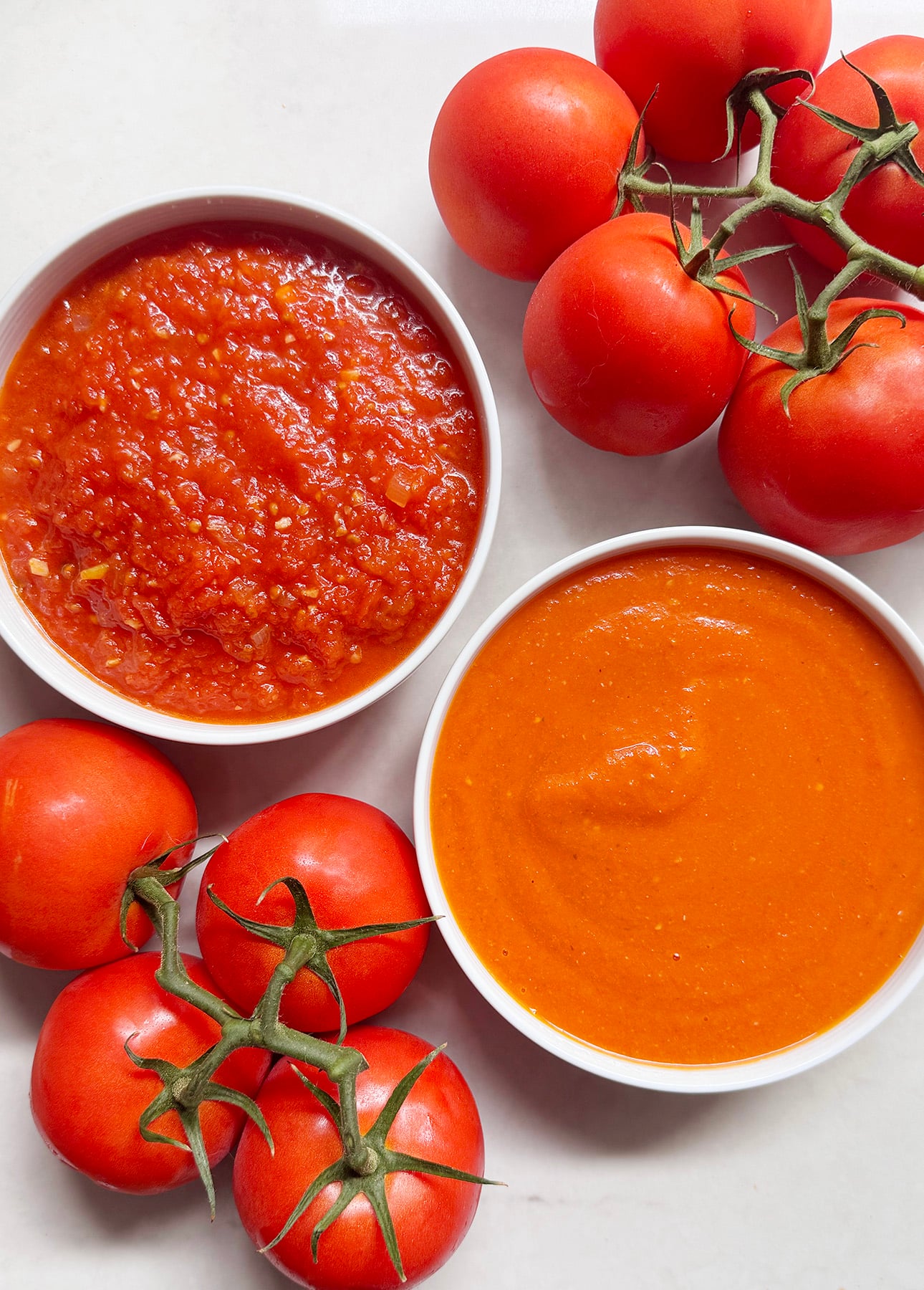
For a smoother sauce, use an immersion blender directly in the pot once the sauce is cooked, or transfer the cooled sauce to a stand blender to process. You can blend just briefly to remove the largest pieces or keep going until the sauce is completely smooth.
I often choose the texture according to what I’m serving. A chunky sauce is lovely tossed with pasta because the tomato pieces cling to the noodles, while a smoother version works well for dishes where you want a more even consistency.
The two bowls of sauce in the picture below are one and the same recipe: the bowl on the left is the chunky sauce as it was cooked, and the bowl on the right is the blended sauce.
How should you flavor fresh tomato sauce?
You can take homemade tomato sauce in countless directions, but I deliberately keep this one simple.
My basic combination is onion, garlic, salt, and fresh basil. It gives the tomatoes enough support to make a delicious sauce on their own while keeping the finished batch versatile enough for many different recipes.
If you want to build on that base, crushed red pepper adds gentle heat and dried oregano adds a more assertive Italian herb flavor.
You can also add fresh or dry thyme, parsley, a bay leaf, or other herbs depending on how you intend to use the sauce.
When I’m making tomato sauce for the freezer, though, I prefer going for the basic flavor combination. I’d much rather freeze a versatile basic sauce and decide how I want to season it when I turn it into dinner.
Add fresh basil at the end
Fresh basil is delicate, so I add it after the sauce comes off the heat instead of simmering it for the entire cooking time. This preserves much more of its fresh fragrance and flavor.
If you’re making the sauce specifically to freeze, you can even freeze it without the basil and add freshly torn or chopped basil when you reheat it.
How to make fresh tomato sauce ahead
Fresh tomato sauce is ideal for batch cooking because making a larger quantity doesn’t require much more active work.
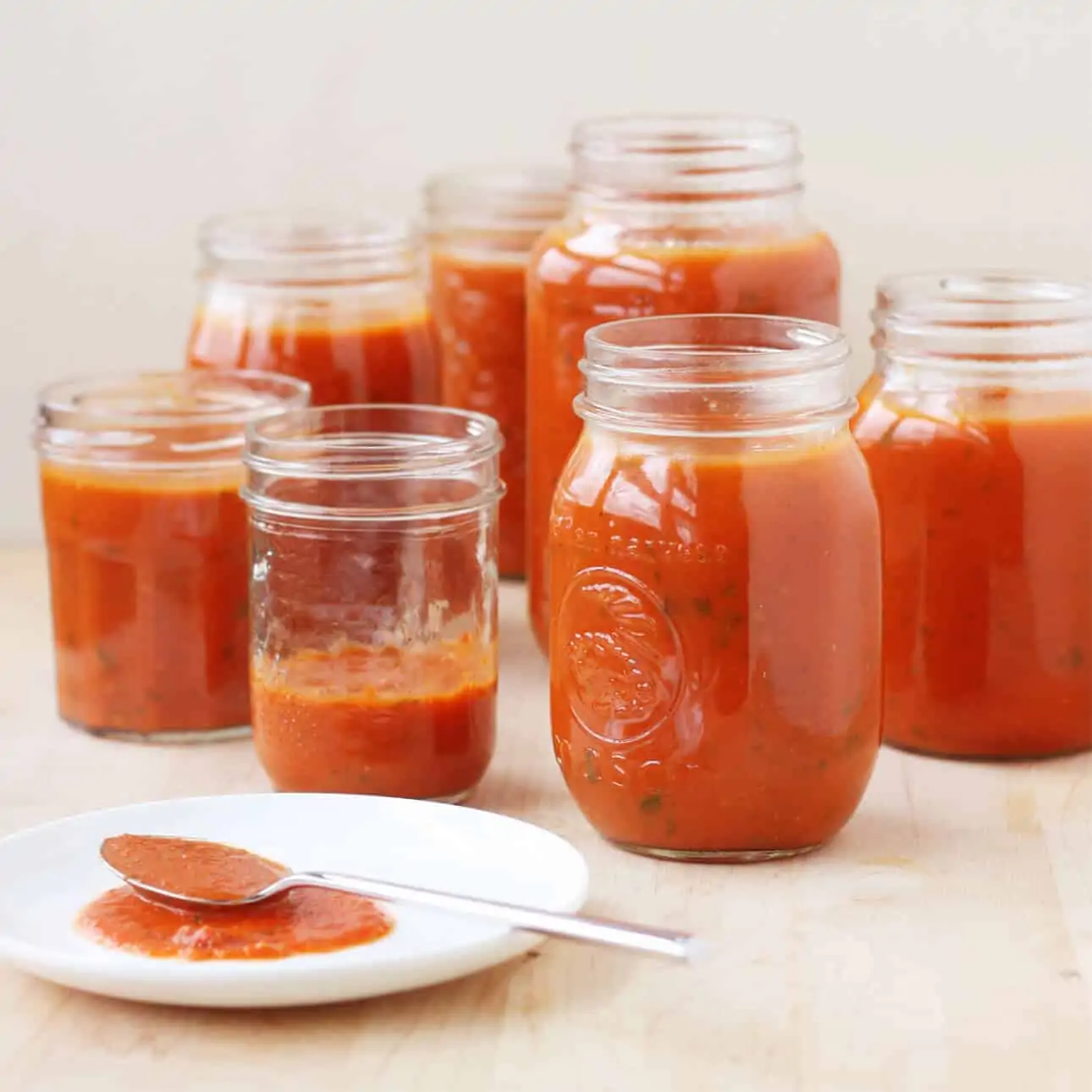
Let the finished sauce cool completely, then transfer it to airtight containers. Keep it in the fridge for short-term storage or freeze it in meal-size portions for longer storage. I prefer freezing it in amounts that correspond to future meals rather than storing one enormous batch in a single container.
The sauce freezes beautifully for up to about three months. Thaw it overnight in the refrigerator, reheat gently, then taste and adjust the seasoning before serving.
If you’re adding fresh basil, do it after reheating for the brightest flavor.
How to use fresh tomato sauce for pasta and more
This fresh tomato pasta sauce is delicious enough to toss with noodles as-is, but because I’ve kept the seasoning simple, it can also be the base for many other meals.
Here are some ideas:
- Toss the chunky version with your favorite cooked pasta, then finish with basil and freshly grated Parmigiano-Reggiano.
- Spoon it over homemade gnocchi for an easy dinner.
- Serve it warm alongside Sicilian arancini as a dipping sauce.
- Add meatballs and serve them with spaghetti, polenta, or crusty bread.
- Use the sauce in lasagna or another baked pasta, spoon it over creamy polenta, or pile it onto toasted bread and finish it with fresh mozzarella or burrata.
For pizza, I would reduce the sauce a little further than usual and blend it smooth so you’re not adding too much moisture to the crust.
And when dinner needs to be especially simple, there is absolutely nothing wrong with a bowl of pasta, this tomato sauce, plenty of Parmesan, and a handful of fresh basil.

Looking for more inspiration? Browse my easy authentic Italian pasta recipe collection for more dinner ideas.
Fresh Tomato Sauce FAQ
Is fresh tomato sauce the same as Marinara or Passata?
Not exactly.
Fresh tomato sauce simply describes a finished tomato sauce made with fresh rather than canned tomatoes.
Marinara is a particular style of cooked tomato sauce, generally made with tomatoes, olive oil, garlic, and herbs. You can make it with fresh tomatoes, but canned tomatoes are extremely common.
Passata is a strained tomato purée that’s generally smooth and uncooked or only lightly processed before packaging. It makes a useful ingredient for tomato sauces but isn’t necessarily a seasoned, finished sauce on its own.
Can I use canned tomatoes instead of fresh tomatoes?
You can make excellent tomato sauce from canned tomatoes, but I wouldn’t swap them directly into this recipe because its quantities and cooking process were designed specifically around fresh tomatoes.
When good fresh tomatoes aren’t in season, make my Universal Big Batch Tomato Sauce instead. That recipe was developed specifically around canned tomatoes and produces the same kind of versatile sauce you can keep on hand for future meals.
Can I can this fresh tomato sauce?
Not as written.
This fresh tomato sauce recipe was developed for eating fresh, refrigerating, or freezing. It hasn’t been formulated or tested as a shelf-stable canning recipe.
Safe tomato canning requires appropriate acidification and a tested processing method, so those who want to water-bath can tomatoes should use a recipe specifically developed and tested for that purpose.
For this recipe, freeze it rather than can it.
Optional flavorings (use any or all)
-
Peel the tomatoes: Bring a big pot of water to a rolling boil. Slice a shallow “X” on the bottom of each tomato. Plunge them in the boiling water until you see their skin roll back, 10 to 15 seconds. Fish them out and let them cool for a couple of minutes before removing their skins. Do this step in 2 or 3 batches to make sure there’s just one layer of tomatoes in your pot at a time.
-
Prepare the tomatoes: Once the tomatoes are peeled, chop them roughly or dice them, depending on the texture you’re trying to achieve. You can use a food processor to speed up this process. Keep all of the tomatoes in a large bowl as you go: the flesh, the seeds, and the juice.
-
Cook the base of the sauce: Heat the olive oil in a big pot over medium-low heat. Add the onion and garlic and cook until translucent (don’t let it brown!), about 5 minutes. Pour the white wine into the pot and scrape the flavorful bits that may have stuck to the bottom of the pot. Let the wine evaporate (about 3 minutes more).
-
Simmer the sauce: Add the chopped tomatoes as well as 1 teaspoon of the salt and freshly ground pepper to the pot. Raise the heat to medium-high to bring the sauce to a boil then turn the heat to low again to let it simmer, uncovered. Stir once in a while.
-
The cooking time will vary from 30 to 50 minutes depending on the variety of tomatoes you used (less time for Italian varieties; more time for regular garden tomatoes). You want the final sauce to be thick, not watery. How to tell if the fresh tomato sauce is ready: The key is to look at the sauce before stirring it when it has simmered for about 5 minutes. At the beginning of the cooking time, you’ll see a thick layer of watery juices rise to the surface. As the sauce simmers, you’ll see less and less of that juice rising. The sauce is ready when it’s topped with just a thin layer of juice and you see tomato chunks surfacing here and there.
-
Finish the sauce: When the sauce is ready, turn off the heat and taste. Season with 1 teaspoon (5 ml) salt, or more to taste. Stir in the chopped basil, if using. If you’re not serving the sauce right away, let it cool completely before storing.For a smooth sauce: Use an immersion blender directly in the pot, or carefully transfer the sauce to a stand blender and process until smooth.
-
STORAGE: Refrigerate the sauce in airtight containers for up to 4 days, or freeze for up to 3 months.
Note about canning: This recipe is intended for refrigerating or freezing and has not been tested for shelf-stable canning. If you want to can tomato sauce, use a recipe specifically developed and tested for safe canning.
Did you make this?
Tell me how you liked it! Leave a comment or take a picture and tag it with @foodnouveau on Instagram.
This site participates in the Amazon Associates Program, an affiliate advertising program designed to provide a means for the site to earn fees by linking to Amazon and affiliated sites.
If you click on an affiliate link, I may earn advertising or referral fees if you make a purchase through such links, at no extra cost to you. This helps me create new content for the blog–so thank you! Learn more about advertising on this site by reading my Disclosure Policy.