

Once you know your personality type, you read what you’re bad at and you think: so what? That’s how you know it’s your type. The thing other people think is your weakness is, indeed, your weakness. In their eyes. Because it’s important to them. It’s not important to you.
I’m an ENTJ. People always write about how ENTJs come off rough and don’t take time to say things nicely. This is correct. And I don’t care. I mean, I care when people tell me I hurt their feelings, but not enough to, like, become an INFJ — the master of delivering bad news with kindness.
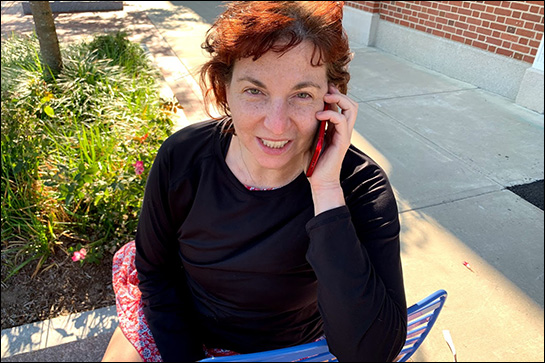
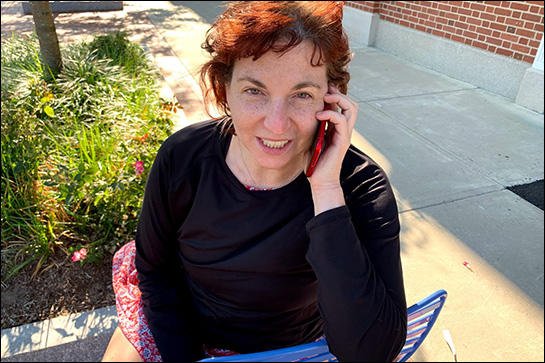
Z took this picture of me. I was coaching someone and Z heard me say, “It doesn’t matter how much you love the idea. It’s not a business. It’s a wish.” Z sent me the picture with the caption: Breaking another person’s heart. I saved it all these years because I was proud.
I wouldn’t want to be an INFJ because they think everyone shares their values and then they’re disappointed in everyone for not living up to those values. If you tell an INFJ this is their problem, they’ll be like, yeah. I know. But they’re not going to stop orienting their lives around their values.
INFPs don’t make a lot of money and they don’t care. I mean, they care like I care about being nice: lip service to ensure it doesn’t get totally out of control.
We usually talk about type in terms of what people care about. But what we don’t care about is what makes us really unique. And what we don’t care about is intrinsic: it’s not changing. Every type gets to pick which problems count, and every type quietly picks the same way — the big, type-defining problem doesn’t make the list.
So each type solves a problem from its own wheelhouse instead. ENTJs solve that we don’t have a good enough army behind us. INFPs solve that they don’t have enough meaning in their lives. ENFPs’ weakness is never committing, but the problem they solve is not enough opportunities opening up.
So what’s important isn’t to see your weakness. You don’t care. What’s important is to see your blind spot. The blind spot is not the thing you care about, and it’s not the thing you’re consciously ignoring — ignoring takes awareness. It’s the thing in between.
Personality type is most useful when it’s about the blind spot, because no one can just tell you and you know. Personality type is most fun when it’s about weaknesses, because it’s amazing what each type thinks is okay. The next Personality Type Office Hours will be about the difference. We’ll meet Tuesday, July 28 at 5pm.
Here are new personality type posts:
ENFJs: Nobody thanks you for the fight that didn’t happen
ENTJ trap: Making plans to make plans
Why my INFJ writing group failed
INTJs don’t get lonely, you get understaffed
INFPs: You ruin your writing when you make it coherent
ENFPs: You leave before someone tells you who you are


