How to Build a Collaborative Culture: You Can’t Mandate Collaboration

While it’s understood that promoting collaboration is critical for organizational success, many leaders still struggle with how to make collaboration work. A key reason for this is an over-reliance on collaboration tools and structures, instead of focusing on how to support a collaborative workplace culture.
What Spotify’s Squad Model Gets Right About Collaboration
A good example of this distinction can be seen in Spotify’s “squad” model, where teams of 6-12 people work like mini-startups within the organization.
While each squad has its own mission and decision-making authority, insights and learnings are shared across the organization through “tribes”, “chapters”, and “guilds”.
Now what makes this collaboration model successful is not the structure itself, but the fact that Spotify’s leadership understands this fundamental truth:
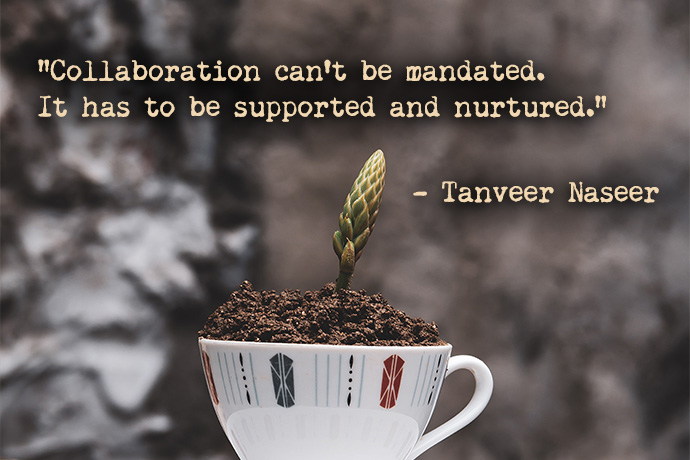
Collaboration can’t be mandated. It has to be supported and nurtured by giving employees autonomy to decide how to achieve their goals, and connection to others so they can share their learnings and gain insights on the value created.
3 Practical Steps to Build a Collaborative Culture
So with this in mind, here are three practical steps you can take to promote better collaboration in your organization.
1. Practice collaborative visibility by being transparent about your decision-making process
Instead of communicating via email or closed-door meetings, make your decision-making transparent. Share with your team how decisions are made and invite them to share their insights to help inform future decisions.
By being transparent and practicing collaborative visibility with your team, you’ll encourage your employees to be more openly collaborative with each other.
2. Implement “cross-pollination sessions”
On my “Leadership Biz Cafe” podcast, I spoke with Siobhan McHale about her book “The Hive Mind at Work” where she writes about the “Law of Multiple Perspectives”, which states “not everyone sees things the same way.”
That’s why you should create monthly “cross-pollination sessions” where employees from different departments that wouldn’t normally interact are brought together to work on a unique challenge. This will not only help employees get comfortable working with divergent viewpoints, but it can also inspire new ideas and solutions.
3. Measure collaboration efforts (don’t just assume it’s happening)
With this step, you want to create clarity around how successful collaboration efforts are in your organization – and if it’s really happening at all. You can measure things like cross-departmental project completion times, knowledge sharing frequency, and rates of experimentation.
By implementing these three practical steps, you’ll not only promote better collaboration, but you’ll be creating conditions that empower your employees to bring their best efforts to work.
Discover more from Tanveer Naseer
Subscribe to get the latest posts sent to your email.