How to Get Rid of Mosquitoes in Your Yard


Learning how to get rid of mosquitoes in your yard starts with removing standing water, treating water that cannot be emptied and reducing the shady places where adult mosquitoes rest. Fans, repellents and professional mosquito control can add another layer of protection, but controlling mosquitoes works best when you address both breeding areas and adult activity. Mosquitoes in North Carolina can also carry West Nile virus and other mosquito-borne illnesses, so a consistent control plan protects more than just your evenings outside.
If you live in Raleigh or anywhere around the Triangle, mosquitoes are a familiar part of warmer weather. North Carolina’s rain, heat and humidity give them plenty of opportunities to breed, and it does not take much water for the mosquito population around a backyard to grow.
The good news is that you can make your yard much less inviting with a few consistent steps.
Start by Removing Standing Water
The most effective way to control mosquitoes around your yard is to start where they breed.
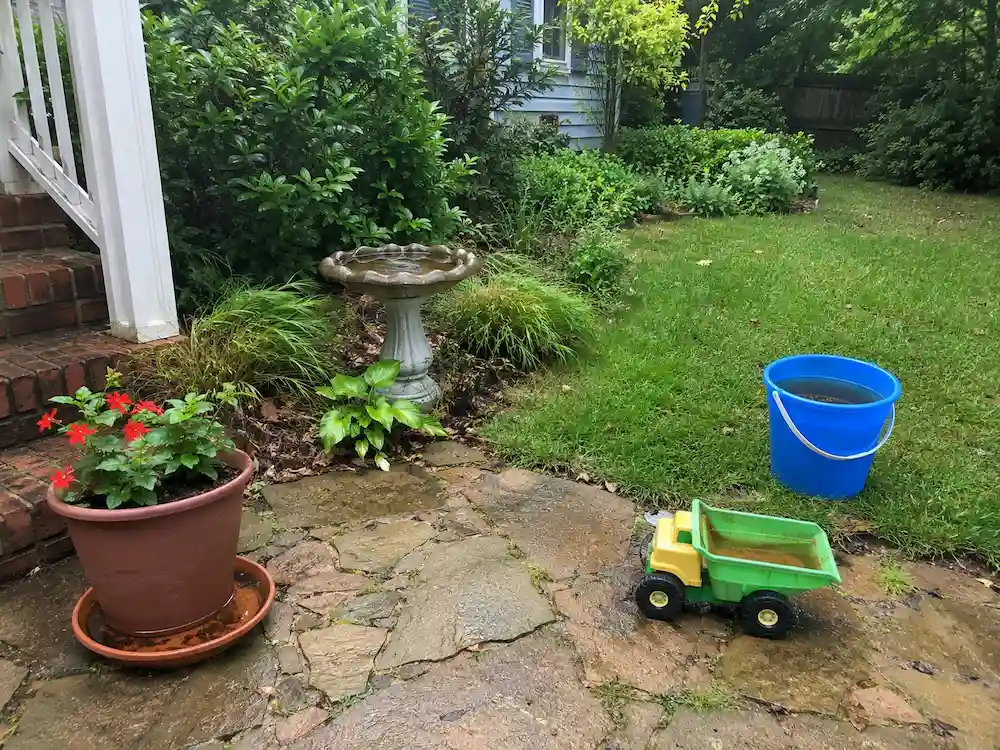
Mosquitoes lay eggs in or near water, and those eggs develop into larvae before the mosquitoes reach adulthood. A bucket does not need to be full. Plant saucers, toys, old tires and other small containers can hold water long enough to become a breeding ground. In warm conditions, mosquitoes can complete the trip from egg to biting adult in about a week, which is why even short-lived puddles are worth checking.
Walk around your yard at least once a week and look for anything that can collect water. Dump it, turn it over, cover it or put it away when possible.
Treat Water That Cannot Be Removed
Not every water source can be dumped. When water has to stay in place, products designed to control mosquito larvae may be useful.
Bti and Mosquito Larvae
Bacillus thuringiensis israelensis, or Bti, is used in mosquito-control products such as mosquito dunks. It targets mosquito larvae in certain types of standing water before they can develop into biting adults. Depending on the product and water conditions, a single application can keep working for up to 30 days.
Always follow the product label and label instructions. A product that is appropriate for one pond or container may not be intended for another.
Methoprene is another ingredient used to control mosquito larvae. It interferes with their development so they do not mature normally. Some methoprene formulations remain active longer than Bti, which can make them useful for water sources that are hard to treat repeatedly.
Neither product replaces source reduction. If you can safely empty the water, removing the breeding site is still the better first step.
Why Mosquitoes Are So Common Around Raleigh
Warm temperatures, summer rain and high humidity make North Carolina a comfortable place for mosquitoes.
In Raleigh, Cary, Wake Forest, Apex, Holly Springs, Garner and surrounding areas, mosquito activity can continue for much of the warmer part of the year.

Local geography adds to the problem. Wooded lots, slow-draining clay soil and the creeks and greenways that run through many Triangle neighborhoods all give mosquitoes more places to breed and rest. Homeowners in this area are also more likely to encounter species such as the Asian Tiger Mosquito, which bites during the day as well as at dawn and dusk.
- Mosquitoes prefer cool, damp and shaded vegetation during the heat of the day. Thick shrubs, tall weeds, trees and dense garden areas can give these insects plenty of places to rest.
- Regular yard maintenance can help. Trim overgrown plants, thin dense shrubs and keep weeds from taking over around patios, decks and other seating areas.
- You don’t need to strip the garden bare or remove every plant. The goal is simply to reduce the dark, humid pockets where mosquitoes spend time.
Make Your Patio Less Inviting to Mosquitoes
Removing breeding areas helps control future mosquitoes, but it does not immediately eliminate mosquitoes that are already flying around.
A few simple changes can make outdoor spaces more comfortable.
Do Mosquito Traps Help Control Mosquitoes?

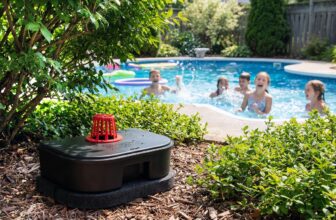
Mosquito traps can reduce mosquito activity in a limited area, depending on the type of trap and where it is placed. In some field trials, well-placed traps have reduced bites by as much as 88 percent, though results vary based on trap type, placement and yard conditions.
Some traps use carbon dioxide or other attractants to draw mosquitoes in. They may reduce the number of adult mosquitoes nearby, but they do not eliminate eggs, larvae or breeding sites.
Some traps use carbon dioxide or other attractants to draw mosquitoes in. They may reduce the number of adult mosquitoes nearby, but they do not eliminate eggs, larvae or breeding sites.
If water is still sitting around the yard, new adult mosquitoes can continue emerging.
The same is true for sprays and foggers. They may kill mosquitoes that are present during treatment, but they work better when the breeding source has also been addressed.
How to Prevent Mosquito Bites
Even with good yard maintenance, you may still encounter mosquitoes outdoors.
Personal protection can help protect you from mosquito bites while you are outside.
Wear long sleeves and long pants when mosquito activity is heavy. Light, loose clothing also leaves less exposed skin available for bites and gives mosquitoes fewer places to land.
Use an EPA-registered insect repellent and follow the label instructions. Products containing DEET and oil of lemon eucalyptus are among the options commonly used to repel mosquitoes. Look for a repellent with up to 30 percent DEET for extended protection, or a lemon eucalyptus product listing citriodiol as the active ingredient.
Clothing and gear may also be treated with permethrin when the product is specifically labeled for that use. Keep repellents and treated clothing away from pets unless the product label specifically says they can be used around them.
If you are spending time outdoors around dawn or dusk, be especially aware of mosquito activity. Some species are most active during those hours, although mosquitoes can bite at other times too.
How to Keep Mosquitoes Out of the House
If you are finding mosquitoes inside the house, start with the obvious entry points.
Repair torn window screens and door screens, and make sure exterior doors close properly. A tightly fitted, intact screen creates a nearly impassable barrier, which is usually more effective than trying to control mosquitoes inside once they have already gotten in. Air conditioning can also help keep indoor humidity lower while allowing doors and windows to stay closed.

A fan can make it harder for mosquitoes to land and may help keep mosquitoes away from the area where you are sitting.
Indoor mosquito sprays may kill adult mosquitoes in resting areas, but controlling mosquitoes inside usually starts with keeping them from entering in the first place.
Also check for containers that hold water indoors, especially in basements, garages or areas around plants.
Can DIY Sprays Kill Mosquitoes?
DIY bug sprays may kill some insects on contact, but spraying alone usually does not fix the full mosquito problem.
If standing water remains nearby, eggs and larvae can continue developing. Spraying only the open lawn can also miss the shaded plants and foliage where adult mosquitoes spend much of their time.
This is why repeated spraying may seem to work for a short period before the mosquitoes return.
For better results, combine treatment with standing-water removal, garden maintenance and attention to resting areas.
When to Use Professional Mosquito Control
Some properties are simply harder to manage without help.
Wooded lots, heavy landscaping, drainage problems and nearby properties can all contribute to a mosquito problem even when you are doing the right things in your own backyard.
Professional mosquito control should focus on more than spraying the middle of the lawn. A technician should look at standing water, shaded vegetation, breeding areas and the places where adult mosquitoes are resting.
Stomp Pest Control targets those areas as part of its mosquito control service. The goal is to control mosquitoes where they are actually spending time and continue addressing activity through the season. Stomp has served the Triangle since 2008 and follows an integrated pest management approach, combining source reduction, larvicide treatment and barrier sprays to foliage roughly every 3 to 4 weeks during the season. Every mosquito service is backed by a satisfaction guarantee, so if mosquitoes return between scheduled visits, Stomp will retreat at no extra cost, and there are no long-term contracts required.
Stomp Pest Control
Frequently Asked Questions About Mosquito Control
Early spring is a good time to start checking your yard for standing water and other breeding sites. Starting before mosquito populations build can make controlling them easier through the summer.
The most effective approach combines removing standing water, controlling mosquito larvae and treating areas where adult mosquitoes rest.
No single spray, trap or natural repellent handles every stage of the mosquito life cycle.
For fast, short-term relief before a party or evening outside, a barrier spray or fogging treatment can knock down the adult mosquitoes already in the yard, and a fan on the patio makes it harder for the rest to land. These options offer quick relief, but they do not stop new mosquitoes from developing unless standing water is also addressed.
Mosquitoes tend to avoid the scents of citronella, lavender, marigolds, eucalyptus and peppermint. These smells can make an area less appealing for a short time, but on their own they are not a reliable substitute for removing standing water and treating breeding sites.
A few drops of dish soap in a bowl of water is a common DIY trap. The soap breaks the water’s surface tension, which can trap and drown mosquitoes and their larvae that land in it. It may catch a small number of insects, but it is not a dependable way to control a mosquito population and should not replace removing standing water around the yard.
Run outdoor fans on the porch or patio, switch to yellow “bug” bulbs instead of white light, and keep doors and screens closed as much as possible during the evening. Treating the yard with a barrier spray before dusk, when mosquito activity typically increases, can also cut down on bites during nighttime hours outside.
Coffee grounds are sometimes promoted as a natural mosquito treatment, but they should not replace proven control methods.
Removing standing water or using a properly labeled larvicide is a more dependable way to prevent mosquitoes from developing.
Fish can eat mosquito larvae in some ponds, while bats and other beneficial insects or animals may eat adult mosquitoes.
They can be helpful parts of the environment, but they are unlikely to eliminate mosquitoes when active breeding sites remain around the property. Installing a bat box near the edge of the yard is a simple way to encourage this natural predator without attracting bats into the house itself.
Have a Mosquito Problem? Contact Stomp Pest Control
You should not have to spend every summer evening swatting mosquitoes or avoiding your own backyard.
Stomp Pest Control provides mosquito control throughout Raleigh and the Triangle. We look at where mosquitoes are breeding, where adult mosquitoes are resting and which areas of the yard need the most attention. Every visit is backed by our satisfaction guarantee, with no long-term contract required.
If you are searching for mosquito treatment near me or dependable mosquito control NC, call Stomp Pest Control at (919) 858-2213 or fill out the form below to request a quote.
Contact Form
We would love to hear from you! Please fill out this form and we will get back to you shortly.
“*” indicates required fields