
A lawn that looked fine on Monday can be chewed down to bare stems by Friday. That is the reputation fall armyworms have earned, and it is well deserved. These caterpillars move through a yard in large numbers, feeding around the clock, and a healthy patch of grass can turn brown before most homeowners even realize what is happening.
This guide covers what fall armyworms are, how to spot them in your yard, and why a professional exclusion plan is the most effective way to get rid of them and keep them from coming back.
What Is a Fall Armyworm?
The fall armyworm, known scientifically as Spodoptera frugiperda, is the larval stage of a migratory moth. Several species of armyworm exist across the United States, but the fall armyworm is the one most commonly associated with late-summer and early-fall damage in the southeastern states, including North Carolina.
The name comes from the way large numbers of larvae move through a lawn or field together, feeding as they go, almost like an army on the march. In corn and other row crops, fall armyworm larvae can burrow into the ears and attack corn kernels directly, which is a major reason growers monitor for them closely. In a residential lawn, the damage looks different but happens just as fast.
Where Fall Armyworms Come From
Fall armyworms can’t survive cold winters, so they don’t overwinter in North Carolina the way many lawn pests do. Instead, adult moths migrate north from southern Florida and other southern states each year as the weather warms, often reaching South Carolina and North Carolina by late summer. This migration pattern is exactly why fall armyworm activity in the Triangle tends to build through late summer and peak in early fall.
Fall Armyworm Life Cycle
Understanding the fall armyworm life cycle helps explain why these caterpillars can do so much damage in such a short window, and why timing matters so much for control.
Eggs
Adult moths lay eggs in clusters on grass blades, fences, siding or light posts. A single moth can lay up to 1,000 eggs in one night, and each egg measures only about 0.4 mm across. Egg masses have a distinctive furry or moldy appearance, since the female covers them with scales from her own body.
Larvae
This is the stage that causes the damage. Fall armyworm larvae hatch within days and begin feeding immediately. They can reach up to 1.5 inches in length by the time they are fully grown, and their appetite grows along with them. In their later stages, fall armyworm larvae can consume up to 50 times more food than they did as newly hatched caterpillars, which is why an infestation that looked minor a few days ago can suddenly cause severe damage.
Pupae
Once larvae finish feeding, they burrow into the soil to pupate, typically 2 to 8 cm deep. This stage is largely hidden from view, which is one reason infestations can seem to disappear and then return as a new generation of moths emerges.
Adult Moths
Adult fall armyworm moths have a wingspan of about 1 to 1½ inches. Their front wings are dark gray with light and dark splotches, while the hind wings are pale and plain by comparison. The entire life cycle, from egg to adult moth, can be completed in about one month, which means several generations can move through the same area in a single season.
How to Identify Fall Armyworms in Your Lawn
Knowing how to find armyworms early, before they cause severe damage, makes a real difference in how much of the lawn can be saved.
What the Larvae Look Like
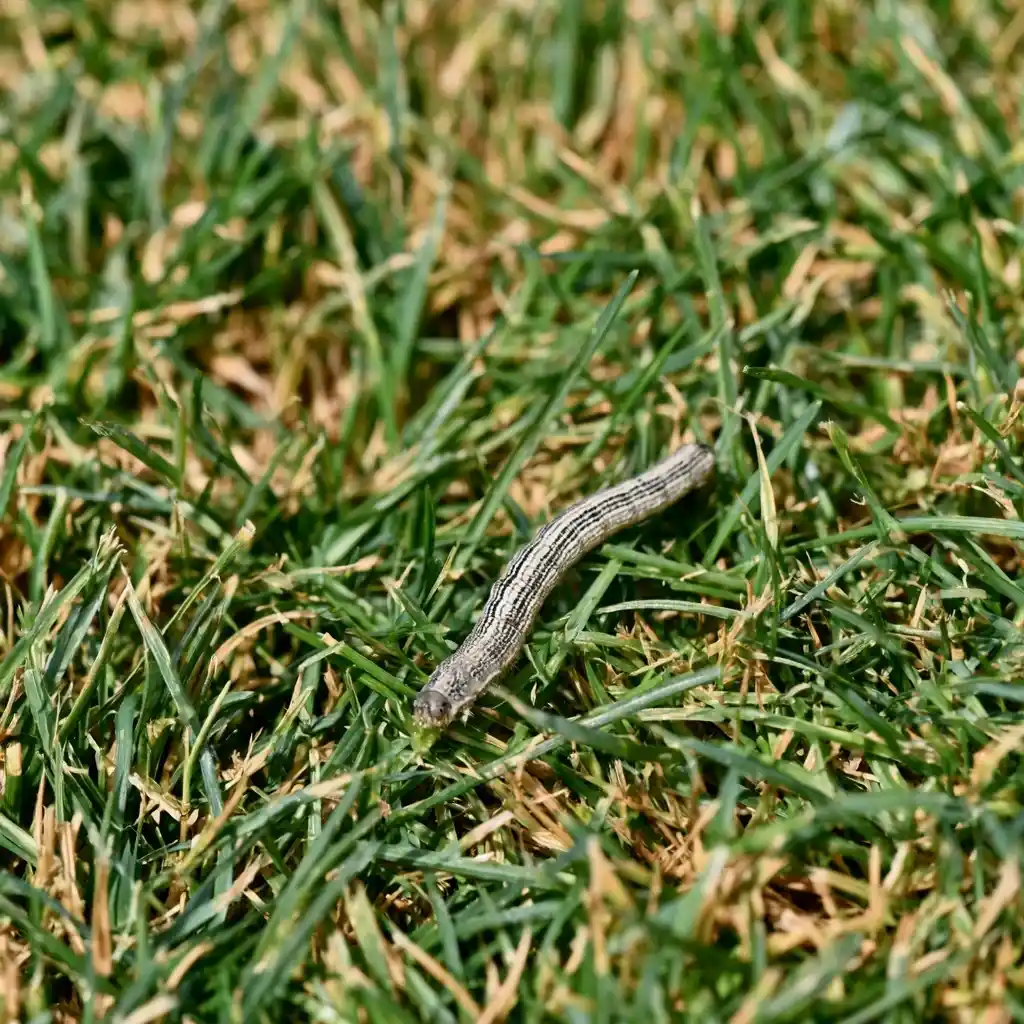
Fall armyworm larvae vary in color from green to brown and gray, which can make them tricky to spot against turf. The one consistent identifying feature is a light-colored, inverted “Y” shape on the head. Look closely and you will also usually see light and dark splotches running down the body.
Signs of Damage in Your Yard
Armyworm damage tends to show up quickly and looks different from typical drought stress once you know what to look for. Watch for these signs:
- Grass blades chewed down close to the stems, sometimes leaving a thin, transparent look before the grass browns entirely
- A clear, sharp boundary between damaged brown grass and healthy green grass, rather than a gradual fade
- Small brown patches that expand rapidly over just a few days
- Frass, which is the small, pellet-like droppings larvae leave behind on grass blades
- A noticeable increase in bird activity, since birds are drawn to feed on the larvae

A simple soap flush test can also confirm what you are dealing with. Mix a small amount of dish soap with water, pour it over a suspect patch of lawn, and watch for larvae to surface within a few minutes.
Fall Armyworms vs. Corn Earworm
Homeowners with a vegetable garden sometimes confuse fall armyworms with the corn earworm, another caterpillar pest that targets sweet corn varieties. Both can damage corn, but corn earworm tends to feed directly on the ear itself, while fall armyworms are more likely to strip foliage and turf in large numbers before moving on to nearby plants. If you are seeing both lawn damage and chewed corn in the same season, it is worth having a professional confirm which pest, or combination of pests, you are actually dealing with.
What Causes Fall Armyworms to Show Up in Your Yard
Fall armyworms thrive in warm, humid conditions, which is a large part of why late summer and early fall in the Triangle line up so closely with peak activity. A cool, wet spring earlier in the year can also favor armyworm survival and reproduction, setting the stage for a larger population by the time fall arrives.
Certain lawn conditions make a yard more attractive to egg-laying moths in the first place. Fall armyworms prefer common southern grasses like Bermuda and fescue, and they are especially drawn to well-fertilized, healthy turf with plenty of green blades to feed on. Thick thatch buildup can also make a lawn more inviting, since it gives larvae a place to hide during the day.
Should You Try to Kill Fall Armyworms Yourself?

Natural predators, including ground beetles, parasitoid wasps, wolf spiders and birds, and even rodents, do a lot of the work in most years, keeping armyworm populations from ever reaching a damaging level. Biological control matters, and it is worth protecting these beneficial insects rather than treating a lawn at the first sign of a single caterpillar.
The picture changes once a real infestation is underway. Because larvae can consume so much more food in their later stages, a lawn that seems only lightly affected can be seriously damaged within a matter of days if the population is left unchecked. At that point, the question is not whether to act, but how to act effectively, and that is where a lot of DIY treatments fall short.
Why DIY Armyworm Treatments Often Fail
Effective treatment depends on identifying the correct larval stage and applying the right product at the right time of day.
Timing matters more than you might expect. Because of armyworm feeding behavior, insecticide applications are generally most effective in the evening. Even if you have an effective product, you may not see results if you spray at the wrong time of day.
There is also the follow-up problem. Since fall armyworm moths keep migrating into the area and laying new eggs through the season, a single treatment doesn’t guarantee the problem is over. Without ongoing monitoring, a lawn that looked clear a few weeks ago can face a second infestation from an entirely new generation of moths.
The Most Effective Way to Get Rid of Fall Armyworms
A professional approach to fall armyworm control combines identification, correctly timed treatment and follow-up monitoring, rather than relying on a single spray and hoping for the best.
Stomp’s Approach to Lawn Pests Like Fall Armyworms
Stomp Pest Control has served homeowners throughout Raleigh and the Triangle since 2008, and every regular pest control service includes granulating the entire lawn with a water-activated product that helps repel and control common household pests, at no extra charge. Because many pest problems, fall armyworms included, start in the lawn before they ever become a bigger issue, this ongoing lawn treatment is built into every visit rather than offered as an afterthought.

Technicians are trained to spot signs of lawn pest activity during routine visits, and all products used are EPA approved and biodegradable, which matters for homes with pets and children spending time on the grass. If you are noticing brown patches spreading quickly or want a lawn inspection before fall armyworm season ramps up, Stomp’s team can identify what is actually happening and recommend the right next step.
Preventing Future Fall Armyworm Infestations
A few ongoing habits make a lawn less appealing to egg-laying moths in the first place and help it bounce back faster if armyworms do show up.
Frequently Asked Questions
“Armyworm” is a general term that covers several species of moth larvae that feed in large groups and move across lawns and fields together. The fall armyworm, Spodoptera frugiperda, is one specific species within that group, and it is the one most responsible for late-summer and early-fall lawn damage in North Carolina and other southeastern states.
Fall armyworm larvae eventually pupate in the soil and emerge as adult moths, with a wingspan of about 1 to 1½ inches and dark gray, mottled front wings. Those moths then lay the eggs that start the next generation, which is why an untreated lawn can face repeated waves of activity in a single season.
Warm, humid weather triggers increased fall armyworm activity, and a cool, wet spring earlier in the year can set the stage for a larger population by late summer. Migration from southern states also plays a role, since fall armyworms move north as temperatures rise each year rather than overwintering locally.
Healthy, well-fertilized turf with plenty of green grass blades is genuinely attractive to egg-laying moths, and thick thatch gives the larvae somewhere to hide once they hatch. Ironically, a lawn that is being cared for well can be just as appealing to fall armyworms as one that is neglected.
Look for grass chewed down close to the stems, a sharp line between healthy and damaged turf, small brown patches that spread quickly, frass on the grass blades, and more birds than usual feeding in the yard. A soap flush test can confirm what you are seeing within a few minutes.
Not automatically. Natural predators keep small armyworm populations in check in most years, so a single sighting doesn’t necessarily call for treatment. Once damage is spreading quickly or larvae are present in large numbers, though, that is the point where professional treatment is worth bringing in.
Depending on the stage and size of the infestation, options include Bt for young larvae, spinosad for surface feeders, contact insecticides like bifenthrin for active outbreaks, and granular products like Acelepryn G applied earlier in the season for longer-lasting prevention. Correct product selection, timing and label compliance all affect how well any of these actually work.
The most effective approach combines confirming the infestation, treating with the right product at the right time, usually in the evening, and following up with monitoring to catch any new activity as fresh moths move into the area. A professional inspection takes the guesswork out of each of those steps.
In most cases, yes. Healthy lawns tend to recover faster from minor feeding damage once the larvae are dealt with, especially warm-season grasses like Bermuda that regrow readily from an intact root system. Severe, untreated infestations that strip large areas down to bare soil may need reseeding in addition to treatment.
Fall armyworms can’t survive a North Carolina winter, so activity does taper off once cold weather arrives. That said, waiting out an active infestation without treatment usually means significant lawn damage in the meantime, since a new generation can emerge and start feeding again within about a month.
There is no reliable evidence that vinegar is an effective armyworm treatment, and it isn’t labeled or tested for this use the way products like Bt, spinosad or bifenthrin are. Relying on it instead of a proven treatment risks giving an active infestation more time to spread while the lawn continues to take damage.
There is no reliable evidence that vinegar is an effective armyworm treatment, and it isn’t labeled or tested for this use the way products like Bt, spinosad or bifenthrin are. Relying on it instead of a proven treatment risks giving an active infestation more time to spread while the lawn continues to take damage.
Get Lawn Pest Control in Raleigh, NC
Fall armyworms move fast, and a lawn that looks fine one week can be significantly damaged the next. Stomp Pest Control has been protecting Triangle lawns and homes since 2008, with lawn granulation built into every regular service and technicians trained to spot pest activity before it gets out of hand.
If you are seeing brown patches spreading through your yard, or you would rather have a lawn inspection now than deal with the damage later, call Stomp Pest Control at (919) 858-2213 or fill out the form below to get started.