‘Hands Off Ohio!’: FBI Raid of Voting Rights Group Raises Alarms Over Voter Intimidation


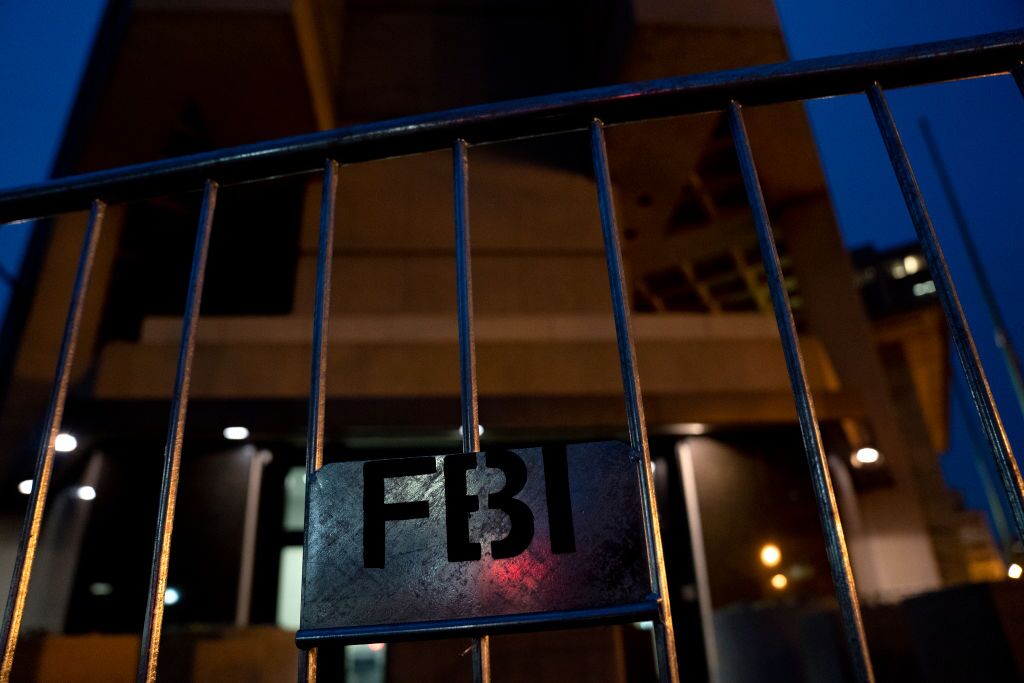
On the morning of June 11, agents from the Federal Bureau of Investigation raided the Cleveland offices of the Ohio Organizing Collaborative (OOC), a grassroots pro-democracy organization focused on registration, civic engagement and community organizing for marginalized communities.
Agents seized documents and computer files and questioned staff members for several hours, according to reports. Investigators also contacted employees and community leaders at their homes, workplaces and schools. While some agents reportedly carried subpoenas and asked questions related to voter fraud, officials have not publicly explained the specific focus of the investigation.
For voting rights advocates, the search immediately raised alarms—not only about the investigation itself, but about its potential chilling effect on voter registration and civic participation ahead of the 2026 midterm elections.
The mission of the OOC is to build power among everyday Ohioans through racial, social and economic justice organizing. In the aftermath of the raid, many local leaders and voting rights advocates expressed concern that the investigation could discourage voter registration and civic participation ahead of the 2026 midterm elections.
In response, the Ohio Democracy Defense Project launched the #HandsOffOhio campaign, calling the FBI operation “intimidation” rather than legitimate law enforcement.
“The ‘crime’ in question? Registering hundreds of thousands of Ohio voters,” organizers wrote in a public statement. “The Ohio Organizing Collaborative has worked for nearly 20 years to expand the electorate in Ohio. That’s not a threat to democracy. That is democracy.”
Meanwhile, partner organizations are training nonprofit organizations to better understand their legal rights during government investigations. Staff at the Brennan Center for Justice, Nonprofits Together and the Leadership Conference on Civil Rights emphasize the importance of understanding legal obligations, consulting counsel when possible and developing emergency response plans. They also encourage nonprofit staff to prioritize safety and de-escalation during interactions with law enforcement.
The FBI’s raid comes amid continuing national debates over voting rights, election administration and voter fraud claims. Since the 2020 election, many groups have repeatedly challenged election results and raised concerns about voter fraud, despite there being no evidence and multiple courts rejecting the claims.
Recent court decisions have intensified those concerns. In Louisiana v. Callais, the Supreme Court ruled 6-3 that a Black-majority district was unconstitutional racial gerrymandering. With the decision effectively gutting the Voting Rights Act of 1965, many Southern states immediately responded by redrawing their congressional maps to dilute the Black vote.
More recent Supreme Court cases could have threatened additional harm to marginalized voters. Watson v. RNC responded to Trump’s Executive Order 14248 by considering the constitutionality of counting mail-in ballots cast and postmarked, but received after Election Day. On June 29, the Supreme Court ruled to uphold the original Mississippi law that allowed a grace period for mail-in ballots, but only by one vote: The final decision was 5-4.
As Ohio prepares for the 2026 midterm elections, the work of organizations like the OOC remains critical. Efforts to register and engage voters, particularly in historically underrepresented communities, should not be hindered by allegations that have yet to be publicly substantiated. A healthy democracy depends on broad civic participation and equal access to the ballot box.
Adapted from an article published on June 18, 2026, in the Feminist Majority Foundation’s Feminist Newswire, “FBI Raids Ohio Voting Rights Group Raising Alarms Over Voter Intimidation.”