Here you’ll find the best nutritious and easy baby snacks that are simple to prepare and serve. Bonus: Each is also super yummy!
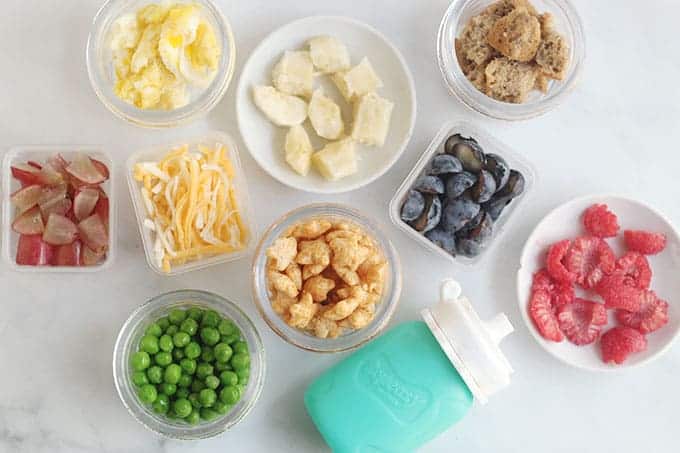
Once your sweet baby has started solids, generally has the hang of eating, and meals are working in your schedule, you may be ready to add in snacks. To help you know what to offer, this post is here to help.
You will find easy baby snacks organized by food group, the best homemade recipes to try, and tips for serving food to this age group to ensure snacks are yummy and easy to eat.
Depending on the baby, how much they are nursing or drinking from bottles, and the schedule of your day, when and how often you add in snacks may vary. You can start them around 9 months or at 12 months—whatever works best for your family and the appetite of your child.
(You may also like my Baby Lunch Boxes, Baby Breakfast Ideas, Baby Cookies, and baby-led weaning recipes.)
Your toddler won’t eat? Help is here!
Sign up for our email updates to get tips and ideas sent your way!
Snacks for 9 Month Old Babies
At about 9 months, babies develop the pincer grasp, or the ability to pick up small (think the size of a pea) pieces of food. This usually opens up a whole wide range of foods, including baby snacks, that babies can feed themselves.
Those are primarily the types of foods you’ll find in this post, along with some pureed options to round things out.
TIP: Find my Master List of Early Finger Foods to refresh your memory on all of the many food options you can serve at any meal to babies starting around 9 months.
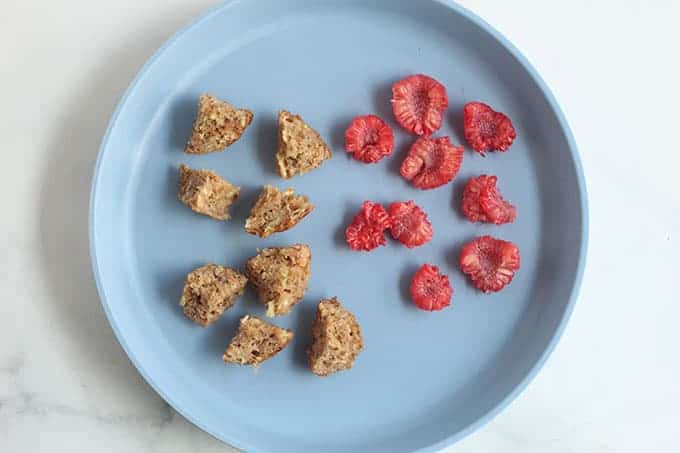
Snacks for One Year Olds
Many babies from 12 months through 16-18 months are in this same category of eating small pieces of finger foods, so any of these foods are appropriate for them, too.
(Actually, they are appropriate for any age, though kids past that 18 month mark are better able to take bites from larger pieces of food.)
TIP: Find my One Year Old Feeding Schedule, too.
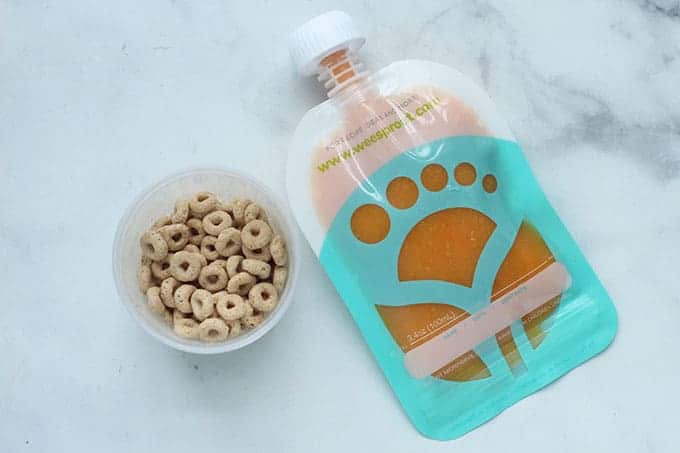
Baby Snacks: Fruits and Veggies
These produce-based snacks are great options to have in the mix. I like to pair them with another food group if possible—though baby won’t always eat perfectly balanced snacks and that’s okay!
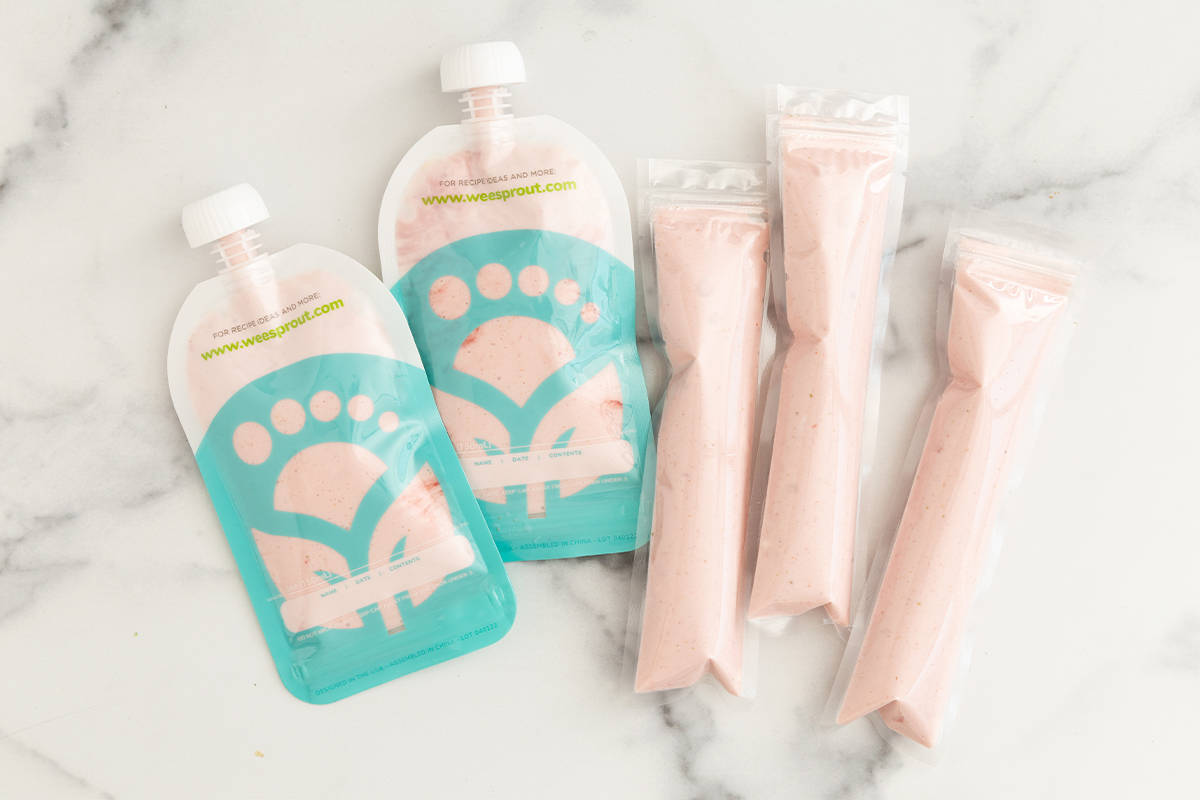
- Baby Food Pouches
- Sweet Potato Baby Food
- Frozen peas, warmed
- Roasted Zucchini, diced small
- Diced Roasted Sweet Potato or Butternut Squash
- Fresh blueberries, cut in half or quarters
- Fresh raspberries, broken into small pieces
- Frozen fruit, warmed and fully thawed and chopped (such as blueberries, raspberries, strawberries, or mango)
- Freeze-dried fruit (it dissolves very fast)
- Banana, broken into small segments (they are less slippery this way as opposed to slices)
- Avocado, diced and mashed slightly (be sure it’s ripe and very soft)
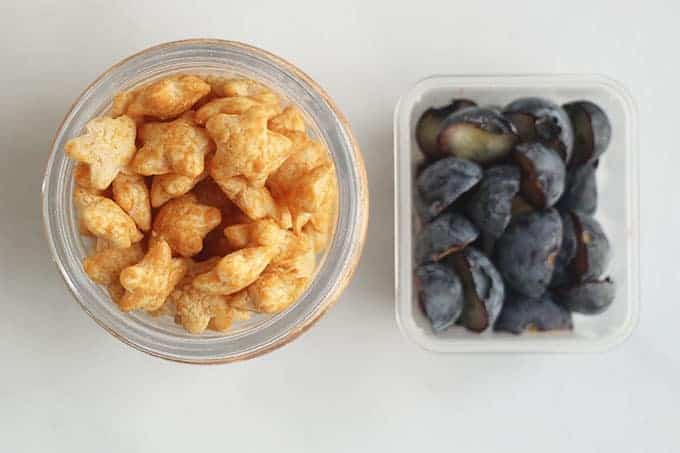
Carbohydrate Snacks for Baby
Babies (and kids!) need carbohydrates in their diets, and we need to serve them often. Look for whole grains when possible to incorporate fiber and B vitamins. Combine with produce or protein at snack time.
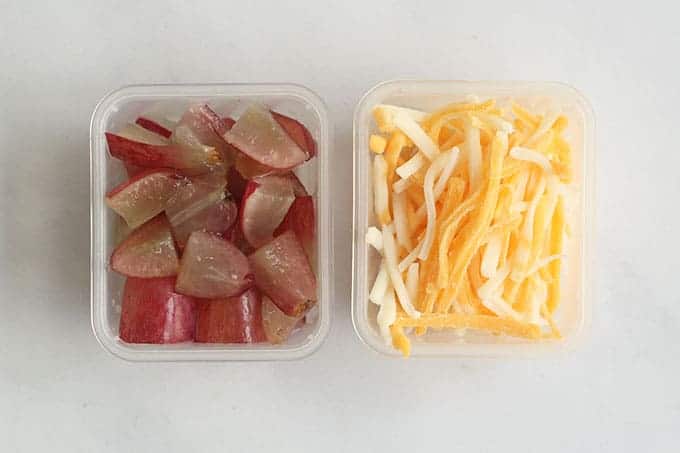
Protein Snacks for Baby
Incorporating protein and healthy fat foods into baby’s food is a great way to help them ensure their food is filling and satisfying until the next eating opportunity.
Look for full-fat dairy to ensure baby gets the fats they need for brain development. Combine with another food group at snack time.
- Shredded cheese (thicker cuts are a little easier to pick up, mozzarella tends to be softest)
- Crumbled goat cheese
- Tofu for babies, diced and sauteed lightly or steamed
- Healthy Meatballs, lightly mashed or diced
- Shredded chicken, cut up finely (we love this Butter Chicken to share with baby)
- Ground beef, turkey, or chicken, cooked and broken into smaller pieces
- Turkey Zucchini Meatballs or Baked Chicken Meatballs, lightly mashed or diced
- Beans, lightly mashed
- Frozen peas, warmed
- Scrambled eggs, broken up into small pieces
- Egg Muffins, diced
- Yogurt for babies (plain whole milk)
- Homemade Yogurt Melts
- Cottage cheese
- Mango smoothie (made with plain nondairy milk or yogurt)
- Baby popsicles
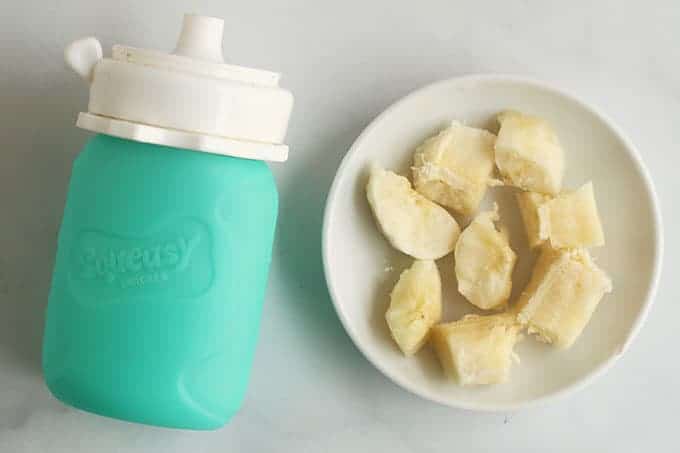
Snacks to Serve Baby in a Pouch
Reusable pouches are super handy for babies—and toddlers too! We love the 3.5 ounce Squeasy Gear silicone pouch since it’s virtually spill-proof.
I started using it around 7 months with my kids to offer foods including:
The WeeSprout BPA-free pouches are also great and are very easy to wash.
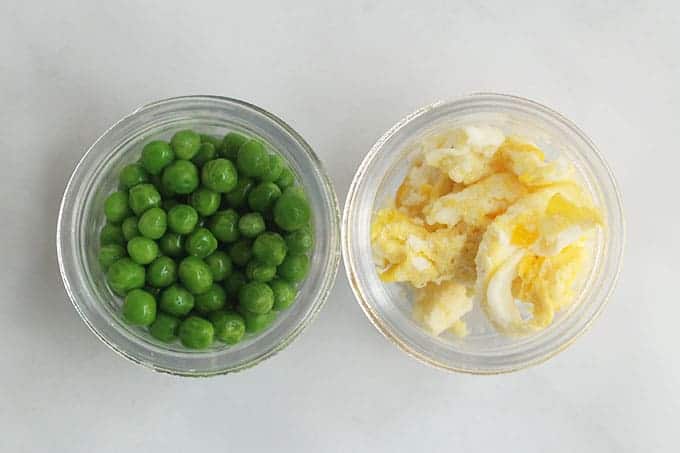
Frequently Asked Questions
There’s no “right” portion size, so my advice is to start with a very small amount to avoid food waste and offer more according to baby’s hunger—which may be more or less than you expect.
Follow their lead as they are very in tune with their own hunger and fullness cues.
Typically, babies eat every 2-3 hours, so you will want to work the meals in between nursing or bottle sessions and naps. This can be hard to do until baby is closer to the 12 month mark, just logistically speaking, so don’t feel like you must do snacks if you can’t find the time and baby is getting plenty of calories from milk feedings and other meals.
I like to think of snacks as mini meals and serve all sorts of foods. This can help ensure that the littles are being introduced to all sorts of foods throughout the day and makes it easier to use up leftovers!
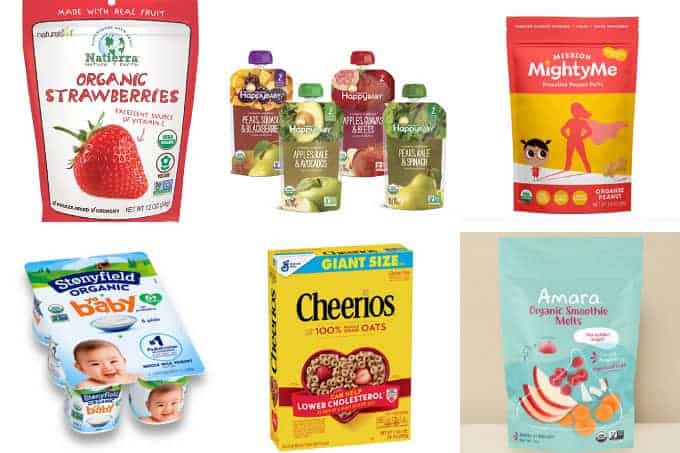
Best Store-Bought Snacks for Littles
In addition to the single ingredient foods you can buy at the store, these packaged snacks are convenient ones to have on hand for snack time.
Best Recipes for Healthy Baby Snacks
If you want to make some snacks at home that are a little more than just single ingredient foods, here are my top picks.
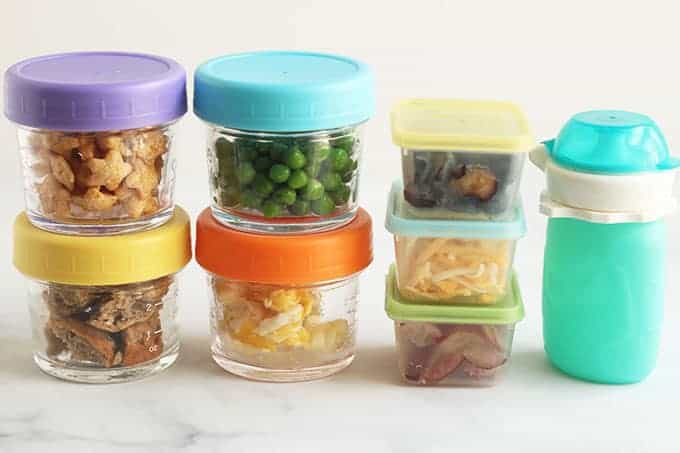
TIP: My favorite storage containers for kids snacks include the WeeSprout glass containers (shown below on the left with the colorful lids), the Beaba Clip Containers, and the Wean Green Storage Cubes.
Best Tips for Baby Snacks
- Aim to offer 2 foods (or more) from different food groups at each snack so baby has the opportunity to have a mix of nutrients.
- Aim for at least 1 of the foods to have fat and/or protein to help baby feel satisfied.
- If a food seems too slippery for baby to pick up or they’re otherwise having trouble, put the food onto a utensil, cut it differently, or otherwise help them eat the food.
- Try to avoid serving meals or snacks when baby is tired or is specifically hungry for their milk feedings—it takes them a while to connect solid food as a way to satisfy hunger, so be patient with that process of learning.
- Start with small portions to avoid food waste and offer more according to baby’s unique hunger.
- It can take kids time to learn to like a wide range of foods, so offer a range of foods throughout the week—and offer foods they didn’t eat (making sure it’s easy to eat and tastes good) so they have the chance to learn to like them.
- Keep meals fun and free from pressure without forcing baby to eat a certain amount of food.
- Sit with baby as you can and model eating so they have someone to copy—they are new to this and the more information they have (visual, verbal, etc.), the better they can learn!
Related Posts
If you have any questions about feeding your baby, comment below and I will do my best to help!
Fruit and Veggie Snacks (start with 1-2 tablespoons and offer more following baby’s leadd)
Carbohydrate Snacks (start with 1-2 tablespoons and offer more following baby’s lead)
Protein Snacks (start with 1-2 tablespoons and offer more following baby’s lead)
- 1-2 tablespoons beans, lightly mashed
- 1-2 tablespoons cheese, shredded (thicker cuts are a little easier to pick up, mozzarella tends to be softest)
- 1-2 tablespoons cottage cheese
- 1 Egg Muffin, diced
- 1-2 tablespoons goat cheese, crumbled
- 1-2 tablespoons ground beef, turkey, or chicken, cooked and broken into smaller pieces
- 1-2 tablespoons hummus
- 1 meatball, lightly mashed or diced
- 1-2 tablespoons peas
- 1 Scrambled Egg, broken up into small pieces
- 1-3 ounces smoothie made with plain nondairy milk or yogurt
- 1-2 tablespoons Shredded chicken, cut up finely (we love this Butter Chicken to share with baby)
- 1-2 tablespoons Tofu, diced and sauteed lightly or steamed
- 1-2 tablespoons Yogurt (plain whole milk)
-
Choose 2 single ingredient foods (or more) or 1 food that is made from a mix of foods (like a pancake or egg muffin).
-
Cut up food into small pieces or mash lightly.
-
Serve to baby, offering preloaded spoons as needed to help them eat. (It’s okay if baby gets messy as they learn to eat—that’s part of the process!)
-
Start with a small portion and serve more according to baby’s hunger—it’s okay if they eat more or less than you expect!
-
Offer water with snacks (and meals).
-
Store any leftovers in an airtight container in the fridge for 3-5 days.
- Aim to offer 2 foods (or more) for each snack so baby has the opportunity to have a mix of nutrients.
- Aim for at least 1 of the foods to have fat and/or protein to help baby feel satisfied.
- If a food seems too slippery for baby to pick up or they’re otherwise having trouble, put the food onto a utensil, cut it differently, or otherwise help them eat the food.
- Try to avoid serving meals or snacks when baby is tired or is specifically hungry for their milk feedings—it takes them a while to connect solid food as a way to satisfy hunger, so be patient with that process of learning.
- It can take kids time to learn to like a wide range of foods, so offer a range of foods throughout the week—and offer foods they didn’t eat (making sure it’s easy to eat and tastes good) so they have the chance to learn to like them.
- Keep meals fun and free from pressure without forcing baby to eat a certain amount of food.
- Sit with baby as you can and model eating so they have someone to copy—they are new to this and the more information they have (visual, verbal, etc.), the better they can learn!
Calories: 85kcal, Carbohydrates: 2g, Protein: 4g, Fat: 7g, Saturated Fat: 3g, Polyunsaturated Fat: 1g, Monounsaturated Fat: 3g, Cholesterol: 16mg, Sodium: 94mg, Potassium: 90mg, Fiber: 1g, Sugar: 1g, Vitamin A: 173IU, Vitamin C: 2mg, Calcium: 110mg, Iron: 1mg
This post was first published December 2020.