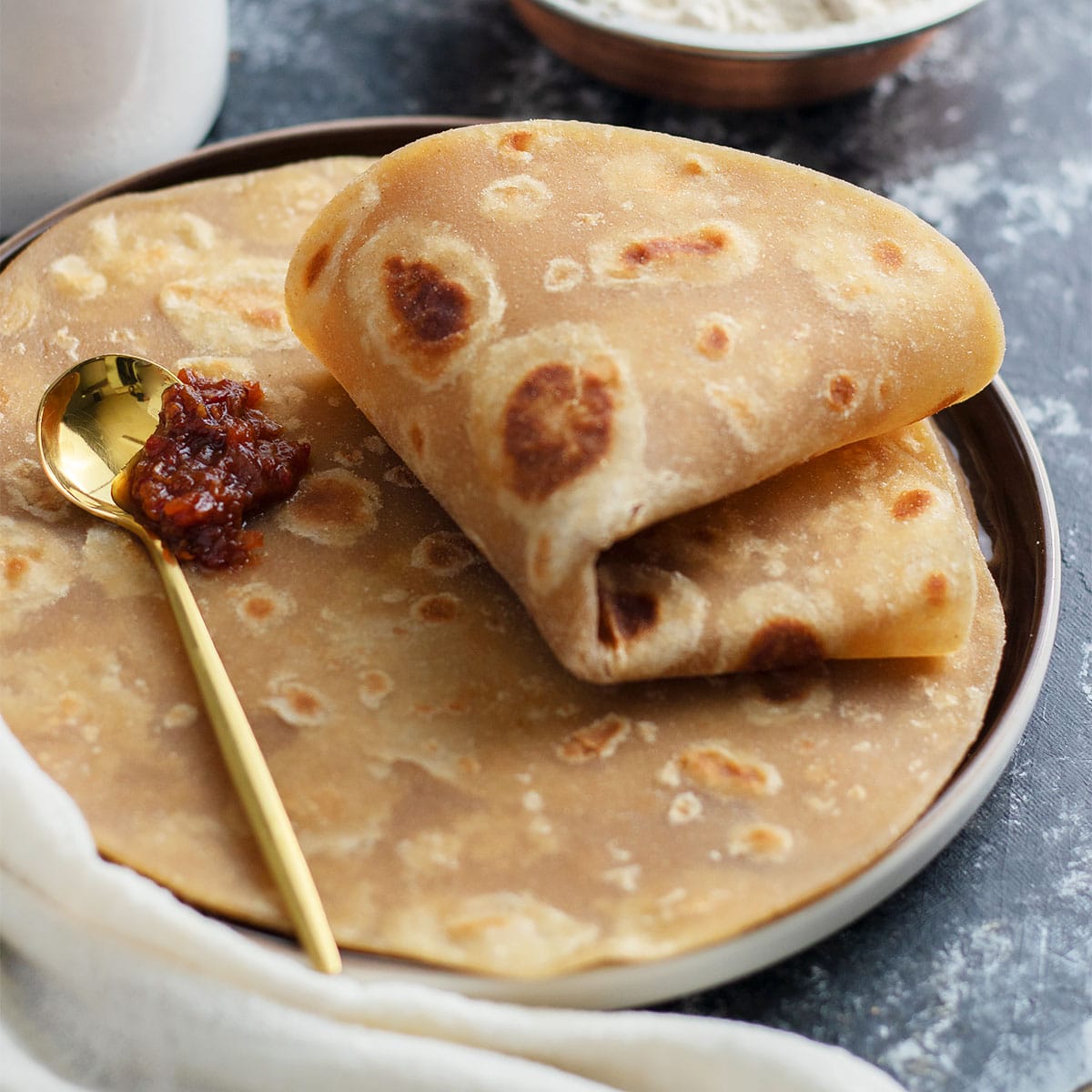
This easy Chapati recipe makes soft, delicious Indian flatbread with simple ingredients. Made with atta (Indian whole wheat flour), chapati is an everyday bread that’s perfect with curries, dips, or used as a wrap.

Making soft chapati at home is easier than you might think. The dough comes together with atta, warm water, ghee, and oil, then rests briefly before being rolled thin and cooked on a hot tawa or pan.
I’ll show you how to make chapati step by step, including how to keep it soft, help it puff while cooking, and prevent it from turning dry.
📺 Watch Me Make This Recipe

WHY YOU’LL LOVE THIS RECIPE
- Easy to make: This easy chapati recipe uses just a few simple ingredients and straightforward steps, making it perfect for beginners.
- Quick: With a resting time of only around half an hour, you can have soft, delicious chapatis ready in no time. And once you get the hang of it, rolling out and cooking each chapati takes mere minutes.
- Adaptable: While this recipe uses whole wheat flour for a healthier twist, you can easily substitute some of the wheat flour with all-purpose flour if you want your chapatis to stay soft for longer.
- Delicious: The perfect balance of ingredients in this recipe ensures that every chapati is deliciously soft, light, and fluffy. The ghee and oil give them a rich, mouthwatering flavor that’s hard to resist.

INGREDIENTS
More details about the ingredients and measurements are in the recipe card below!
- Atta: Use Indian atta (chapati flour) for the best texture. Atta is a finely milled whole wheat flour traditionally used for making chapati. The amount of water you need can vary depending on the brand of atta, so add the water gradually while kneading.
- Oil: Adding oil to your dough not only makes it easier to work with, but also gives the chapati a soft texture.
- Ghee: This clarified butter adds a rich, buttery flavor to your chapati. Combined with oil, it makes the dough soft and flavorful.
- Warm Water: Warm water is best for kneading the dough. It helps keep the dough moist, which is key for a soft, pliable chapati. Remember, the amount of water may vary depending on the brand of atta you’re using.
- Plain Yogurt or Milk: This is an optional ingredient. Adding a couple of tablespoons can make your chapati even softer.
HOW TO MAKE SOFT CHAPATI
Here’s how to make soft chapati step by step. The key is to add the water gradually, let the dough rest, and control the heat while cooking so the chapati stays soft and puffs beautifully.
Step 1: In a large bowl or straight on your working surface, add the flour, salt, ghee, and oil. Mix well until you get clumps of flour.

Step 2: Add the water gradually while kneading the dough. Depending on the flour you are using and its brand, you may not need the whole cup of water.

Step 3: Now you should have smooth and not a sticky dough, that bounces slightly when pressed. Cover the dough and allow it to rest for about half an hour. This resting time makes the dough softer and easier to roll.

Step 4: Knead the dough for a few seconds. Make seven or eight equal size balls from the dough. Dredge the ball in atta (whole wheat flour) and then roll it out to an eight inch diameter.

Step 5: If the dough is sticking while rolling, dust it again with atta and continue rolling. Place the rolled dough over a hot tawa or a flat pan.

Step 6: Reduce the heat to medium and wait for a few seconds until the surface of the bread looks slightly dry with a few small bubbles. Flip the bread. When the bottom side has light brown patches, flip the bread again.

Step 7: Gently press the edges of the bread, to help it cook through and puff up. Do not overcook the bread, when both sides have brown patches and have puffed, it is done. Leaving it for a longer time on the tawa or pan will make it dry.

Step 8: Place the hot chapati in a container with a lid, making sure to place either a parchment paper or a kitchen towel at the bottom to prevent the bread from getting soggy.
Step 9: Smear with ghee before serving and then serve with your favorite curry, dip, yogurt, or you can make it into a sandwich. Enjoy your homemade chapati!
PRO TIPS
- Use warm water: Warm water helps keep the dough moist and makes it easier to knead, which helps produce softer chapati.
- Combine ghee and oil: Using both gives the chapati good flavor while helping the dough stay soft and pliable.
- Add water gradually: Different brands of atta absorb different amounts of water. Add it little by little until you have a smooth, soft dough that isn’t sticky.
- For extra-soft chapati: You can add two tablespoons of plain yogurt or milk to the dough for an even softer texture.
- Control the heat: Start with a hot pan when you place the chapati on it, then reduce the heat after a few seconds. Proper heat helps the chapati puff without drying out.
- Rest the dough: Let it rest for 20 to 30 minutes before rolling. This makes the dough softer and easier to work with.
- Don’t overcook: Once both sides have brown patches and the chapati has puffed, remove it from the pan. Cooking it too long will make it dry and hard.
- Don’t worry about a perfect round shape: It took me time to learn how to roll perfectly round chapati too. Concentrate first on making the dough correctly and cooking the chapati well. The round shape comes with practice.

VARIATIONS
- Use some all-purpose flour: Replace part of the atta with all-purpose flour if you prefer a softer, lighter chapati.
- Try other grain flours: You can experiment by replacing a small portion of the atta with millet, barley, or maize flour. Keep in mind that different flours absorb water differently, so adjust the water gradually.
- Make multigrain chapati: Replace about half a cup of atta with multigrain flour for a slightly different flavor and texture.
How to Serve Chapati
Chapati is best served warm and works beautifully with many different dishes.
- Serve it with your favorite Indian curry or dal and use the soft chapati to scoop up the sauce.
- Enjoy it with plain yogurt, raita, or pickle for a simple meal.
- Serve chapati alongside vegetable, chicken, or meat curries.
- Use it as a wrap and fill it with grilled vegetables, chicken, or your favorite savory filling.
- Brush the warm chapati lightly with ghee just before serving for extra flavor.

FREQUENTLY ASKED QUESTIONS
Why Is My Chapati Hard?
Chapati can turn hard if the dough is too dry, if it hasn’t rested long enough, or if the bread is overcooked. Add the water gradually until you have a soft, smooth dough, let it rest for 20 to 30 minutes, and remove each chapati from the pan as soon as it has puffed and developed brown spots.
Why Does My Chapati Not Puff Up?
Make sure the dough is soft and well rested and that you roll the chapati to an even thickness. The pan should also be properly heated before you add the rolled dough. When bubbles begin to form, flip the chapati and gently press around the edges to encourage it to puff.
What Is the Best Flour for Chapati?
Atta (Indian chapati flour) is the best choice for traditional chapati. It is a finely milled whole wheat flour that produces a soft, flexible dough. Regular whole wheat flour can have a coarser texture and may give you a different result.
Can I Make Chapati With All-Purpose Flour?
You can replace some of the atta with all-purpose flour for a softer, lighter chapati. However, for the flavor and texture of traditional chapati, I recommend keeping atta as the main flour.
How Do I Keep Chapati Soft After Cooking?
Place each hot chapati in a covered container as soon as it comes off the pan. Put a clean kitchen towel or parchment paper at the bottom to prevent condensation from making the bread soggy. You can also lightly brush the chapati with ghee before serving.
Can I Make Chapati Dough Ahead of Time?
You can prepare the dough ahead and keep it well covered in the refrigerator. Let it come closer to room temperature before rolling so it is easier to work with.
STORING
How to Store Chapati
Refrigerate
Let the chapati cool completely, then place them in an airtight container or zip-top bag. Store them in the refrigerator for up to one week.
To reheat, warm each chapati on a hot tawa or pan for a few seconds on each side. You can also microwave it briefly, but avoid overheating it or the chapati may become dry.
Freeze
Chapati can be frozen for up to 3 months. Once cooled, place parchment paper between the chapatis so they are easy to separate, then store them in a freezer-safe bag with as much air removed as possible.
You can reheat frozen chapati directly on a tawa or flat pan, flipping it several times until heated through and soft. This is my preferred method.
MORE INDIAN BREAD RECIPES
⭐ PLEASE RATE AND REVIEW
If you have tried this recipe and liked it, please give it a 5-star rating and leave a comment below with your experience!

Chapati Recipe
Soft homemade chapati made with atta, ghee, and a few simple ingredients. This easy chapati recipe makes tender Indian flatbread that’s perfect for serving with curries, dips, and your favorite meals.
- 2 cups atta
- 1 teaspoon salt
- 1 tablespoon oil
- 1 tablespoon ghee
- 1 cup warm water
-
In a large bowl or directly on your work surface, add the atta, salt, ghee, and oil. Mix well until the mixture forms small clumps.
-
Gradually add the warm water while kneading. Depending on the brand of atta you use, you may not need the entire cup of water.
-
Knead until you have a smooth, non-sticky dough that springs back slightly when pressed.
-
Cover the dough and let it rest for 20 to 30 minutes. Resting makes the dough softer and easier to roll.
-
Knead the dough for a few seconds, then divide it into 7 or 8 equal-sized balls. Dredge one ball lightly in atta and roll it into an 8-inch circle.
-
If the dough sticks while rolling, lightly dust it with more atta and continue rolling.
-
Place the rolled chapati on a hot tawa or flat pan. After a few seconds, reduce the heat to medium and cook until the surface looks slightly dry and small bubbles begin to appear.
-
Flip the chapati. When the underside develops light brown spots, flip it again.
-
Gently press around the edges to help the chapati cook evenly and puff up.
-
Do not overcook it. Once both sides have brown spots and the chapati has puffed, remove it from the pan. Cooking it too long will make it dry.
-
Place the hot chapati in a covered container lined with parchment paper or a clean kitchen towel to prevent it from becoming soggy.
-
Brush with ghee, if desired, and serve warm with your favorite curry, dip, or yogurt.
- Use warm water when kneading the dough. It helps keep the dough soft and moist.
- Using a combination of ghee and oil gives the chapati a soft texture and good flavor.
- Different brands of atta absorb water differently, so add the water gradually. You may need slightly more or less than the amount listed.
- Atta is different from regular whole wheat flour. It has a finer texture. Look for Indian atta in the Asian or international section of the grocery store for the best chapati texture.
- For even softer chapati, you can add 2 tablespoons of plain yogurt or milk to the dough.
- Heat is important. Start with a hot pan when you place the chapati on it, then reduce the heat after a few seconds. Cooking it over excessive heat for too long can make the chapati dry.
- Don’t worry about getting a perfectly round chapati at first. Focus on making a soft dough and cooking it correctly. Your rolling technique will improve with practice.
Serving: 1 Chapati | Calories: 166kcal | Carbohydrates: 27g | Protein: 4g | Fat: 4g | Saturated Fat: 2g | Polyunsaturated Fat: 1g | Monounsaturated Fat: 2g | Trans Fat: 0.01g | Cholesterol: 5mg | Sodium: 335mg | Potassium: 38mg | Fiber: 1g | Sugar: 0.1g | Calcium: 7mg | Iron: 2mg