Easy Ribollita Recipe (Tuscan Bread and Bean Soup)

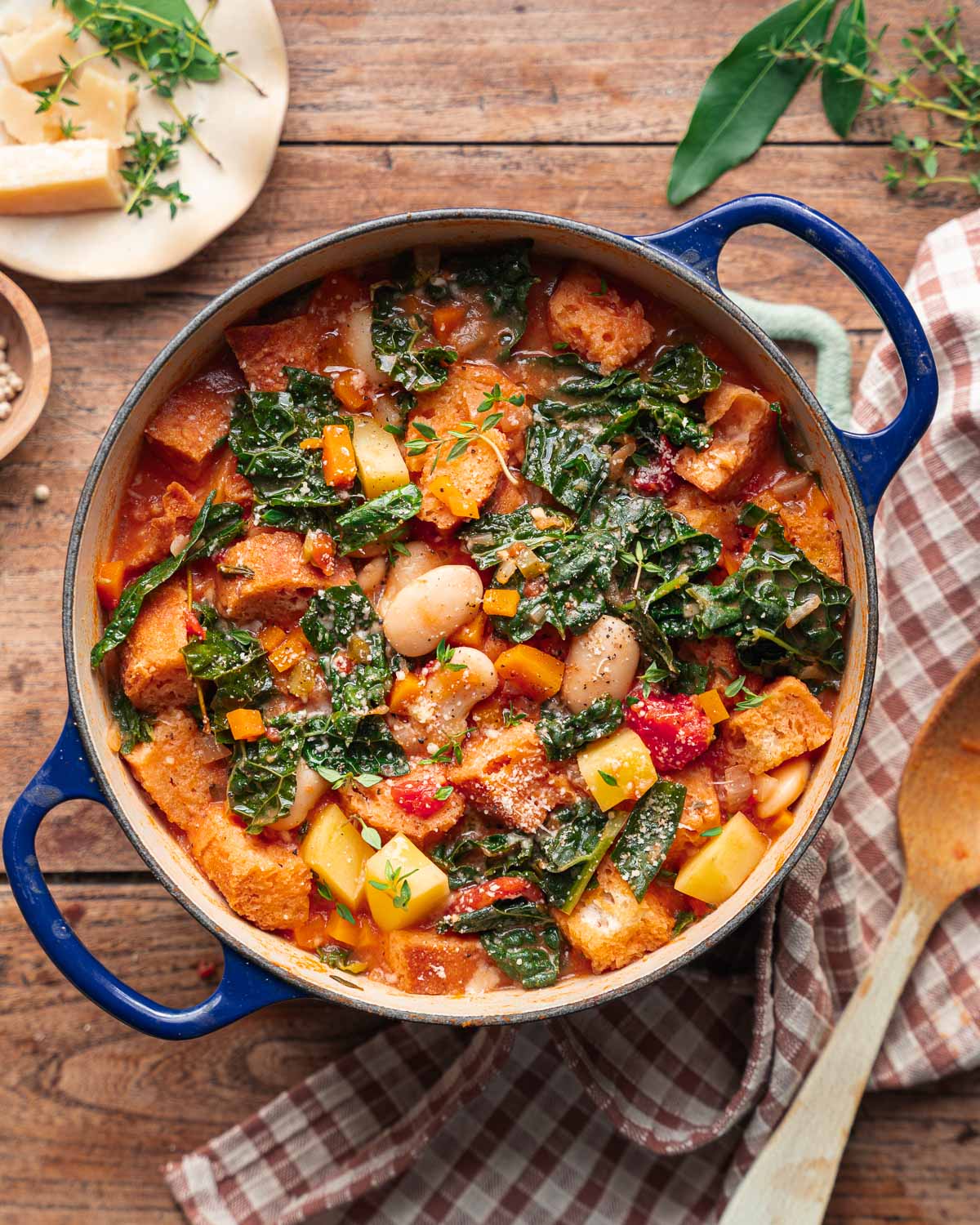
If you’ve been reading the blog for a while, you know I love white bean soups, like my creamy white bean soup. In winter they’re my perfect meal: vegetarian, packed with protein from the beans, full of vegetables, and fast, because I use canned beans.
Ribollita has this extra step I really like. It’s adding day-old bread cubes in the soup at the end. It soaks up the broth and turns the soup thick and hearty.
Like most French people, I have a soft spot for Italian food. And many recipes from the South of France are pretty close to what they cook across the border.

What Is Ribollita?
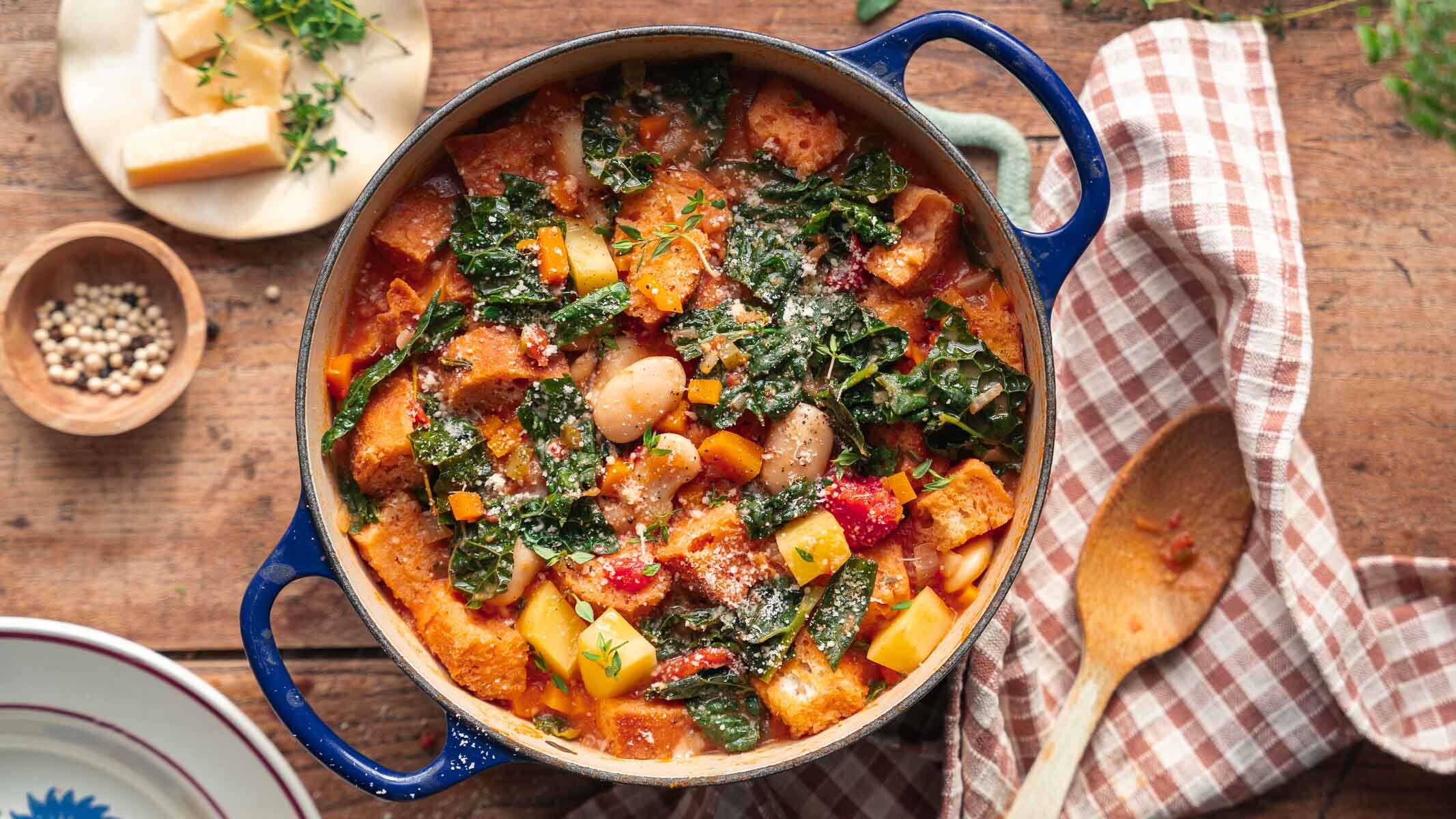
Ribollita is an Italian soup from Tuscany made with vegetables, lacinato kale, and stale bread.
Originally, it was sort of a poor man’s dish, made with leftover soup or minestrone that was reheated with the addition of bread, hence the name ribollita, which means “reboiled” in Italian.
Lacinato Kale (Cavolo Nero), the Star of This Soup
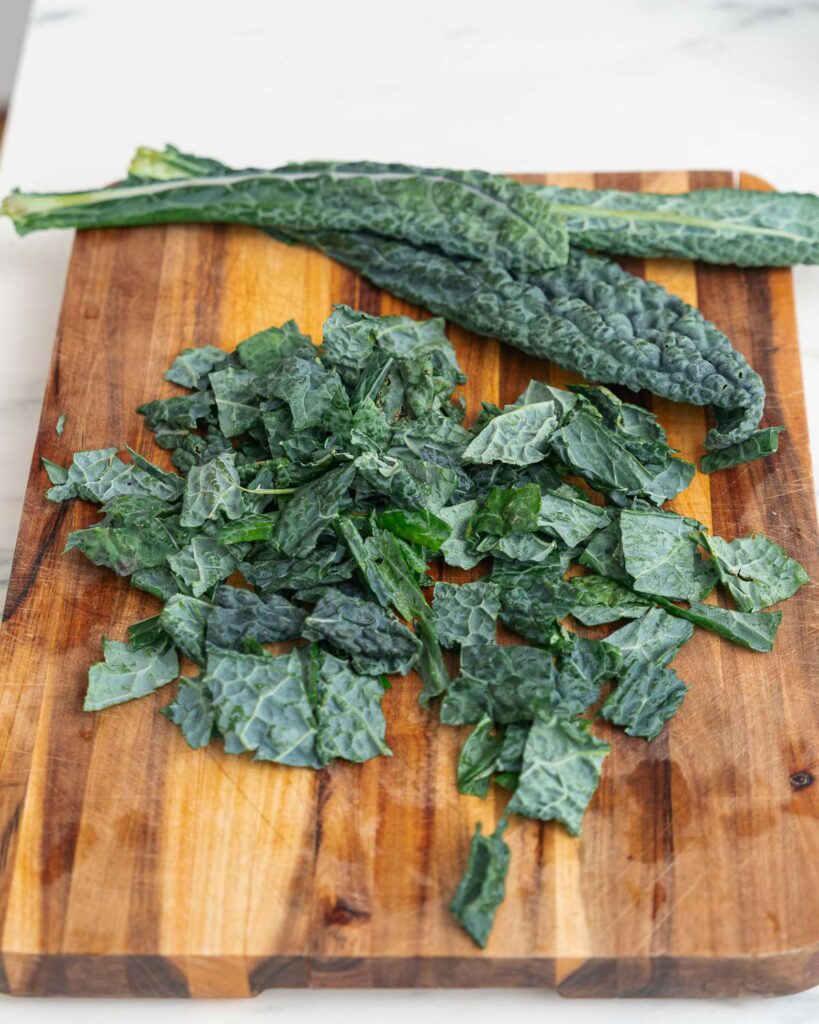
Lacinato kale, or cavolo nero in Italian, is, in my opinion, the star ingredient of ribollita. If you’re not very familiar with this kale, it has long, fairly dark green leaves with a slightly wrinkled texture. It has a more intense flavor than green cabbage.
You can find it at farmers’ markets from fall through late winter. Before cooking it, just remove the central rib from each leaf and chop it coarsely. I prefer to add it toward the end of cooking—during the last 10 to 15 minutes—so that it remains slightly firm.
My Tip
Can’t find lacinato kale? You can swap it for spinach, curly kale or Swiss chard!

Ribollita Recipe, Step by Step
For the soup
- 10 oz lacinato kale (cavolo nero)
- 1 yellow onion finely diced
- 2 carrots finely diced
- 2 celery stalks finely diced
- 2 garlic cloves minced
- 1 tsp ground fennel seeds
- 7 oz medium potato cut into 1/2-inch cubes
- 2 cans cannellini beans drained, each can 15 oz/ 400 g or 9 oz/ 265 g drained
- 14 oz whole peeled tomatoes
- 4 cups vegetable broth
- 2 bay leaves
- 2 sprigs thyme
- 1/2 cups grated Parmesan
- 2 tbsp olive oil
- 7 oz bread 2 to 3 days old, cut into cubes
- Salt and freshly ground pepper
To serve
- 1 tsp olive oil
- 1 tbsp grated Parmesan
- a few fresh thyme leaves
-
In a large Dutch oven, heat the olive oil over medium heat and sauté the onion, carrots and celery for 5 minutes. Add the garlic and ground fennel and sauté for 1 more minute.
-
Add the peeled tomatoes and crush them with a wooden spoon. Add the potato, broth, herbs and bay leaves, then simmer for 20 minutes.
-
Meanwhile, strip the central rib from the lacinato kale leaves and cut them into 1/2-inch strips. Rinse and drain the beans. Blend half of them with a ladleful of broth from the pot into a smooth purée.
-
Once the potato is tender, stir the bean purée, whole beans, kale and Parmesan into the pot. Cook for 10 to 15 minutes.
-
Discard the herbs and bay leaves and take the pot off the heat. Add the bread, stir once and let it rest for 10 minutes, until the bread is fully soaked.
-
Taste and adjust the seasoning. Serve in bowls with a generous drizzle of olive oil, grated Parmesan, a few thyme leaves and a twist of pepper.
-
For the traditional version, serve the soup the next day, when it’s even thicker. Reheat it over low heat, stirring occasionally, and add a little water if it has thickened too much.
Storage: Ribollita keeps for 3 to 4 days in the fridge in an airtight container. It thickens as it sits, so add a little water when you reheat it over low heat.
Freezing: It keeps for up to 3 months in the freezer.
Calories: 541kcal | Carbohydrates: 88g | Protein: 26g | Fat: 14g | Saturated Fat: 3g | Polyunsaturated Fat: 2g | Monounsaturated Fat: 7g | Cholesterol: 7mg | Sodium: 2148mg | Potassium: 1078mg | Fiber: 21g | Sugar: 13g | Vitamin A: 13537IU | Vitamin C: 96mg | Calcium: 551mg | Iron: 10mg
My 3 Tips for a Thick, Hearty Ribollita
A good ribollita should be thick, almost like a stew. To achieve this, there are three tips:
- Very dry bread. It’s essential to use stale or dry bread; otherwise, fresh bread may get soggy too quickly. If your bread is still fresh, cut it into cubes and bake it in the oven for 8 to 10 minutes at 325°F (160°C).
- Blended beans. Blend half of them with some of the soup broth. It’s a trick I already use in other recipes. It adds creaminess without using cream.
- Lacinato kale at the end. Many recipes call for adding the kale right at the start, but I prefer to add it during the last 10 to 15 minutes. That way, it stays a little green and retains some of its texture.
Parmesan rind in the broth
I know it’s not in the traditional recipe, but if you have leftover Parmesan rinds, drop them into the broth: they add so much flavor!


Serve It Right Away or the Next Day?
According to the authentic ribollita recipe, it should be served the next day, because as it sits, it thickens and the flavors have time to blend. That’s also where its name comes from, as I mentioned earlier: “reboiled.”
But personally, I can’t wait! I usually make a large batch and serve some that same evening and the rest the next day. Reheat it over low heat, adding a little water if it has thickened too much, since the bread continues to absorb the broth.
When serving, I recommend adding a generous drizzle of olive oil. At home, I also add grated Parmesan, fresh thyme, and a twist of pepper.

Ribollita FAQ
These are two Italian vegetable soups (though minestrone is also from the south of France). Minestrone is often made with pasta or rice, and it has a thinner consistency. Ribollita, on the other hand, is thickened with stale bread and beans, and lacinato kale is an important ingredient in this soup.
I recommend a fairly neutral wheat bread: a baguette, a ciabatta, a country loaf or even a plain sourdough. In Tuscany, ribollita is made with Tuscan bread, which is unsalted, so if you use a regular country loaf, salt the soup a little less.
Cut it into pieces, spread them out on a baking sheet, and dry them for 8 to 10 minutes in the oven at 325°F (160°C) on convection, without letting them brown. You can also let them air-dry for a few hours.
Yes, use about 1 cup (7 oz / 200 g) of dried cannellini beans. Soak them overnight in cold water, then cook them for 1 hour to 1 hour and 30 minutes with a few bay leaves and some thyme in unsalted water. You can then save some of the cooking liquid to replace part of the broth.
Yes, and it’s high in protein thanks to the white beans. For a vegan version, just leave out the Parmesan and choose bread that doesn’t contain milk or butter.
I recommend either a light Sangiovese-based red, such as a young Chianti, or a Tuscan white, such as a Vernaccia di San Gimignano or a Vermentino, to stay within the region.
More Soup Recipes
If you try my ribollita, let me know in the comments, and don’t forget to rate the recipe—it really helps me out.