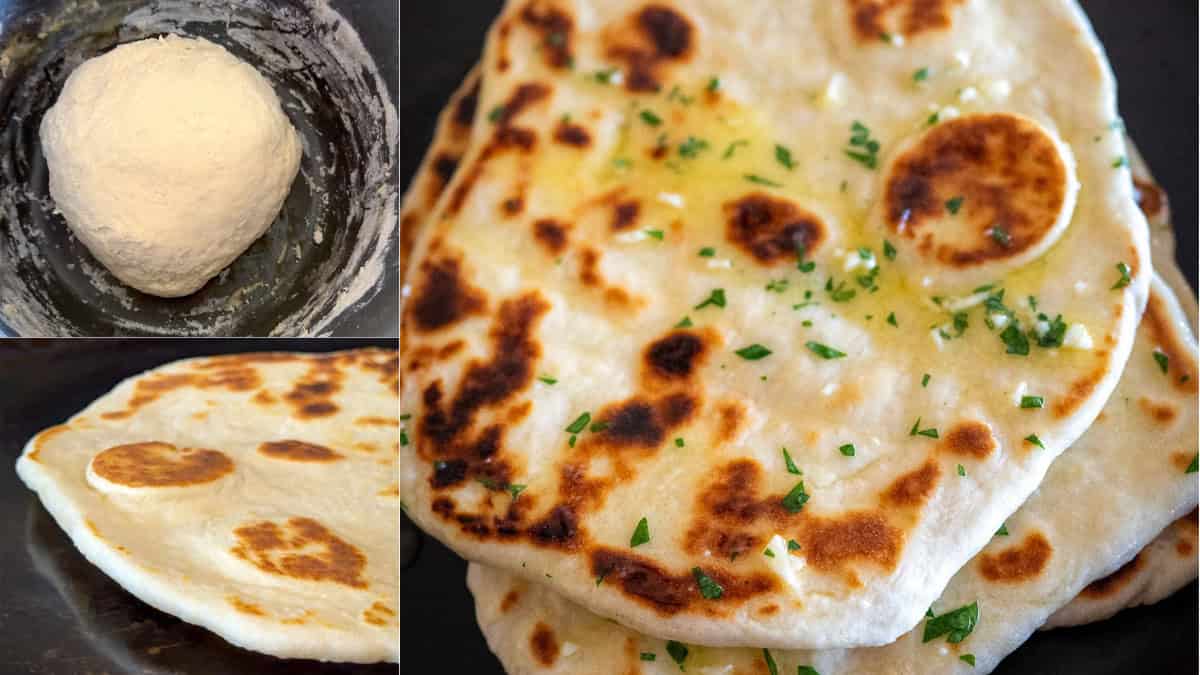
This flatbread recipe comes together with just five ingredients and no yeast, but it took me a handful of failed batches to get it right.
Crumbly dough, tough dough, pancake-thick dough, scorched dough. I made every mistake in the book. This post walks you through exactly what went wrong and how I fixed it, so your first batch turns out soft, chewy and blistered in all the right places.

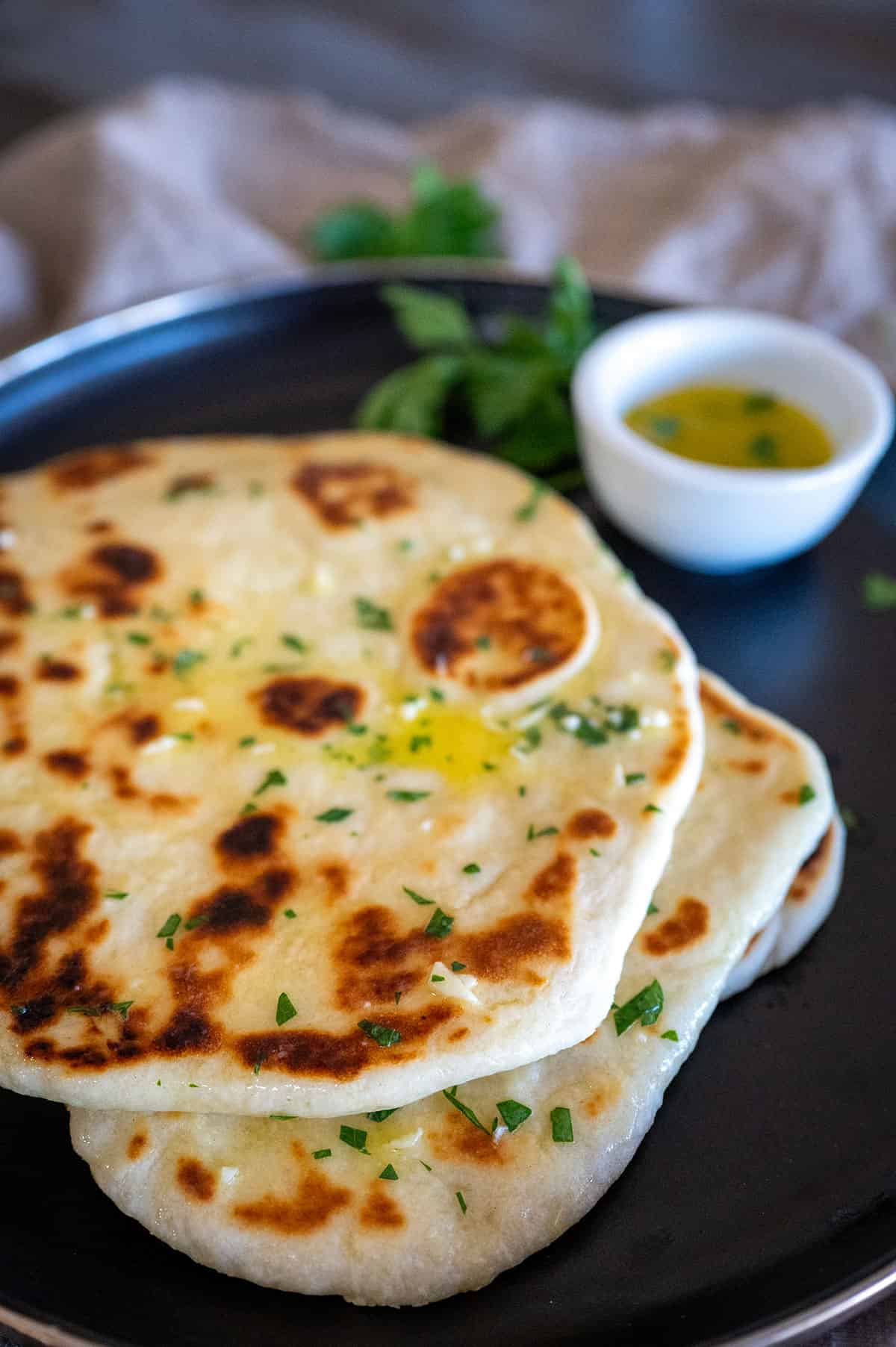
What Is Flatbread?
Flatbread is exactly what it sounds like: a simple, unleavened or lightly leavened dough that’s rolled thin and cooked quickly on a hot surface instead of baked in the oven. No proofing, no waiting around for yeast to do its thing. This version gets its lift from self-rising flour and its soft, pillowy texture from Greek yogurt, so you can mix, rest, roll and cook it all in about 30 minutes.
I cook mine on a comal over the fire, but a cast iron skillet or griddle on the stovetop works just as well.
-
Mix: Combine the Greek yogurt, milk, self-rising flour, olive oil and kosher salt in a large bowl until a shaggy dough forms.
-
Knead: Turn the dough onto a lightly floured surface and knead for about 5 minutes, adding a light dusting of flour as needed, until smooth.
-
Rest: Cover the dough and let it rest for 10 minutes.
-
Divide and Roll: Cut the dough into 6 pieces. Using a rolling pin, roll each piece into a thin circle. Roll it as thin as you can.
-
Heat the Pan: Heat a comal or skillet over medium heat, 350-375F.
-
Cook: Place the dough on the hot pan. Cook, then flip and cook the other side until golden with browned spots.
-
Brush: Melt the butter and stir in the olive oil, minced garlic, parsley and a pinch of salt. Brush over the warm flatbread.
Weigh your flour for the most consistent dough. If your Greek yogurt is thick, thin it slightly with extra milk before mixing. Use an infrared thermometer to keep the pan between 350-375F. You don’t need to oil the pan.
Calories: 261kcalCarbohydrates: 31gProtein: 8gFat: 12gSaturated Fat: 4gPolyunsaturated Fat: 1gMonounsaturated Fat: 6gTrans Fat: 0.2gCholesterol: 12mgSodium: 431mgPotassium: 95mgFiber: 1gSugar: 1gVitamin A: 191IUVitamin C: 1mgCalcium: 47mgIron: 0.5mg
Nutrition information is automatically calculated, so should only be used as an approximation.
What you’ll need
- Greek Yogurt: This is what gives the flatbread its soft, tender texture and slight tang. Full-fat plain Greek yogurt works best. I use Fage brand.
- Milk: Thins out the yogurt so the dough comes together smoothly instead of staying stiff and dense.
- Self-rising Flour: This already includes levining ingredients.
- Olive Oil: Adds richness and helps keep the dough pliable while you knead and roll.
- Kosher Salt: Balances the tang of the yogurt.
Optional: I brush my flatbread with butter, olive oil, garlic and parsley at the end, but that's totally optional.
See the full recipe card above for servings and a full list of ingredients.
How to cook flatbread
Get your comal, cast iron skillet or griddle ready to go, and don’t rush the resting step. It’s what makes these easy to roll thin instead of springing back on you.
Step 1: Mix the dough
In a large mixing bowl, combine the Greek yogurt, milk, self-rising flour, olive oil and a teaspoon of kosher salt for flavor. Stir until a shaggy dough forms.
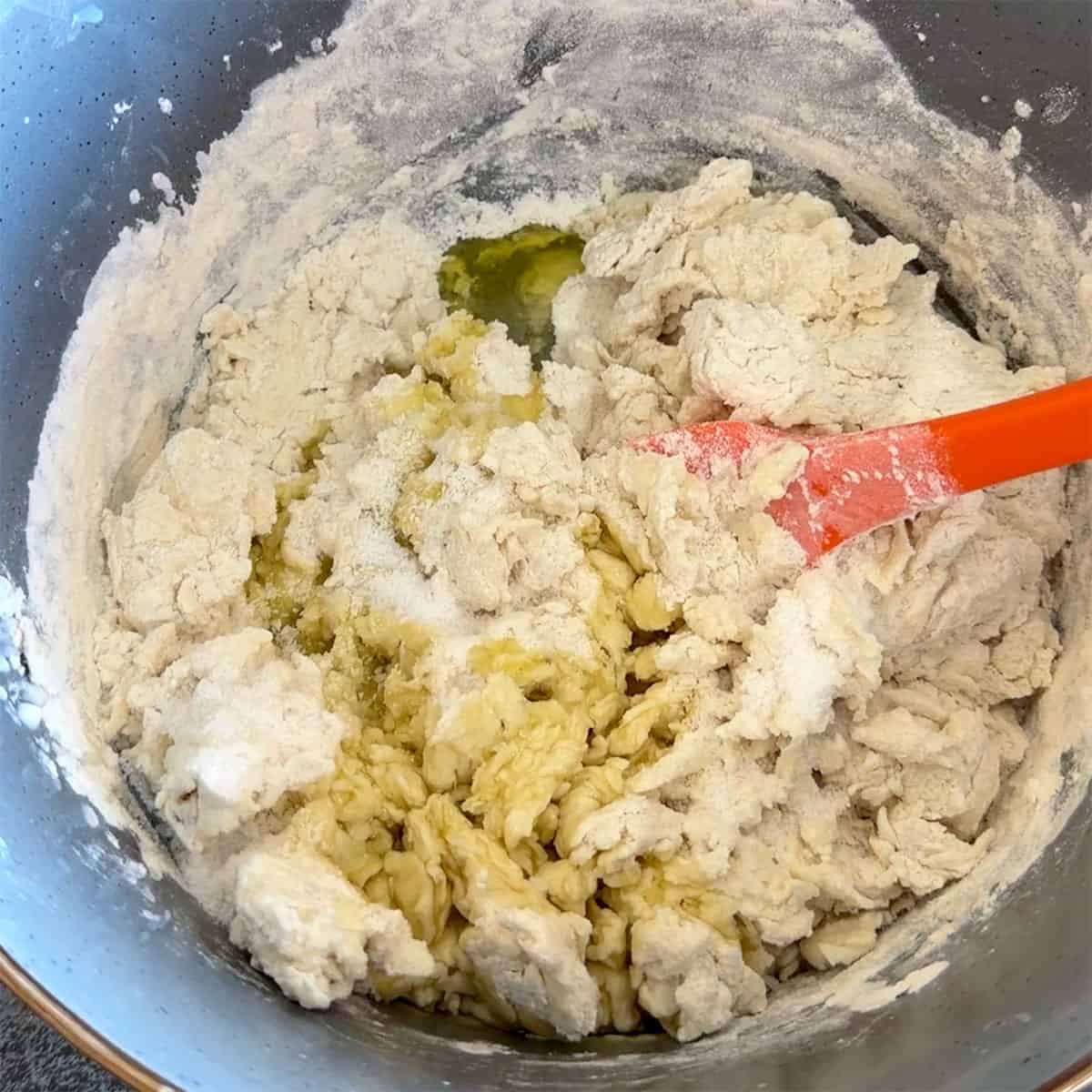
GCG PRO TIP: The first time I made this, I eyeballed my flour with measuring cups and ended up with dry, crumbly dough that wouldn't hold together. Self-rising flour settles and compacts in the bag, so a "cup" can weigh anywhere from 200g to 260g depending on how you scoop. Weigh your ingredients on a kitchen scale for a dough that comes together every time. Your flour should weigh the same as your combination of yogurt and milk.

Step 2: Knead until smooth
Turn the dough onto a lightly floured work surface and knead for about 5 minutes, dusting with a light sprinkle of flour as needed, until the dough is smooth and no longer tacky.
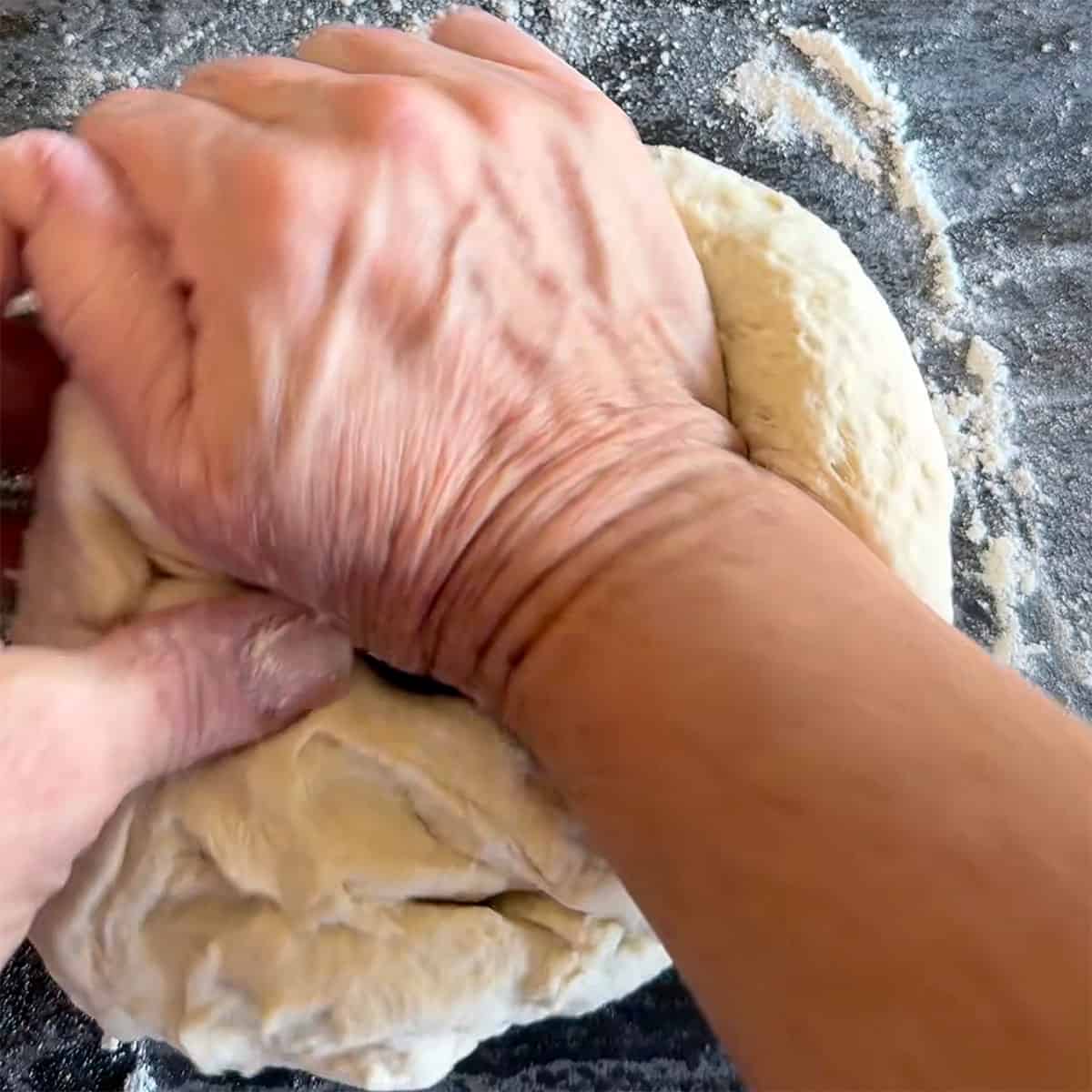
GCG PRO TIP: My Greek yogurt is thick, and the first time I skipped thinning it, my dough stayed stiff and never smoothed out no matter how long I kneaded. Thinning the yogurt with milk first (the same trick I use in my biscuits) gives the dough the right hydration so it actually smooths out instead of fighting you.And don't shortcut the kneading time. I rushed it once and ended up with tough, chewy flatbread instead of soft and pillowy. Give it the full 5 minutes.
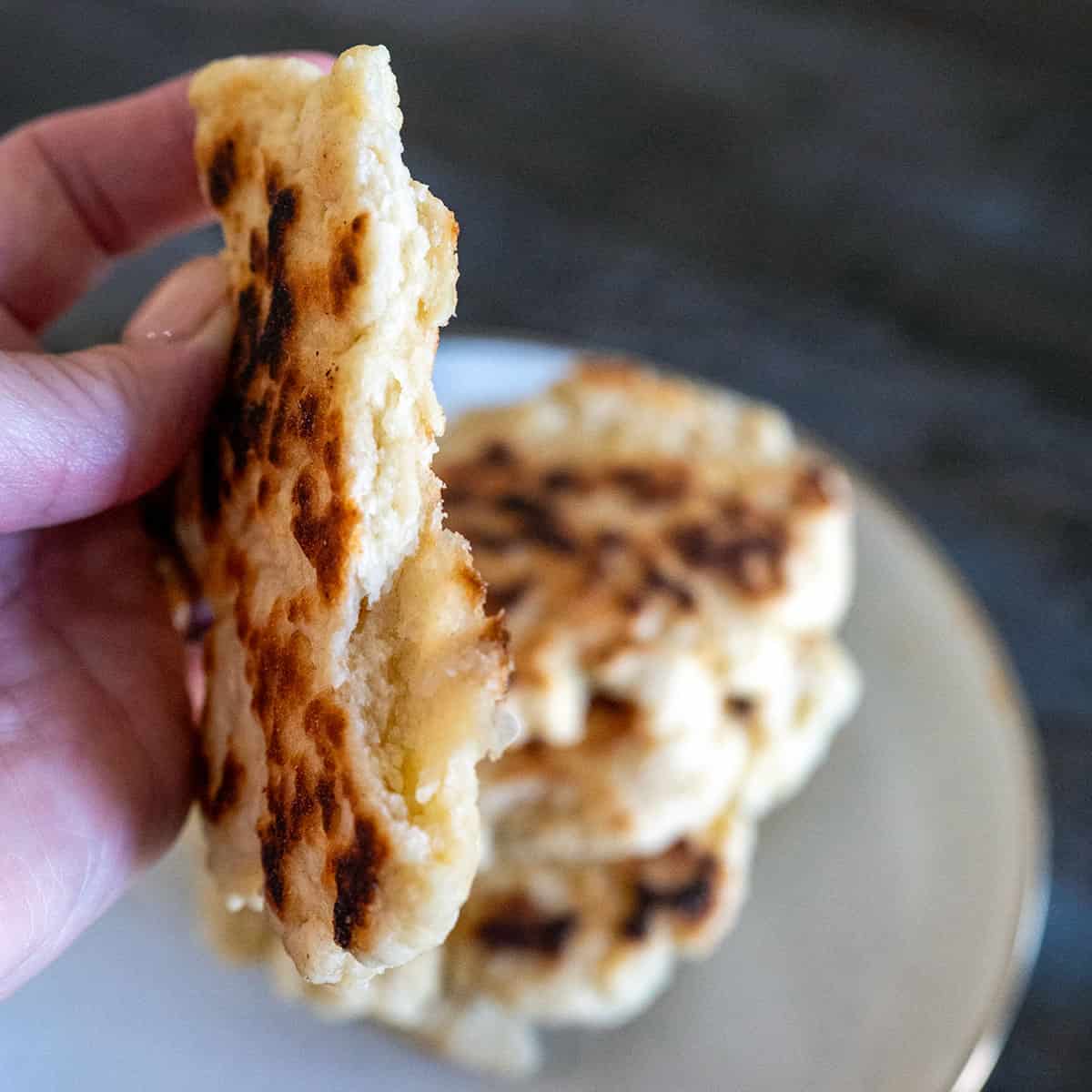
Step 3: Rest the dough
Cover the ball of dough with a clean kitchen towel and let it rest for 10 minutes. This relaxes the gluten so it’s easier to roll thin.
Step 4: Divide and roll
Cut the dough into 6 equal pieces. Using a rolling pin, roll each piece into a large, thin circle.
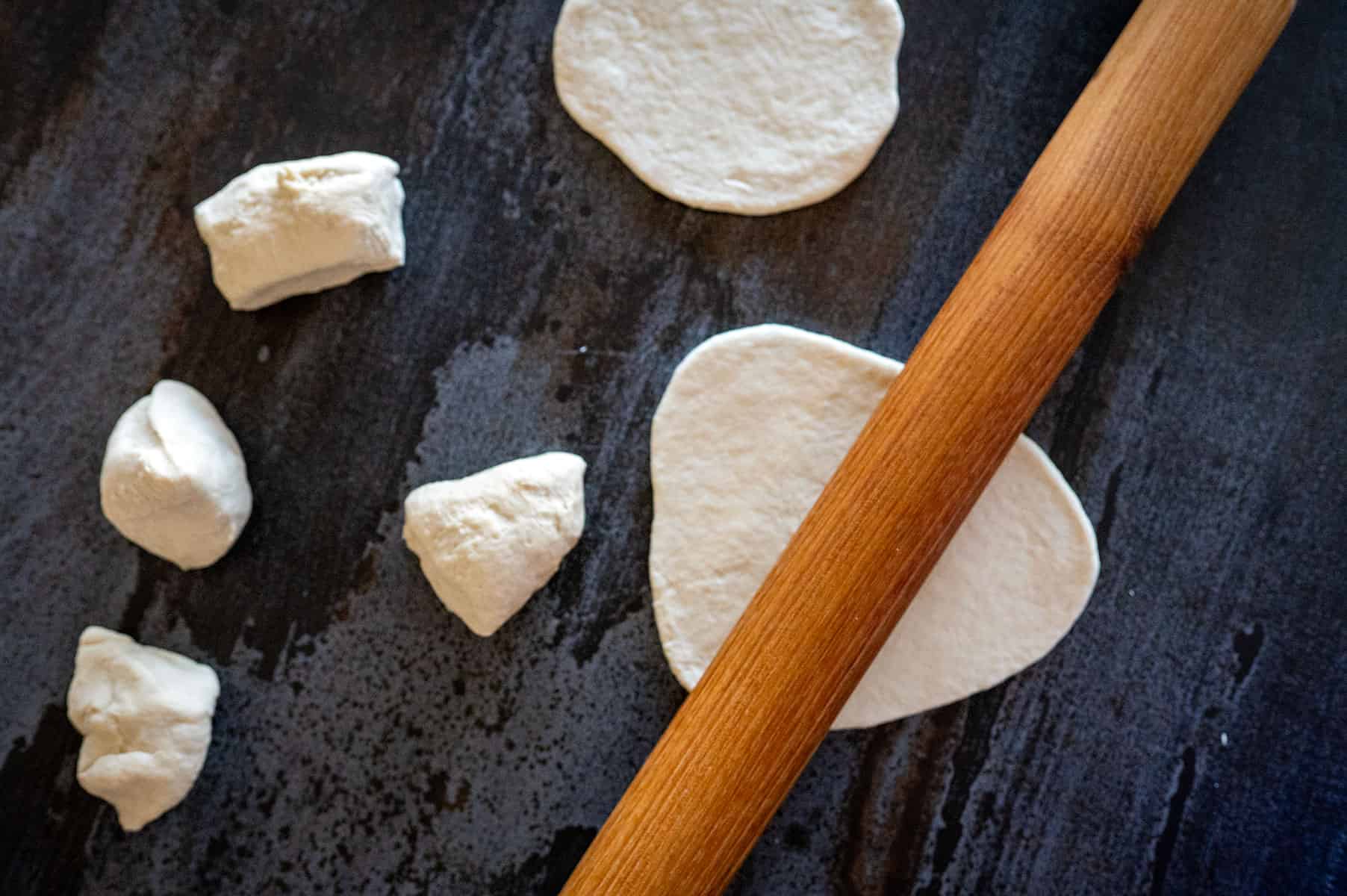
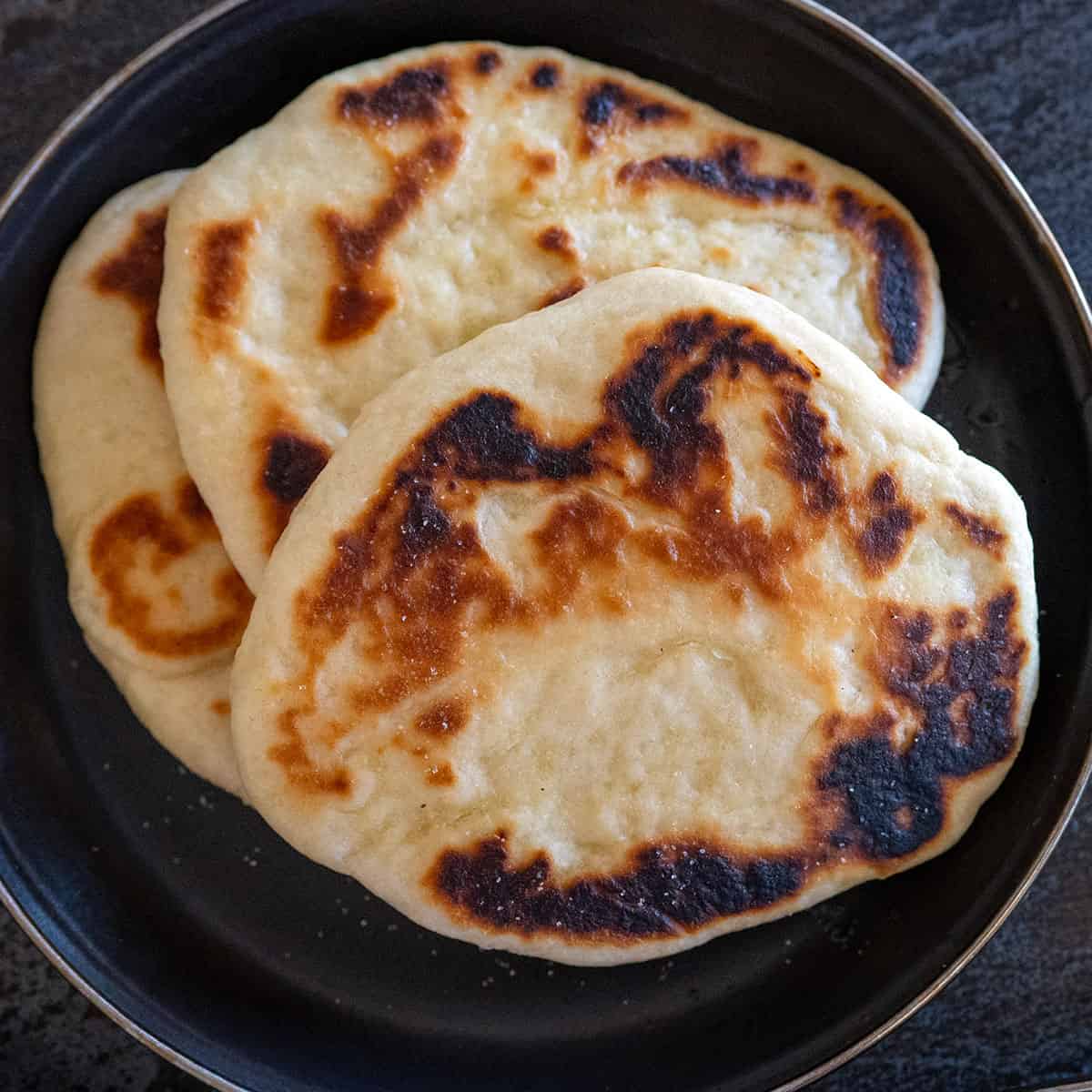
GCG PRO TIP: My first batch turned out thick and puffy, more like pancakes than flatbread. Roll these out as thin as you can get them (thinner than feels right) for that classic chewy, blistered flatbread texture. The picture above matches the ones below. Roll it about twice as large.
Step 5: Heat the pan
Heat a comal or skillet over medium to medium-high heat until it reaches 350-375F.
GCG PRO TIP: I burned my first few rounds because I had the heat cranked too high, guessing at the temperature instead of checking it. I use an infrared thermometer to hit 350-375F every time. You don't even need to add oil to the pan.
Step 6: Cook the flatbread
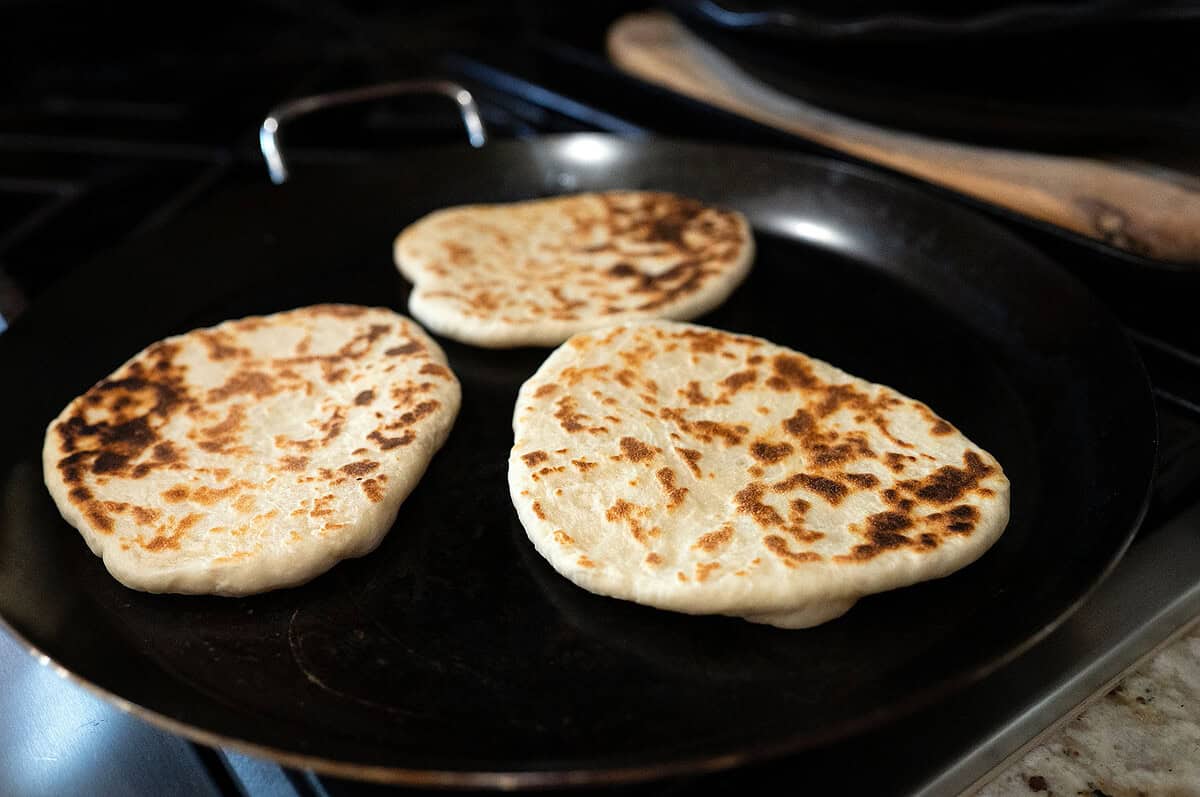
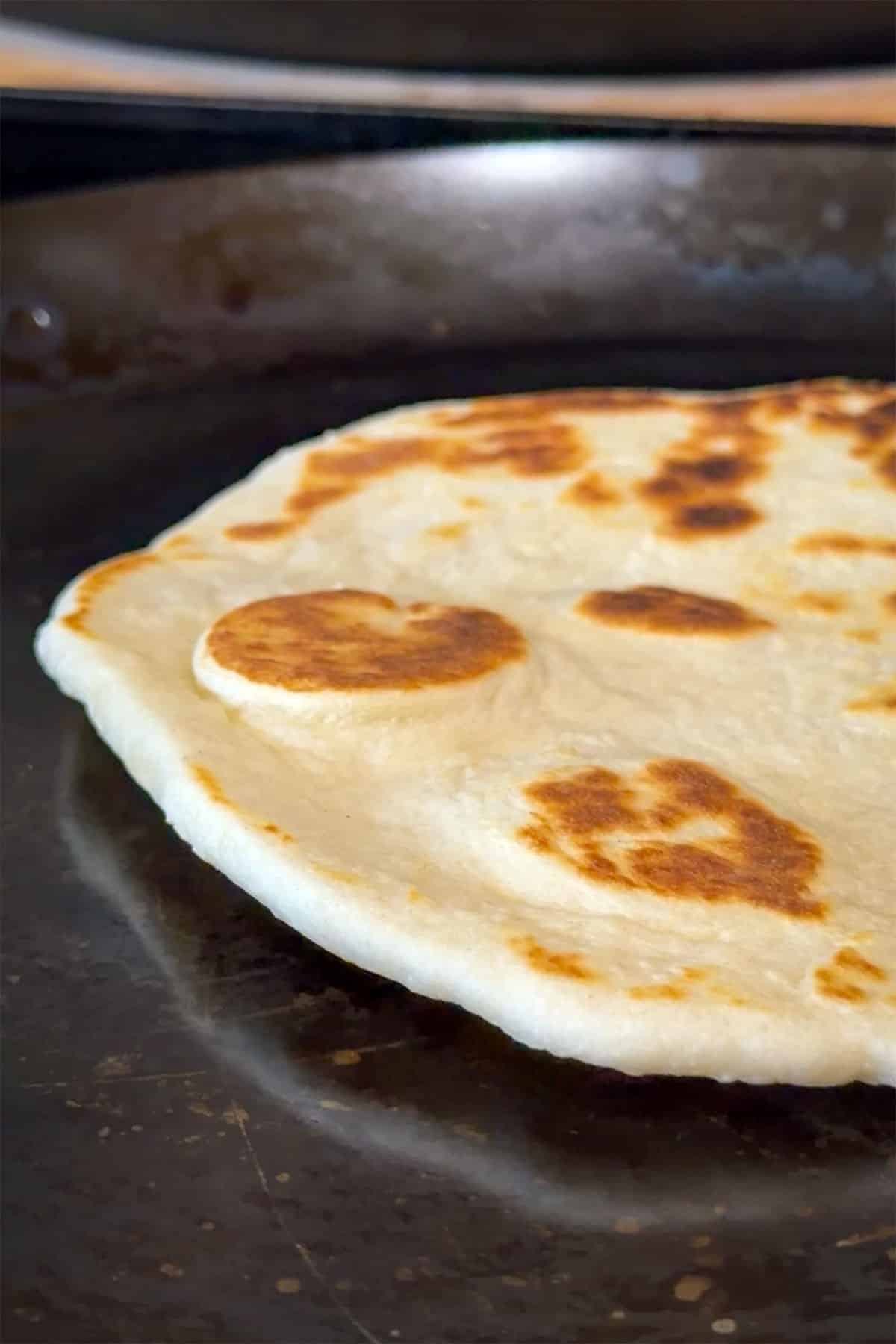
Place a rolled-out piece of dough on the hot pan. Cook until air bubbles form and the bottom is golden with a few browned spots, then flip and cook the other side.
Step 7: Brush with garlic herb butter
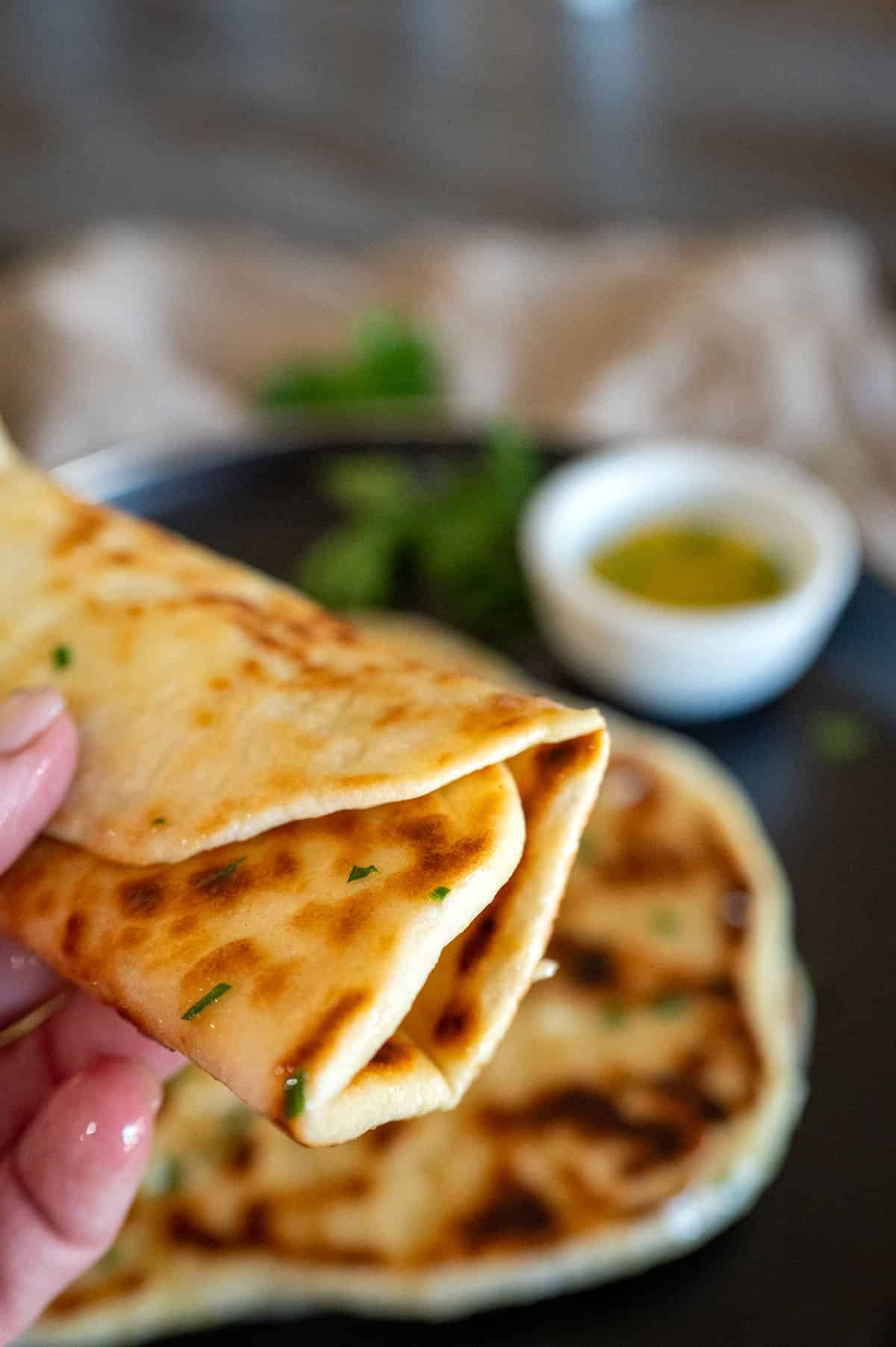
Melt butter in a small bowl and stir olive oil, minced garlic (or garlic powder), chopped fresh parsley or other fresh herbs and a pinch of salt. Brush over each warm flatbread as it comes off the pan.

How to Serve Flatbread
Serve this flatbread warm, straight off the comal, alongside dips, grilled meats or a big salad. It’s also sturdy enough to use for wraps with veggies, lunch meats and cheese. Or use it to scoop up dips like Campfire Brie Dip or hummus.
Homemade flatbread dough is also a great crust option for pizza.
Storage
Store leftover flatbread in an airtight container or zip-top bag at room temperature for up to 2 days, or in the refrigerator for up to 5 days. Reheat in a dry skillet for a minute or two per side to bring back the soft texture.
You can also freeze the cooked flatbread. Layer a piece of parchment between each piece, and store it in a freezer bag for up to 2 months. Thaw at room temperature, then warm in a skillet before serving.
GCG Pro Pitmaster Tips
- Weigh your flour instead of scooping. It’s the difference between smooth dough and crumbly dough.
- Use an infrared thermometer to check your pan temperature. Guessing is how you end up with burnt flatbread.
- Roll the dough thinner than feels natural. Thin dough is what gives you that classic chewy flatbread texture instead of a thick pancake.
Frequently Asked Questions
No. A cast iron skillet or griddle on the stovetop works just as well. The key is hitting the right temperature of 350-375F, not the specific pan. I like using my Made In Comal for tortillas, so I found it worked just as well for flatbread.
Tough flatbread usually means one of two things: the dough wasn’t kneaded long enough, or the yogurt was too thick and not properly thinned with milk. Both steps matter for a soft, pliable dough. For tender flatbread, weigh your ingredients and follow the steps above.
Yes. You can mix and knead the dough, then wrap it tightly and refrigerate for up to 24 hours. Let it come to room temperature before rolling and cooking.
If you use a different flour like all-purpose or bread flour, you’ll need to add in baking powder or baking soda.
More homemade bread recipes
Newest Recipes