
It’s no surprise that electric vehicles (EVs) are becoming increasingly popular as time goes on and technology develops. However, it seems as though there’s an accessibility gap between renters and homeowners. After all, you need to have regular access to a charging station or an at-home charger to power an electric car. There’s just one issue for renters–not all rental properties offer EV charging stations. But that doesn’t mean it’s not possible. In today’s article, we’ll go over the benefits of offering EV charging, different types of charging, and how much it may cost at your rental property.
Key Takeaways
- Adding EV charging can make a rental property more appealing to tenants with electric vehicles while potentially supporting tenant retention and property value.
- Level 1 charging is the slowest and simplest option, while Level 2 charging offers faster speeds and may be a practical choice for many residential rental properties.
- DC fast charging provides significantly faster charging but is generally more appropriate for commercial or high-traffic properties due to its higher cost and electrical requirements.
- Installation costs can vary significantly based on the type and number of chargers, existing electrical infrastructure, labor, permitting, and necessary property upgrades.
- Before installing EV chargers, landlords should evaluate tenant needs, electrical capacity, local regulations, ongoing costs, and how electricity use will be managed.
Contents of This Article:
Should You Add EV Charging at Your Rental?
With the rising popularity of electric vehicles, it poses one question for landlords and property managers in Baltimore–how can you accommodate tenants who have them? Well, installing EV charging stations at your properties is the obvious answer. However, there are obviously more questions to follow. For instance, you have to consider the benefits, costs, and level of charging power you need.
One way to evaluate the needs of your renters is by asking them. How many drive electric cars or plan to buy an electric vehicle in the future? Remember, the need for charging stations is usually greater in cities compared to more rural areas.
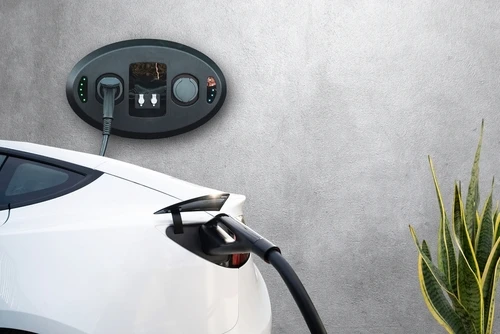
Additionally, you’ll want to consider the potential repercussions of not installing appropriate charging for electric vehicles. For example, some renters may resort to charging their car using extension cords or other unsafe methods, elevating fire risk or electric shock.
Ultimately, deciding whether to add EV charging to your rental or not depends on several factors. In today’s article, we’ll go over some of the main benefits, different charging options, how much they may cost, and more considerations for landlords.
Benefits of Adding Electric Vehicle Charging
Adding EV charging at your rental can offer several benefits for both property owners and tenants.
- Attracting Tenants- Offering EV charging can make your rental property more attractive for tenants with electric vehicles. After all, more people buying electric vehicles means more renters looking for properties with EV charging stations.
- Higher Rental Value- Adding EV charging to your rental can enhance the value of your property. As EVs become more mainstream, properties with charging stations may be worth more, allowing landlords to charge higher rents.
- Competitive Edge- Having EV charging stations can give your property a competitive edge in the market. It can set your property apart from others and potentially lead to higher occupancy rates and rental rates.
- Tenant Retention- Providing convenient amenities like EV charging can contribute to tenant satisfaction. So, by installing an EV charging system, you can increase the likelihood of longer lease durations, reducing turnover and associated costs.
- Eco-Friendly- Offering EV charging aligns with sustainability and environmental initiatives. As such, it shows your commitment to eco-friendly living and can attract tenants who share the same values.
What Level of Charging Do You Need?
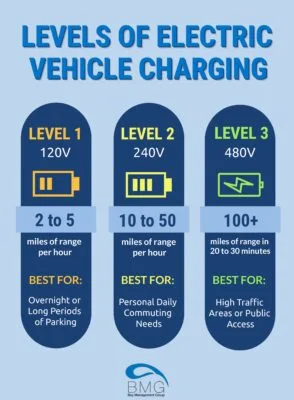
Determining the appropriate level of charging for your rental property depends on various factors. For instance, you’ll want to consider tenant needs, your budget, and the available electrical infrastructure. That said, there are three primary levels of EV charging, each with different charging speeds and requirements.
Level 1 Charging
This level of charging is the slowest option, usually providing 2 to 5 miles of range per hour. It uses a standard 120-volt household outlet, so extensive electrical work typically isn’t necessary. Level 1 charging is most suitable for rental properties where tenants have longer parking periods, like single-family homes or townhouses.
Level 2 Charging
Level 2 charging is faster, typically adding around 10 to 30 miles of range per hour, depending on the vehicle and charging equipment. It generally requires 208- or 240-volt electrical service and may be hardwired or connected through an appropriate outlet.
Level 3 Charging
DC fast charging, sometimes referred to as Level 3 charging, provides significantly faster charging than Level 1 or Level 2. Depending on the vehicle, charger, battery conditions, and other factors, DC fast charging can add roughly 100 to 200 or more miles of range in about 30 minutes. This type of charging is generally more appropriate for commercial properties or locations with high traffic or public access because it requires specialized, high-powered equipment.
Other Considerations for Landlords
If you’re trying to decide which level of charging to install at your rental property, consider the following factors:
- Tenant Needs- Assess the types of electric vehicles your tenants drive and ask them about their driving habits. For instance, if they commute to work or travel long distances frequently, a faster charging option might be more beneficial.
- Property Type- The type of rental you have, whether it’s a single-family home, apartment complex, or commercial building, can influence the charging needs. Larger properties may need faster charging or a mix of charging levels to cater to various tenant needs.
- Budget- Level 1 charging is the most cost-effective option due to its lower electrical requirements. However, if you have the budget and electrical capacity, Level 2 charging provides a better balance between charging speed and installation cost.
- Electrical Infrastructure- Consider the availability and capacity of your property’s electrical system. You may need to upgrade the electrical infrastructure to accommodate higher charging levels.
- Future-Proofing- It’s important to consider the present and anticipate the growth of electric vehicles and advancements in charging technology. For instance, installing higher-capacity charging stations could provide a longer-lasting solution as EVs become more popular and battery capacities increase.
- Local Regulations- Research local regulations and zoning requirements related to EV charging installations. Some areas may have specific rules or incentives for EV charging.
How Much Does It Cost to Add EV Charging?
One of the main considerations when adding EV charging to a rental property is cost. Expenses can vary significantly depending on the type of charger, existing electrical capacity, installation requirements, permitting, and whether electrical upgrades are necessary. Property owners should also consider ongoing electricity, maintenance, and network or service costs. Who ultimately pays for the electricity used for EV charging will depend on the property’s utility setup, lease terms, charging system, and applicable state and local laws.
The cost to install EV charging equipment can vary significantly depending on the charging level, number of chargers, property layout, existing electrical infrastructure, labor, permitting, and whether electrical upgrades or trenching are required. Level 1 charging may require little or no additional equipment if a suitable dedicated 120-volt circuit is already available. Level 2 equipment and installation generally cost more, particularly at multifamily properties where multiple chargers or electrical upgrades may be necessary.
DC fast charging is considerably more expensive and generally better suited to commercial or high-traffic properties. Equipment and installation can cost tens of thousands of dollars per connector, with costs increasing substantially when electrical service upgrades or other infrastructure improvements are necessary. Property owners should obtain site-specific estimates from qualified professionals before budgeting for an installation.
Frequently Asked Questions About EV Charging in Rentals
Should Landlords Install EV Chargers at Rental Properties?
It depends on the property, tenant demand, budget, and existing electrical infrastructure. EV charging can be an attractive amenity for renters who drive electric vehicles, but landlords should weigh the potential benefits against installation and ongoing costs.
What Type of EV Charger Is Best for a Rental Property?
The best option depends on the property and how tenants will use the charger. Level 1 may work for properties where vehicles remain parked for long periods, while Level 2 provides faster charging and may be better suited to many residential and multifamily properties. DC fast charging is generally more appropriate for commercial or high-traffic locations.
How Much Does It Cost to Install an EV Charger at a Rental Property?
Costs vary significantly based on the charging equipment, number of chargers, electrical capacity, labor, permitting, and whether upgrades or trenching are required. Landlords should obtain a site-specific estimate from a qualified professional before budgeting for installation.
Who Pays for EV Charging at a Rental Property?
It depends on the property’s utility setup, lease terms, charging system, and applicable state and local laws. Depending on the setup, electricity costs may be paid by the landlord, tenant, or individual charger user.
Do Landlords Need Permission to Install EV Chargers?
Requirements vary by location and property type. Permits, electrical inspections, zoning requirements, building codes, or other approvals may apply. Landlords should check state and local requirements and work with qualified professionals before installing EV charging equipment.
Can EV Charging Increase Rental Property Value?
EV charging may make a property more attractive to renters who own electric vehicles and can help distinguish it from competing rentals. However, the effect on rental or property value will depend on local demand, the property, and the cost of installing and maintaining the equipment.
Managing EV Charging at Your Rental
As electric cars become more popular, it’s no surprise that landlords are considering installing EV charging stations at rental properties. After all, it can be a great way to attract more tenants and increase the value of your rental property. However, it’s important to consider the cost of installation as well as your property’s needs. Additionally, you’ll want to consider how you’ll advertise, maintain, and price rentals with EV charging stations available.
Need More Advice? contact us today!
If you’re looking for a comprehensive rental management team to handle it all, consider Bay Property Management Group. Our team of qualified professionals offers full-service rental management, so you don’t have to stress about the day-to-day tasks of owning properties. So, if you’re looking to maximize your rental business and overall success, contact BMG today.