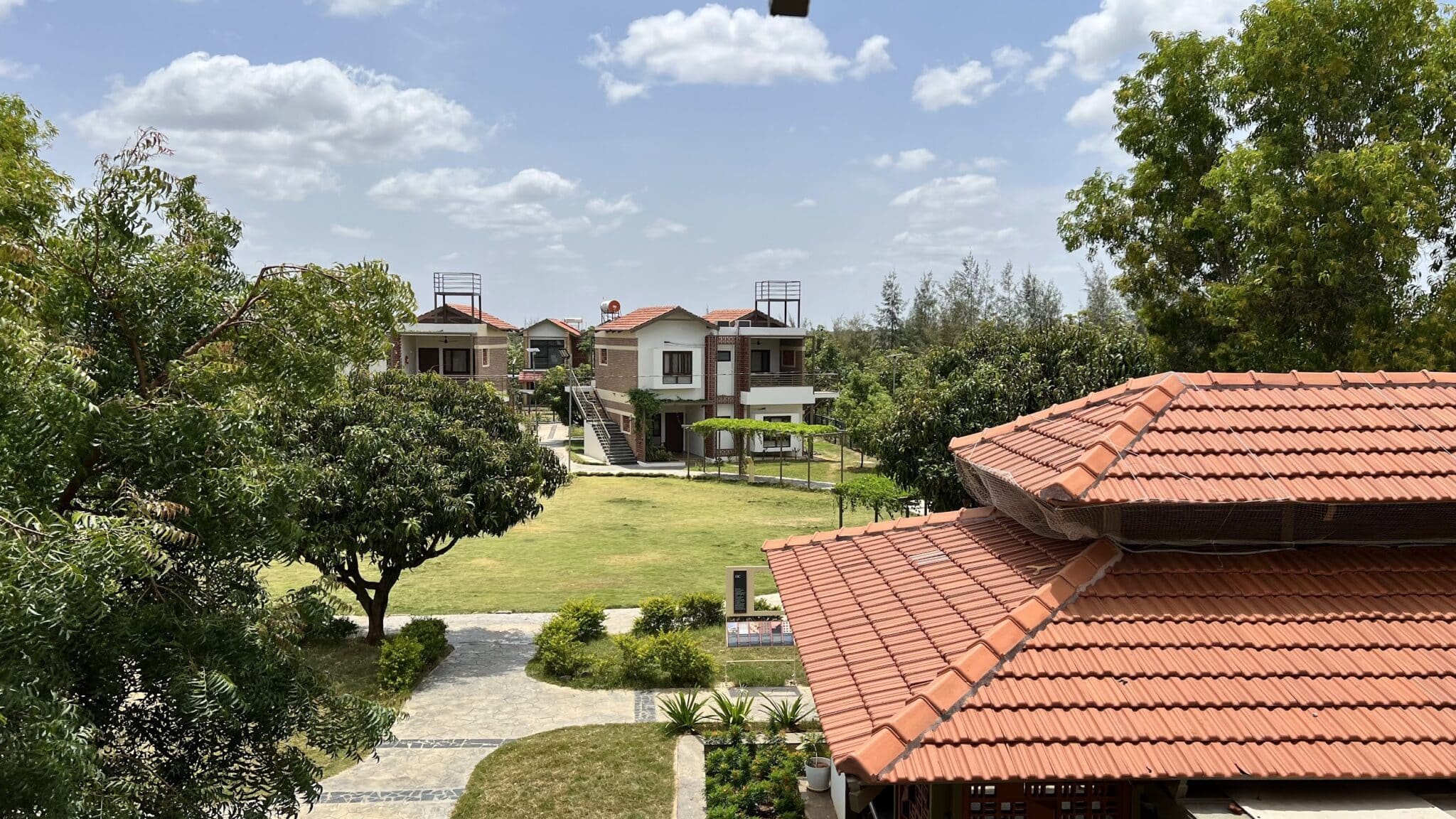
Okay, so here’s a fun fact I didn’t know until recently: there are city people, techies, doctors, the works, who “own” farms two hours outside Bangalore, have never planted a single seed themselves, and still call themselves farmers. In a real, land-is-in-my-name way.
I found this out because I ended up staying on one of these farms myself, and by the end of it I had so many questions that I basically interrogated everyone I met there. What I got back was the story of a company called Hosachiguru.
When I was invited for a first-hand experience, what made me say yes was my curiosity to know more about what they offer, but honestly, it was their remote, peaceful, lush location that beckoned me even more.
So let me tell you what I learned, the way it was explained to me – no jargon, promise.
Wait, So What Do They Actually Do?
Here’s the one-line version: Hosachiguru is an agroforestry and managed farmland company that develops, maintains and manages agricultural land on behalf of landowners. To put it simply, Hosachiguru sells you a piece of farmland and then farms it for you.
That’s it. That’s the whole trick. You buy a plot- could be a quarter of an acre, could be way more – somewhere on the outskirts of Bangalore.
Then, instead of you having to figure out what to plant, when to water it, or why your mango tree looks sad, an entire team does that on your behalf. Forever. Or at least for a very long stretch of years.
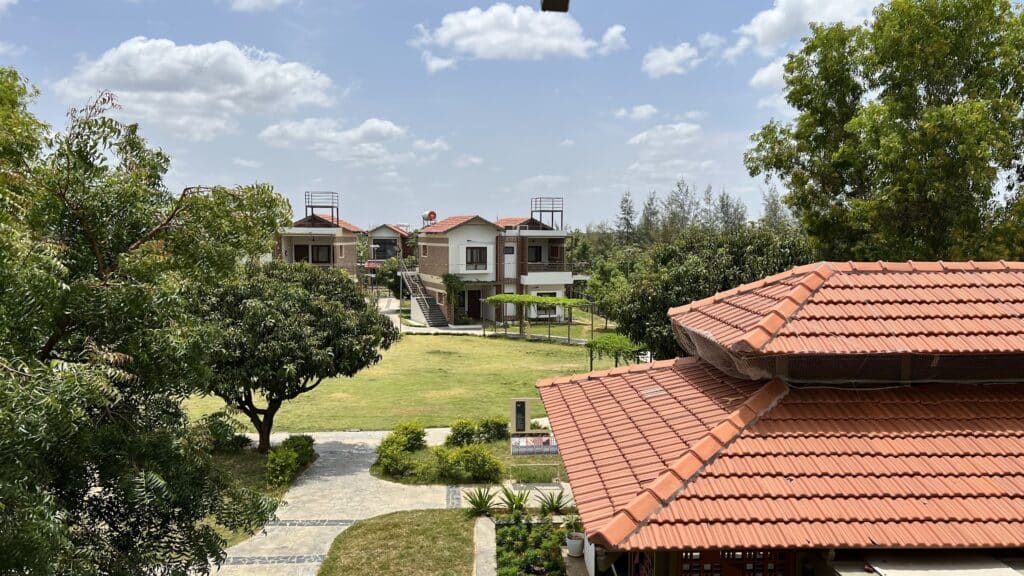
You still own the land, on paper, with your name on it, fully legal. You just don’t have to be the farmer. Someone else shows up every day so you don’t have to.
I kept thinking of it like this: it’s basically a gated community, except instead of just a clubhouse and a gym, you get mango orchards, timber, vegetable patches, and a bunch of very patient agricultural experts babysitting your soil.
And this isn’t some shiny new startup thing either; they’ve quietly been doing this since 2013. One small farm turned into many, one family turned into thousands, until they became one of the biggest names in this whole “managed farmland” space.
You know that feeling where you step into a place and instantly feel your shoulders drop, like your body decides to relax before your brain even catches up? That’s exactly how I felt within the first few moments of arriving.
I’m still not sure if it was the long drive navigating Bangalore’s infamous traffic finally being behind me, or the sudden, soothing quiet that replaced it; maybe it was both. Either way, I knew almost instantly that saying yes to this invite had been the right call.
But Why Would Anyone Buy a Farm They’re Never Going to Farm?
I asked this exact question, more than once. And the answer surprised me.
Most people buying into Hosachiguru aren’t trying to become farmers. They’re just tired city folks who want something that isn’t another flat, another SIP, another spreadsheet.
Land has always felt like the “real” thing to own in India, except owning land far from the city usually means one of two things happens: it sits there rotting and unused, or you spend every single weekend driving out just to make sure nobody’s stolen your fruit.
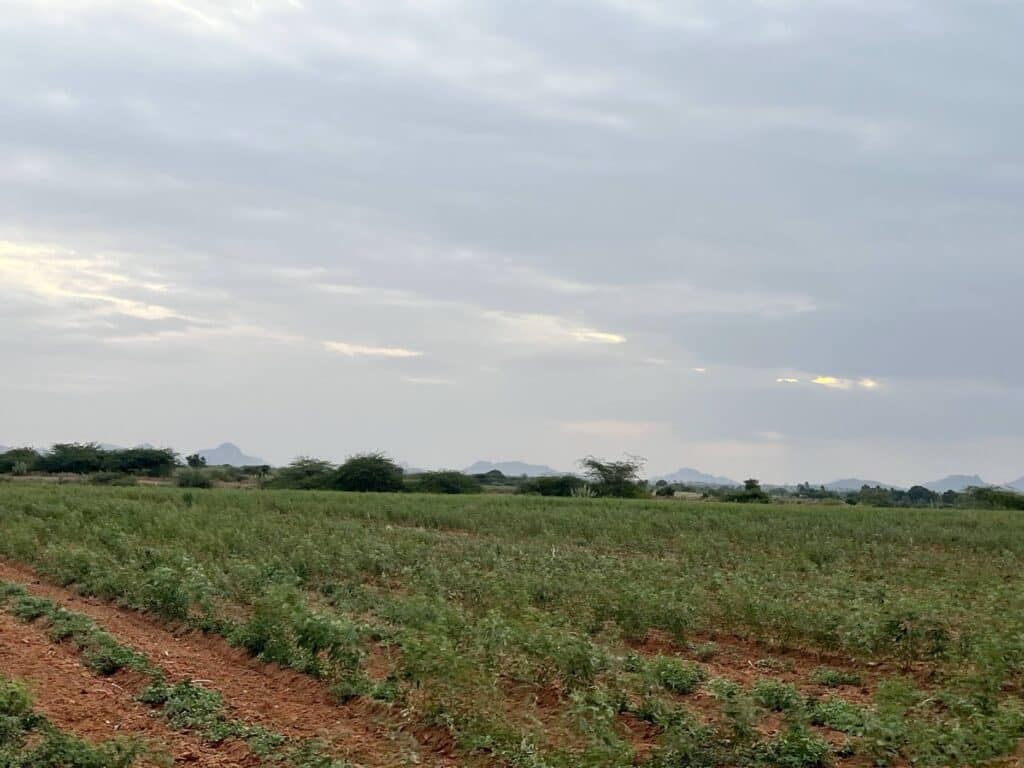
Hosachiguru basically deletes that entire problem. You get the land, minus the headache. Because Hosachiguru takes care of planting and nurturing trees, irrigation, soil management, farm maintenance, and harvesting – which is basically everything that causes these headaches.
So the people who go for this are usually chasing one (or several) of these:
– A patch of earth that’s actually alive and growing, not just sitting there gathering dust
– A weekend escape that feels like a home away from home, not a hotel room
– Something meaningful to leave behind for their kids, a story, not just a number in a bank account
– The feeling of being a farmer, minus the 5 a.m. alarms and the actual back-breaking work
Basically: they want the poetry of farming, without signing up for the grind of it.
Okay, But How Does It Actually Work Behind the Scenes?
This is where it got genuinely interesting for me, because I expected “we plant some trees” and got a whole philosophy instead.
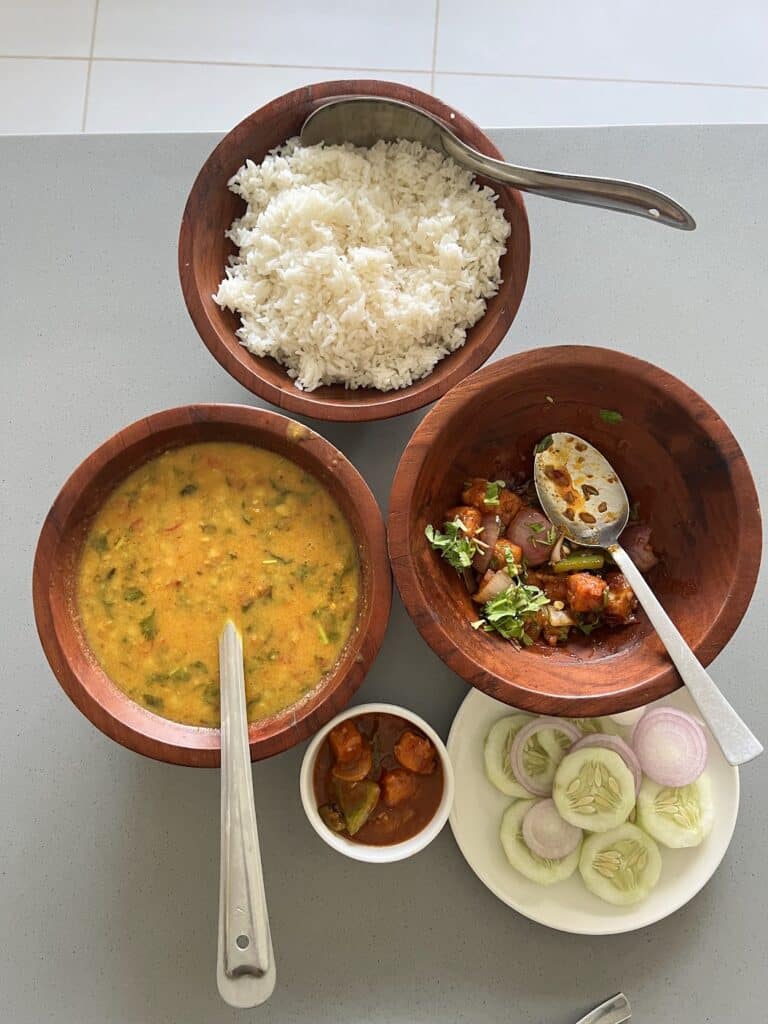
After a simple yet delicious farm-to-table meal and a quick tour, I had the chance to sit down with Ashok Kumar, one of the co-founders of Hosachiguru.
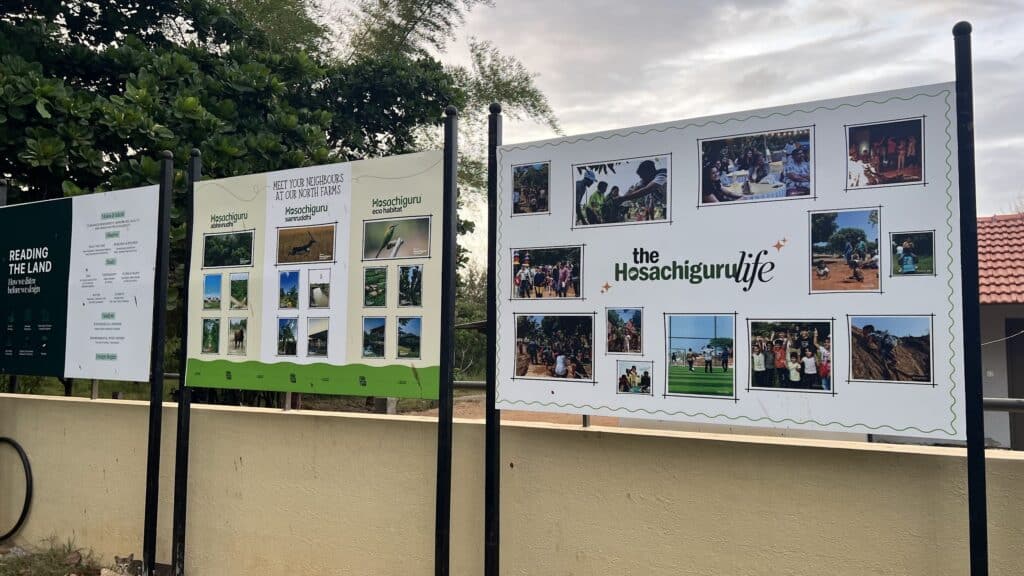
I was fascinated by how the team has built a perfectly running ecosystem and what that actually means for everyone involved. Here’s what I learned.
They don’t plant one crop; they build a tiny forest
When I asked Ashok what really sets Hosachiguru apart, this was one of the first things he brought up: that they’re essentially building a tiny forest on your behalf. Instead of lining up rows of a single fruit like a factory, their team mixes fruit trees, timber trees, and other plants together, almost like how a wild forest naturally organises itself.
Some plants feed the soil, some give shade, some invite the right insects in; everyone helps everyone. The fancy word for this is agroforestry, but really it’s just: don’t plant lonely rows, plant a little community.
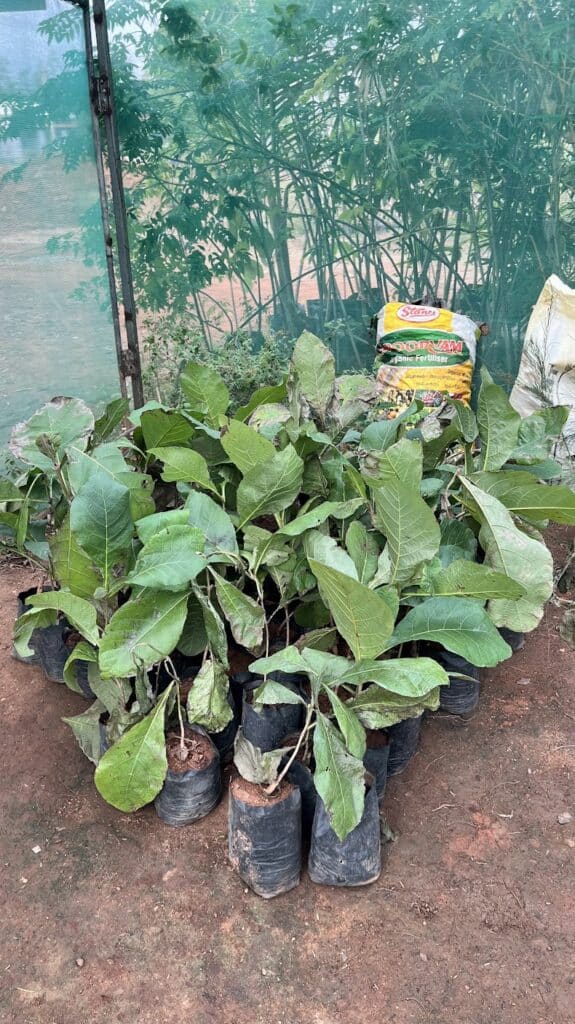
They try to skip the chemicals. When I pointed out all the manure being collected for processing, Ashok told me that in a single year, their Abhivriddhi farm alone had prevented the use of twenty thousand tonnes of chemical fertiliser.
Abhivriddhi happens to be the largest of their projects, spanning nearly 300 acres, so imagine the scale of toxicity avoided on just this one farm, he said. I nodded, genuinely impressed, because generating that much natural manure for a property that size is no small feat.
Instead of pesticides and synthetic fertilisers, they lean on composting, mulching, and just letting the land heal itself over time.
There’s a whole design philosophy behind this called permaculture, and the simplest way I can explain it is: build the farm so it mostly takes care of itself, the way nature would if left alone.
The unglamorous stuff is already sorted before you show up.
Roads, water lines, fencing, all the boring but important bits, are usually already built by the time you or I ever set foot on a plot. No dealing with random contractors, no starting from scratch with bare land.
There’s literally an app for your farm.
This one is probably my favourite thing about Hosachiguru: how they’ve paired an old-school idea like farming with genuinely thoughtful tech.
Since most owners obviously can’t drive out every week, there’s a MyFarm App that lets you peek into your land from your phone: what’s growing, how much water’s being used, what’s been harvested.
It’s such a small detail, but it’s the thing that makes “I own a farm two hours away and never visit” feel a lot less like blind faith.
There’s also a steady calendar of events across their two dozen-plus projects, everything from fun activities for kids to workshops and outdoor experiences for the whole family. Honestly, it doubles as a ready-made plan for whenever you need a last-minute weekend escape with your kids.
You’ve got actual humans to call
Confused about soil, seasons, or what on earth grows well in your specific plot? There are in-house farm experts whose entire job is answering exactly that.
They don’t disappear after the sale.
Unlike, say, buying an apartment where the builder vanishes the second the keys are handed over, this relationship is built to run for years and years after you buy in, they keep showing up, tending the land, sending updates.
It’s Not Just Land, It’s Also a Whole Little World to Visit
Here’s the bit I think you’ll actually care about most: these aren’t just plots of land sitting quietly somewhere far away. A lot of these properties are genuinely built to be visited, stayed at, wandered around, and enjoyed.
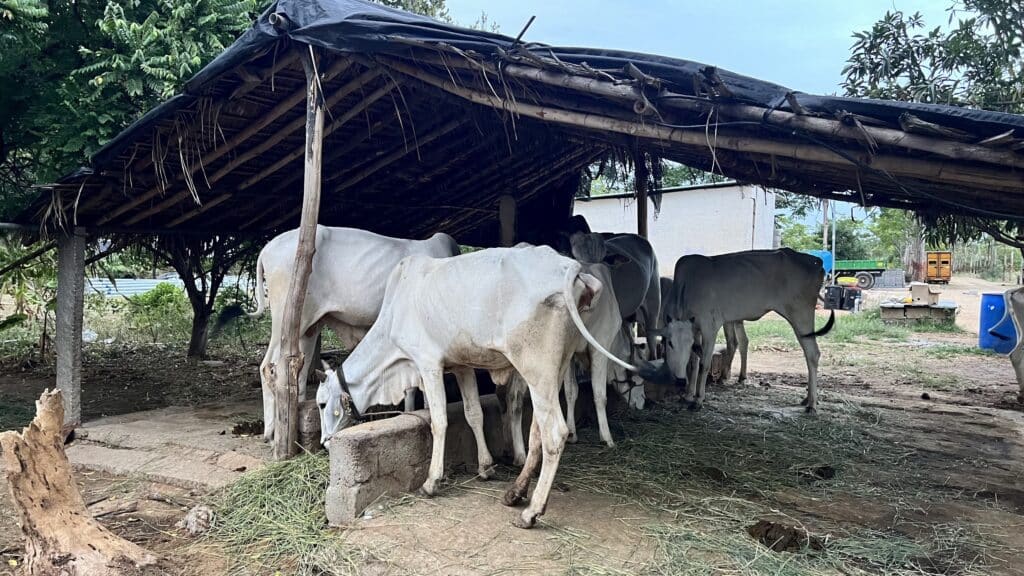
Depending on which farm you go to, you might find:
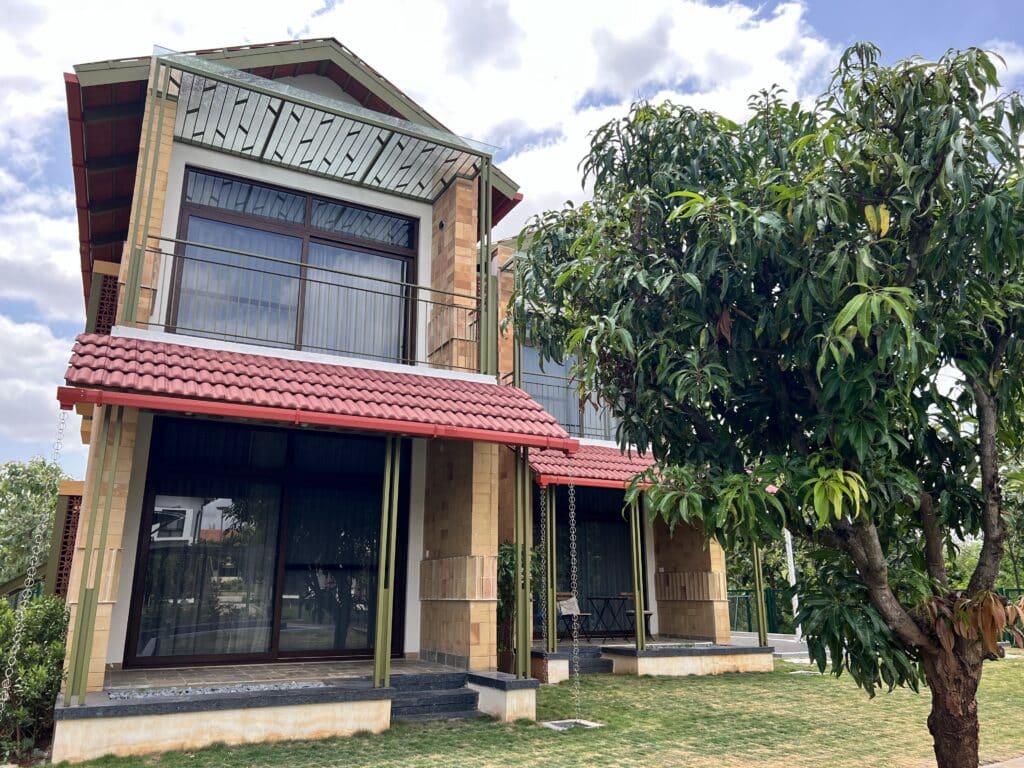
- Cute little eco cottages to actually spend the night in
- A community vegetable patch where you can pick your own dinner, basically
- A goshala, a proper shelter and care space for cows, very rooted in that old-school Indian farm feel
- Play areas and petting zones that make the whole thing genuinely fun for kids, not just a peaceful retreat for tired adults
- Cozy dining and retreat spaces built for doing absolutely nothing productive, on purpose
And there’s a real sense of community here too. Hosachiguru doesn’t just sell to individuals and disappear; they’ve built a whole network of what they call “co-farmers,” now numbering in the thousands, who all sort of belong to the same slightly obsessive, tree-loving club. They run workshops and get-togethers to keep everyone connected to their land, not just their land documents.
I got a taste of that community feel firsthand. In the evening, Dilip took me around Abhivriddhi, the common retreat areas, the goshala, the community vegetable farms, the nursery, and the water system that keeps the whole place running.
Afterwards, I checked into my Eco Farm-stay Cottage, spacious and quiet, and spent the rest of my time doing exactly what this place seems designed for: strolling around, working a little, but mostly just slowing down.
Why This Whole Idea Actually Matters
Step back for a second, and you realise Hosachiguru isn’t really selling real estate. They’re selling a slower kind of life that a lot of us city people quietly miss without admitting it.
Their whole approach boils down to three simple ideas, borrowed from permaculture thinking:
- Take care of the earth, keep the land healthy, not exhausted
- Take care of the people, make sure everyone involved actually benefits, not just the company
- Don’t be greedy with what you take, use only what you need, leave the rest alone
Sounds a bit like a poster in a yoga studio, I know. But it’s backed by real numbers: hundreds of thousands of trees planted and looked after, soil that’s regularly tested and nursed back to health, and a farming style built to heal land instead of draining it dry.
If you’ve never once thought of farmland as something you could own, that’s the real mental shift here. Land doesn’t have to be either some distant investment you forget about, or a demanding responsibility eating your weekends. It can just quietly sit there, growing, waiting for you to show up whenever the city gets too loud.
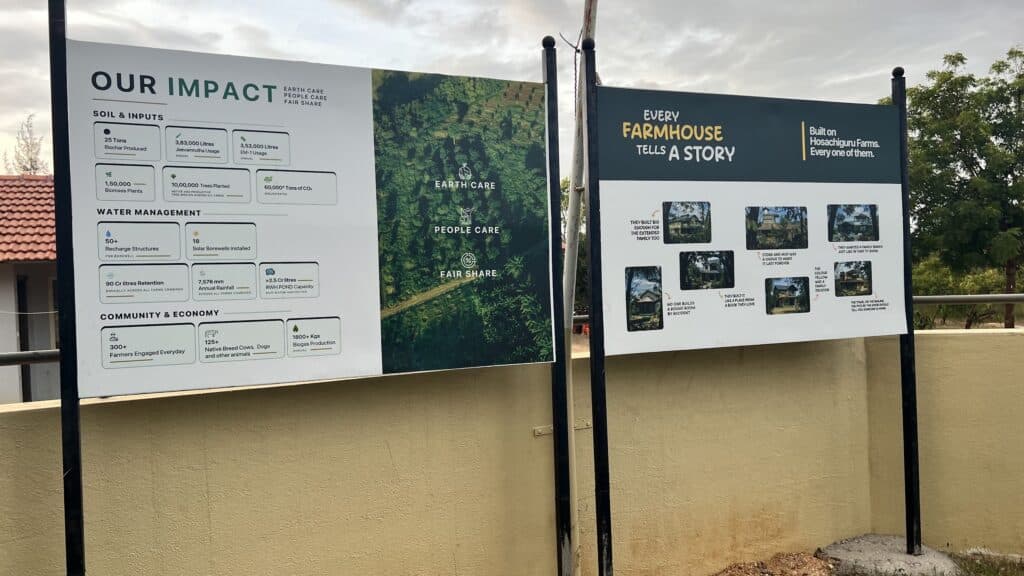
Hosachiguru changed the way I’d thought about farming all along. Owning a piece of land in a place you don’t live comes with its own set of anxieties: who’s going to take care of it, what happens to it when you’re not around, the kind of worry most of us would have.
Managed farm-stays are quietly rewriting that, and I think Hosachiguru is miles ahead of the pack when it comes to quality, locations, and community.
So, Final Verdict?
At the end of the day, Hosachiguru is solving a very specific, very modern itch: city people want to feel connected to land and nature, but nobody actually has the time (or honestly, the skill) to farm it themselves. Their fix is simple: you own it, they run it, you show up whenever you feel like it.
Is it right for everyone? No idea; that’s genuinely a personal call, and land is a big decision worth researching properly before jumping in.
But as an idea? It’s a pretty clever rethink of what “owning land” can look like for a generation that grew up in concrete jungles but never quite stopped missing the green ones.

Reshma is a digital content creator, storyteller, and history lover. She is the founder of The Solo Globetrotter, a site for solo travelers, female travelers wanting to travel independently, and those wishing to travel on a budget or go flashpacking. She has been traveling alone for over 6 years, currently having explored over 35+ countries. She prefers traveling slow and loves immersing in local experiences & culture, nature, hiking, festivals, and history. An Electronics Engineer turned Software Lead turned Solopreneur; she is specialized in SEO-based content curation and Pinterest Management.