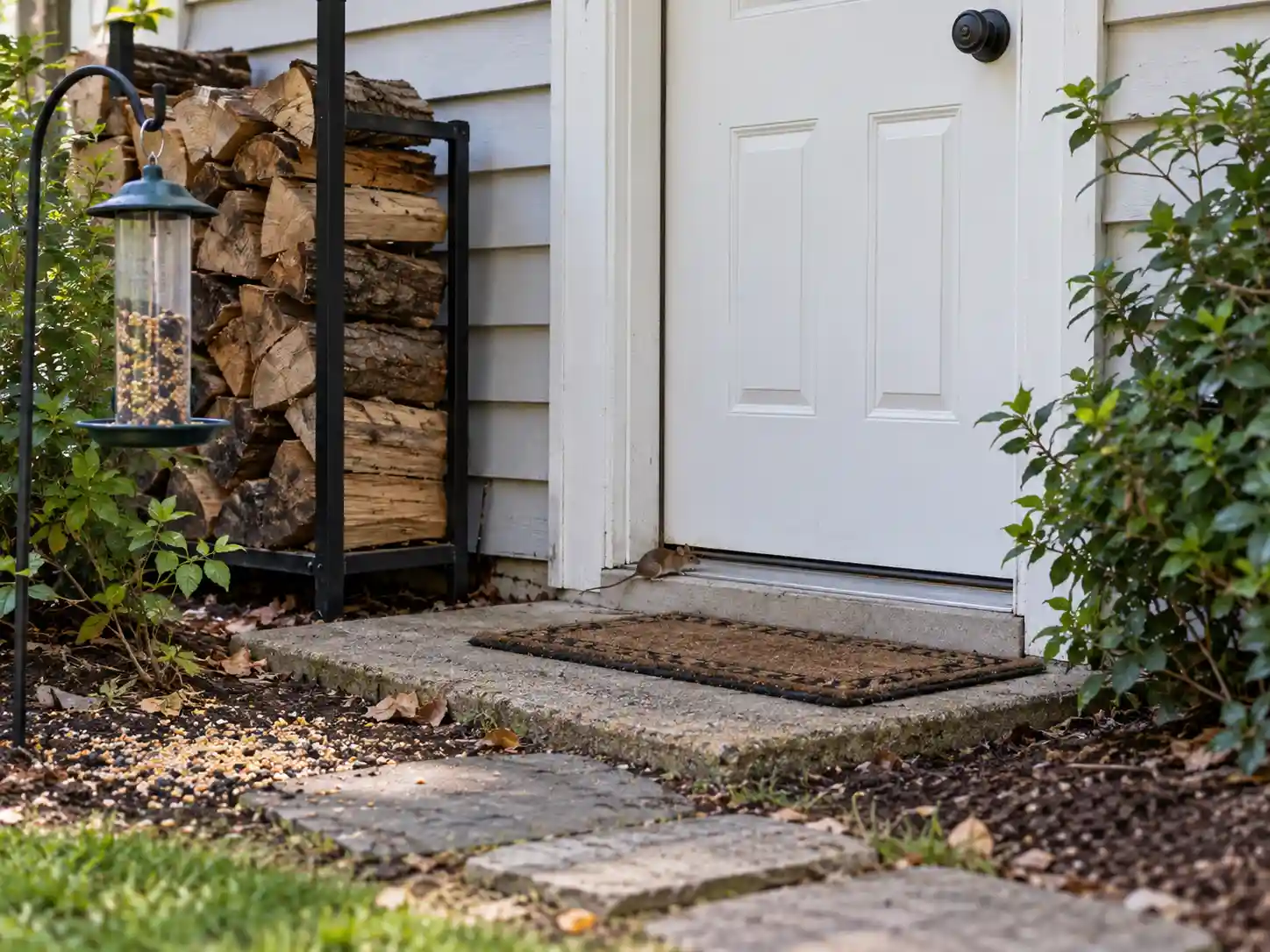
Mice and rats rarely show up out of nowhere. A rodent that ends up in your pantry usually found its way there because something on the outside of your home made it possible, whether that’s a gap under a door, a stack of firewood too close to the foundation, or a bird feeder that’s been scattering seed onto the ground for months. Most homeowners searching for how to get rid of mice in house are really asking two different questions at once. How do I deal with the ones already inside, and how do I stop the next ones from getting in?

This guide covers what attracts rodents to a property, when they’re most likely to try to move in, and how to get rid of mice and rats using the same exclusion-based approach professional rodent control, rather than a shelf full of traps and hoping for the best.
What Attracts Mice and Rats to Your Home
Rodents are looking for three things: food, water, and shelter. A home that offers easy access to any one of them becomes a candidate. Offer all three, and it becomes a target.
Food Sources
- Pet food left out overnight
- Birdseed scattered under a feeder
- Fallen fruit under a tree
- Unsecured garbage cans
- Crumbs left on counters and pantry items stored in their original bags instead of sealed containers
- Compost piles too close to the exterior wall
Water Sources
Water matters just as much as food. A leaking outdoor faucet, a clogged gutter that holds standing water, or condensation dripping from an AC unit can be enough to keep a rodent population fed year-round, even in a yard that’s otherwise clean.
Shelter and Hiding Places
Shelter is the piece people overlook most. Cluttered garages, stacked firewood, dense brush piles, dark corners of a basement, and overgrown vegetation touching the house all give mice and rats a safe place to nest close to an entry point, which makes the final step, actually getting inside, that much easier.
When Rodents Are Most Likely to Move In
Conditions That Make a Home Vulnerable
Some houses are simply easier targets than others, and it usually comes down to a handful of predictable factors.
Older Homes and Structural Wear
Older homes tend to have more settling cracks around the foundation and less consistent sealing around pipes and utility lines than newer construction, which gives mice and rats more options to work with.
Proximity to Wooded Lots or Construction
Homes near wooded lots, fields, or active construction nearby are exposed to more rodent traffic in general, since construction and land clearing push existing populations to look for a new place to go, often the nearest house.
Common Weak Points
- Overhanging tree limbs that touch the roofline, giving rats a direct route to the attic
- Gaps as small as a dime, which is all a mouse needs to get inside
- Openings closer to the size of a quarter, which rats can manage
- Door sweeps that have worn down or no longer sit flush
- Vents and chimney openings without screens
- Crawl spaces that were never properly sealed
Health Risks of an Untreated Mouse Infestation

A mouse infestation is more than a nuisance. Mouse droppings and urine can carry hantavirus and other pathogens, and both can trigger asthma and allergy symptoms in people who are sensitive to them, especially in enclosed spaces like a crawl space or attic with poor airflow. Rats carry their own set of health risks and can spread diseases through contamination of food and surfaces as they travel through a home.
Even a few individual mice can leave droppings in multiple rooms within days, and dead rodents left inside a wall after treatment can create an odor problem on top of the health concern. This is part of why waiting out an infestation rarely pays off, and why cleanup after treatment matters as much as the treatment itself.
How to Get Rid of Mice the Right Way: Exclusion First
A lot of advice on how to get rid of mice starts and ends with traps, but traps only deal with the rodents already inside. They don’t do anything about the opening that let them in, which means a new mouse can move in almost as soon as the last one is caught. The more durable answer to how to get rid of mice and rats is exclusion, the process of physically sealing off every way a rodent could get into the structure in the first place.

Exclusion is the approach most professional pest control companies build their rodent programs around, and for good reason. It’s designed to control mice and rats long-term, not just eliminate the ones currently inside. If a rodent can’t get in, there’s nothing left to trap.
What Professional Rodent Exclusion Actually Involves
Exclusion sounds simple in theory, sealing up gaps, but doing it well takes a trained eye and the right materials.
Staying Rodent-Free After Treatment
Once exclusion work is done and any existing rodents have been removed, keeping a home rodent-free is mostly a matter of maintenance rather than another round of treatment.

- Store pantry staples and pet food in airtight glass or metal containers rather than their original packaging
- Keep trash in cans with tight fitting lids and bring pet food in overnight
- Trim plants and shrubs back at least 18 inches from the foundation and keep firewood stacked away from the house
- Walk the exterior each season and check that door sweeps, vent screens, and previously sealed gaps are still intact
- Clean up fallen fruit and keep the area under bird feeders tidy
None of this replaces professional exclusion, but it protects the work that’s already been done and makes it far less likely a new rodent finds a way back in.
When to Call a Professional
A single mouse sighting doesn’t necessarily call for a full-scale response, but a few signs mean it’s time to bring in a professional rather than keep buying traps from the hardware store. Scratching sounds in the walls, especially at dusk or overnight when rodents are most active, droppings showing up in more than one room, a musty odor in an enclosed space like a closet or crawl space, or gnaw marks on wiring and structural wood all point to an infestation that has moved past the point where a couple of snap traps will solve it.

Stomp Pest Control has served homeowners throughout Raleigh and the Triangle since 2008, with rodent service starting at $49 a month. Every visit begins with an inspection to identify the type of rodent, how it’s getting in, and how far the problem has spread, followed by exclusion work to seal the home, strategic trap and bait placement, and ongoing monitoring so the issue doesn’t quietly return. Placements are made with pets and children in mind, and same-day or next-day service is often available. Every service is backed by a 100% satisfaction guarantee.
FAQs
The fastest way to rid a home of an active infestation is a combination of professional structural exclusion and a high density of snap traps. Sealing the exterior prevents new rodents from entering, while setting 6 to 12 traps along known travel routes quickly eliminates the trapped population indoors. Checking these traps daily and using high-value baits like peanut butter ensures rapid results.
Mice hate strong scents that disrupt their sensitive olfactory systems or signal danger. Mice detest the smell of peppermint oil. Capsaicin from chili peppers repels mice effectively. They are also deterred by the scent of ammonia, which resembles predator urine, and the scent of domestic dogs and cats. Cotton balls soaked in vinegar can repel mice effectively.
While mice prefer to stay hidden in wall voids and dark corners, they are highly motivated by food and nesting materials. If food crumbs are left in a bedroom, a mouse might venture into the room at night. However, they are naturally fearful of humans and generally avoid direct contact with a sleeping person.
Achieving a 100% success rate requires an exclusion-first approach. You must seal all holes, cracks, and gaps larger than a dime with durable materials like steel wool and heavy-duty caulk. Combine this exterior barrier with interior trapping, strict sanitation, storing food in airtight containers, and removing yard debris to completely control mice.
Beyond strong odors like peppermint and vinegar, rodents despise open, exposed spaces and a lack of resources. They hate environments where their food supply is locked in sealed containers, trash is secured with tight-fitting lids, and their natural travel pathways are blocked by metal barriers.
The 5-day rule in pest control suggests that if you set traps and do not catch a mouse within five days, the traps are either in the wrong location or the bait is not appealing. If this happens, you should move the traps to areas with fresh mouse droppings or change the bait to something more enticing, like peanut butter.
Permanent prevention relies entirely on structural integrity and habitat modification. Local experts recommend an exclusion-first approach to pest control. Inspect exterior doors for gaps and worn weather stripping. Keep firewood stacked away from the house to discourage mice. Regularly trim plants at least 18 inches from your foundation. By making your home impenetrable and uninviting, you keep mice away for good.
While humans use commercial rodent baits to poison mice, certain human foods can also be toxic to them. However, relying on toxic foods is not an effective or controlled method for eradicating an infestation. It is always better to use approved trapping methods or consult a pest control professional.
Get Rid of Mice with Stomp Pest Control
Rodents don’t need much of an invitation, and the longer an opening goes unsealed, the more likely it is to get used. Stomp Pest Control combines inspection, exclusion, and ongoing monitoring into one process, rather than leaving you to figure out how to get rid of mice and rats on your own with whatever’s on the shelf at the hardware store.
If you’re hearing activity in the walls or want an inspection before the weather turns, call Stomp Pest Control at (919) 858-2213 or fill out the form below to schedule a visit.
Find a Program
Save $100 off your regular maintenance program!
“*” indicates required fields