Michel Rolland: The Flying Winemaker Who Helped Shape India’s Wine Story – Sommelier India

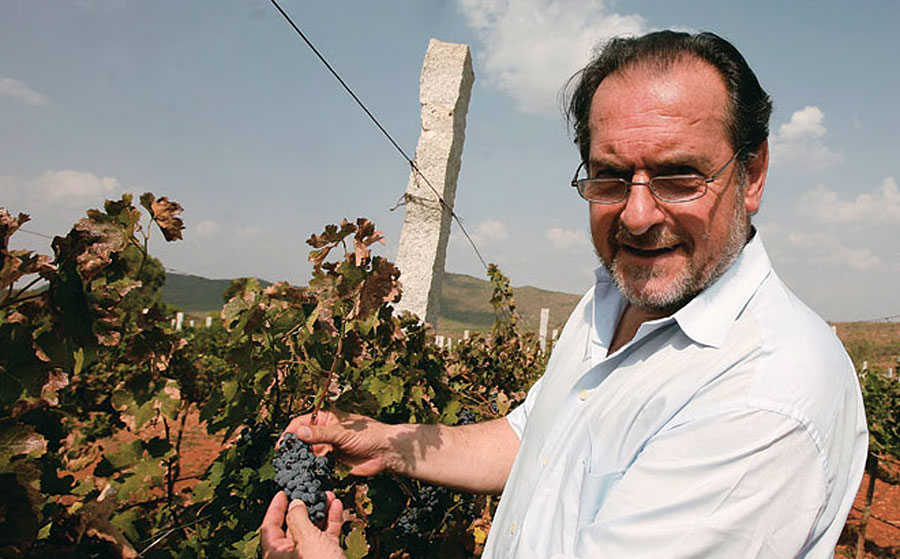
Michel Rolland’s passing at 78 marks the end of one of the most influential chapters in modern wine. For much of the world, he will be remembered as the original flying winemaker, the Bordeaux-trained consultant whose influence stretched across continents and helped define an era of richer, more polished, globally marketable wines. He was admired, debated, and at times criticized for the consistency of his vision. Yet in India, his legacy feels more specific and more constructive. Here, Michel Rolland was not simply a global consultant bringing a well-known style to a new market. He was one of the early figures who helped shape the very foundations of modern Indian wine.
When Rolland began working with Grover Vineyards in the mid-1990s, India’s wine industry was still young, ambitious, and searching for its footing. As Sommelier India documented in earlier coverage, he first became involved in 1994, at a time when the country had promise but lacked many of the technical systems, benchmarks, and winemaking disciplines that define a mature wine region. What Rolland brought was not only expertise, but structure. His approach to vineyard management, grape selection, yields, fermentation, and blending introduced a new level of rigor at a moment when such rigor could make an outsized difference. This was not just about improving a wine. It was about helping build an industry’s confidence in what it might become.
That influence came through most clearly in La Réserve, the wine that became one of the defining symbols of premium Indian winemaking. Often described as India’s answer to a Bordeaux-style red, La Réserve did more than establish a stylistic benchmark. It sent a signal to the market that Indian wine could aspire to seriousness, complexity, and international relevance. Sommelier India has long recognized the significance of that moment. Rolland’s role in shaping Grover’s direction gave the winery technical credibility, but just as importantly, it gave it aspiration. In an emerging category, that combination matters enormously.

What stands out even more in Sommelier India’s past interview with Rolland is the confidence he expressed in India itself. At a time when many worried that imported wines would overwhelm domestic producers, he argued that Indian wines were already better than many inexpensive international labels. That view was striking then and remains striking now. It showed that Rolland was not merely transplanting Bordeaux know-how into India. He was publicly validating the country’s potential. For a young wine culture, that kind of endorsement can have lasting importance. It tells producers to aim higher, consumers to pay attention, and the trade to take the category seriously.
Globally, Michel Rolland’s legacy will always carry a degree of tension. Some saw him as a master of modernization who helped wineries improve quality and compete on a larger stage. Others believed his stylistic influence pushed wines toward a more uniform international profile. Both interpretations contain truth. But India offers a particularly revealing counterpoint. Here, his influence did not diminish identity. It helped create the conditions for identity to emerge. By bringing discipline, credibility, and belief at a formative moment, he helped Indian wine move from possibility to proof.
That is why Michel Rolland’s legacy in India deserves to be remembered in its own right. He was not simply a famous international name attached to an Indian winery. He was an early believer in the country’s potential and a meaningful participant in its rise. The wines he helped shape, the standards he helped introduce, and the confidence he helped instill remain part of the story of Indian wine today. If Bordeaux was where he built his reputation, India was one of the places where his influence helped build a future.