Riding the Solar Winds in the Barnum System – Library of American Comics

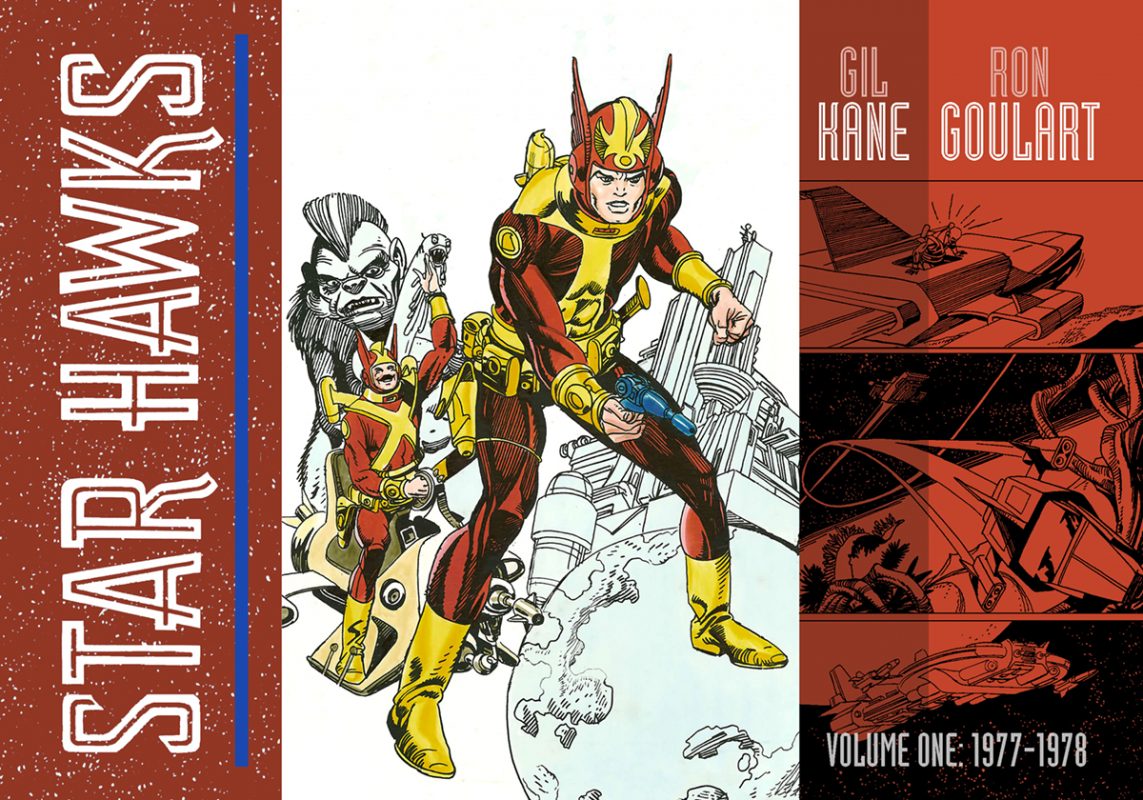
Our 2017-18 three-volume reprinting of STAR HAWKS (by Gil Kane, Ron Goulart, and others) was a treat, especially since during the same period we also did another set of releases collecting the STAR WARS strip. It was fun to contrast the more lighthearted swashbuckling happenings in Goulart’s Barnum System of planets with the more somber, pulp-influenced adventures set in George Lucas’s galaxy far, far away. (And the setting of STAR HAWKS indeed was Goulart’s, since he had previously established it in a variety of prose science fiction stories.)

It was also a great pleasure to offer readers a terrific sampling of artistic talent in both series: Gil Kane (with Howard Chaykin and Ernie Colon doing pinch-hit duties during a period when Kane was ill) in Star Hawks; Russ Manning, Al Williamson, and Alfredo Alcala on Star Wars.

Star Wars, of course, was a global phenomenon — the two words in its title served as all the promotion necessary to evoke images in millions of imaginations of lightsabers and dodging, spinning, darting X-Wing fighters roaring through the vacuum of outer space. By contrast, Star Hawks was the Little Engine That Could. Only prose SF aficionados had read Goulart’s previous Barnum stories; only comic book lovers were familiar with Kane’s dynamic figurework and dramatic pacing and staging.
Yet Star Hawks rode high on early success: Gil Kane won the National Cartoonist Society’s 1977 “Story Comic Strip” Award, while Ron Goulart sold two original paperback prose Star Hawks novels — Empire 99, followed by The Cyborg King. The feature’s original, unique two-tier daily format certainly helped it visually stand out from its competition on newspaper comics pages, and it gave Kane room to vary his panel layouts while keeping the stories progressing at an appreciably quicker pace than the standard three- or four-panel continuity series.

Certainly several client newspapers gave the strip a ballyhoo as they brought it into their pages, as these examples from 1977 and 1978 make clear. Left-to-right, here are promos from the Philadelphia News; Kingston, Ontario’s Whig-Standard; and the Mason City (Iowa) Globe Gazette:

It often seems inevitable: the fresh comic strip of the moment becomes yesterday’s Old News, and in this case the ever-growing popularity of gag-a-day features became only more pronounced as the 1970s drew to a close. Here are two separate newspapers — Windsor, Ontario’s Star and the venerable Fresno Bee — doing feature articles on their readers polls, ranking the popularity of the entries on their comics pages. Star Hawks (together with Star Wars, in the Bee) was prominent in its place at or near the bottom of both polls. (By the way, the Bee‘s graphs and demographic information is one of the most comprehensive reports on poll findings we’ve ever seen, in any newspaper …)

This last brace of newspaper coverage shows both Star Hawks‘s heights (a full-page coloring contest from 1977 that ran in the Wilmington, Delaware News Journal) and depths: during 1980 and 1981 client newspapers such as the Houston Post and Santa Maria (California) Times were informing readers that the syndicate was not delivering new strips in time to appear as scheduled in their pages; the problem was frequent enough at the Times for them to drop the strip in favor of a humorous comic. Also from the Post in January of 1981, a letter from a disgruntled reader, complete with an editorial response that hardly expressed enthusiasm for Star Hawks (by now reverted to a standard single-tier daily, with Archie Goodwin and eventually Roger McKenzie supplying the stories and scripts).

That letter was a harbinger of the doom that was on the horizon: Star Hawks ceased publication, with its last installment appearing on May 2, 1981, less than five months after Mr. Liljestrand’s critique was published.
Some comic strips endure through the decades, while others launch like fireworks, have their brief explosion of enjoyment, then burn out and disappear. Star Hawks was a sparkler that burned brightly in its time, and we’re proud to have preserved the entire series as part of The Library of American Comics.