Ten Things Your Phone is Doing to You

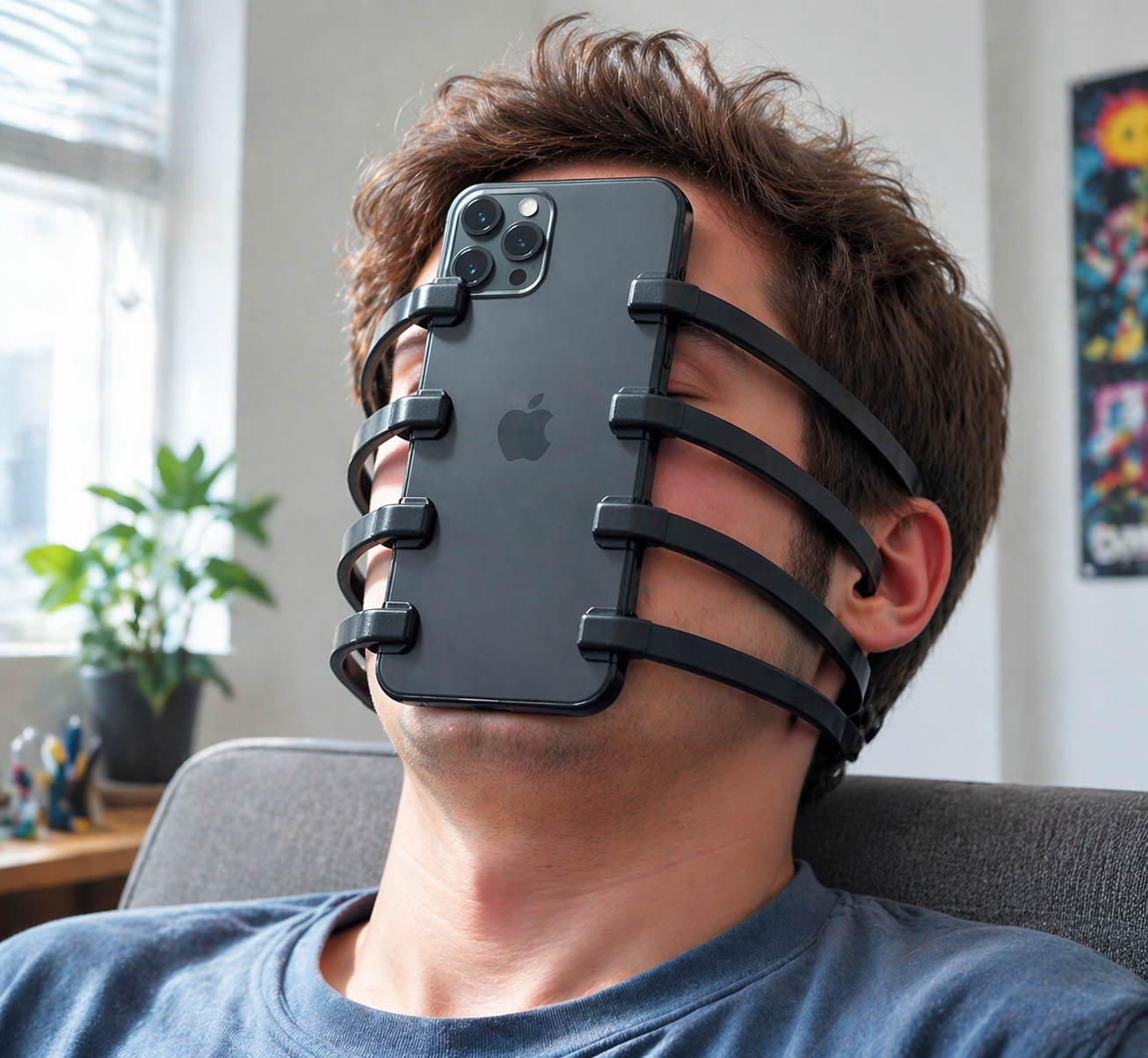

Not long ago, boredom was unavoidable. We waited in lines, sat in silence, and rode the elevators staring at the floor. Those small gaps of nothingness were little gifts, though we may not have understood them that way at the time. Our minds wandered to and fro and contemplated any number of things In these small but precious moments. Now we have eliminated them entirely thanks to a little technological companion we do not need but cannot seem to live without.
Smartphones are everywhere. Finding someone using an “old-fashioned” flip phone is a rarity. They are useful tools, but they are not neutral. They shape our habits, our attention, our relationships, and even our spiritual lives. We are going to explore ten ways our phones fundamentally change who we are and how we behave.
We Become Digitally Addicted. The word “addict” carries a negative stigma, and for good reason. Yet that describes our behavior with our phones. Many of us reach for them before our feet touch the floor in the morning. We surrender our first moments of the day to email, news, texts, and social media. Smartphones train us to crave constant novelty; each notification or new post provides a small reward that keeps us returning. This unconscious habit has us checking our phones every few minutes without realizing it. Constant stimulation destroys our ability to sit and meditate on spiritual things (Psalms 1:2; 46:10).
We Develop a Craving for Approval. Social media turns approval into a measurable commodity—likes, shares, comments, and followers become a resource by which we evaluate our personal worth (cf. John 12:43). This might tempt us to carefully curate what others see, posting not to communicate truth but to gain affirmation.
We Get FOMO. Smartphones create the fear that we are missing something better happening somewhere else. We experience “disconnection anxiety” when separated from our devices. Social media constantly presents the best moments of other people’s lives, producing the sense that everyone else is happier, busier, or more fulfilled. The serpent used the same strategy in Eden—he convinced Adam and Eve that they were missing out, too. The apostle Paul, however, learned the art of being content regardless of his circumstances (Philippians 4:11).
Our Phones Train and Mold Us. Social media is more than a tool; it molds us. Algorithms repeatedly feed us the voices, values, and attitudes we already prefer, creating an echo chamber that reinforces our assumptions and pre-existing beliefs. We begin to imitate the speech, priorities, and worldview of influencers. We may start to define ourselves more by political, cultural, or celebrity identities than by Christ. The Bible calls us to transform, not conform (Romans 12:2).
We Lose Meaning. Modern life floods us with endless information, much of it trivial. Digital content is often designed to be immediately appealing rather than intellectually or spiritually nourishing. We may know every celebrity scandal and viral trend, but neglect eternal truths. Paul calls us to meditate on honorable things (Philippians 4:8). The book of Ecclesiastes repeatedly reminds us of life’s emptiness in the absence of what truly matters (see Ecclesiastes 12:13).
Phones Undermine Our Literacy. Online reading encourages scanning, skimming, and multitasking. We skip from one headline to the next, link to link, image to image. Any article or post over a few hundred words becomes too unwieldy to manage. The mind becomes impatient with anything difficult or lengthy. We undermine our ability to read carefully, think deeply, and engage in self-reflection while considering weightier things.
We Become Lonely. Smartphones promise connection but deliver isolation. We can be connected to hundreds of people and still feel profoundly alone. Digital interaction often replaces face-to-face relationships. We neglect neighbors, spouses, children, and friends (see the remarkably powerful 2-minute video I Forgot My Phone). We ignore people right in front of us, staring at our phones during meals and conversations. It could almost be an image in a horror movie: rooms full of people entranced by glowing screens designed to modify their behavior. So what do we do? We treat those physically present as inconveniences when they interrupt us.
We Become Harsh with Others. It is easier to attack someone through a screen than face-to-face. Distance reduces compassion and restraint and gives us a power that anonymity provides. Anger, public shaming, slander, outrage, sarcasm, and constant criticism all become easier when shielded by a computer screen. Online interactions make people feel less real, and we forget that behind every profile is a human being made in the image of God. We can lose our tempers in a moment and make comments we would never utter to someone’s face (cf. James 1:19).
It Encourages Secret Vices. Smartphones lower the barriers that once made sinful behavior more difficult. Sin feels easier when it is hidden, and the phone creates the illusion that nobody sees. Pornography, emotional affairs, private relationships, gambling, gossip, slander, and other hidden indulgences always remain within reach. The problem is not merely that temptation exists, but that the device—our ever-lurking tempter—is always at our fingertips. It is a portal to sinful opportunities that never closes. But sin works best in the shadows, doesn’t it (cf. Job 24:15)?
We Become Trapped in the Momentary Now. Smartphones trap us in the “momentary now.” Digital life encourages us to think only in terms of the next notification or headline. Like Pavlov’s dogs, we have been trained to respond to dings and vibrations announcing the arrival of the latest email or text message. We should set our minds on things above (Colossians 3:2) and be aware of our time (Psalm 90:12).
Smartphones are useful tools and dangerous masters. We have handed over our autonomy the moment we stop directing our devices and begin letting them direct us. Many of us have probably already done so unwittingly.
The deeper issue is not merely how much time we spend on our phones, but what our phones are doing to us. What habits does it form? What desires does it feed? How does it slowly—and surely—shape who we become? That role belongs to Scripture, and Scripture alone.
Habits are not neutral. Repeated behaviors quietly shape our hearts and minds, pulling us in one direction or another—toward God or away from him, toward loving people or neglecting them, toward eternity or the next notification. The invitation of Scripture is to something better: stillness, wisdom, and love for God and neighbor. As with any other aspect of life, we have to ask a single, definitive question: are our phones making us more godly, or not?
Surely there is a part of us that will acknowledge, perhaps even begrudgingly, that we already know the answer to that question.