Cycling Routes in Scotland for Beginners: A Guide to Biking the National Cycle Network

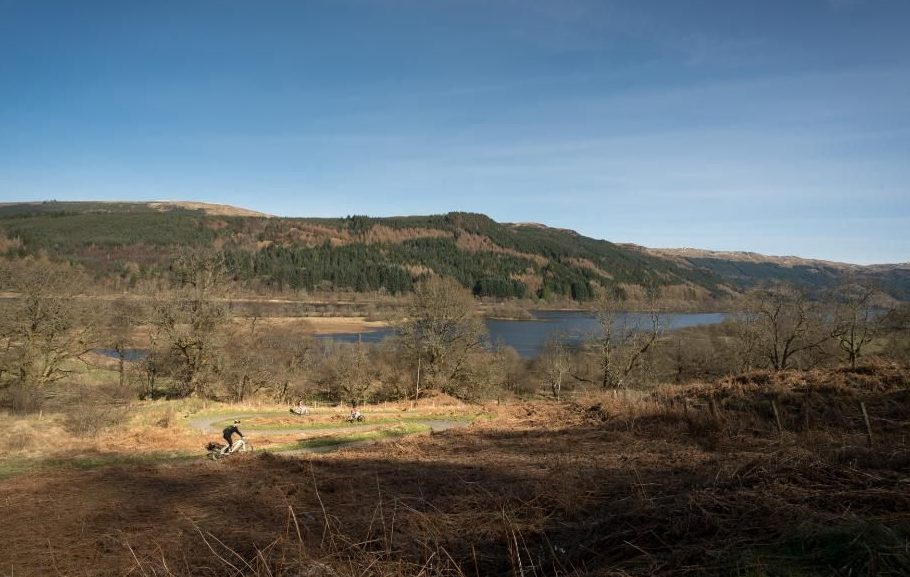
Scotland has a reputation as a walker’s paradise — and it absolutely is. But here’s what a lot of visitors don’t realize: some of the best cycling routes in Scotland are also perfectly accessible to beginners, and you don’t have to be a serious cyclist to experience them. With over 1,600 miles of signed national routes threading through Highland glens, along loch shores, past ancient castles, and through some very lovely scenery, this country rewards anyone willing to get on a bike — even if the last time you rode one was a beach cruiser on vacation.
I’ve spent a lot of time in Scotland on foot — walking the West Highland Way, exploring the Moray Coast Trail, and, most recently, walking the Great Glen Way (part of the Lochs and Glens Cycle Route) — so I know this landscape well. But biking it offers something different. You cover more ground, you arrive in towns with an appetite, and the rhythm of pedaling through a misty glen has a meditative quality that’s hard to replicate any other way.
This guide is for anyone curious about cycling Scotland for the first time — what the routes are, what you need to know, and what to pack.

What Is the National Cycle Network?
Before you start plotting a route, it helps to understand the system. The National Cycle Network (NCN) is a UK-wide collection of signed cycling and walking paths managed by Walk Wheel Cycle Trust (formerly Sustrans). In Scotland alone, there are approximately 1,643 miles of NCN routes, including 702 miles of completely traffic-free paths running along former railway lines, canal towpaths, forest roads, and loch-side trails.
All routes are marked with blue cycle route signs or red-numbered stickers — so once you’re on the network, navigation is pretty straightforward. You can search routes by region, distance, or difficulty using the Walk Wheel Cycle Trust route finder or browse the VisitScotland cycling map. I’d recommend downloading your chosen route offline before you head out — cell signal in Scotland is good in most places, but definitely not all.
One more thing worth knowing: the NCN isn’t exclusively for cyclists. Walkers, joggers, and equestrians share many of these paths, which makes them low-pressure, welcoming environments for beginners. You won’t feel out of place if you’re not clipped in and wearing lycra.

5 Scotland Cycling Routes Worth Knowing for Beginners
You could spend a lifetime exploring Scotland’s bike routes. Here are five that are particularly well-suited to casual riders — whether you have a full week or just an afternoon.
NCN 7 — The Lochs & Glens Way (Glasgow to Inverness)
This is the big one, and one of Scotland’s most celebrated long-distance cycling routes. The full route runs roughly 215 miles from Glasgow to Inverness, passing through some of the most iconic Highland scenery in the country — Loch Lomond, the Trossachs, and Rob Roy Country before continuing north toward Inverness through the Cairngorms. The good news for beginners is that you absolutely don’t have to do it all.

Many sections — particularly those following the Forth & Clyde Canal and the River Leven corridor, and the gentler farmlands of Perthshire and Stirling — are flat, well-surfaced, and very manageable for a casual rider.
I’ve ridden part of NCN 7 through the Trossachs, from Callander toward Strathyre, with my family when our kids were 8 and 10 years old—a beautiful, mostly traffic-free stretch through Rob Roy Country that I wrote about in my Easy Family Bike Rides in England and Scotland post. It’s a perfect half-day ride and a great introduction to biking in Scotland. The scenery is spectacular, the path is well-marked, and there’s a lovely pub waiting at the other end.
NCN 78 — The Caledonia Way (Campbeltown to Inverness)
Running approximately 234 miles up the western spine of Scotland, the Caledonia Way passes through Oban, along the Great Glen, and into Inverness alongside Loch Ness. If you’ve read my West Highland Way post or followed my Great Glen Way trip, you’ll recognize much of this terrain — it’s stunning, accessible, and deeply atmospheric.
Some sections are more challenging due to elevation, but the canal towpath stretches are beautifully flat and completely traffic-free. We saw more people biking the canal paths along the Great Glen Way than walking. It’s a wonderful option for anyone who wants that Great Glen experience without the hiking boots.

NCN 1 — Coasts & Castles (Dover to John O’Groats — and Beyond)
If NCN 1 were a person, it would be the overachiever in the room. At over 1,000 miles, it’s the only National Cycle Network route to break that mark, running the entire eastern spine of Britain from Dover all the way to John O’Groats — and technically beyond, as it forms the UK leg of the international North Sea Cycle Route. A full end-to-end tour would take most cyclists about a month.
For our purposes — a Scotland bikers guide for beginners — it’s worth knowing what NCN 1 actually is before you set out, because it surprises a lot of people. Most of the route is on-road rather than traffic-free. It also isn’t strictly coastal: the route takes long inland diversions in places, and south of Yorkshire it’s generally flat to gently undulating. The biggest climb on the entire route comes on the inland section between Berwick-upon-Tweed and Edinburgh — something worth knowing if you’re planning to ride into the capital.
That said, there are lovely traffic-free stretches in Scotland, and the Edinburgh city sections are among the best. NCN 1 threads through the capital via the Roseburn and Blackhall paths — two former railway lines converted into smooth, well-surfaced cycling routes that are completely traffic-free and accessible to everyone. It’s one of the nicest ways to escape Edinburgh’s bustle and see the city from a completely different angle.

Further north, the route runs along the Moray Coast — and this is where it gets quietly spectacular. I spent a month in Cullen on the Moray Coast, and we walked this stretch regularly. The highlight is the Cullen Viaduct: a Category B-listed, eight-arch stone railway viaduct built in 1884 that now carries NCN 1 over the village and out toward Portknockie. Walking or cycling across it — with the village below you, the Moray Firth stretching out ahead, and the old railway bed rolling out in both directions — is one of those unexpectedly magical moments that the NCN occasionally delivers. The path between Cullen and Portknockie was recently upgraded with a £1.4 million resurfacing project and is now smooth, fully traffic-free, and accessible year-round. If you’re anywhere near the Moray Coast, don’t miss it.

NCN 75 — Edinburgh to Glasgow
If point-to-point cycling appeals to you, NCN 75 connects Scotland’s two great cities along a mixture of traffic-free former railway paths, canal towpaths, and quiet country roads via Currie, Bathgate, and Livingston.
It’s roughly 100 miles end-to-end, but easily broken into day sections if you’re based in one city and want to explore by bike. One highlight along the way: the Colinton Tunnel in Edinburgh, where a former railway tunnel has been transformed into an art installation — its walls covered in a striking mural the entire length of the tunnel.
The route also passes through Falkirk, where you’ll ride right past the Falkirk Wheel — the world’s only rotating boat lift, connecting the Forth & Clyde Canal with the Union Canal. This is a fascinating structure. Our family spent an hour watching it raise and lower boats.
From there, the Kelpies are just a short detour — two 30-meter-tall horse head sculptures standing at the gateway to the canal, and one of the most unexpectedly dramatic things you’ll encounter on a bike ride. I’ve visited with my family — they are so much more impressive in person than any picture suggests. If you have kids in tow or simply appreciate jaw-dropping public art, don’t skip this side trip.
NCN 195 — The Deeside Way (Aberdeen to Ballater)
For a gentler, more focused (long) day ride, the Deeside Way is one of Scotland’s loveliest traffic-free cycling routes. Running 41 miles from Aberdeen to the Victorian village of Ballater along a former railway line, it follows the River Dee through increasingly beautiful countryside toward the Cairngorm foothills. It’s flat, well-surfaced, and easy to do in sections — making it a great option if you’re exploring the northeast or combining it with a visit to Balmoral Castle country.

What You Need to Know Before You Ride
Scotland’s weather is the main variable. The same glen that’s bathed in golden light at 10 am can be shrouded in mist and rain by noon. This isn’t a reason not to go — it’s just a reason to dress for it. Pack a waterproof jacket you can stuff into a bag, wear layers, and don’t plan a route that requires everything to go perfectly. Scotland’s weather is part of the experience, and honestly, cycling through low cloud in the Highlands has its own kind of magic.
One more weather-related note: from May through September, Scotland’s infamous midges — tiny biting insects — can be a real nuisance in still, damp conditions, particularly in the Highlands and near standing water. See the Best Time of Year section below for how to avoid the worst of them.
E-bikes are a game-changer. If the thought of hills puts you off, don’t let it. E-bike rentals are increasingly available along many of the main NCN routes, particularly in tourist hubs like Inverness, Fort William, and Edinburgh. An e-bike levels the playing field enormously and lets you cover much more ground comfortably — I find myself riding an e-bike more and more these days.
Scotland’s right-to-roam laws are on your side. Scotland has some of the most generous public access laws in the world, codified in the Land Reform (Scotland) Act 2003. As a cyclist, this means you can legally ride or camp on most land — moorland, forests, fields, beaches, and alongside lochs and rivers — as long as you’re behaving responsibly.
The Scottish Outdoor Access Code lays out exactly what that means in practice, but the spirit of it comes down to three principles:
- take responsibility for your own actions
- respect other people’s interests
- care for the environment.
In cycling terms that means sticking to your line on shared paths, avoiding cropland, not disturbing livestock, and leaving any spot you stop at exactly as you found it. It’s a remarkably freeing way to explore a country, and one that makes Scotland unlike almost anywhere else you’ll ride.

Check for closures before you go. Sections of the NCN are occasionally closed for maintenance or diverted. Always check the NCN closures page before setting out.
Shared path etiquette matters. Many NCN routes are shared with walkers and sometimes horse riders. Slow down when passing, call out a friendly “on your left” or ring your bell, and give way to horses — they can spook easily, and it’s not worth the drama.
Trains make point-to-point routes easy. ScotRail accepts bikes on most services (advance reservation required on many routes), which allows you to ride one-way and take the train back. This is particularly useful on longer routes like NCN 7 and the Caledonia Way.

Best Time of Year to Bike in Scotland
The honest answer is that Scotland can be cycled year-round, but some windows are considerably more pleasant than others.
May is my personal favorite. The countryside is at its most intensely green, the days are long, the wildflowers are out, and if you’re cycling through farming country you’ll almost certainly encounter newborn lambs bounding around the fields — which is exactly as charming as it sounds. The main advantage over summer, though, is the midges. Scotland’s infamous midges — tiny biting insects that travel in clouds and target any exposed skin — emerge in earnest from June onward, particularly in still, damp conditions near standing water and in the Highlands. In May, they’re largely not a problem yet. Crowds are also thinner than peak summer, accommodation is easier to book, and you have a real chance of scoring those magical clear Highland days.
September is the other sweet spot. The summer crowds have thinned, the midges are tapering off, and Scotland often delivers its driest, most settled weather of the year in early autumn. The light takes on a golden quality that photographers love, the heather is still out on the moorland, and the whole country feels slightly exhaled. Temperatures are cooler than August but entirely comfortable for cycling with layers.
June through August offers the longest days — useful for longer rides — but also the most midges, the most tourists, and the highest accommodation prices. If you’re going in summer, pack a midge net and repellent (Smidge is the brand most locals swear by), stay moving on the bike, and avoid camping near still water in the evenings.
Winter is for the hardy. Days are very short, many rural services close, and conditions on exposed routes can be challenging. That said, the scenery is dramatic, and the solitude is real.
The bottom line: aim for May or September if you can. You’ll have Scotland more to yourself, and you won’t spend your evenings swatting at your face.

What to Pack: A Practical Scotland Biking Kit List
You don’t need a lot to cycle Scotland, but a few things make a significant difference.
The essentials:
- Waterproof jacket (non-negotiable)
- Helmet
- Layers — temperatures can drop fast, especially in the Highlands
- Sunscreen — yes, even in Scotland; UV can be strong on clear days at altitude
- Snacks and a water bottle or hydration pack
- Basic repair kit: patch kit, mini pump, tire levers, multi-tool
- Offline maps downloaded before you leave
Navigation: The NCN signage is good but not infallible, especially in remote sections. Download your route on the Walk Wheel Cycle Trust app, Komoot, or OS Maps before you head out. Don’t rely on cell signal.

Bike lights — front and rear: This might seem like an obvious one, but many casual cyclists underestimate how much they’ll need quality bike lights on a biking trip in Scotland, even on daytime rides. Scottish weather means you can find yourself pedaling through deep forest, misty glens, or low-lying cloud with significantly reduced visibility — none of which requires it to actually be dark. And even on a bright day, a powerful light alerts other cyclists, walkers, and drivers to your presence on shared paths well before they’d otherwise see you. After one too many murky afternoon rides fumbling with my phone flashlight, I stopped leaving home without a proper rechargeable set.
My current go-to is the Fenix BC28R Smart Control Bicycle Light Combo, which takes care of front and rear in one integrated system. The front light puts out up to 2,500 lumens with a beam that reaches 590 feet ahead — more than enough to seriously light a path rather than just signal your presence — and an anti-glare cut-off design that keeps that light on the road rather than in the eyes of oncoming traffic. What I really appreciate is the smart-sync setup: the front and rear lights communicate wirelessly, so you can adjust the rear light from the front unit without fumbling behind you mid-ride, and the front display shows your rear light status at a glance. Both charge via USB-C, the front battery is replaceable, and the whole system is IP66-rated — meaning it handles whatever Scottish rain throws at it without complaint.

If you’re planning to get off the main NCN routes and into technical trail riding, the Fenix BC45R High Performance Mountain Bicycle Light is worth a look instead. It pushes 3,300 lumens with a 286-meter beam distance, includes a wireless remote for instant control without taking your hands off the bars, and has an OLED display showing battery percentage and brightness level in real time — exactly what you want when you’re picking a line in the dark on rough terrain.
Front and rear visibility is the baseline for cycling anywhere, but on Scotland’s routes — where conditions can shift from sunny to soupy in twenty minutes — it moves from optional to essential.

Frequently Asked Questions: Biking in Scotland
Q: What is the best cycling route in Scotland for beginners?
A: NCN 7 — the Lochs & Glens Way — is the most popular choice, and for good reason. The sections following the Forth & Clyde Canal north of Glasgow and the old railway paths through the Trossachs are flat, well-surfaced, and traffic-free. The stretch from Callander toward Strathyre is a particularly good entry point — beautiful scenery, manageable distance, and a pub at the end. For a shorter, easier day ride, the Deeside Way (NCN 195) from Aberdeen to Ballater along a former railway line is also hard to beat.
Q: Do I need a bike light for daytime cycling in Scotland?
A: Yes — and this surprises a lot of people. Scotland’s weather means you can find yourself cycling through deep forest, misty glens, or low cloud with significantly reduced visibility even in the middle of the afternoon. A quality rechargeable light like the Fenix BC28R Smart Control Bicycle Light Combo handles front and rear in one smart-synced system and is IP66-rated for Scottish weather. Even on a clear day, a bright light makes you visible to other path users well before they’d otherwise notice you.
Q: Can I rent a bike on Scotland’s cycle routes?
A: Yes, bike hire is available in most major towns and cities along the main NCN routes, including Edinburgh, Glasgow, Inverness, Fort William, and Oban. E-bike rentals are increasingly available too, which is worth knowing if hills are a concern — an e-bike makes even challenging Highland terrain manageable for a casual rider. Check local hire shops near your starting point before you travel, especially for e-bikes, which book up quickly in peak season.
Q: What are midges and how do I deal with them?
A: Midges are tiny biting insects that are a fact of life in the Scottish Highlands from roughly June through September, particularly in still, damp conditions near lochs, rivers, and woodland. They’re not dangerous, but they can be genuinely miserable in large numbers. The good news for cyclists is that midges can’t fly in a breeze — once you’re moving on the bike, you’re largely fine. The problems come when you stop. Pack a midge repellent (Smidge is the most effective brand recommended by locals), consider a lightweight midge net for the evenings, and try to avoid camping near standing water. Visiting in May or September sidesteps the worst of it entirely.
Q: Do I need to be fit to cycle in Scotland?
A: Not particularly — it depends entirely on which routes and sections you choose. The traffic-free canal towpaths, former railway lines, and loch-side paths that make up the beginner-friendly sections of routes like NCN 7, NCN 75, and NCN 195 are largely flat and entirely manageable for someone of average fitness. If you’re concerned about hills, hire an e-bike. Scotland’s NCN routes are designed to be achievable for everyday cyclists, not just athletes — the key is to pick the right section for your fitness level and not overcommit on day one.
Q: Can I take my bike on a train in Scotland?
A: Yes, and this is one of the things that makes Scotland particularly good for point-to-point cycling. ScotRail accepts bikes on most services, which means you can ride one direction and train back — or string together a multi-day route without having to return to your starting point. Advance reservation is required on many routes and space is limited, so book your bike space when you book your ticket, especially in summer. The Caledonian Sleeper and some intercity services also carry bikes with advance booking.
Q: Is cycling in Scotland safe for solo travelers and women?
A: Yes. Scotland’s NCN routes are shared-use paths used by families, dog walkers, joggers, and everyday commuters — they’re not remote wilderness tracks. Solo cycling on the main routes is very common and generally very safe. Scotland also has a strong culture of friendliness toward travelers, and you’re unlikely to feel isolated or unwelcome anywhere on the network. The usual sensible precautions apply: download offline maps before you go, tell someone your route and expected return time on longer rides, carry a basic repair kit, and check the weather before heading into more remote sections. Women’s cycling groups and guided tours are also widely available if you’d prefer company for your first Scotland bike trip.
Q: Is biking in Scotland good for kids and families?
A: Absolutely — some of Scotland’s best cycling is ideal for families. The traffic-free sections of NCN 7 through the Trossachs, the Deeside Way, and the canal towpath sections of NCN 75 and NCN 78 are all flat, safe, and manageable for children. I rode the Callander to Strathyre stretch of NCN 7 with my own kids when they were 8 and 10, and it was one of the highlights of that whole trip (not to say there wasn’t some complaining along the way – that’s just travel with kids).
E-bikes and tag-alongs are available from many hire shops for families with younger children. The Falkirk Wheel and Kelpies along NCN 75 are also a great incentive to keep little legs pedaling — few things motivate a child on a bike like the promise of giant horse sculptures or cream tea at the end.

A Final Word: Start Small, Go Slow
You don’t have to plan an epic multi-day adventure to bike Scotland. One of my favorite rides — the stretch of NCN 7 from Callander toward Strathyre — took a few hours and cost nothing beyond the bike rental. It was one of the highlights of that whole Scotland trip.
If you’re new to cycling travel, start with a half-day section of NCN 7 or a flat traffic-free route like the Deeside Way. Get a feel for the pace, the signage, and what your body wants after a full day in the saddle. Then start plotting something bigger.
Scotland rewards the traveler who takes it slowly — whether that’s on foot or on two wheels. The scenery doesn’t rush, and neither should you.
Planning a Scotland trip? Browse my full Scotland travel content here, or read about my experience walking the West Highland Way for more on exploring Scotland on the trail.