Going for Green Zone: Why every crew needs a moodometer | Graeme Cowan

Why do most leaders know their revenue targets to the dollar but have no idea how their crew is feeling this week? Because performance has a dashboard. Wellbeing doesn’t, not yet.
That gap is where burnout, disengagement and quiet quitting all start.
What is the crew moodometer
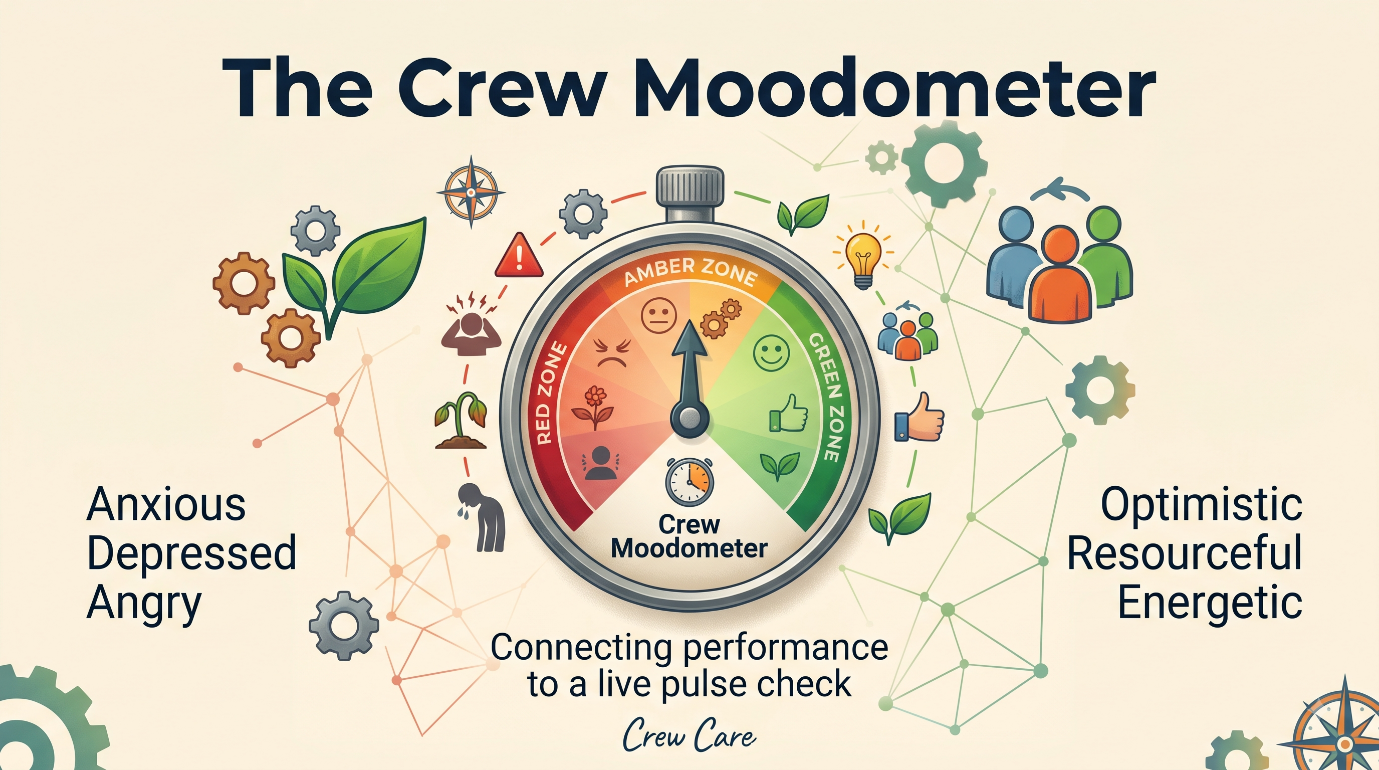
The crew moodometer is a simple idea with serious weight behind it. It’s a regular, honest check on where your crew sits between two states: Green Zone and Red Zone.
Green Zone is optimistic, energetic and resourceful. Research shows that when we are in this zone we are 31% more productive, sell 37% more, and 200% more creative. Red Zone is running on empty, disconnected and just getting through the day.
Team mood drives team performance.
The moodometer isn’t a survey that sits in a drawer. It’s a rhythm. A weekly or fortnightly pulse check that gives leaders a live read on their crew, not a lagging indicator six months too late.
Why it matters more than we think
Here’s the shift worth making in 2026. Most workplaces still treat wellbeing as separate from performance. Something HR or WHS handles. Something for the annual engagement survey.
But crew care isn’t the soft add-on to high performance. It’s the foundation of it. A crew running in the Red Zone cannot sustain the output a Green Zone crew delivers, no matter how good the strategy or how tight the deadlines.
Gallup’s global workplace data has consistently shown disengagement carries a real cost, in lost productivity and in retention. The moodometer is one of the few tools that catches the drift before it shows up in those numbers.
How to actually use it
Three things make the moodometer work.
First, ask often. A once-a-year survey tells you where things ended up, not where they’re heading. Weekly beats monthly. Monthly beats quarterly.
Second, ask simply. “Where are you this week, Green or Amber (no one likes to admit they are in the Red Zone – stigma is real)?” opens more honest conversation than a ten-question form ever will. Complexity kills participation.
Third, and this is the part most leaders skip, respond to what you hear. A moodometer that never changes anything becomes noise. If half your crew flags Amber/Red Zone three weeks running, that’s not a data point. That’s a signal to act, whether that means redistributing workload, checking in one on one, or naming the pressure openly in a team meeting.
This is where compassion becomes the gateway. Not results concern, but genuine curiosity about what’s driving the number. Sometimes it’s workload, sometimes bullying. Sometimes it’s something happening well outside work. Either way, the leader’s job is to notice and respond, not just record.
The crew versus team distinction
There’s a reason the language matters here. A team is a structure on an org chart. A crew is a group of people who trust each other enough to tell the truth about how they’re doing.
You build that trust one honest check-in at a time. The moodometer, used consistently, becomes the mechanism that builds it.
Where this leaves leaders
Green Zone isn’t a destination you arrive at once and tick off. It’s a state you maintain through consistent, small acts of noticing and responding. The moodometer is one of the simplest tools available to do that, if leaders are willing to actually ask, and actually listen to the answer.
What would your crew’s moodometer read this week, and would you actually want to know?
Not soft care. Strong care.
Graeme Cowan is a keynote speaker who helps leaders build resilient and successful teams, without losing good people to burnout. He is also a founding director of R U OK? and host of The Caring CEO podcast – rated #2 globally in workplace mental health. His new Wiley book is “GREAT LEADER’S CARE: Developing safe, resilient, and successful teams”, and he co-founded WeCARE365 which produces customised and practical eLearning, to help managers have better burnout prevention conversations.