
The Lina Law, Land Rights, and the Homelessness Paradox

The Lina Law, Land Rights, and the Homelessness Paradox
Why the Philippines Needs a National Land and Housing Strategy

By Karl M. Garcia
Introduction
Land has always been more than a physical resource. It is the foundation upon which homes are built, food is produced, businesses are established, infrastructure is developed, and communities are formed. Throughout history, access to land has shaped economic opportunity, political stability, and social justice. In the Philippines, however, land remains one of the nation’s most contested resources. Disputes over ownership, overlapping claims, informal settlements, urban congestion, environmental degradation, and housing shortages continue to challenge national development.
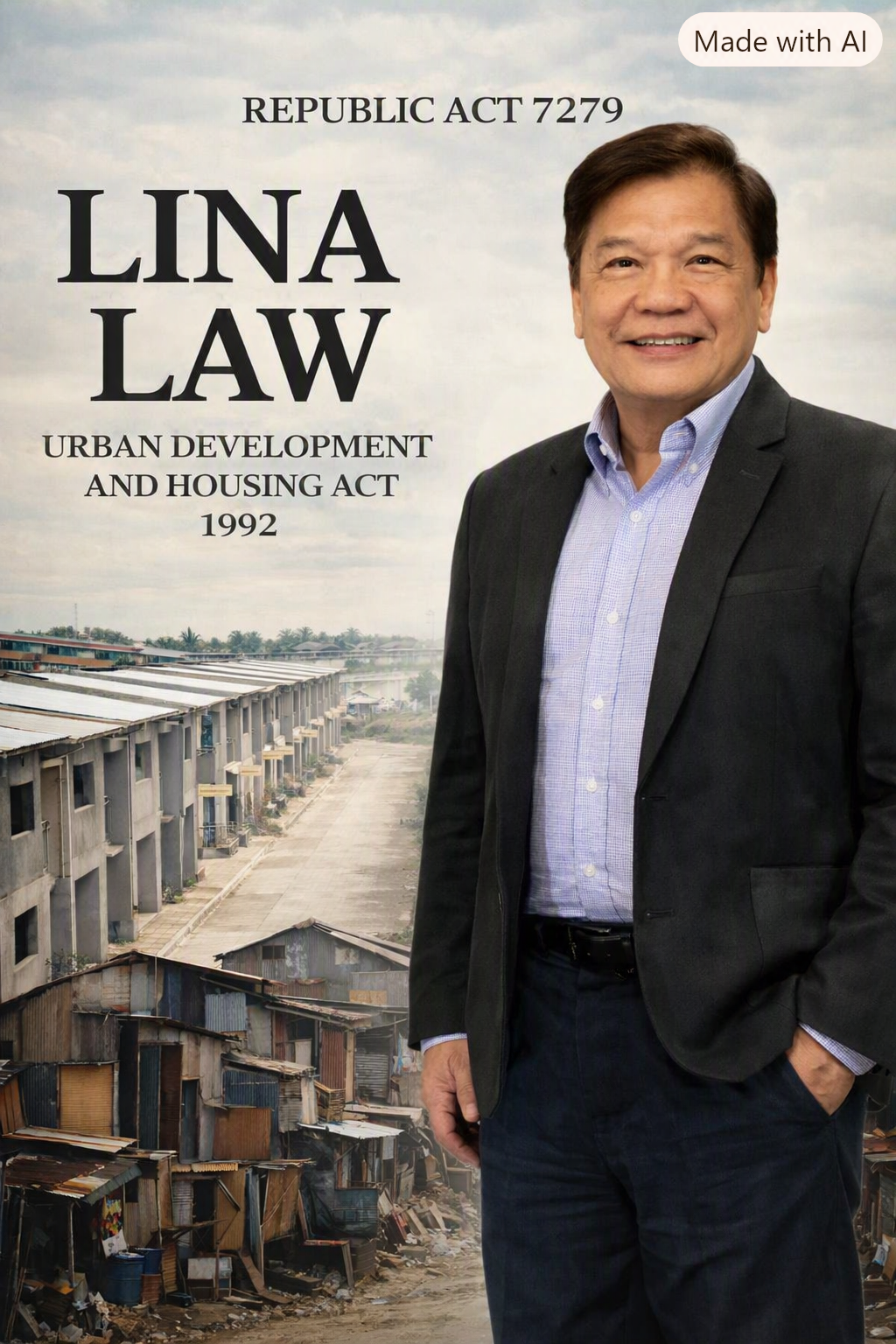
Public debate often focuses on individual laws such as the Urban Development and Housing Act of 1992 (Republic Act No. 7279), commonly known as the Lina Law, or the Indigenous Peoples’ Rights Act of 1997 (Republic Act No. 8371). Some argue that these laws discourage investment or complicate development projects. Others believe they are indispensable protections for vulnerable communities.
This framing presents a false choice. The country’s land and housing challenges cannot be explained by any single law. Rather, they are the result of decades of fragmented planning, inconsistent implementation, weak land administration, rapid population growth, urban migration, inadequate affordable housing, and institutional capacity constraints.
The challenge before the Philippines is not choosing between landowners and informal settlers, or between economic development and Indigenous rights. The challenge is building a system that protects property rights, respects human dignity, promotes investment, and ensures that every Filipino has access to safe, affordable, and productive communities.
A comprehensive National Land and Housing Strategy offers an opportunity to transform land from a recurring source of conflict into a foundation for inclusive and sustainable national development.
Land as the Foundation of Nation-Building
Every successful nation recognizes that land is a strategic national asset. It supports agriculture, industry, transportation, energy, environmental conservation, tourism, and housing. Well-managed land systems encourage investment because individuals and businesses are more willing to develop property when ownership rights are secure and regulations are predictable.
The Philippine Constitution reflects this balance by protecting private property while recognizing that property also serves a social function. It guarantees just compensation when private property is acquired for public purposes while acknowledging the State’s responsibility to promote social justice, environmental protection, and equitable development.
These constitutional principles should not be viewed as competing objectives. Secure property rights encourage entrepreneurship and investment, while responsible land-use planning ensures that development benefits society as a whole.
When land governance becomes inefficient, uncertainty discourages investment. Conflicting titles, overlapping jurisdictions, lengthy permitting processes, and prolonged litigation increase costs for businesses, delay infrastructure projects, and create opportunities for corruption. Ordinary citizens likewise suffer when they cannot secure legal ownership of property or obtain housing near employment opportunities.
Improving land governance is therefore not simply a legal reform; it is an economic, social, and institutional priority.
Understanding the Lina Law
The Urban Development and Housing Act was enacted to address the growing number of informal settlements in urban areas while protecting underprivileged and homeless citizens from arbitrary eviction. The law seeks to balance property rights with the government’s responsibility to provide socialized housing and humane relocation.
Over time, however, the Lina Law has become the subject of criticism. Some property owners contend that the law complicates the recovery of privately owned land occupied by informal settlers. Others argue that relocation requirements increase the costs of development projects.
While these concerns deserve thoughtful consideration, they should not obscure the broader reality. The law did not create informal settlements. Rapid urbanization, persistent poverty, insufficient affordable housing, rural-to-urban migration, and inadequate long-term planning are the primary drivers of the housing crisis.
Blaming the Lina Law for these structural challenges risks oversimplifying a far more complex problem.
The true policy question is not whether vulnerable families deserve protection—they do. The more important question is how government can protect both property rights and human dignity while reducing the growth of informal settlements through proactive planning rather than reactive interventions.
Housing Is More Than Shelter
Housing policy should not be measured solely by the number of houses constructed. A home is meaningful only when it enables individuals and families to build stable, productive, and dignified lives.
Many relocation projects have succeeded in providing physical structures but have struggled to create sustainable communities. Families relocated to distant areas frequently encounter limited employment opportunities, inadequate transportation, insufficient healthcare, overcrowded schools, and weak digital connectivity. Faced with these challenges, some eventually return to informal settlements closer to their livelihoods.
This cycle demonstrates that housing cannot be separated from economic opportunity.
Successful housing policy should integrate affordable homes with transportation, employment centers, educational institutions, healthcare facilities, utilities, parks, public safety, and digital infrastructure. These elements reinforce one another and enable families to improve their quality of life over time.
At the same time, compassion must not be confused with permitting dangerous living conditions. Settlements located along riverbanks, railway easements, flood-prone areas, landslide zones, and other hazardous locations expose families to significant risks during natural disasters and infrastructure emergencies.
Government has an obligation to protect lives while ensuring that relocation is humane, participatory, and linked to sustainable livelihoods. Safe communities should never require citizens to choose between employment and personal safety.
Indigenous Rights and Sustainable Development
Land governance extends beyond urban housing. It also encompasses the rights of Indigenous peoples, whose ancestral domains represent both cultural heritage and ecological stewardship.
The Indigenous Peoples’ Rights Act recognizes the historical relationship between Indigenous communities and their ancestral lands. These areas often contain forests, watersheds, biodiversity, and traditional knowledge that contribute significantly to environmental sustainability.
Some observers mistakenly assume that recognizing Indigenous rights inevitably obstructs economic development. International experience suggests otherwise.
Many countries have demonstrated that Indigenous communities can become active partners in sustainable development when governments pursue meaningful consultation, equitable benefit-sharing, and long-term investments in education, healthcare, infrastructure, and digital connectivity.
Development should therefore occur with Indigenous communities rather than at their expense. Respecting ancestral domains is not incompatible with responsible investment. Instead, collaboration can strengthen environmental protection, reduce conflict, and improve the legitimacy of development projects.
The objective should be inclusive growth that values both cultural heritage and economic opportunity.
Justice, Poverty, and Public Confidence
Land governance ultimately depends on public trust in the rule of law.
Many Filipinos perceive that access to justice is influenced by economic resources. Wealthier individuals generally have greater access to legal representation and can navigate lengthy judicial proceedings more effectively. Meanwhile, many economically disadvantaged detainees remain in detention for extended periods while awaiting trial because they lack adequate legal assistance or cannot meet bail requirements where applicable.
Regardless of economic status, every citizen deserves equal protection under the law, due process, and timely access to justice.
Justice delayed carries profound economic consequences. Families lose income when wage earners are unable to work, children may leave school to support household finances, and poverty becomes increasingly difficult to escape. These social costs extend well beyond the courtroom.
The same principle applies to land disputes. Investors hesitate when ownership remains uncertain, permits are delayed, or conflicting government decisions create legal ambiguity. Ordinary citizens likewise suffer when they spend years attempting to resolve property disputes or obtain secure land titles.
Corruption further undermines public confidence by facilitating fraudulent transactions, political patronage, and irregular permitting practices. The familiar Filipino expression, “Kung walang korap, walang mahirap,” reflects the widespread belief that corruption contributes significantly to poverty. At the same time, persistent poverty also creates conditions that make corruption and patronage politics more difficult to eliminate.
Strengthening governance therefore requires addressing both challenges simultaneously. Reducing corruption while expanding economic opportunity reinforces public trust and strengthens the rule of law.
Ultimately, justice should never be perceived as a privilege available only to those who possess financial resources or political influence. Equal justice is essential not only for protecting individual rights but also for fostering investment, promoting inclusive development, and building a capable Republic.
Learning from the Global Housing Crisis
The Philippine housing challenge is neither unique nor inevitable. Around the world, many high-income countries continue to struggle with homelessness despite decades of economic growth. The experiences of the United States, Canada, Australia, and several European countries demonstrate that rising national wealth does not automatically translate into affordable housing.
Rapid urbanization, speculative increases in land values, restrictive land-use policies, inadequate housing supply, and rising construction costs have pushed home ownership beyond the reach of many families. Mental health concerns, substance abuse, unemployment, and limited social housing have further contributed to homelessness in some communities.
These experiences offer an important lesson for the Philippines. Waiting until housing shortages become deeply entrenched makes reform more expensive and politically difficult. Prevention is more effective than crisis management. Building affordable housing, modernizing land administration, and improving urban planning today can prevent future generations from facing even greater social and economic challenges.
Rather than repeating the mistakes of other countries, the Philippines has an opportunity to develop a housing system that integrates affordability, accessibility, resilience, and economic opportunity from the outset.
Infrastructure Must Build Communities
The Philippines is making historic investments in railways, airports, expressways, bridges, seaports, airports, and industrial corridors. These projects have the potential to transform economic geography by improving mobility, strengthening regional connectivity, and attracting investment.
Yet infrastructure should never be viewed simply as physical construction. Roads, railways, and ports exist to improve people’s lives.
Transportation systems should connect workers to affordable housing rather than forcing families to spend hours commuting each day. Industrial estates should be linked to nearby residential communities so that economic growth creates opportunities for local residents. Schools, hospitals, parks, utilities, and digital infrastructure should be incorporated into long-term community planning rather than added only after neighborhoods have expanded.
Transit-oriented development offers one promising approach. By concentrating housing, employment, commercial activity, and public services around major transportation corridors, government can reduce congestion, improve mobility, lower transportation costs, and make urban development more sustainable.
Infrastructure succeeds not when it produces impressive engineering projects alone, but when it creates healthier, more productive, and more connected communities.
Completing an Unfinished Reform
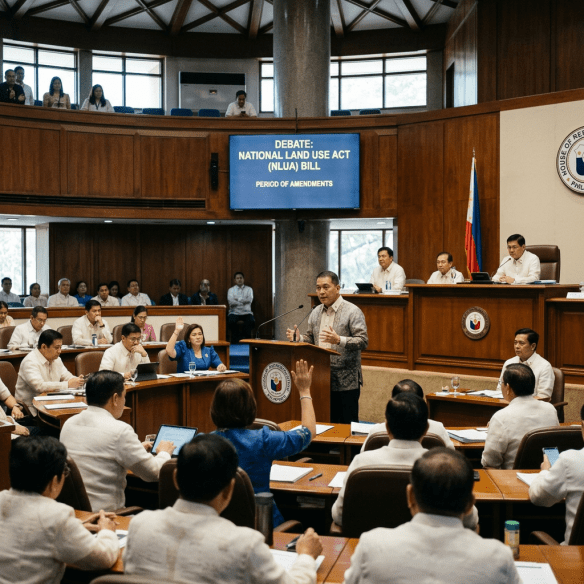
Among the country’s most significant unfinished reforms is the enactment of a comprehensive National Land Use Act.
For decades, land-use decisions have been divided among multiple national agencies and local government units. While each institution performs important responsibilities, fragmented authority often results in inconsistent zoning decisions, overlapping regulations, environmental degradation, delayed investments, and prolonged legal disputes.
A comprehensive land-use framework would provide greater clarity regarding agricultural lands, forests, watersheds, urban expansion, industrial development, infrastructure corridors, environmentally sensitive areas, and disaster-risk reduction.
Such legislation should not centralize every decision within the national government. Instead, it should establish a coherent framework that strengthens coordination among national agencies, local governments, Indigenous communities, the private sector, civil society, and academic institutions.
Integrated planning provides greater certainty for investors while protecting communities and the environment.
Modernizing Land Administration
Effective land governance depends upon reliable information.
The Philippines has made important progress in strengthening land administration, yet many records remain fragmented across multiple institutions. Conflicting titles, incomplete cadastral surveys, paper-based records, and overlapping claims continue to delay development and increase transaction costs.
A modern land administration system should include interoperable digital land records, geographic information systems, satellite mapping, transparent permitting, and coordinated cadastral databases. Digitalization can reduce opportunities for fraud, improve government efficiency, accelerate infrastructure implementation, and strengthen public confidence in property transactions.
Modern technology also enables better disaster planning, environmental monitoring, taxation, agricultural management, and infrastructure development.
Digital transformation alone, however, is not enough. Institutions must remain transparent, accountable, and accessible. Technology should support good governance rather than substitute for it.
Building a National Land and Housing Strategy
The Philippines requires a long-term strategy that views land, housing, infrastructure, environmental protection, and economic development as interconnected components of nation-building.
Such a strategy should rest upon several fundamental principles.
First, property rights must remain secure. Individuals and businesses invest when ownership is protected, contracts are enforced, and regulations remain predictable. Legal certainty strengthens economic growth while encouraging responsible development.
Second, housing policy should prioritize complete communities rather than isolated housing projects. Homes should be connected to employment opportunities, schools, healthcare, transportation, utilities, parks, public safety, and reliable digital connectivity.
Third, Indigenous rights should continue to be respected through meaningful consultation, recognition of ancestral domains, equitable participation in development, and investments that improve education, healthcare, and sustainable livelihoods.
Fourth, agricultural land, forests, watersheds, coastal ecosystems, and environmentally sensitive areas should be protected to strengthen food security, biodiversity, climate resilience, and disaster preparedness. Responsible development requires balancing economic growth with environmental stewardship.
Fifth, government should modernize land administration through digital records, interoperable databases, transparent permitting systems, and stronger coordination among national agencies, local governments, the judiciary, the private sector, civil society organizations, and Indigenous communities.
Finally, governance itself must become more integrated, evidence-based, transparent, and forward-looking. National development cannot depend upon fragmented institutions responding independently to interconnected challenges.
Balancing Rights and Responsibilities
Public discussion often portrays land policy as a conflict between competing interests. Landowners seek protection of their investments. Informal settlers seek security and dignity. Indigenous communities seek recognition of ancestral rights. Developers seek regulatory certainty. Environmental advocates seek conservation. Local governments pursue economic growth while responding to community needs.
In reality, these objectives need not be mutually exclusive.
A capable state protects private property because secure ownership encourages investment, entrepreneurship, and job creation. It protects vulnerable families because human dignity is fundamental to democratic society. It respects Indigenous rights because cultural heritage and environmental stewardship strengthen national resilience. It preserves natural ecosystems because sustainable development depends upon healthy forests, watersheds, coastlines, and agricultural lands.
Good governance recognizes that long-term prosperity depends upon balancing these interests fairly rather than allowing one objective to undermine another.
Conclusion
The Philippines does not suffer from a shortage of laws. It suffers from fragmented implementation.
The country’s land and housing challenges cannot be solved by blaming the Lina Law, landowners, developers, informal settlers, or the Indigenous Peoples’ Rights Act. Lasting solutions require stronger institutions, integrated planning, efficient land administration, equal justice, and sustained political commitment.
A National Land and Housing Strategy offers a pathway toward this goal. Supported by a comprehensive National Land Use Act, modern digital land administration, affordable housing linked to livelihoods, integrated infrastructure planning, environmental stewardship, and respect for both property and Indigenous rights, such a strategy can reduce conflict, strengthen investor confidence, expand economic opportunity, and improve the quality of life for millions of Filipinos.
Development without compassion creates inequality. Compassion without planning perpetuates poverty. Property rights without social responsibility weaken public trust. Social justice without respect for the rule of law discourages investment and undermines sustainable growth.
The task before the Philippines is therefore not to choose between development and justice, but to recognize that each depends upon the other.
Ultimately, national progress should not be measured solely by taller buildings, wider highways, or rising land values. It should be measured by whether ordinary Filipinos can build secure lives in safe, affordable, productive, and resilient communities where opportunity, justice, environmental stewardship, and human dignity are shared by all. A nation that manages its land wisely does more than resolve disputes over property—it lays the foundation for lasting prosperity, social cohesion, and a more capable Republic for generations to come.


