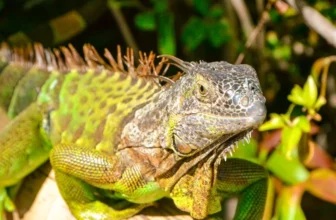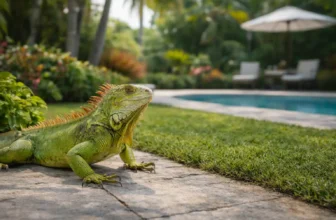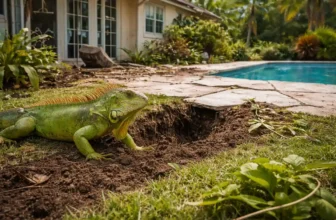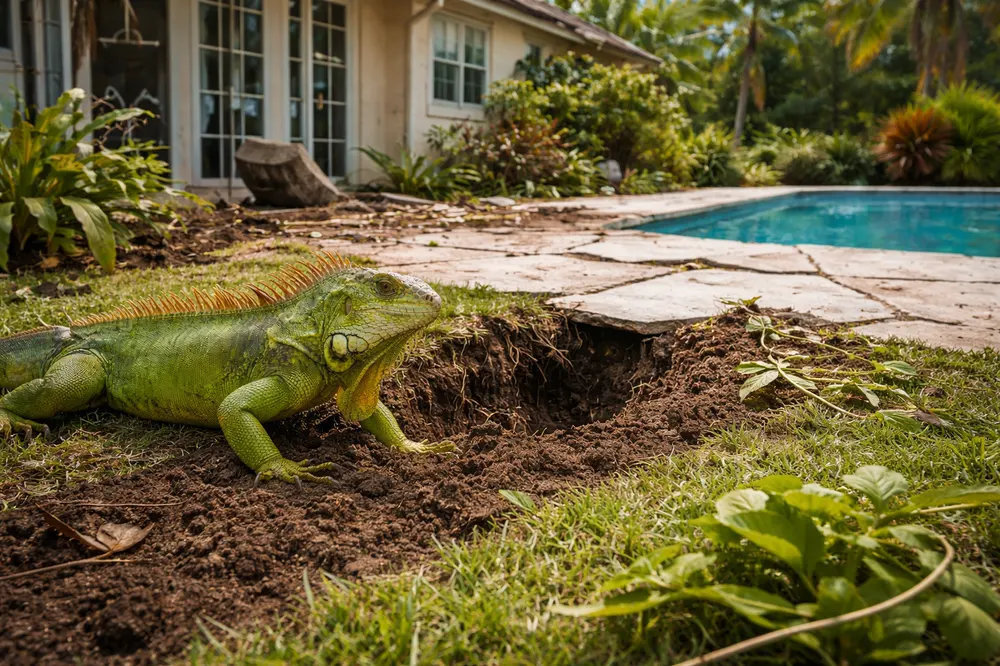
South Florida is home to a massive population of invasive green iguanas, black spiny-tailed iguanas, and other non-native species. Estimates suggest hundreds of thousands of iguanas live across Miami-Dade, Broward, Palm Beach, and the Florida Keys. With populations this dense, encountering a dead iguana is almost inevitable for homeowners in the region.
Several factors contribute to iguana deaths on residential properties:
- Cold snaps: When temperatures drop below 40°F, iguanas enter a torpor state and fall from trees. Many never recover.
- Vehicle strikes: Iguanas frequently cross roads and driveways, especially during breeding season from October through March.
- Predation: Dogs, cats, hawks, and other predators kill iguanas and sometimes leave the remains behind.
- Poisoning and pest control: Iguanas may ingest toxic plants, rodenticide, or other chemicals in suburban landscapes.
- Natural causes: Older iguanas, sick animals, and juveniles that fail to thrive die in yards, under bushes, and inside burrows.
Understanding why the iguana died matters because it affects how you handle the carcass. An iguana that died from poisoning, for example, poses different risks than one that froze during a cold front.