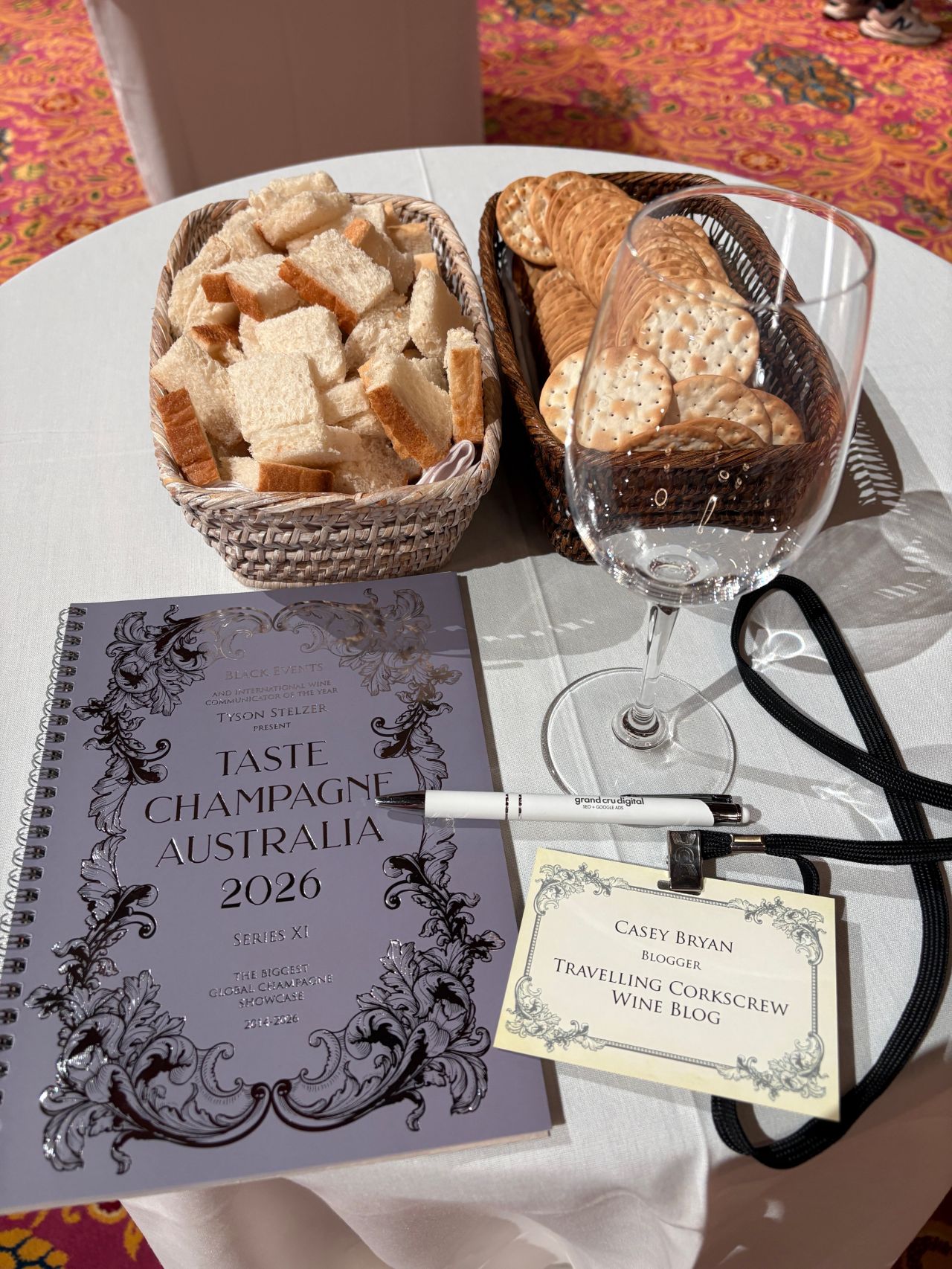

If there’s one thing I learned at Tyson Stelzer’s Taste Champagne Melbourne 2026, it’s that the champagne landscape is fracturing – but in the best way possible.
Basically it means Champagne is no longer a one-size-fits-all drink – it’s becoming deeply diverse, giving wine lovers way more interesting choices!
While walking through the tasting room this week at the beautiful Plaza Ballroom (seriously can there be any better Melbourne venue for sipping champagane in?!), the energy was undeniable.
According to Tyson, global champagne shipments might have hit a 25-year low, but here in Australia, we are seeing a fascinating “two-speed economy.” While mainstream volume has dipped, the quality of top-tier, terroir-focused cuvées has never been higher, and Australians are drinking more premium fizz than ever.
For wine lovers, the fast lane is packed with incredible, lesser-known grower producers and exclusive micro-releases. If you are looking to step outside your comfort zone this year, here are the standout trends and hidden gems you need to know about:
- The Eco-Pioneers: Producers focusing strictly on organic, biodynamic, and low-intervention methods.
- The Grower Movement: Small farmers who are deciding to bottle their own specific vineyards (terroir) instead of selling their grapes.
- The Hyper-Specific Cuvées: A surge in single-vineyard, single-vintage, or zero-dosage (no added sugar) champagnes.
So grab a glass of something delicious, and let’s delve a bit deeper….
1. The Biodynamic & Organic Mavericks
Sustainability is no longer a buzzword in Champagne; it’s producing some of the most dynamic, electric wines in the region. These houses are treating champagne as a wine first, rather than just a celebratory fizz.
Leclerc Briant
Pioneers of biodynamics in Champagne, Leclerc Briant is doing wild, avant-garde things in the cellar—including aging some of their cuvées underwater. The result? Wines with incredible tension, low dosage, and a purity of fruit that absolutely dances on the palate.
I tasted through the Brut Reserve NV and the Rosé Extra Brut NV, and honestly, they absolutely blew me away. The Rosé, in particular, is one I will be actively hunting down. It has this incredible, electric tension with a super-low dosage that lets the pure, pristine fruit absolutely dance on the palate. Utterly delicious and dangerously drinkable!
Vincent Couche
Hailing from the Aube (the Côte des Bar in the south of Champagne), Vincent Couche is an obsessive farmer. His Demeter-certified biodynamic approach results in rich, Pinot Noir-dominant champagnes. They are textural, vinous, and perfect for pairing with serious food.
I am completely obsessed with the Brut Nature NV and the Chloé Solera Brut Nature NV. The Chloé is a total geek-out wine—it’s made using a perpetual solera system blending six vintages (2011–2017), with half the wine vinified in oak barrels. It’s bottled unfiltered with zero dosage, resulting in this incredibly rich, textural, and vinous champagne. It’s less of a ‘party fizz’ and more of a serious gastronomic wine that I can’t wait to pair with food.
2. The “If You Know, You Know” Grower Champagnes
Consumers are actively hunting down “grower champagnes” – wines crafted by the same farmers who grew the grapes. This year’s showcase proved exactly why this category is booming.
Lacourte-Godbillon
A brilliant premier cru grower from the village of Écueil. If you have a friend who wants to pivot away from the big supermarket brands and taste true terroir, this is the house to introduce them to. Their focus on Pinot Noir yields champagnes with beautiful structure and elegance.
Their Brut Nature had my palate absolutely swooning. It is a stunning expression of Pinot Noir from Écueil – structurally beautiful, super interesting, and completely unmasked by sugar. If you want to taste pure, unadulterated terroir, this is the bottle to seek out.
Veuve Fourny & Fils
If you want to understand the magic of the Côte des Blancs, you have to taste Veuve Fourny & Fils. Run by fifth-generation brothers Charles and Emmanuel Fourny in the Premier Cru village of Vertus, this is the epitome of the modern grower movement.
They focus heavily on Chardonnay, employ incredibly meticulous farming, and keep their dosage (added sugar) extremely low. The resulting champagnes are electric, chalky, and vibrant – a pure expression of the soil they come from.
A huge highlight for me was the Extra Brut Vertus Premier Cru NV, not just for the chalky, vibrant wine itself, but for the suggested food pairing: KFC! Yes, fried chicken and grower champagne – a match made in high-low heaven that I am 100% going to try.
Their Rosé Brut Premier Cru NV was also a standout; despite being wonderfully dry, it has these gorgeous red fruit notes that would pair beautifully with a strawberry panna cotta or a rich cheesecake.
Waris-Hubert
At the heart of Avize in the Côte des Blancs, Champagne Waris-Hubert is a beautiful family story. Born from the marriage of fifth-generation vignerons Stéphanie Hubert and Olivier Waris in 1997, the family now tends 18 hectares of vines alongside their children.
They are part of a tiny, elite group of Champagne growers (just 5%) to achieve organic certification. Between horse-drawn ploughs in their Grand Cru parcels and a dedication to minimal intervention, their philosophy of care is evident in every sip.
Their Albescent Grand Cru Blanc de Blancs Extra Brut NV was a total showstopper (and they were pouring it from a magnum, which always makes everything taste better!). It’s crystalline and incredibly pure.
But the fun surprise was their 1er Cru de Grauves Extra Brut NV. My tasting notes literally say it had a ‘Zooper Dooper-ness’ to it ? – think of this amazingly lively, lifted, and nostalgic hit of zesty fruit (lemon and crisp apple) that is just insanely fun to drink.
3. The Secret Tiers of the Grandes Marques
Even the famous houses brought out their big guns, showcasing exclusive cuvées that often fly under the radar of the average consumer.
RSRV by G.H. Mumm
Everyone knows Mumm, but RSRV is their best-kept secret. As I found out, as it was completely new to me before Taste Champagne! Originally, these Grand Cru, limited-production champagnes were reserved purely for friends of the cellar master and inner-circle VIPs (hence the name, which stands for Réservé). It’s a masterclass in precision and a massive step up in complexity.
I was lucky enough to try a 2004 Belle Epoque a few years ago, so when I spotted the Belle Epoque Rosé 2014 on pour, I ran straight for it. The most fascinating takeaway?
The lovely host taking us through the tasting suggested letting the champagne warm up slightly in the glass. It goes against everything we are taught about serving sparkling wine ice-cold, but as the temperature rises, the complexity and aromatics of the 2014 just explode out of the glass.
Barons de Rothschild
This was on my list to definitely try, having worked in fine wine sales in Dubai and having sold a number of Lafite and Mouton bottles over my time, finding out they now make Champagne had me intrigued.
It takes a family as well-connected as the Rothschilds to build a new champagne house from a standing start. They built this project entirely around Grand Cru and Premier Cru Chardonnay from the legendary Côte des Blancs. Their Blanc de Blancs is an absolute showstopper: elegant, chalky, and refined.
Perrier-Jouet
Having had a 2004 Belle Epoque a number of years ago, when I saw that the Belle Epoque Rose 2014 was on taste, well I just had to! The interesting thing I learnt, it that the lovely lady taking us through the tasting said that it is actually really interesting when you let it warm up a bit. The complexity really comes out.
Moët & Chandon Collection Impériale Création No1
Moet wasn’t high on my list to check out, but I simply had to taste the newly released Brut Nature Collection Impériale Création No. 1, and I must admit, it is breathtaking.
It’s an intricate blend of seven different vintages – some aged in stainless steel, others in oak, and some on lees in the bottle – it is designed to let the uniqueness of each year shine.
I didn’t realise the price tag when I was tasting it, and now I’m kicking myself for not going back for seconds! At around $400 a bottle, it’s not exactly a Tuesday night wine, but it is an absolute masterpiece of blending.
The biggest takeaway
The biggest takeaway from Taste Champagne 2026? It’s time to look past just the recognisable labels at your local bottle shop. The real excitement in champagne in Australia right now is in the growers, the organic pioneers, and the secret prestige cuvées.
Let me know your favourites in the comments below!