By Bjorn Fehrm • Aerospace Analyst
October 15, 2026
Subscription Required
The air freight market is split about 50-50 between freight that travels in the belly of passenger aircraft as add-on revenue and freight loaded onto dedicated freighters. The dedicated freighter market has been dominated by Boeing’s freighters for the last 50 years, where the 777F is the present intercontinental freighter feeding mega hubs and the 767-300F is the distribution freighter from those hubs—Louisville and Memphis in the U.S., Frankfurt in Europe, and Hong Kong in Asia-Pacific.
The combination of the 777F and 767-300F is now in trouble, as both aircraft fall under the ICAO ban on new production after 2027 because their engines have emissions that are too high. This ban is an ICAO recommendation to local regulators, and they can choose whether to enact it. The FAA has banned new 767-300ER deliveries from 2028 but will allow a total of 35 777Fs to be produced until 2030, when Boeing will presumably have the 777-8F ready to take over the intercontinental freighter role.
The dedicated freighter that will replace the 767-300ER is undecided. The market will use freighter-converted passenger aircraft, so-called P2F (passenger to freighter), because the ICAO ban does not apply to older feedstock entering a conversion chain.

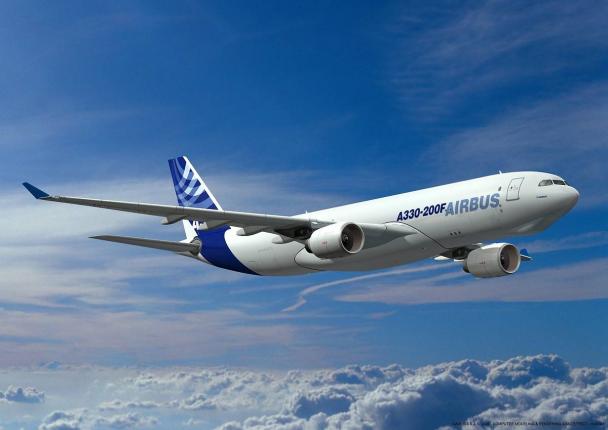
Figure 1: The A330-200F introduced in 2010 and sold in 38 units until 2017. Photo credit: Airbus
Airbus has entered the freighter race with its A350F, a freighter in the 777F and 777-8F class, with engines that keep this aircraft in production past the 2027 ban. Airbus also introduced a smaller freighter in 2010, the A330-200F, but it only sold 38 units and is no longer in production. Because its engines would also fall under the 2027 ICAO emission rules, Airbus can’t reintroduce it to complement the A350F.
But Airbus could transfer the A330-200F freighter adaptations to a more modern A330 variant, the A330neo or A330-900. Its engines, the Rolls-Royce Trent 7000, would make it eligible for new aircraft deliveries past 2027. It would offer a complementary distribution freighter alongside the intercontinental A350F, rivaling Boeing’s 777-8F and 767-300F, and later the 767-300P2F.
This week, we examine a possible A330-900F and how it would compare with the factory Boeing 767-300F and with P2F conversion from both Airbus and Boeing. We use the Leeham Aircraft Performance and Cost Model (APCM) to design the freighters and then run them on typical routes to understand their operational economics.