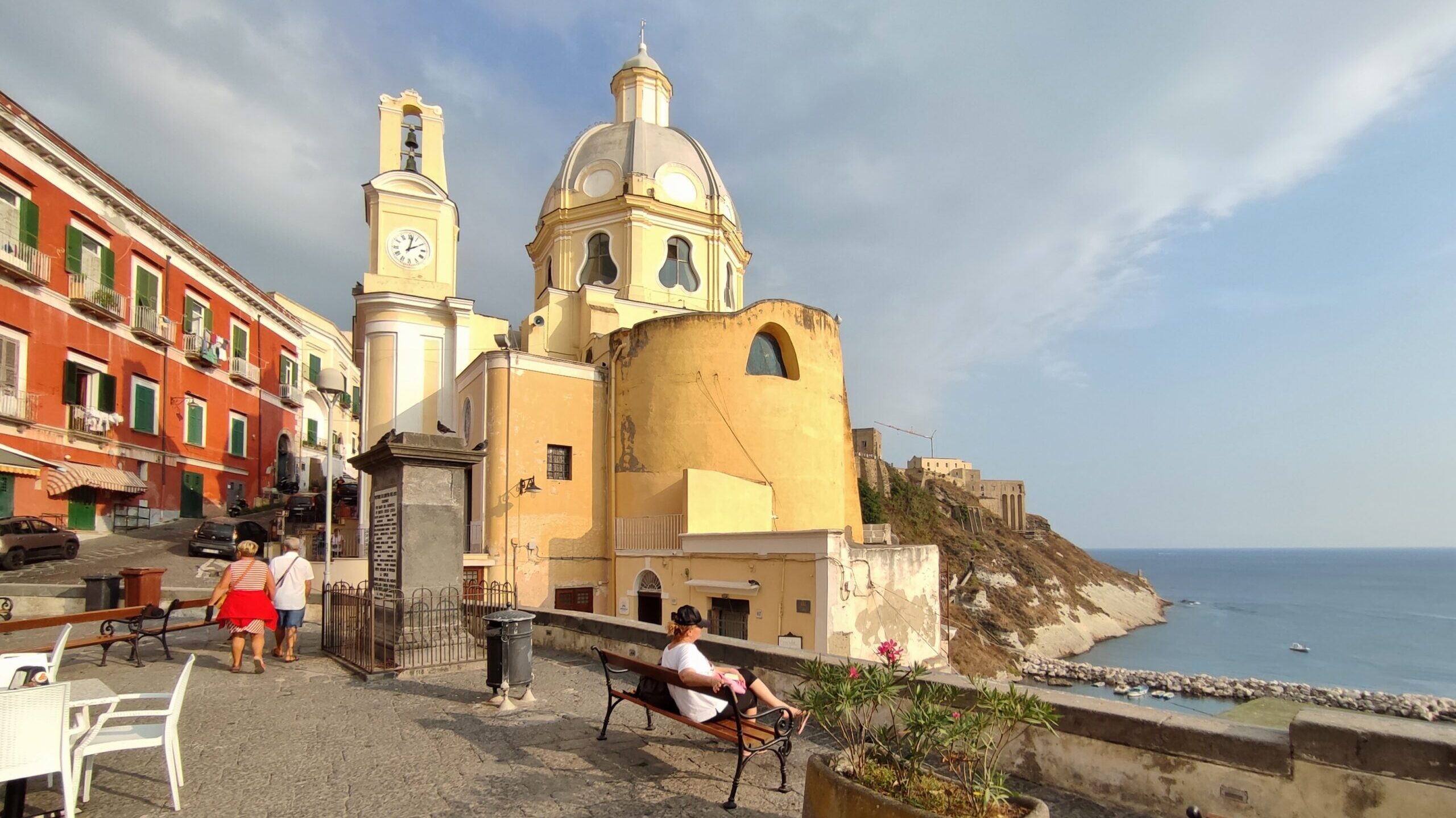
On the island of Procida, in the Bay of Naples, a monument honors men executed for believing people should be citizens rather than subjects.
Susan and I came upon it while visiting the island. It stands quietly in a public square, but the story it tells is anything but peaceful.
In 1799, a short-lived Neapolitan Republic promised what the monarchy never had: individual rights and greater equality before the law. Some of Procida’s people embraced that promise. When the king regained power, he condemned them as traitors and had them executed.
More than 60 years later, the island reversed that judgment.
The monument marks the spot where the men died. Its inscription, in my translation, reads: “Civilization, impartial judge of the past, having annulled the unjust sentence, has proclaimed them martyrs.”
It lists each man by name and trade. Then it gives them all the title the king had denied them: citizens of Procida.
Those in power called them traitors.
History remembered them as patriots.
Consider when this happened. The men of Procida died just 23 years after Americans declared that all men are created equal. George Washington was still alive. The ideas that had given birth to a young nation across the Atlantic were stirring here as well: government by consent, rights belonging to people rather than kings, and the radical belief that ordinary men and women could govern themselves.
In America, those ideas survived and grew into a republic. On Procida, the monarchy crushed them, and the men who believed in them paid with their lives.
That difference should humble us.
American freedom was not inevitable. It was not the natural order of things. People willing to sacrifice won and preserved it. Elsewhere, people who believed the same truths lost everything.
The men of Procida received no honor while they lived. The price of their convictions came due immediately. Their vindication arrived long after they were gone.
That is often how the struggle for freedom works.
Power has always had a vocabulary for those who challenge it: traitor, agitator, troublemaker, radical, enemy of the people. The words change. The purpose does not. Those in authority use them to convince the public that dissent is dangerous and obedience is patriotic.
This bay has seen many rulers who wanted to keep people under control. Among them were the fascists who governed Italy for two decades during the last century.
Mussolini did not seize Italy by defeating the nation in war. In 1922, the king handed him the government. Established politicians and business leaders went along because they believed they could manage him, use him or benefit from him.
They were wrong.
Within a few years, his government banned opposition parties and silenced the press. Political violence became an instrument of the state. Loyalty to a leader became more important than fidelity to the law.
It did not happen because Italians were uniquely wicked. It happened because enough people were frightened, angry, ambitious or comfortable enough to look away.
That is how freedom is usually lost—not all at once and not always at the point of a gun. People surrender it piece by piece as they convince themselves that the danger is temporary, that the leader is useful or that only someone else’s rights are at stake.
Americans often speak as if tyranny is something that happens elsewhere. We imagine that our Constitution, our courts and our traditions will protect us regardless of what we do.
But institutions are only as strong as the people entrusted with them—and the citizens willing to defend them.
That is why citizenship cannot be a spectator sport.
We are a deeply divided nation, but much of that division is self-inflicted. It grows from ignorance of our history, obedience to political tribes and a willingness to excuse conduct from our own side that we would condemn in the other.
Too many citizens have stopped paying attention. Too many leaders have stopped offering hope. Some no longer even pretend to respect the rule of law. Instead, they appeal to resentment, fear and the darker impulses of human nature.
They promise freedom for those who agree with us—not the harder and nobler truth that freedom must belong to everyone.
Tyranny has never needed everyone’s support. It needs only enough people to embrace it, enough people to profit from it and enough good people to remain silent.
The danger has never been only the tyrant.
The danger has also been us.
That is the lesson of this small island.
The men of Procida were not nobles or members of a powerful elite. They were priests and farmers, a pharmacist and a sailor, a surgeon, a notary and an artisan. They died for the belief that people like them deserved the same rights as noblemen and kings.
They believed that a life of dignity did not belong only to the powerful, the wealthy or the favored.
It belonged to everyone.
That belief is the heart of a free society.
Freedom is never secure when we want it only for ourselves. It is secure only when we want it just as fiercely for our neighbors—including those who vote differently, worship differently, look different or disagree with us.
The moment we decide that some people deserve freedom while others do not, we have already begun to surrender our own.
The men of Procida paid in full, up front, for a promise they would never live to enjoy.
Most of us are asked to pay far less.
For us, freedom survives through smaller acts of duty: casting a ballot even when the race seems unimportant, studying the candidate instead of blindly choosing a party, speaking when silence would be safer and holding public officials accountable long after the election is over.
Above all, it requires doing what is right when doing what is convenient would be so much easier.
None of that will earn us a monument.
But it may keep us from needing one.
Those who hold power will always claim the right to judge their critics. But on a quiet island in the Bay of Naples, a stone monument delivers a more lasting verdict.
Power writes the first judgment.
History writes the last.
The question for every generation—including ours—is which side of that judgment we choose to stand on.