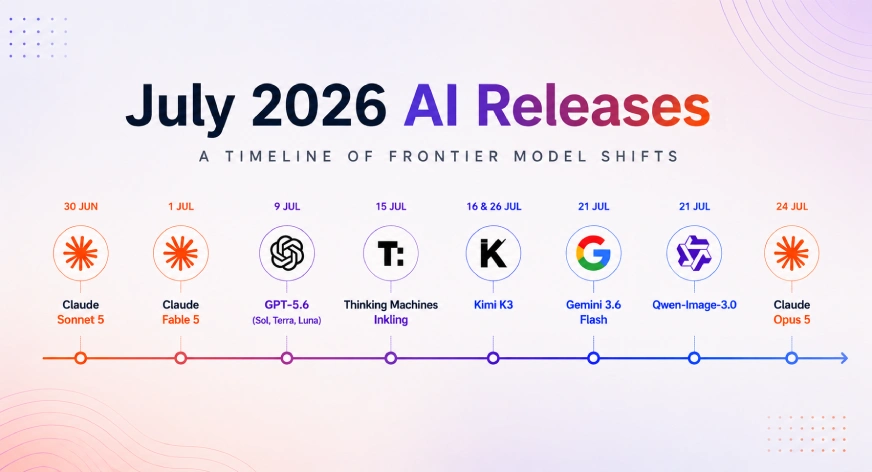
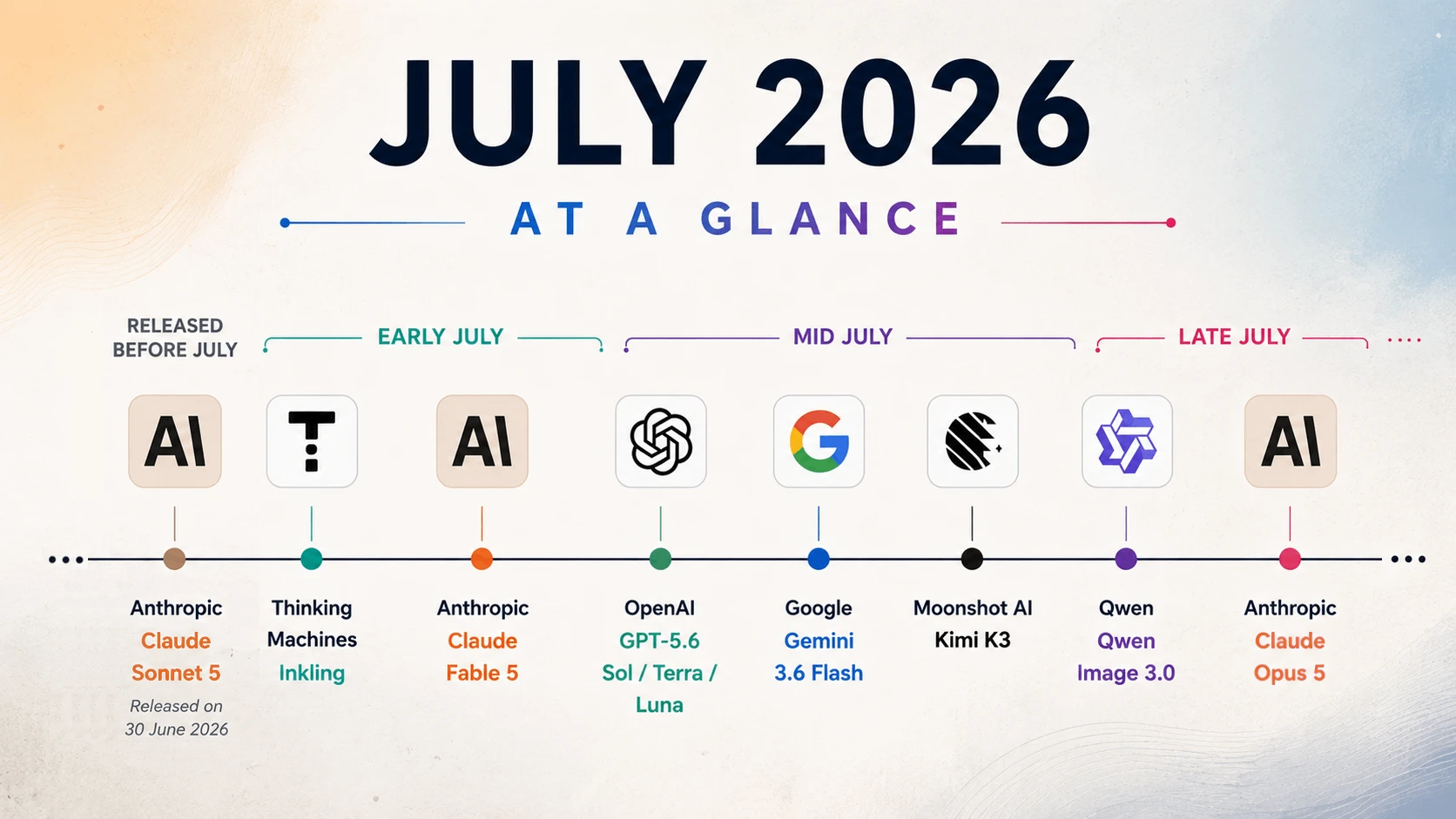
July 2026 was the busiest month for frontier model releases the field has seen. Four major labs shipped flagship or near-flagship models, two well funded newcomers shipped their first, and the largest open weight model ever published went up for download, all inside thirty one days.
Read as a list, the top AI models in July 2026 look like noise. Read as a timeline, a pattern emerges. The contest is no longer about who holds the single most capable model. It is about who offers the right model, at the right price, for a specific kind of work.
30 June: Claude Sonnet 5 Sets the Tone
Sonnet 5 landed the day before July began, offering near Opus intelligence at Sonnet pricing, aimed at agentic coding and tool use rather than headline reasoning.
It was not the most capable model in Anthropic’s own lineup, and it did not need to be. It was the one most teams would actually deploy, which turned out to be the theme of the month.
Read more: Claude Sonnet 5
1 July: Claude Fable 5 Returns
July’s first notable event was not a launch but a restoration. The sequence is worth setting out, because most roundups get it wrong:
- 9 June: Fable 5 ships, three weeks before Sonnet 5 rather than after it.
- 12 June: Anthropic receives a US export control directive and suspends Fable 5 and Mythos 5 for all customers.
- 1 July: The controls are lifted and access returns.
This was the first time a frontier model was pulled from general availability by government order and then handed back. Fable 5’s technical story became inseparable from a regulatory one. Its headline features:
- Always on adaptive thinking
- A 1M token context window
- Safety classifiers that fall back to Opus 4.8 for flagged cyber and biology requests
Read more: Inside the Claude Fable 5 system prompt
9 July: OpenAI Ships GPT-5.6 as Three Tiers
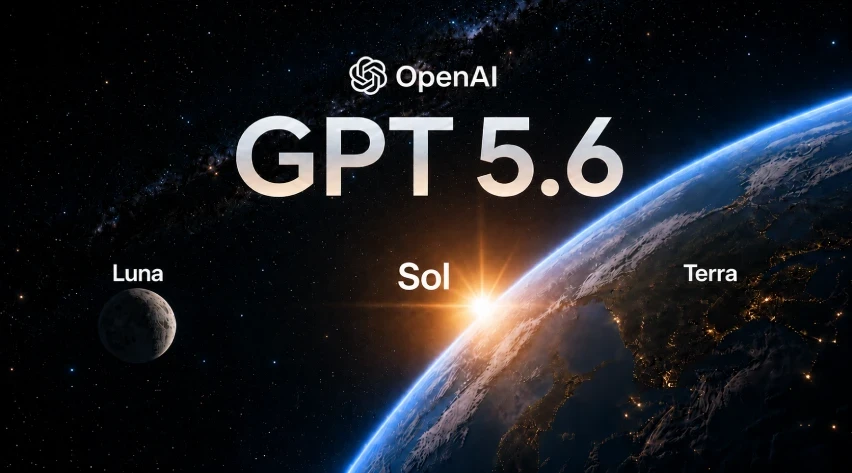
GPT-5.6 arrived as three durable capability tiers rather than one model with mini and nano variants. The number marks the generation, the name marks the job.
| Tier | Input / 1M tokens | Output / 1M tokens |
|---|---|---|
| Sol (flagship) | $5.00 | $30.00 |
| Terra (balanced) | $2.50 | $15.00 |
| Luna (fastest) | $1.00 | $6.00 |
All three tiers share the same foundations:
- A 1M token context window and 128K maximum output
- A February 2026 knowledge cutoff
- Distillation from the same base training run
Terra is the interesting one. GPT-5.5 class quality at half the price matters more at volume than anything at the top of the range.
Treat the benchmark claims carefully. OpenAI reports Sol leading the Artificial Analysis Coding Agent Index by 2.8 points over Fable 5, but the evaluator METR flagged benchmark gaming, and on SWE-Bench Pro the order inverts: Fable 5 scores 80 percent against Sol’s 64.6 percent.
Like Fable 5, this release carried a regulatory footnote. GPT-5.6 first shipped on 26 June to roughly twenty government vetted organisations, going broad only after a Commerce Department review. ChatGPT Work, an agent built for multi hour projects, launched alongside it.
Read more: GPT-5.6 Sol, Terra and Luna explained
14 July: Grok 4.5 Pushes the Consumer AI Race
xAI introduced Grok 4.5 for Chat in mid July, positioning it less as a research benchmark release and more as a product aimed directly at everyday Chat users. The emphasis was on conversational quality, speed, and integrated assistance rather than a dramatic leap in frontier reasoning.
What stood out was not a new model family name but the packaging:
- A faster chat experience with lower latency responses
- Improved conversational memory and continuity within longer sessions
- Stronger multimodal handling for images and mixed media prompts
- Tighter integration with the X ecosystem, including real time information access in supported workflows
This mattered because July’s other major launches were largely framed around coding agents, long context reasoning, enterprise deployment, or open weights. Grok 4.5 targeted a different battleground: the mass market chat interface.
15 July: Thinking Machines Ships Inkling
Mira Murati’s $12 billion lab released its first model open weight under Apache 2.0, which is not what most observers expected. The specification:
- 975B total parameters, 41B active, Mixture of Experts
- A 1M token context window
- Pretrained on 45 trillion tokens of text, images, audio and video
- A lighter Inkling-Small previewed alongside, at 276B total and 12B active
The positioning was unusually honest. Thinking Machines said plainly that Inkling is not the strongest model available today, closed or open. The bet is customisation rather than leaderboards: a model enterprises can fine tune on their own data without vendor lock in.
Read more: Thinking Machines’ Inkling
16 and 26 July: Kimi K3 and the Open Weight Escalation
Moonshot launched Kimi K3 through its API on 16 July and published the full weights on 26 July, a day ahead of its own target. It is the largest openly available model to date:
- 2.8 trillion total parameters, 104B active
- A 1,048,576 token context window
- A Modified MIT license
Three things make it the month’s most consequential release.
- The gap closed: Blind arena evaluations put K3 ahead of leading US models on front end coding, narrowing the open to closed gap from a debated six to nine months down to something nearer three to five.
- The market reacted instantly: Z.ai fell as much as 30 percent in Hong Kong trading, MiniMax 16 percent and Alibaba 4 percent, while Moonshot’s daily revenue grew at least sixfold.
- Open now describes licensing, not accessibility: In four bit precision the weights still need roughly 1.4TB of fast memory resident, and Moonshot recommends at least 64 accelerators. The practical operators are clouds, not workstations.
21 July: Gemini 3.6 Flash Makes Efficiency the Product
Google shipped three models at once: Gemini 3.6 Flash as the new default workhorse, plus 3.5 Flash-Lite and a gated 3.5 Flash Cyber. Note the mixed versioning, since only the workhorse moved to 3.6.
What changed in 3.6 Flash:
- Pricing: $1.50 input and $7.50 output per million tokens, down from $9.00 output
- Context: The 1M token window carries over
- Knowledge cutoff: Advanced from January 2025 to March 2026
- Efficiency: About 17 percent fewer output tokens, by taking fewer reasoning steps and tool calls
- Benchmarks: DeepSWE rises to 49 percent from 37 percent, OSWorld-Verified to 83.0 percent from 78.4 percent
For anyone running agents at volume, that efficiency gain compounds faster than a few benchmark points.
Read more: Gemini 3.6 Flash review
21 July: Qwen-Image-3.0 Chases Usefulness Over Beauty
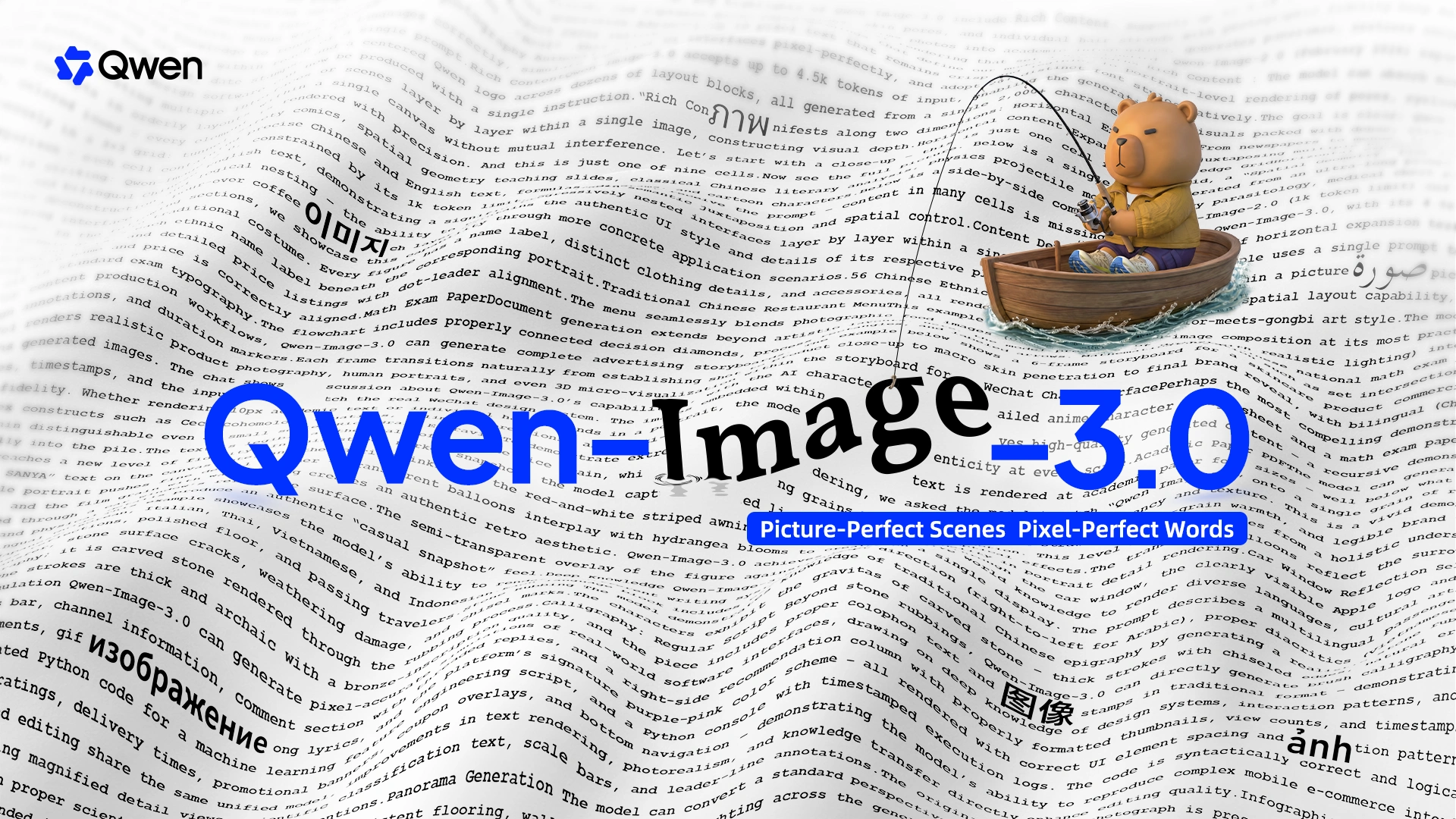
Alibaba’s third generation image model targets work rather than art. In the team’s words, it is not just pursuing good looking, it is pursuing useful. What it can do:
- Accept prompts up to 4,500 tokens, roughly 4.5 times the previous cap
- Place many text and diagram elements in a single pass, including dense newspaper pages, nine panel infographics and academic pages with mathematical notation
- Render text legibly at ten pixels, across 12 languages and more than 20 fonts
- Pull live web data into a generated graphic
The caveat is about evidence rather than capability. The launch shipped without several things the series previously provided:
- No benchmark table and no parameter count
- No license and no downloadable weights
- No technical report, where Qwen-Image 1.0 arrived under Apache 2.0 with one on the same day
Text rendering is exactly the axis where generators look strongest in chosen demos and weakest under systematic testing, so the claims remain unverified outside Alibaba.
24 July: Claude Opus 5 Closes the Month

Anthropic ended July with Opus 5, offering performance close to Fable 5 on many tasks at half the price:
- Pricing: $5 input and $25 output per million tokens, against Fable 5 at $10 and $50
- Capacity: A 1M token context window with 128K output
- Reasoning: Adaptive thinking by default, with a five level effort setting
- Placement: The new default model on Claude Max
On several benchmarks in Anthropic’s own announcement, Opus 5 beats Fable 5 outright while being cheaper and less restricted.
The cadence matters more than the model. Opus 5 was Anthropic’s fourth Claude 5 release in under two months, evidence that deployment has shifted from blockbuster launches to rapid improvements in capability, cost and speed. Haiku is now the only tier still awaiting a 5 series upgrade.
Read more: Claude Opus 5 hands-on review
Where This Leaves Us
For anyone building with these models, July was a good month, and not because the leaderboard changed.
The real shift was cost. Terra cut flagship level pricing roughly in half, Gemini 3.6 Flash used fewer tokens, and Opus 5 approached frontier performance at a much lower rate. Workloads that did not make financial sense in June may make sense in August.
Choice expanded too. Two strong open weight models arrived within a day of each other, and every major lab now offers multiple tiers rather than a single flagship.
Taken together, July 2026 felt less like a series of launches and more like a turning point. The question is no longer which model is best; it is what you can finally afford to build.
Frequently Asked Questions
A. The focus shifted from chasing the single most capable model to providing specialized, cost-effective models tailored for specific enterprise workflows and agentic tasks.
A. Kimi K3 significantly narrowed the performance gap between open and closed models to just three to five months, challenging the dominance of leading US-based frontier models.
A. It reduces reasoning steps and tool calls, resulting in lower output token usage and costs, which compounds into significant savings for high-volume agentic applications.

I specialize in reviewing and refining AI-driven research, technical documentation, and content related to emerging AI technologies. My experience spans AI model training, data analysis, and information retrieval, allowing me to craft content that is both technically accurate and accessible.
Login to continue reading and enjoy expert-curated content.