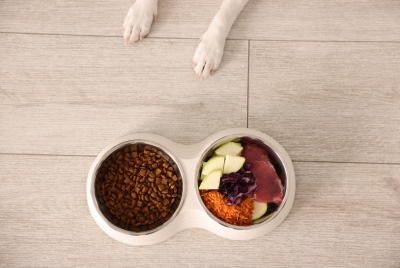

Cumulatively, Americans spend an astonishing amount on their pets. According to the American Pet Products Association, Americans spend $168 billion on their pets annually. The largest portion of those dollars, about a third, is spent on pet food. That tells us something every veterinarian already knows: Americans care deeply about what they feed their pets. In a previous blogpost, I discussed the factors influencing our choices of food for our dogs and cats. Today’s blogpost answers common questions about one of the newer additions to pet menus: fresh pet food.
A Brief History of Pet Food
Our friends at Dogster have created a pet food development timeline. Commercial dog food has been around for more than 150 years, dating back to the time of the Civil War. The first commercial pet food was a biscuit for dogs, the precursor of today’s dry kibble. Canned food followed in the 1930s and 1940s and was often used to feed sick pets. Around the same time, the first prescription diet was developed for Buddy, a seeing-eye dog with kidney disease.
What Is Fresh Pet Food?
Fresh pet food came on the scene about 20 years ago, but the terminology can be confusing. Part of the confusion comes from the lack of a precise definition from the American Association of Feed Control Officials (AAFCO). Manufacturers generally use the term to describe diets that are minimally processed, meaning they are not baked like kibble or canned like traditional wet foods. Fresh pet food may be raw, freeze-dried, gently cooked or steamed. Some labels also use the phrase “human grade.” That term does have an AAFCO standard: it applies only when the product is manufactured following federal regulations for current good manufacturing practices for human edible foods. To be approved, the manufacturing facility must be inspected and licensed to produce human food by appropriate authorities (local, county or state public health authorities). Since fresh diets do not rely on preservatives, they usually have a shorter shelf life than canned food or kibble. Some are shipped frozen, then thawed and served when your pet is ready for their meal.
Why Is Fresh Pet Food So Popular?
What we want for our pets often mirrors what we want for ourselves. Many fresh pet foods—with little cubes of carrots, pieces of pasta, and chunks of meat—look more like our dinners than traditional pet food. Current nutritional advice for people encourages limiting ultra-processed foods, and fresh pet food appears to offer the same virtue for dogs and cats. But appearance is not nutrition. Just because a food looks wholesome does not mean it meets your pet’s nutritional requirements. Here are my suggestions for selecting a food for your pet.
Fresh food companies have also made feeding these diets easy for pet owners. The food is shipped directly to your home in packages sized for your pet and designed to store in the refrigerator or freezer. Fresh diets may also appeal to pets with fussy appetites, which can remove some of the daily drama from mealtime.
Is Fresh Pet Food Healthier? What the Science Says
Because fresh diets are relatively new, the scientific literature is still limited, and we do not yet have data on their long-term impact on pet health and disease. However, a few things are clear from the currently available research. First, different types of pet food—including fresh food—can change your pet’s intestinal microbiome. That change may be helpful for some pets and not helpful for others, which is exactly the kind of question that needs more study.
Another study found total water intake was higher in dogs eating fresh or canned food. If your pet is predisposed to forming bladder stones, more water may be beneficial. If your pet has heart disease, extra water may not be ideal. This is why veterinary advice is critical when choosing a diet.
Finally, processing method—canned, baked, steamed or lightly cooked—can change digestibility and fecal output, but we need more research to know how those changes affect long-term health.
Have Any of My Patients Been Fed a Fresh Food Diet?
Choosing food for your pet should start with general nutritional guidelines, such as those outlined in the pet owner-friendly guide from the World Small Animal Veterinary Association Global Nutrition Committee. Once you identify a food that meets those recommendations, the next question is practical: does it work for your pet and your family? I had two memorable patients eating a log-shaped fresh food that could be sliced into thin pieces. Both dogs had oral cancer and needed food that was easy to hand-feed. For them, this product fit the bill beautifully.
How Do I Know If Fresh Pet Food Is Right for My Dog or Cat?
- Choose a food that meets nutritional guidelines outlined by veterinary nutritionists.
- Make sure the brand and flavor are ones your pet likes and will reliably eat.
- Ask your veterinarian whether the diet’s composition is appropriate for your pet’s life stage and medical conditions. The fresh food fed to my cancer patients was a life-saver, but that does not make it right for every pet.
- Pay attention to calories. Fresh diets may be less calorie dense than kibble, so be sure you are meeting the caloric needs for your dog’s or cat’s ideal weight.
Tags:
AAFCO, choosing pet food for your pet, diet, fresh pet food, kibble, pet food, prescription diets,